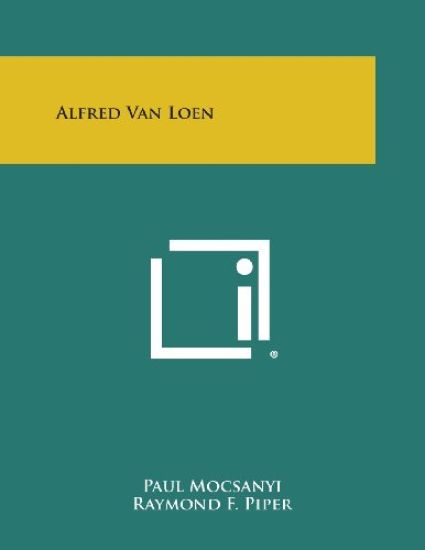
Alfred Van Loen is a book written by Paul Mocsanyi. The book is a biography of Alfred Van Loen, a Dutch businessman and entrepreneur who made a significant impact in the business world in the early 20th century. The book covers Van Loen's life and career, from his early days as a clerk to his rise to the top of the business world. It includes details of his business ventures, including his founding of the Van Loen Company, which became one of the most successful businesses in the Netherlands. The book also explores Van Loen's personal life, including his relationships with his family and friends, and his involvement in social and political causes. Overall, Alfred Van Loen is a fascinating look at the life of a successful businessman and entrepreneur, and offers valuable insights into the world of business and entrepreneurship.Photographs By David Robins, Eva Millette, And Lou Millette.This scarce antiquarian book is a facsimile reprint of the old original and may contain some imperfections such as library marks and notations. Because we believe this work is culturally important, we have made it available as part of our commitment for protecting, preserving, and promoting the world's literature in affordable, high quality, modern editions, that are true to their original work.
Alfred Nobel: Dynamite King, Architect of Peace is a biography of the Swedish inventor, chemist, and industrialist Alfred Nobel. Written by Herta E. Pauli, the book explores Nobel's life and legacy, from his early years as the son of an inventor to his groundbreaking work in the field of explosives and his eventual creation of the Nobel Prizes. The book examines Nobel's contributions to science and industry, as well as his efforts to promote peace and disarmament. It also delves into Nobel's personal life, including his relationships with family members and his struggles with depression. Through detailed research and engaging storytelling, Alfred Nobel: Dynamite King, Architect of Peace provides a comprehensive look at one of the most influential figures of the 19th and 20th centuries.This is a new release of the original 1942 edition.This scarce antiquarian book is a facsimile reprint of the old original and may contain some imperfections such as library marks and notations. Because we believe this work is culturally important, we have made it available as part of our commitment for protecting, preserving, and promoting the world's literature in affordable, high quality, modern editions, that are true to their original work.
Alfred Yarrow: His Life and Work is a biography written by Eleanor C. Barnes that chronicles the life of Alfred Yarrow, a prominent British engineer and shipbuilder. The book delves into Yarrow's upbringing, education, and early career, as well as his contributions to the development of steam engines and shipbuilding technology. Yarrow's work on torpedo boats and his involvement in World War I are also explored in detail. The book provides a comprehensive account of Yarrow's personal and professional life, including his relationships with family, friends, and colleagues. With detailed research and insightful analysis, Barnes offers a fascinating portrait of a man who played a significant role in the growth of British industry and engineering.This is a new release of the original 1923 edition.This scarce antiquarian book is a facsimile reprint of the old original and may contain some imperfections such as library marks and notations. Because we believe this work is culturally important, we have made it available as part of our commitment for protecting, preserving, and promoting the world's literature in affordable, high quality, modern editions, that are true to their original work.
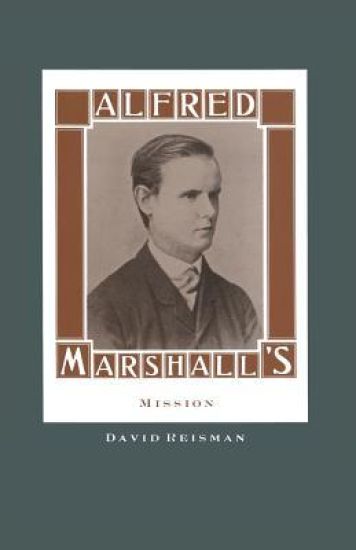
Marshall's theories of economic and social advancement are explained with reference to the scientific and philosophical movements which influenced them: utilitarianism, evolutionism, mathematical marginalism and ethical idealism.
This study looks to the work of Tarski's mentors Stanislaw Lesniewski and Tadeusz Kotarbinski, and reconsiders all of the major issues in Tarski scholarship in light of the conception of Intuitionistic Formalism developed: semantics, truth, paradox, logical consequence.
Alfred Marshall and Modern Economics re-examines Marshall's legacy and relevance to modern economic analysis with the more settled conventional wisdom concerning evolutionary processes allowing advances in economic theorising which were not possible in Marshall's life time.
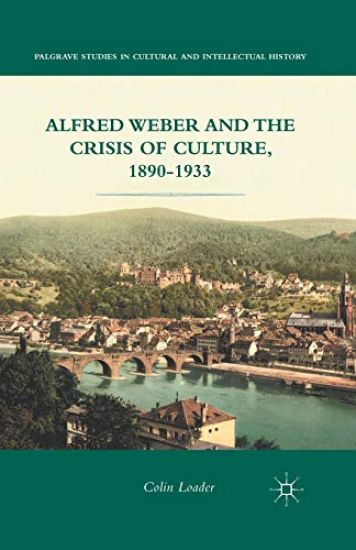
Alfred Weber was an important participant in the dialogue over the political and cultural crises of the late Empire and Weimar Republic. This study connects Weber's career to the social, political, intellectual, cultural, and institutional contexts of the period.