The Rule of Benedict has successfully guided people to God for over 1500 years. Although written originally for a small community of monks in Italy, its wisdom and humanity helped it spread worldwide. From its very first days, it proved to be a beacon for the laity as well.This present edition revives a 17th century translation into Early Modern English, here updated for the modern reader. In keeping with contemporary usage, gratuitous references to men are replaced with unobtrusive inclusive language.The most prominent feature of this work, however, is a comprehensive topical concordance. This gathers related subject material scattered throughout Benedict's original work and puts it in one place so the reader can review Benedict's thoughts on any given subject without the necessity of thumbing through a conventional index that lists only page numbers.
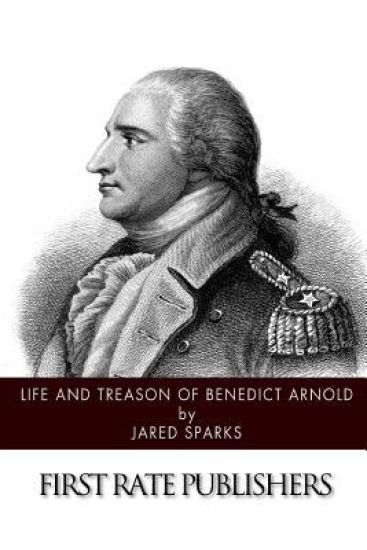
It is the chief object of the following narrative to give an account of the treason of Arnold, its causes, the plans for carrying it forward, and its final issue. In executing this design, it was necessary to touch upon the events of his previous life; and, as many of these have a real interest in themselves, and others a direct bearing on the subject, it is believed no apology for introducing them will be required. The author has of course consulted all the printed books and documents, which he could find; and among others he acknowledges his obligation to M. de Mar-bois' Complot d'Arnold et de Sir Henry Clinton, published several years ago in Paris, and soon afterwards translated by Mr. Walsh for the second volume of the American Register. The parts of M. de Marbois' book, which he wrote from personal knowledge and observation, have a special value; some of the other parts would have been varied, if his materials had been more abundant and exact. Besides printed sources of information, the author has been fortunate in procuring the use of a large number of original papers in manuscript, which have not before been inspected. In the public archives of London he was allowed to peruse the entire correspondence, between the British commander in America and the ministry, concerning Arnold's defection; particularly a very ample narrative of all the transactions, dated nine days after the death of Andr , methodically drawn up, and signed by Sir Henry Clinton. This correspondence exhibits in a clear view the British side of the question. Among General Washington's manuscripts are also original materials, including the papers that were laid before the board of general officers to whom Andre's case was submitted, and the drafts of letters and other papers left behind by Arnold when he escaped. Arnold's letters to Congress are curious, and indicate the workings of his mind while maturing his plot. The same may be said of some of his miscellaneous letters, which have fallen into the author's hands.
It is the chief object of the following narrative to give an account of the treason of Arnold, its causes, the plans for carrying it forward, and its final issue. In executing this design, it was necessary to touch upon the events of his previous life; and, as many of these have a real interest in themselves, and others a direct bearing on the subject, it is believed no apology for introducing them will be required. The author has of course consulted all the printed books and documents, which he could find; and among others he acknowledges his obligation to M. de Mar-bois' Complot d'Arnold et de Sir Henry Clinton, published several years ago in Paris, and soon afterwards translated by Mr. Walsh for the second volume of the American Register. The parts of M. de Marbois' book, which he wrote from personal knowledge and observation, have a special value; some of the other parts would have been varied, if his materials had been more abundant and exact. Besides printed sources of information, the author has been fortunate in procuring the use of a large number of original papers in manuscript, which have not before been inspected. In the public archives of London he was allowed to peruse the entire correspondence, between the British commander in America and the ministry, concerning Arnold's defection; particularly a very ample narrative of all the transactions, dated nine days after the death of Andr , methodically drawn up, and signed by Sir Henry Clinton. This correspondence exhibits in a clear view the British side of the question. Among General Washington's manuscripts are also original materials, including the papers that were laid before the board of general officers to whom Andre's case was submitted, and the drafts of letters and other papers left behind by Arnold when he escaped. Arnold's letters to Congress are curious, and indicate the workings of his mind while maturing his plot. The same may be said of some of his miscellaneous letters, which have fallen into the author's hands.
It is the chief object of the following narrative to give an account of the treason of Arnold, its causes, the plans for carrying it forward, and its final issue. In executing this design, it was necessary to touch upon the events of his previous life; and, as many of these have a real interest in themselves, and others a direct bearing on the subject, it is believed no apology for introducing them will be required. The author has of course consulted all the printed books and documents, which he could find; and among others he acknowledges his obligation to M. de Mar-bois' Complot d'Arnold et de Sir Henry Clinton, published several years ago in Paris, and soon afterwards translated by Mr. Walsh for the second volume of the American Register. The parts of M. de Marbois' book, which he wrote from personal knowledge and observation, have a special value; some of the other parts would have been varied, if his materials had been more abundant and exact. Besides printed sources of information, the author has been fortunate in procuring the use of a large number of original papers in manuscript, which have not before been inspected. In the public archives of London he was allowed to peruse the entire correspondence, between the British commander in America and the ministry, concerning Arnold's defection; particularly a very ample narrative of all the transactions, dated nine days after the death of Andr , methodically drawn up, and signed by Sir Henry Clinton. This correspondence exhibits in a clear view the British side of the question. Among General Washington's manuscripts are also original materials, including the papers that were laid before the board of general officers to whom Andre's case was submitted, and the drafts of letters and other papers left behind by Arnold when he escaped. Arnold's letters to Congress are curious, and indicate the workings of his mind while maturing his plot. The same may be said of some of his miscellaneous letters, which have fallen into the author's hands.
It is the chief object of the following narrative to give an account of the treason of Arnold, its causes, the plans for carrying it forward, and its final issue. In executing this design, it was necessary to touch upon the events of his previous life; and, as many of these have a real interest in themselves, and others a direct bearing on the subject, it is believed no apology for introducing them will be required. The author has of course consulted all the printed books and documents, which he could find; and among others he acknowledges his obligation to M. de Mar-bois' Complot d'Arnold et de Sir Henry Clinton, published several years ago in Paris, and soon afterwards translated by Mr. Walsh for the second volume of the American Register. The parts of M. de Marbois' book, which he wrote from personal knowledge and observation, have a special value; some of the other parts would have been varied, if his materials had been more abundant and exact. Besides printed sources of information, the author has been fortunate in procuring the use of a large number of original papers in manuscript, which have not before been inspected. In the public archives of London he was allowed to peruse the entire correspondence, between the British commander in America and the ministry, concerning Arnold's defection; particularly a very ample narrative of all the transactions, dated nine days after the death of Andr , methodically drawn up, and signed by Sir Henry Clinton. This correspondence exhibits in a clear view the British side of the question. Among General Washington's manuscripts are also original materials, including the papers that were laid before the board of general officers to whom Andre's case was submitted, and the drafts of letters and other papers left behind by Arnold when he escaped. Arnold's letters to Congress are curious, and indicate the workings of his mind while maturing his plot. The same may be said of some of his miscellaneous letters, which have fallen into the author's hands.
"There is no shortage of good days," writes Annie Dillard. "It is good lives that are hard to come by." Reflecting on what makes a "good life," Robert Benson offers a warmhearted, humorous guide to enriching our lives with the wisdom of Benedict, a 6th century monk. Each chapter is shaped around a Benedictine principle: prayer, rest, community, and work, and reveals the brilliant and infinitely practical ways that Benedictine spirituality can shape our lives today. Benson is honest and wise, sharing his own failings and the constant tension that he feels between the demands of the temporal and the spiritual. For anyone who feels caught in a web of conflicting priorities, or who finds the pace of modern life more draining than fulfilling, A Good Life will come as a welcome treat for the soul.
Discussion around the bestseller The Benedict Option by Rod Dreher has led many people to want to know more about Benedictine principles.???????Listen, my child. I want you to put the ear of your heart to the solid ground of the master’s wisdom (what I received, I’m passing on to you). It’s advice from a spiritual father who loves you—the sort of counsel you receive by letting it shape your whole life. Listening is hard work, but it’s the essential work. It opens us up to the God we’ve rejected by only listening to ourselves. If you’re ready to give up your addiction to yourself, this message is for you: to listen is to equip yourself with the best resources available to serve the real Master, Christ the Lord.So begins the famous opening paragraph of Benedict’s Rule in Jonathan Wilson-Hartgrove’s vital, new, contemporary paraphrase. The entire text of the Rule is here plus a lengthy introduction from Jonathan, and detailed explanatory notes throughout that explain difficult passages. The result is a classic re-introduced that will enliven any 21st century expression of religious community.
To receive Jesus in Holy Communion is to enter into a lifelong friendship with him. In this beautifully illustrated book by Ann Engelhart, Amy Welborn introduces Pope Benedict's profound yet simple answers to various questions put to him by children in Rome who had recently made their First Holy Communion. Pope Benedict's answers, and the children's wonderful questions concerning this very important spiritual occasion in their young lives, provide inspiring text for this beautiful gift book for First Communion. Amy Welborn is a well-known, popular freelance writer. She is the author of many books on prayer, the saints and apologetics. Amy lives with her family in Birmingham, Alabama. Ann Kissane Engelhart is a watercolor artist and illustrator. She has taught art in Catholic education for many years and currently teaches painting classes in her home studio on Long Island, New York, where she lives with her husband and two children. Her portraits and illustrations are exhibited in galleries and private collections in New York and Connecticut.
This practical resource for finding peace, meaning and God, from the pen of a sixth-century monk, can help guide your own spiritual journey. Many people today are realizing that the cultural focus on competition, success, acquisition and constant busyness is ultimately not satisfying. They hunger for a way of life that has more lasting value and deeper meaning. For centuries, people within and outside Christianity have turned to the writings of Benedict of Nursia, a sixth-century monk committed to shaping a life of humility and compassion, to guide their spiritual lives. His Rule speaks profoundly to our contemporary search for spiritual grounding. Anglican laywoman and writer Esther de Waal says that Benedict’s Rule helps her know “how to be human now today, tomorrow and for the rest of my life.”This accessible introduction to the Rule of Benedict, intended for readers unfamiliar with Benedictine monasticism, presents the Rule as a guide to a God-centered, balanced approach to life. It shows us how to use Benedict’s wisdom to build relationships and communities formed by love and respect. It offers historical background and personal reflections on Benedictine topics such as living in the present moment, balance, finding God in everyday life, individual and community prayer, hospitality, and healthy approaches to work and service.
In September 1775, Benedict Arnold let 1,100 men up Maine's Kennebec River in hastily built wooden bateaux. The 300-mile journey along Indian trade routes was intended to allow Arnold and his men to sneak up to the British held Quebec and rout them from the city. While the mission itself was a dismal failure, the 80-day trek by Arnold and his men is considered one of the greatest military expeditions of all time. Fast forward to the 21st century: Writer and adventurer W. Hodding Carter teamed with a small group of friends to retrace Arnold's route. They built a single bateau (to the exact specifications of those used by Arnold's men) and strove to make the same trip in the same number of days. What followed was an adventure by turns harrowing and hilarious, as the small band braved Maine weather and water to complete the trip. Carter recounts their journey, from the building of their bateaux to preparing and setting out, to the trials of dealing with white water, swamping, and portaging a nearly 500 pound craft. Woven throughout is the story of Arnold's expedition, culled from historical sources as well as numerous first-hand accounts in the form of letters home from Arnold's men. It's a unique and exhilarating look at a key moment in Maine history.
Discussion around the bestseller The Benedict Option by Rod Dreher has led many people to want to know more about Benedictine principles.? This little rule can be a place to begin.“Listen, my child. I want you to place the ear of your heart on the solid ground of the Master’s wisdom (what I received, I’m passing on to you). This advice is from a spiritual father who loves you and gives you the sort of counsel that will shape your whole life.”Jonathan Wilson-Hartgrove’s The Rule of Saint Benedict presents the timeless wisdom of the Rule in a vibrant new language. The contemporary reader will find this sixth-century classic more accessible, while any student or follower of the Rule will discover in this paraphrase a vital new expression. The full text is included, and detailed explanatory notes offer help in understanding challenging passages.
Questions keep arising about what really happened in 2013 with the surprising "resignation" of Benedict XVI, his decision to remain on as "pope emeritus," and thus the presence of two popes living side-by-side. In this compelling work, Socci investigates the mysterious mission to which Benedict XVI has felt called in service of the Church.