Kirjojen hintavertailu. Mukana 12 016 292 kirjaa ja 12 kauppaa.

Kirjahaku

Etsi kirjoja tekijän nimen, kirjan nimen tai ISBN:n perusteella.

1000 tulosta hakusanalla Benjamin Franklin Perry

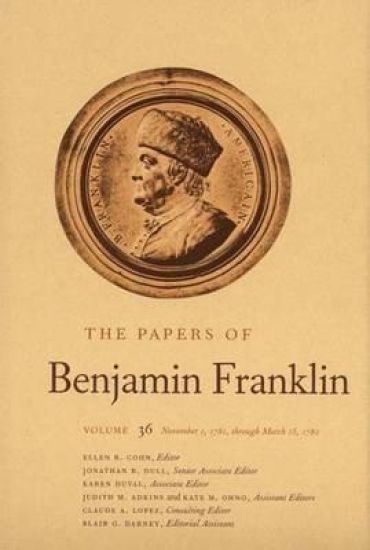
The Papers of Benjamin Franklin, Vol. 36

The Papers of Benjamin Franklin, Vol. 36

Benjamin Franklin

Yale University Press
2001
sidottu
The thirty-sixth volume of the collected writings and correspondences of the American statesman, ambassador, and Founding Father Benjamin Franklin As this volume opens, Franklin despairs of living long enough to see the war come to an end. He had been plagued by continued financial demands from Congress that he could not meet and was worried about how much further he could draw on France’s goodwill. But on the evening of November 19, Vergennes received and forwarded to Franklin the news of Cornwallis’s capitulation at Yorktown a month earlier. All France celebrated the Franco-American victory, and Franklin’s life became a whirl of dinner parties and congratulations. Franklin spent the winter in excellent health and used this period of relative respite to intellectual advantage, buying books and attending scientific meetings. He could do little to hasten the war’s end, however, and waited patiently for a change of policy by the British government. With the approach of spring, he received a series of letters on the failing fortunes of Lord North and his colleagues in the House of Commons. As the volume ends, Lord Cholmondeley is on his way to Paris. His arrival will offer Franklin a chance to make contact with a new British government that might negotiate for peace.
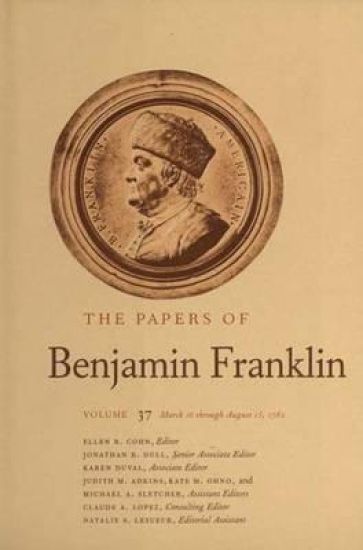
The Papers of Benjamin Franklin, Vol. 37

The Papers of Benjamin Franklin, Vol. 37

Benjamin Franklin

Yale University Press
2004
sidottu
The thirty-seventh volume of the collected writings and correspondences of the American statesman, ambassador, and Founding Father Benjamin Franklin This book, encompassing five months during 1782, promises to be one of the most significant volumes in the entire series of Benjamin Franklin’s papers. Between March and August, Franklin mastered one of the greatest challenges of his diplomatic career by establishing the framework for a peace agreement with Great Britain. The negotiations required enormous subtlety in order to mollify the French while also satisfying the British. Franklin’s success was based upon the same strengths he had demonstrated several years earlier during the lengthy search for an alliance with the French government: an unswerving confidence in the rectitude and ultimate triumph of the American cause, immense patience, and an aptitude for one of the diplomat’s most subtle arts—creating contrasting impressions for different audiences.
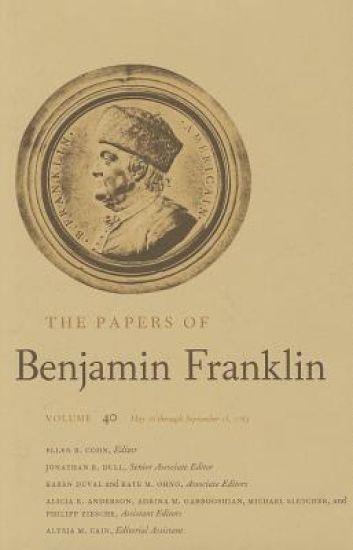
The Papers of Benjamin Franklin, Vol. 40

The Papers of Benjamin Franklin, Vol. 40

Benjamin Franklin

Yale University Press
2011
sidottu
The fortieth volume of the collected writings and correspondences of the American statesman, ambassador, and Founding Father Benjamin Franklin During the period of this volume, the United States of America completed its transformation into a fully recognized independent nation. In May, Franklin and his fellow American peace commissioners John Adams, John Jay, and Henry Laurens recommenced treaty negotiations with their new British counterpart David Hartley. Those negotiations proved fruitless, as the new British ministry rejected all proposals for additional articles. On September 3, 1783, the commissioners signed the Definitive Treaty of Peace, which was essentially identical to the preliminary articles signed the previous November. While this marked the official end of the War for American Independence, the nations of Europe had long since recognized the United States. In the spring, Franklin, as sole minister plenipotentiary, secretly negotiated draft commercial treaties with Denmark and Portugal. After being recognized by the diplomatic corps in early July, he received overtures from other ambassadors, including a proposal from the papal nuncio concerning American Catholics. Franklin published a French edition of the American state constitutions, which he sent to every monarch in Europe, witnessed the first hot-air balloon ascension, welcomed his grandson Benjamin Franklin Bache back from Geneva, and wrote to his friends that “There never was a good War or a bad Peace.”
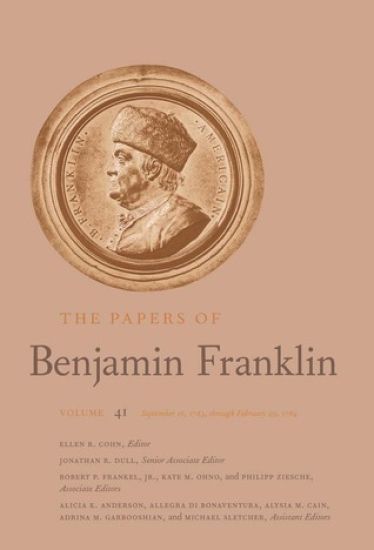
The Papers of Benjamin Franklin

The Papers of Benjamin Franklin

Benjamin Franklin

Yale University Press
2014
sidottu
The forty-first volume of the collected writings and correspondences of the American statesman, ambassador, and Founding Father Benjamin Franklin After the signing of the definitive peace treaty on September 3, 1783, Franklin’s official duties as minister plenipotentiary diminished. He concluded a draft consular convention with France, but Great Britain did not act on the articles for a commercial agreement that he negotiated with David Hartley, and Congress did not ratify the draft treaties of commerce with Denmark and Portugal that he had sent to Philadelphia the previous summer. In his welcome leisure time, however, Franklin followed scientific developments (witnessing the first balloon ascensions in Paris), advised the French government on schemes for civic improvement (making cornbread and building coal-burning stoves), and wrote three of his most remarkable pieces about what it meant to be American.
Benjamin Franklin, Young Printer

Benjamin Franklin, Young Printer

Augusta Stevenson

Prentice Hall IBD
1986
nidottu
One of the most popular series ever published for young American's, these classics have been praised alike by parents, teachers, and librarians. With these lively, inspiring, fictionalized biographies - easily read by children of eight and up - today's youngster is swept into history.
Benjamin Franklin's Bastard

Benjamin Franklin's Bastard

Sally Cabot

William Morrow Paperbacks
2014
nidottu
Benjamin Frankiln's Bastard by Sally Cabot is an absorbing and compelling work of literary historical fiction that brings to life a little-known chapter of the American Revolution - the story of Benjamin Franklin and his bastard son, and the women who loved them both. William Franklin, the son of Benjamin and his favorite mistress, Anne, is raised by Deborah, Benjamin's wife. A steadfast loyalist, he and his father cannot reconcile their wildly disparate views, causing a rift in the bond both thought unbreakable. Fascinating and heartbreaking, Benjamin Franklin's Bastard is a gripping tale of family, love, and war, set against one of America's most fascinating periods of history.
Benjamin Franklin's Last Bet: The Favorite Founder's Divisive Death, Enduring Afterlife, and Blueprint for American Prosperity
The incredible story of Benjamin Franklin's parting gift to the working-class people of Boston and Philadelphia--a deathbed wager that captures the Founder's American Dream and his lessons for our current, conflicted age.Benjamin Franklin was not a gambling man. But at the end of his illustrious life, the Founder allowed himself a final wager on the survival of the United States: a gift of two thousand pounds to Boston and Philadelphia, to be lent out to tradesmen over the next two centuries to jump-start their careers. Each loan would be repaid with interest over ten years. If all went according to Franklin's inventive scheme, the accrued final payout in 1991 would be a windfall. In Benjamin Franklin's Last Bet, Michael Meyer traces the evolution of these twin funds as they age alongside America itself, bankrolling woodworkers and silversmiths, trade schools and space races. Over time, Franklin's wager was misused, neglected, and contested--but never wholly extinguished. With charm and inquisitive flair, Meyer shows how Franklin's stake in the "leather-apron" class remains in play to this day, and offers an inspiring blueprint for prosperity in our modern era of growing wealth disparity and social divisions.
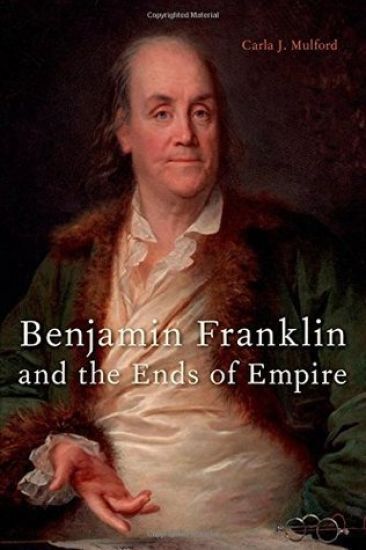
Benjamin Franklin and the Ends of Empire

Benjamin Franklin and the Ends of Empire

Carla J. Mulford

Oxford University Press Inc
2020
nidottu
Drawing from Benjamin Franklin's published and unpublished papers, including letters, notes, and marginalia, Benjamin Franklin and the Ends of Empire examines how the early modern liberalism of Franklin's youthful intellectual life helped foster his vision of independence from Britain that became his hallmark achievement. In the early chapters, Carla Mulford explores the impact of Franklin's family history--especially their difficult times during the English Civil War--on Franklin's intellectual life and his personal and political goals. The book's middle chapters show how Franklin's fascination with British imperial strategy grew from his own analyses of the financial, environmental, and commercial potential of North America. Franklin's involvement in Pennsylvania's politics led him to devise strategies for monetary stability, intercolonial trade, Indian affairs, and imperial defense that would have assisted the British Empire in its effort to take over the world. When Franklin realized that the goals of British ministers were to subordinate colonists in a system that assisted the lives of Britons in England but undermined the wellbeing of North Americans, he began to criticize the goals of British imperialism. Mulford argues that Franklin's turn away from the British Empire began in the 1750s--not the 1770s, as most historians have suggested--and occurred as a result of Franklin's perceptive analyses of what the British Empire was doing not just in the American colonies but in Ireland and India. In the last chapters, Mulford reveals how Franklin ultimately grew restive, formed alliances with French intellectuals and the court of France, and condemned the actions of the British Empire and imperial politicians. As a whole, Mulford's book provides a fresh reading of a much-admired founding father, suggesting how Franklin's conception of the freedoms espoused in England's ages old Magna Carta could be realized in the political life of the new American nation.
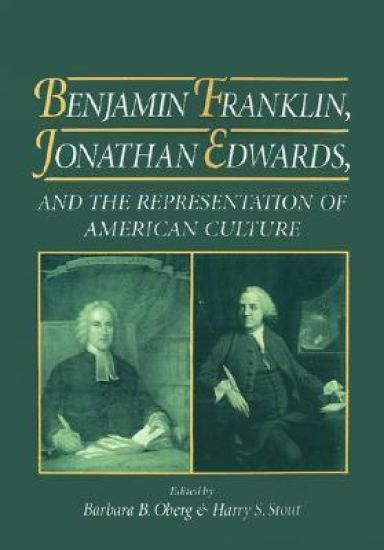
Benjamin Franklin, Jonathan Edwards, and the Representation of American Culture
This is an interdisciplinary collection of comparative essays which look at aspects of the thought of Jonathan Edwards and Benjamin Franklin and consider the place of these two men in American culture. The essays have their origin in a conference held at Yale University, the home of the modern editions of the papers of both these 18th century American thinkers. Franklin and Edwards are probably the two most studied colonial figures and have often been the subject of comparative exercises. In such studies, they have often been treated as having the characteristics of mutually exclusive ideal types and set into categories as different and opposed as `traditional' and `modern.' In the present volume, however, polemical contrasts disappear and Edwards and Franklin emerge as contrapuntal themes in a larger unity.
Benjamin Franklin and the Ends of Empire

Benjamin Franklin and the Ends of Empire

Carla J. Mulford

Oxford University Press Inc
2015
sidottu
Benjamin Franklin and the Ends of Empire provides a painstaking study of the Founding Father's stances on government, imperialism, and fiscal policy, ultimately emphasizing how his opinions on these matters evolved over the course of his lifetime. Carla Mulford uses Franklin's prodigious literary output-which includes letters, pamphlets, newspaper articles, journal entries, and drafted speeches-to demonstrate how his views shifted, with special attention to the role played by Great Britain in his decision-making process before, during, and after the Revolution. The book begins with Franklin's progressive early writings on mercantilism, freedom of conscience, and freedom of the press, considering how they were shaped by his English-born parents and their decision to leave their tumultuous homeland in the seventeenth century. Franklin's young adult and middle years, when he became heavily involved with Pennsylvania politics, see a sharply conservative shift in his attitudes toward empire and monetary policy. Mulford draws on letters and issues of Poor Richard's Almanack from these years to reveal the beginnings of a conservative turn in his thought, highlighting his surprising support for the politics of imperialism. Franklin's mature years as the colonies' chief representative and cultural ambassador in Britain and Europe form the content of the next two chapters, which elucidate Franklin's disenchantment with the British colonial administrations overseeing the Thirteen Colonies. Mining Franklin's autobiography, the book's last chapters cover Franklin's ultimate rejection of Great Britain and his condemnation of imperialism, especially with regard to Ireland and India. Overall, Mulford's monograph offers fresh, nuanced interpretations of the central issues that preoccupied Franklin throughout his life.
Benjamin Franklin Explains the Stamp ACT Protests to Parliament, 1766
Benjamin Franklin Explains the Stamp Act Protests to Parliament, 1766 brings together a unique collection of primary source documents, organized and arranged as a dialogue, to examine the issues surrounding the Stamp Act. The selections--at the center of which is Benjamin Franklin's examination in Parliament on February 13, 1766--are meant to be read as a continuous dialogue among leading colonists in America and politicians in England. While the individual documents were separated in time and space, here they are reconstituted as part of a consistent whole--a trans-Atlantic conversation about the nature of the empire, the rights of the colonists, and the powers of Parliament at a critical moment in American and British history. Some liberty has been taken in their editing in order to emphasize this conversational quality. A chronology preceding the documents indicates the sequence of their production, and a bibliographical essay at the end of the documents directs students to useful secondary sources.
Benjamin Franklin, Pennsylvania, and the First Nations
British colonial relations with the native peoples of eastern North AmericaThis is an annotated edition of the treaties between the British colonies and Indian nations, originally printed and sold by Benjamin Franklin. Last published in 1938, Benjamin Franklin, Pennsylvania, and the First Nations makes these important treaties available once again, featuring a simpler, easier-to-read format, extensive explanatory notes, and maps. A detailed introduction by Susan Kalter puts the treaties in their proper historical and cultural context. This carefully researched edition shows these treaties to be complex intercultural documents, and provides significant insight into the British colonists’ relationship with native peoples of North America. They also reveal the complexity of Benjamin Franklin’s perceptions of Native Americans, showing him in some negotiations as a promoter of the Indian word against the colonial one. Finally, the treaties offer an enormous wealth of linguistic, aesthetic, and cultural information about the Iroquois, the Delawares, and their allies and neighbors.
Benjamin Franklin and His Gods

Benjamin Franklin and His Gods

Kerry S. Walters

University of Illinois Press
1998
nidottu
Against the religious backdrop of pre- and postcolonial America stands the towering figure--and mind--of Benjamin Franklin. A Renaissance man in a Revolutionary time, Franklin had interests and knowledge not only in religion but in literature, philosophy, politics, publishing, history, and scientific inquiry, among many other disciplines. Kerry S. Walters examines Franklin's search for the Divine using a similar, multifaceted approach--and in so doing has created the first extended treatment of Franklin's religious thought in thirty years. Walters brings the same intellectual range and depth to the understanding of Franklin's beliefs that Franklin brought to his own quest. What emerges from this pilgrimage into the soul of one of America's greatest figures is a very human Benjamin Franklin who grew with the accumulation of knowledge to arrive at a "theistic perspectivism," which provided him with a philosophical explanation for the diversity of religious faiths--and a justification for the liberty of conscience he advocated throughout his life. Benjamin Franklin and His Gods is an original and beautifully challenging spiritual and intellectual biography. Destined to be a classic.
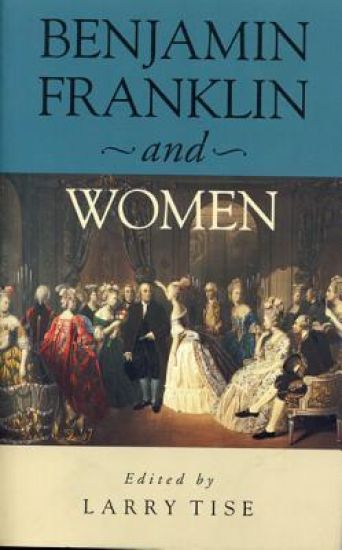
Benjamin Franklin and Women

Benjamin Franklin and Women

Pennsylvania State University Press
2000
sidottu
Benjamin Franklin was undoubtedly one of the most important arbiters of American culture and society at the time of the Revolution, when the young nation was establishing its constitutions, laws, and civil institutions. Franklin also played a major role in defining a new and important role for women in this society. This volume brings together a distinguished group of scholars who are either authorities on Franklin or on the role of women in the eighteenth century to adjudge the record and intentions of Franklin in this most vulnerable facet of his character, life, and place in history. The essays in this volume grew out of a symposium organized by Tise at the Franklin Institute in Philadelphia. They fall into two groups, those that examine Benjamin Franklin’s relationship with women (sisters, relatives, love interests, and friends) and those that explore more generally the role of women in Franklin’s era. Topics addressed include Franklin’s theories on relations between men and women, the nature of marriage, the dangers as well as the delights of sex, and the importance of education for men and women.