Kirjojen hintavertailu. Mukana 11 342 296 kirjaa ja 12 kauppaa.

Kirjahaku

Etsi kirjoja tekijän nimen, kirjan nimen tai ISBN:n perusteella.

1000 tulosta hakusanalla C-Rene Dominique

Collected Works of C. G. Jung, Volume 6: Psychological Types
One of the most important of Jung's longer works, and probably the most famous of his books, Psychological Types appeared in German in 1921 after a "fallow period" of eight years during which Jung had published little. He called it "the fruit of nearly twenty years' work in the domain of practical psychology," and in his autobiography he wrote: "This work sprang originally from my need to define the ways in which my outlook differed from Freud's and Adler's. In attempting to answer this question, I came across the problem of types; for it is one's psychological type which from the outset determines and limits a person's judgment. My book, therefore, was an effort to deal with the relationship of the individual to the world, to people and things. It discussed the various aspects of consciousness, the various attitudes the conscious mind might take toward the world, and thus constitutes a psychology of consciousness regarded from what might be called a clinical angle." In expounding his system of personality types Jung relied not so much on formal case data as on the countless impressions and experiences derived from the treatment of nervous illnesses, from intercourse with people of all social levels, "friend and foe alike," and from an analysis of his own psychological nature. The book is rich in material drawn from literature, aesthetics, religion, and philosophy. The extended chapters that give general descriptions of the types and definitions of Jung's principal psychological concepts are key documents in analytical psychology.
C.G. Jung Speaking

C.G. Jung Speaking

William McGuire; R. F. C. (EDT) Hull

Princeton University Press
1987
pokkari
A collection of journalistic interviews which span Jung's lifetime. This book captures his personality and spirit in more than 50 accounts of talks and meetings with him. They range from transcripts of interviews for radio, television, and film to memoirs written by notable personalities.
The Basic Writings of C.G. Jung: Revised Edition

The Basic Writings of C.G. Jung: Revised Edition

C. G. Jung

PRINCETON UNIVERSITY PRESS
1991
nidottu
In exploring the manifestations of human spiritual experience both in the imaginative activities of the individual and in the formation of mythologies and of religious symbolism in various cultures, C. G. Jung laid the groundwork for a psychology of the spirit. The excerpts here illuminate the concept of the unconscious, the central pillar of his work, and display ample evidence of the spontaneous spiritual and religious activities of the human mind. This compact volume will serve as an ideal introduction to Jung's basic concepts. Part I of this book, "On the Nature and Functioning of the Psyche," contains material from four works: "Symbols of Transformation," "On the Nature of the Psyche," "The Relations between the Ego and the Unconscious," and "Psychological Types." Also included in Part I are "Archetypes of the Collective Unconscious" and "Psychological Aspects of the Mother Archetype." Part II, "On Pathology and Therapy," includes "On the Nature of Dreams," "On the Pathogenesis of Schizophrenia," and selections from "Psychology of the Transference." In Part III appear "Introduction to the Religious and Psychological Problems of Alchemy" and two sections of "Psychology and Religion." Part IV, called "On Human Development," consists of the essay "Marriage as a Psychological Relationship."
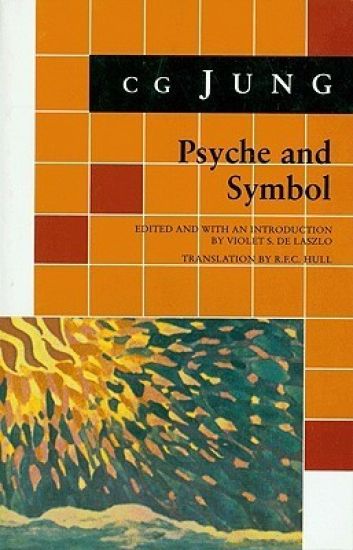
Psyche and Symbol: A Selection from the Writings of C.G. Jung
The archetypes of human experience which derive from the deepest unconscious mind and reveal themselves in the universal symbols of art and religion as well as in the individual symbolic creations of particular people are, for C. G. Jung, the key to the cure of souls, the cornerstone of his therapeutic work. This volume explains the function and origin of these symbols. Here the reader will find not only a general orientation to Jung's point of view but extensive studies of the symbolic process and its integrating function in human psychology as it is reflected in the characteristic spiritual productions of Europe and Asia. Violet de Laszlo has selected for inclusion in Psyche and Symbol five selections from Aion: The Ego, The Shadow, The Syzygy: Anima and Animus, The Self, and Christ, A Symbol of the Self. The book continues with The Phenomenology of the Spirit in Fairy Tales, The Psychology of the Child Archetype, and Transformation Symbolism in the Mass. Also included are the foreword to the Cary Banes translation of the I Ching, two chapters from Synchronicity: An Acausal Connecting Principle, Psychological Commentary on The Tibetan Book of the Dead, and Commentary on The Secret of the Golden Flower.
C*-Algebra Extensions and K-Homology

C*-Algebra Extensions and K-Homology

Ronald G. Douglas

Princeton University Press
1980
pokkari
Recent developments in diverse areas of mathematics suggest the study of a certain class of extensions of C*-algebras. Here, Ronald Douglas uses methods from homological algebra to study this collection of extensions. He first shows that equivalence classes of the extensions of the compact metrizable space X form an abelian group Ext (X). Second, he shows that the correspondence X ? Ext (X) defines a homotopy invariant covariant functor which can then be used to define a generalized homology theory. Establishing the periodicity of order two, the author shows, following Atiyah, that a concrete realization of K-homology is obtained.
C.G. Jung Letters, Volume 2: 1951-1961

C.G. Jung Letters, Volume 2: 1951-1961

C. G. Jung

PRINCETON UNIVERSITY PRESS
1976
sidottu
Beginning with Jung's earliest correspondence to associates of the psychoanalytic period and ending shortly before his death, the 935 letters selected for these two volumes offer a running commentary on his creativity. The recipients of the letters include Mircea Eliade, Sigmund Freud, Esther Harding, James Joyce, Karl Kernyi, Erich Neumann, Maud Oakes, Herbert Read, Upton Sinclair, and Father Victor White.
Collected Works of C. G. Jung, Volume 9 (Part 2): Aion: Researches Into the Phenomenology of the Self
An investigation of the symbolism of the self Aion, originally published in German in 1951, is one of the major works of Jung's later years. The central theme of the volume is the symbolic representation of the psychic totality through the concept of the Self, whose traditional historical equivalent is the figure of Christ. Jung demonstrates his thesis by an investigation of the Allegoria Christi, especially the fish symbol, but also of Gnostic and alchemical symbolism, which he treats as phenomena of cultural assimilation. The first three chapters--on the ego, the shadow, and the anima and animus--provide a valuable summation of these key concepts in Jung's system of psychology.
The Collected Works of C. G. Jung, Volume 9 (Part 1): Archetypes and the Collective Unconscious
A collection of some of Jung's most important essays on the archetypes and the collective unconscious The Archetypes and the Collective Unconscious features many of Jung's most important essays describing and elaborating on these two central, related concepts. The contents are: Archetypes of the Collective Unconscious (1934)The Concept of the Collective Unconscious (1936)Concerning the Archetypes, with Special Reference to the Anima Concept (1936)Psychological Aspects of the Mother Archetype (1938)Concerning Rebirth (1939)The Psychology of the Child Archetype (1940)The Psychological Aspects of the Kore (1941)The Phenomenology of the Spirit in Fairytales (1945)On the Psychology of the Trickster-Figure (1954)Conscious, Unconscious, and Individuation (1939)A Study in the Process of Individuation (1933)Concerning Mandala Symbolism (1950)
Collected Works of C. G. Jung, Volume 10: Civilization in Transition
An authoritative collection of Jung's writings on contemporary events, including The Undiscovered Self and Flying Saucers Civilization in Transition features Jung's writings on contemporary events, especially the relation between the individual and society. In the earliest essay, "The Role of the Unconscious" (1918), Jung advanced the theory that World War I was a psychological crisis originating in the collective unconscious of individuals. In other essays included here, he pursued this theory in the 1920s and 1930s, focusing on the upheaval in Germany, and he gave it a much wider application in two major works of his last years, also featured here--Flying Saucers, which is about the birth of a myth that Jung regarded as a reaction to the scientific trends of a technological era, and The Undiscovered Self.
Collected Works of C. G. Jung, Volume 4: Freud and Psychoanalysis
The authoritative edition of Jung's essential writings for understanding his early enthusiasm for--and later split with--Freud and psychoanalysis Freud and Psychoanalysis gathers Jung's writings on Freud and psychoanalysis published between 1906 and 1916, along with two later, related papers. The book covers the period of the enthusiastic collaboration between the two pioneers of psychology through the years when Jung's growing appreciation of religious experience, his criticism of Freud's emphasis on pathology, and other differences led to Jung's formal break with his mentor. Part I features brief studies of Freud's theory of hysteria, dream analysis, the psychology of rumor, and other subjects. Parts II and III contain the essentials of the criticism that led to Jung's rupture with Freud, the most important of which is "The Theory of Psychoanalysis." Part IV presents "The Significance of the Father in the Destiny of the Individual." The book's final two pieces, "Freud and Jung: Contrasts" and the introduction to a book by W. M. Kranefeldt, further illuminate Jung's reassessment of psychoanalysis.
Collected Works of C. G. Jung, Volume 3: The Psychogenesis of Mental Disease
The authoritative edition of some of Jung's most important writings on psychiatry The Psychogenesis of Mental Disease presents some of Jung's most important writings on psychiatry, including "On the Psychology of Dementia Praecox," his landmark early study of what is today called schizophrenia. Also featured here are nine other key papers in psychiatry, the earliest being "The Content of the Psychoses," written in 1908, when Jung was a leading member of the early psychoanalytic movement. The latest are two papers written in 1956 and 1958, which embody Jung's conclusions after many years of experience in the psychotherapy of schizophrenia. These writings reflect the original techniques with which Jung is especially associated.