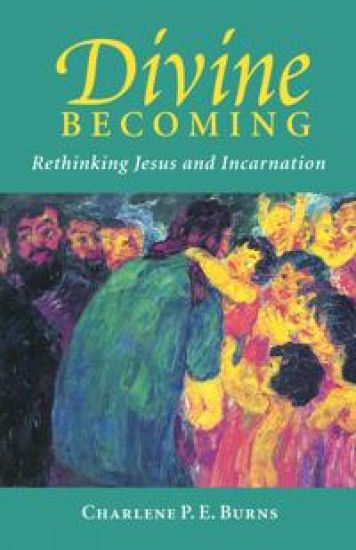
The universally human element of Jesus' incarnation Despite the feverish pace of publishing in historical Jesus studies, biblical scholars and theologians have not notably progressed in addressing the meaning and significance of the figure of Jesus in ways credible for contemporary persons. In this creative and insightful work, Burns seeks to understand the significance of Jesus and his incarnation through the category of participation. The central theological claims in the traditional concept of incarnation are anchored and illumined by Jesus' particular ability for empathy, sympathy, attunement, and entrainment. This notion, derived from the psychological research of Daniel Stern, allows Burns to show that incarnation - the capacity to participate in the life of others - is present not only in Jesus but to some extent in all people and in all religions. It further illumines features of God's trinitarian life and our lifelong journey into God (deification).
"A monument of careful yet easily usable scholarship. The formal legislative record always needs to be supplemented by the evidence of personal correspondence. This correspondence is in its own important way a memorial to a crucial moment in the translation of the constitution from founding text into functioning document, because it helped to establish the links necessary to maintain loyalty to the new government. The completion of the DHFFC will fill in one of the most exciting and momentous chapters in American political history."--Jack Rakove, Stanford University. "One of the most imaginative and valuable editorial projects ever undertaken for any aspect of American history."--John M. Murrin, Princeton University "A wealth of materials. For the first time, a significant part of the early history of Congress will be made accessible to legal scholars, a fact that I believe will significantly inform their discourse."--Christine Desan, Harvard University Law School
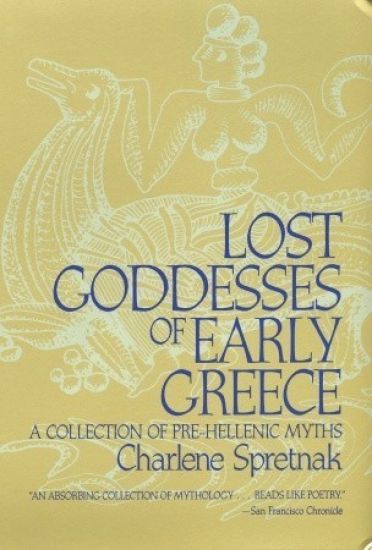
For thousands of years before the classical myths were recorded by Hesiod and Homer, the Goddess was the focus of religion and culture. In Lost Goddesses of Early Greece, Charlene Spretnak recreates, the original, goddess-centered myths and illuminates the contemporary emergence of a spirituality based on our embeddedness in nature.
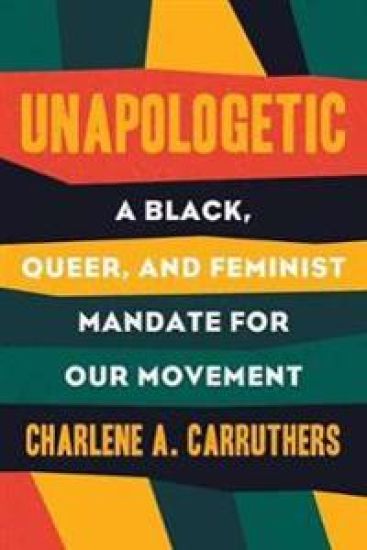
A manifesto from one of America's most influential activists which disrupts political, economic, and social norms by reimagining the Black Radical Tradition. Drawing on Black intellectual and grassroots organizing traditions, including the Haitian Revolution, the US civil rights movement, and LGBTQ rights and feminist movements, Unapologetic challenges all of us engaged in the social justice struggle to make the movement for Black liberation more radical, more queer, and more feminist. This book provides a vision for how social justice movements can become sharper and more effective through principled struggle, healing justice, and leadership development. It also offers a flexible model of what deeply effective organizing can be, anchored in the Chicago model of activism, which features long-term commitment, cultural sensitivity, creative strategizing, and multiple cross-group alliances. And Unapologetic provides a clear framework for activists committed to building transformative power, encouraging young people to see themselves as visionaries and leaders.
A manifesto from one of America's most influential activists which disrupts political, economic, and social norms by reimagining the Black Radical Tradition. Drawing on Black intellectual and grassroots organizing traditions, including the Haitian Revolution, the US civil rights movement, and LGBTQ rights and feminist movements, Unapologetic challenges all of us engaged in the social justice struggle to make the movement for Black liberation more radical, more queer, and more feminist. This book provides a vision for how social justice movements can become sharper and more effective through principled struggle, healing justice, and leadership development. It also offers a flexible model of what deeply effective organizing can be, anchored in the Chicago model of activism, which features long-term commitment, cultural sensitivity, creative strategizing, and multiple cross-group alliances. And Unapologetic provides a clear framework for activists committed to building transformative power, encouraging young people to see themselves as visionaries and leaders.
Independence Hall is a place Americans think they know well. Within its walls the Continental Congress declared independence in 1776, and in 1787 the Founding Fathers drafted the U.S. Constitution there. Painstakingly restored to evoke these momentous events, the building appears to have passed through time unscathed, from the heady days of the American Revolution to today. But Independence Hall is more than a symbol of the young nation. Beyond this, according to Charlene Mires, it has a long and varied history of changing uses in an urban environment, almost all of which have been forgotten. In Independence Hall, Mires rediscovers and chronicles the lost history of Independence Hall, in the process exploring the shifting perceptions of this most important building in America's popular imagination. According to Mires, the significance of Independence Hall cannot be fully appreciated without assessing the full range of political, cultural, and social history that has swirled about it for nearly three centuries. During its existence, it has functioned as a civic and cultural center, a political arena and courtroom, and a magnet for public celebrations and demonstrations. Artists such as Thomas Sully frequented Independence Square when Philadelphia served as the nation's capital during the 1790s, and portraitist Charles Willson Peale merged the arts, sciences, and public interest when he transformed a portion of the hall into a center for natural science in 1802. In the 1850s, hearings for accused fugitive slaves who faced the loss of freedom were held, ironically, in this famous birthplace of American independence. Over the years Philadelphians have used the old state house and its public square in a multitude of ways that have transformed it into an arena of conflict: labor grievances have echoed regularly in Independence Square since the 1830s, while civil rights protesters exercised their right to free speech in the turbulent 1960s. As much as the Founding Fathers, these people and events illuminate the building's significance as a cultural symbol.
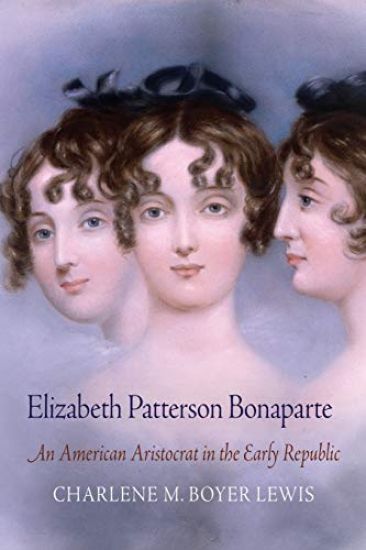
Two centuries ago, Elizabeth Patterson Bonaparte was one of the most famous women in America. Beautiful, scandalous, and outspoken, she had wed Napoleon's brother Jerome, borne his child, and seen the marriage annulled by the emperor himself. With her notorious behavior, dashing husband, and associations with European royalty, Elizabeth became one of America's first celebrities during a crucial moment in the nation's history. At the time of Elizabeth's fame, the United States had only recently gained its independence, and the character of American society and politics was not yet fully formed. Still concerned that their republican experiment might fail and that their society might become too much like that of monarchical Europe, many Americans feared the corrupting influence of European manners and ideas. Elizabeth Patterson Bonaparte's imperial connections and aristocratic aspirations made her a central figure in these debates, with many, including members of Congress and the social elites of the day, regarding her as a threat. Appraising Elizabeth Patterson Bonaparte's many identities-celebrity, aristocrat, independent woman, mother-Charlene M. Boyer Lewis shows how Madame Bonaparte, as she was known, exercised extraordinary social power at the center of the changing transatlantic world. In spite of the assumed threat that she posed to the new social and political order, Americans could not help being captivated by Elizabeth's style, beauty, and wit. She offered an alternative to the republican wife by pursuing a life of aristocratic dreams in the United States and Europe. Her story reminds us of the fragility of the American experiment in its infancy and, equally important, of the active role of women in the debates over society and culture in the early republic.
The factions debating health care reform in the United States have gravitated toward one of two positions: that just health care is an individual responsibility or that it must be regarded as a national concern. Both arguments overlook a third possibility: that justice in health care is multilayered and requires the participation of multiple and diverse communities. Communities of Health Care Justice makes a powerful ethical argument for treating communities as critical moral actors that play key roles in defining and upholding just health policy. Drawing together the key community dimensions of health care, and demonstrating their neglect in most prominent theories of health care justice, Charlene Galarneau postulates the ethical norms of community justice. In the process, she proposes that while the subnational communities of health care justice are defined by shared place, including those bound by culture, religion, gender, and race that together they define justice. As she constructs her innovative theorization of health care justice, Galarneau also reveals its firm grounding in the work of real-world health policy and community advocates. Communities of Health Care Justice not only strives to imagine a new framework of just health care, but also to show how elements of this framework exist in current health policy, and to outline the systemic, conceptual, and structural changes required to put these justice norms into fuller practice.
The factions debating health care reform in the United States have gravitated toward one of two positions: that just health care is an individual responsibility or that it must be regarded as a national concern. Both arguments overlook a third possibility: that justice in health care is multilayered and requires the participation of multiple and diverse communities. Communities of Health Care Justice makes a powerful ethical argument for treating communities as critical moral actors that play key roles in defining and upholding just health policy. Drawing together the key community dimensions of health care, and demonstrating their neglect in most prominent theories of health care justice, Charlene Galarneau postulates the ethical norms of community justice. In the process, she proposes that while the subnational communities of health care justice are defined by shared place, including those bound by culture, religion, gender, and race that together they define justice. As she constructs her innovative theorization of health care justice, Galarneau also reveals its firm grounding in the work of real-world health policy and community advocates. Communities of Health Care Justice not only strives to imagine a new framework of just health care, but also to show how elements of this framework exist in current health policy, and to outline the systemic, conceptual, and structural changes required to put these justice norms into fuller practice.
Each summer from 1790-1860, hundreds and eventually thousands of men and women left the boredom of their plantation homes and journeyed to the healthful Virginia Springs. This work states that Virginia Springs enabled men and women to play roles opposite to those associated with the plantation.
Each summer from 1790-1860, hundreds and eventually thousands of men and women left the boredom of their plantation homes and journeyed to the healthful Virginia Springs. This work states that Virginia Springs enabled men and women to play roles opposite to those associated with the plantation.
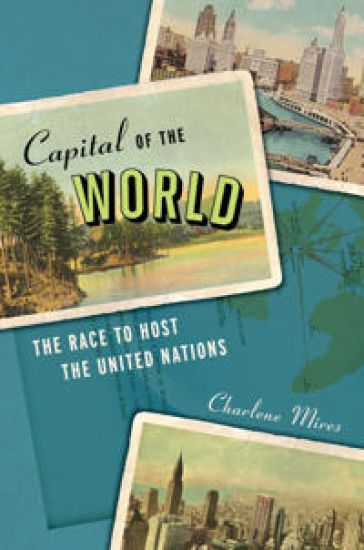
From 1944 to 1946, as the world pivoted from the Second World War to an unsteady peace, Americans in more than two hundred cities and towns mobilized to chase an implausible dream. The newly-created United Nations needed a meeting place, a central place for global diplomacy—a Capital of the World. But what would it look like, and where would it be? Without invitation, civic boosters in every region of the United States leapt at the prospect of transforming their hometowns into the Capital of the World. The idea stirred in big cities—Chicago, San Francisco, St. Louis, New Orleans, Denver, and more. It fired imaginations in the Black Hills of South Dakota and in small towns from coast to coast. Meanwhile, within the United Nations the search for a headquarters site became a debacle that threatened to undermine the organization in its earliest days. At times it seemed the world's diplomats could agree on only one thing: under no circumstances did they want the United Nations to be based in New York. And for its part, New York worked mightily just to stay in the race it would eventually win. With a sweeping view of the United States' place in the world at the end of World War II, Capital of the World tells the dramatic, surprising, and at times comic story of hometown promoters in pursuit of an extraordinary prize and the diplomats who struggled with the balance of power at a pivotal moment in history.
Comparing High-Performing Education Systems provides original insights into the educational structures, ideologies, policies, and practices in Singapore, Shanghai, and Hong Kong. Taking as its basis their global reputation and consistently strong performance in formal assessments, the author provides an in-depth analysis and comparison of these three education systems that draws on cutting-edge research. Chapters explore the dominant cultural and educational norms in Singapore, Shanghai, and Hong Kong to give a wider picture of these high-performing education systems. The performance of students in international large-scale assessments such as Programme for International Student Assessment (PISA), Trends in International Mathematics and Science Study (TIMSS), and Progress in International Reading Literacy Study (PIRLS) is considered, alongside an exploration of attitudes to schooling, tutoring, and assessment. The book shows how Singapore, Shanghai, and Hong Kong exemplify an East Asian Educational Model (EAEM). Such a model – is rooted in and shaped by Confucian habitus: unconscious and ingrained worldviews, dispositions, and habits that reflect the standards of appropriateness in a Confucian Heritage Culture; aspires high performance: a balance between academic excellence and holistic development; and utilises educational harmonisation: the art of bringing together different and contradictory means and ends to achieve desired educational outcomes. Informative and thought-provoking, this book is a useful reference for policymakers, researchers, educators, and general readers on high-performing education systems, school reforms in East Asia, Confucian influences on education, and cross-cultural policy learning and transfer.
Comparing High-Performing Education Systems provides original insights into the educational structures, ideologies, policies, and practices in Singapore, Shanghai, and Hong Kong. Taking as its basis their global reputation and consistently strong performance in formal assessments, the author provides an in-depth analysis and comparison of these three education systems that draws on cutting-edge research. Chapters explore the dominant cultural and educational norms in Singapore, Shanghai, and Hong Kong to give a wider picture of these high-performing education systems. The performance of students in international large-scale assessments such as Programme for International Student Assessment (PISA), Trends in International Mathematics and Science Study (TIMSS), and Progress in International Reading Literacy Study (PIRLS) is considered, alongside an exploration of attitudes to schooling, tutoring, and assessment. The book shows how Singapore, Shanghai, and Hong Kong exemplify an East Asian Educational Model (EAEM). Such a model – is rooted in and shaped by Confucian habitus: unconscious and ingrained worldviews, dispositions, and habits that reflect the standards of appropriateness in a Confucian Heritage Culture; aspires high performance: a balance between academic excellence and holistic development; and utilises educational harmonisation: the art of bringing together different and contradictory means and ends to achieve desired educational outcomes. Informative and thought-provoking, this book is a useful reference for policymakers, researchers, educators, and general readers on high-performing education systems, school reforms in East Asia, Confucian influences on education, and cross-cultural policy learning and transfer.
Visualizing Genocide examines how creative arts and memory institutions selectively commemorate or often outright ignore stark histories of colonialism. The essays confront outdated narratives and institutional methods by investigating contemporary artistic and scholarly interventions documenting settler colonialisms including land theft, incarceration, intergenerational trauma, and genocide. Interdisciplinary approaches, including oral histories, exhibition practices, artistic critiques, archival investigations, and public arts, are among the many decolonizing methods incorporated in contemporary curatorial practices. Rather than dwelling simply in celebratory appraisals of Indigenous survival, this unprecedented volume tracks how massacres, disease, removals, abrogated treaties, religious intolerance, theft of land, and relocation are conceived by contemporary academics and artists. Contributors address indigeneity in the United States, Norway, Canada, Australia, and the Caribbean in scholarly essays, poems, and artist narratives. Missions, cemeteries, archives, exhibitions, photography, printmaking, painting, installations, performance, music, and museums are documented by fourteen authors from a variety of disciplines and illustrated with forty-three original artworks. The authors offer honest critique, but in so doing they give hopeful and concrete strategies for the future. This powerful collection of voices employs Indigenous epistemologies and decolonial strategies, providing essential perspectives on art and visual culture. T. Christopher Aplin Emily Arthur Marwin Begaye Charlene VillaseÑor Black Yve Chavez Iris Colburn Ellen Fernandez-SaccoStephen Gilchrist John Hitchcock Michelle J. Lanteri JÉrÉmie McGowanNancy Marie Mithlo Anne May OlliEmily Voelker Richard Ray Whitman
Visualizing Genocide examines how creative arts and memory institutions selectively commemorate or often outright ignore stark histories of colonialism. The essays confront outdated narratives and institutional methods by investigating contemporary artistic and scholarly interventions documenting settler colonialisms including land theft, incarceration, intergenerational trauma, and genocide. Interdisciplinary approaches, including oral histories, exhibition practices, artistic critiques, archival investigations, and public arts, are among the many decolonizing methods incorporated in contemporary curatorial practices. Rather than dwelling simply in celebratory appraisals of Indigenous survival, this unprecedented volume tracks how massacres, disease, removals, abrogated treaties, religious intolerance, theft of land, and relocation are conceived by contemporary academics and artists. Contributors address indigeneity in the United States, Norway, Canada, Australia, and the Caribbean in scholarly essays, poems, and artist narratives. Missions, cemeteries, archives, exhibitions, photography, printmaking, painting, installations, performance, music, and museums are documented by fourteen authors from a variety of disciplines and illustrated with forty-three original artworks. The authors offer honest critique, but in so doing they give hopeful and concrete strategies for the future. This powerful collection of voices employs Indigenous epistemologies and decolonial strategies, providing essential perspectives on art and visual culture. T. Christopher Aplin Emily Arthur Marwin Begaye Charlene VillaseÑor Black Yve Chavez Iris Colburn Ellen Fernandez-SaccoStephen Gilchrist John Hitchcock Michelle J. Lanteri JÉrÉmie McGowanNancy Marie Mithlo Anne May OlliEmily Voelker Richard Ray Whitman