Kirjojen hintavertailu. Mukana 12 555 895 kirjaa ja 12 kauppaa.

Kirjahaku

Etsi kirjoja tekijän nimen, kirjan nimen tai ISBN:n perusteella.

1000 tulosta hakusanalla Christopher W Mitchell

The Trustee Governance Guide

The Trustee Governance Guide

Christopher K. Merker; Sarah W. Peck

Springer Nature Switzerland AG
2019
sidottu
More than 80% of the financial assets in the United States fall under the purview of a trustee. That's a big responsibility for an estimated 1% (around 1.5 million people) of the U.S. working population charged with overseeing investments for millions and millions of beneficiaries, public sector, and non-profit organizations. In a world proliferated by investment products, increasingly dominated by indexes, faced—particularly in the pension world—with increasing liabilities, more regulation, and a growing number of social and sustainability objectives, what's a trustee to do?The Trustee Governance Guide is here to help guide today’s board trustee through the brave new world of 21st century investing. The book focuses on the critical aspects of the Five Imperatives: Governance, Knowledge, Diversification, Discipline, and Impact. Based on more than a decade of research, practice, and discussions with many key decision makers and influencers across the industry, this book addresses the many topics related to better governance, greater mission-driven financial performance, and impact. The questions the book addresses include: · What is good governance, how do we know it when we see it, and why does it matter?· How much knowledge is necessary to be a competent board member?· How big should my endowment be?· What are the key elements of a diversified portfolio?· How much does cost matter?· What's the difference between socially responsible and ESG investing?· Can I focus on sustainability and still be a good fiduciary? This book provides a way for boards to improve and benchmark their own governance performance alongside their peers, and uniquely covers related investment topics in each chapter.
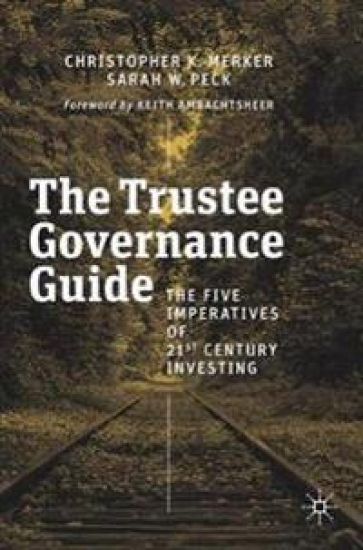
The Trustee Governance Guide

The Trustee Governance Guide

Christopher K. Merker; Sarah W. Peck

Springer Nature Switzerland AG
2020
nidottu
More than 80% of the financial assets in the United States fall under the purview of a trustee. That's a big responsibility for an estimated 1% (around 1.5 million people) of the U.S. working population charged with overseeing investments for millions and millions of beneficiaries, public sector, and non-profit organizations. In a world proliferated by investment products, increasingly dominated by indexes, faced—particularly in the pension world—with increasing liabilities, more regulation, and a growing number of social and sustainability objectives, what's a trustee to do?The Trustee Governance Guide is here to help guide today’s board trustee through the brave new world of 21st century investing. The book focuses on the critical aspects of the Five Imperatives: Governance, Knowledge, Diversification, Discipline, and Impact. Based on more than a decade of research, practice, and discussions with many key decision makers and influencers across the industry, this book addresses the many topics related to better governance, greater mission-driven financial performance, and impact. The questions the book addresses include: · What is good governance, how do we know it when we see it, and why does it matter?· How much knowledge is necessary to be a competent board member?· How big should my endowment be?· What are the key elements of a diversified portfolio?· How much does cost matter?· What's the difference between socially responsible and ESG investing?· Can I focus on sustainability and still be a good fiduciary? This book provides a way for boards to improve and benchmark their own governance performance alongside their peers, and uniquely covers related investment topics in each chapter.

Towards a Science of International Arbitration: Collected Empirical Research

Towards a Science of International Arbitration: Collected Empirical Research

Richard W. Naimark; Christopher R. Drahozal

Kluwer Law International
2005
sidottu
Most books on international commercial arbitration approach the subject through legal theory supported by anecdotal evidence. This remarkable book is distinguished by its focus on the application of quantitative empirical research to the study of international arbitration. It collects, together with commentary, the existing empirical literature on the subject, and also presents several studies published here for the first time. Written in an easily accessible, non-technical manner, Towards a Science of International Arbitration provides the starting point for future empirical research on international arbitration by collecting the existing empirical literature in one place and by suggesting possible topics for research.
The God I Don't Understand

The God I Don't Understand

Christopher J. H. Wright; John R. W. Stott

Zondervan
2016
nidottu
Many Christians believe that they have to understand everything about their faith for that faith to be genuine. This isn't true.There are many things we don't understand about God, His Word, and His works. And this is actually one of the greatest things about the Christian faith: that there are areas of mystery that lie beyond the keenest scholarship or even the most profound spiritual exercises. Sadly, for many people these problems raise so many questions and uncertainties that faith itself becomes a struggle.But questions, and even doubts, are part of faith.Chris Wright encourages us to face the limitations of our understanding and to acknowledge the pain and grief they can often cause. In The God I Don't Understand, he focuses on four of the most mysterious subjects in the Bible and reflects upon why it's important to ask questions without having to provide the answer:The problem of evil and suffering.The genocide of the Canaanites.The cross and the crucifixion.The end of the world. "However strongly we believe in divine revelation, we must acknowledge both that God has not revealed everything and that much of what he has revealed is not plain. It is because Dr. Wright confronts biblical problems with a combination of honesty and humility that I warmly commend this book." —John Stott
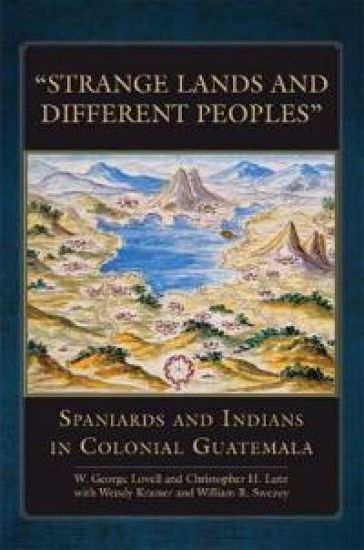
Strange Lands and Different Peoples

Strange Lands and Different Peoples

W. George Lovell; Christopher H. Lutz

University of Oklahoma Press
2013
sidottu
Guatemala emerged from the clash between Spanish invaders and Maya cultures that began five centuries ago. The conquest of these ""rich and strange lands,"" as Hernán Cortés called them, and their ""many different peoples"" was brutal and prolonged. ""Strange Lands and Different Peoples"" examines the myriad ramifications of Spanish intrusion, especially Maya resistance to it and the changes that took place in native life because of it. The studies assembled here, focusing on the first century of colonial rule (1524-1624), discuss issues of conquest and resistance, settlement and colonization, labor and tribute, and Maya survival in the wake of Spanish invasion. The authors reappraise the complex relationship between Spaniards and Indians, which was marked from the outset by mutual feelings of resentment and mistrust. While acknowledging the pivotal role of native agency, the authors also document the excesses of Spanish exploitation and the devastating impact of epidemic disease. Drawing on research findings in Spanish and Guatemalan archives, they offer fresh insight into the Kaqchikel Maya uprising of 1524, showing that despite strategic resistance, colonization imposed a burden on the indigenous population more onerous than previously thought. Guatemala remains a deeply divided and unjust society, a country whose current condition can be understood only in light of the colonial experiences that forged it. Affording readers a critical perspective on how Guatemala came to be, ""Strange Lands and Different Peoples"" shows the events of the past to have enduring contemporary relevance.
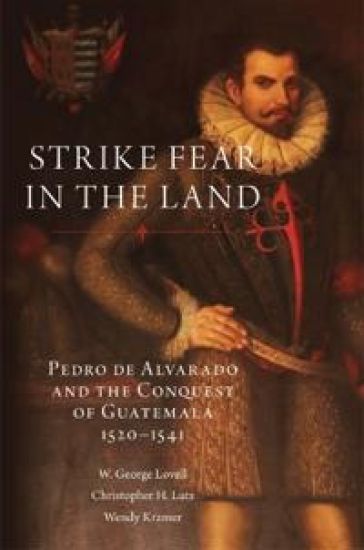
Strike Fear in the Land

Strike Fear in the Land

W. George Lovell; Christopher H. Lutz; Wendy Kramer

University of Oklahoma Press
2020
sidottu
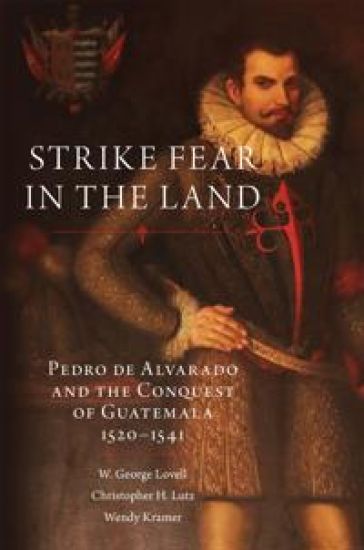
The conquest of Guatemala was brutal, prolonged and complex, fraught with intrigue and deception, and not at all clear-cut. Yet views persist of it as an armed confrontation whose stakes were evident and whose outcomes were decisive, especially in favor of the Spaniards. A critical reappraisal is long overdue, one that calls for us to reconsider events and circumstances in the light of not only new evidence but also keener awareness of indigenous roles in the drama. While acknowledging the prominent role played by Pedro de Alvarado (1485-1541), Strike Fear in the Land reexamines the conquest to give us a greater appreciation of indigenous involvement in it, and sustained opposition to it. Authors W. George Lovell, Christopher H. Lutz, and Wendy Kramer develop a fresh perspective on Alvarado as well as the alliances forged with native groups that facilitated Spanish objectives. The book reveals, for instance, that during the years most crucial to the conquest, Alvarado was absent from Guatemala more often than he was present; he relied on his brother, Jorge de Alvarado, to act in his stead. A pact with the Kaqchikel Maya was also not nearly as solid or long-lived as previously thought, as Alvarado's erstwhile allies soon turned against the Spaniards, fomenting a prolonged rebellion. Even the story of the K'iche' leader Tecún Umán, hailed in Guatemala as a national hero who fronted native resistance, undergoes significant revision.Strike Fear in the Land is an arresting saga of personalities and controversies, conveying as never before the turmoil of this pivotal period in Mesoamerican history.
Strange Lands and Different Peoples

Strange Lands and Different Peoples

W. George Lovell; Christopher H. Lutz

University of Oklahoma Press
2021
nidottu
Guatemala emerged from the clash between Spanish invaders and Maya cultures that began five centuries ago. The conquest of these 'rich and strange lands,' as Hernán Cortés called them, and their 'many different peoples' was brutal and prolonged. 'Strange Lands and Different Peoples' examines the myriad ramifications of Spanish intrusion, especially Maya resistance to it and the changes that took place in native life because of it. The studies assembled here, focusing on the first century of colonial rule (1524-1624), discuss issues of conquest and resistance, settlement and colonization, labor and tribute, and Maya survival in the wake of Spanish invasion. The authors reappraise the complex relationship between Spaniards and Indians, which was marked from the outset by mutual feelings of resentment and mistrust. While acknowledging the pivotal role of native agency, the authors also document the excesses of Spanish exploitation and the devastating impact of epidemic disease. Drawing on research findings in Spanish and Guatemalan archives, they offer fresh insight into the Kaqchikel Maya uprising of 1524, showing that despite strategic resistance, colonization imposed a burden on the indigenous population more onerous than previously thought. Guatemala remains a deeply divided and unjust society, a country whose current condition can be understood only in light of the colonial experiences that forged it. Affording readers a critical perspective on how Guatemala came to be, 'Strange Lands and Different Peoples' shows the events of the past to have enduring contemporary relevance.
Strike Fear in the Land

Strike Fear in the Land

W. George Lovell; Christopher H. Lutz; Wendy Kramer

UNIVERSITY OF OKLAHOMA PRESS
2022
nidottu
The conquest of Guatemala was brutal, prolonged and complex, fraught with intrigue and deception, and not at all clear-cut. Yet views persist of it as an armed confrontation whose stakes were evident and whose outcomes were decisive, especially in favor of the Spaniards. A critical reappraisal is long overdue, one that calls for us to reconsider events and circumstances in the light of not only new evidence but also keener awareness of indigenous roles in the drama. While acknowledging the prominent role played by Pedro de Alvarado (1485–1541), Strike Fear in the Land reexamines the conquest to give us a greater appreciation of indigenous involvement in it, and sustained opposition to it. Authors W. George Lovell, Christopher H. Lutz, and Wendy Kramer develop a fresh perspective on Alvarado as well as the alliances forged with native groups that facilitated Spanish objectives. The book reveals, for instance, that during the years most crucial to the conquest, Alvarado was absent from Guatemala more often than he was present; he relied on his brother, Jorge de Alvarado, to act in his stead. A pact with the Kaqchikel Maya was also not nearly as solid or long-lived as previously thought, as Alvarado’s erstwhile allies soon turned against the Spaniards, fomenting a prolonged rebellion. Even the story of the K’iche’ leader TecÚn UmÁn, hailed in Guatemala as a national hero who fronted native resistance, undergoes significant revision.Strike Fear in the Land is an arresting saga of personalities and controversies, conveying as never before the turmoil of this pivotal period in Mesoamerican history.
Landscapes And Hydrology Of The Predrainage Everglades

Landscapes And Hydrology Of The Predrainage Everglades

Christopher McVoy; Winifred Park Said; Jayantha Obeysekera; Joel VanArman; Thomas W. Dreschel

University Press of Florida
2011
sidottu
"A magnificent undertaking in historical detective work, or 'forensic ecology' in the authors' words. The book will totally reset our way of envisioning the Everglades."--Peter Stone, South Carolina Department of Health and Environmental Control"Represents a landmark in the study of historical ecology in South Florida. It is a must-read for hydrologists, ecologists, policy makers, and managers involved in restoration ecology."--William F. Loftus, retired, Department of InteriorFlorida is in the midst of a colossal multi-billion dollar project to restore the Everglades, a flowing, patterned wetland, once larger than Delaware and Rhode Island combined. This comprehensive plan has been clouded by politics and, more important, challenged by the absence of a clear "original conditions" yardstick against which to measure restoration progress.A group of experts at the South Florida Water Management District have united in an effort to mitigate this dilemma. Using survey notes, historical maps, photos, and firsthand descriptions, they have reconstructed a vivid ecological--and hydrological--picture of the Everglades of the 1800s, before drainage of the swamp drastically altered the landscape. Painstaking documentation and cross-verification of the historic sources (included on a DVD) allow the reader a front-seat view of the process of "forensic" reconstruction.Landscapes and Hydrology of the Predrainage Everglades advances the science behind Everglades restoration. This landmark work offers an invaluable lens for scientists and policy-makers into the technical aspects of this massive wetland. The work is equally accessible to the layperson, gathering in one volume the many and varied voices of the first Europeans to set foot in the Everglades.Christopher McVoy is a soil physicist and wetland ecologist. Winifred Park Said is a botanist, modeler, and environmental planner. Jayantha Obeysekera is a hydrologist and director of the Hydrologic and Environmental Systems Modeling Department at the South Florida Water Management District. Joel VanArman is a biologist, retired after 35 years of Everglades studies. Thomas W. Dreschel is an environmental scientist specializing in aquatic systems.
Analysis of the Cities Readiness Initiative

Analysis of the Cities Readiness Initiative

Christopher Nelson; Andrew M. Parker; Shoshana R. Shelton; Edward W. Chan; Francesca Pillemer

RAND
2012
pokkari
The Cities Readiness Initiative (CRI) aims to improve communities' ability to rapidly provide life-saving medications during public health emergencies. The authors examine (1) the status of communities' operational capability to meet the goal of delivering medical countermeasures within 48 hours of a federal decision to deploy assets and (2) whether there is evidence that CRI has improved communities' capability to meet that goal.
Hardscrabble to Hallelujah, Volume 1 Bayou Terrebonne

Hardscrabble to Hallelujah, Volume 1 Bayou Terrebonne

Christopher Everette Cenac; Carl A. Brasseaux; Donald W. Davis

JPC, LLC
2016
sidottu
This book represents the first time that the known history and a significant amount of new information has been compiled into a single written record about one of the most important eras in the south central coastal bayou parish of Terrebonne. The book makes clear the unique geographical, topographical, and sociological conditions that beckoned the first settlers who developed the large estates that became sugar plantations. This first of a planned four-volume series chronicles details about founders and their estates along Bayou Terrebonne from its headwaters in the northern civil parish to its most southerly reaches near the Gulf of Mexico. Those and other parish plantations along important waterways contributed significantly to the dominance of King Sugar in Louisiana. The rich soils and opportunities of the area became the overriding reason many well-heeled Anglo-Americans moved there to join Francophone locals in cultivating the crop. From that nineteenth century period up to the twentieth century s side effects of World Wars I and II, "Hardscrabble to Hallelujah, Volume I Bayou Terrebonne" describes important yet widely unrecognized geography and history. Today, cultural and physical legacies such as ex-slave-founded communities and place names endure from the time that the planter society was the driving economic force of this fascinating region."
The Chromium Isotope System as a Tracer of Ocean and Atmosphere Redox

The Chromium Isotope System as a Tracer of Ocean and Atmosphere Redox

Kohen W. Bauer; Noah J. Planavsky; Christopher T. Reinhard; Devon B. Cole

Cambridge University Press
2021
pokkari
The stable chromium (Cr) isotope system has emerged over the past decade as a new tool to track changes in the amount of oxygen in earth's ocean-atmosphere system. Much of the initial foundation for using Cr isotopes (d53Cr) as a paleoredox proxy has required recent revision. However, the basic idea behind using Cr isotopes as redox tracers is straightforward—the largest isotope fractionations are redox-dependent and occur during partial reduction of Cr(VI). As such, Cr isotopic signatures can provide novel insights into Cr redox cycling in both marine and terrestrial settings. Critically, the Cr isotope system—unlike many other trace metal proxies—can respond to short-term redox perturbations (e.g., on timescales characteristic of Pleistocene glacial-interglacial cycles). The Cr isotope system can also be used to probe the earth's long-term atmospheric oxygenation, pointing towards low but likely dynamic oxygen levels for the majority of Earth's history.
The Johns Hopkins Guide to Diabetes

The Johns Hopkins Guide to Diabetes

Christopher D. Saudek; Richard R. Rubin; Thomas W. Donner

Johns Hopkins University Press
2014
sidottu
Living with diabetes is a balancing act of monitoring blood glucose, food intake, and medication. It makes sense that individuals who have diabetes do best when they understand their condition and how to control it. The Johns Hopkins Guide to Diabetes is a comprehensive and easy-to-read guide to this complex condition, answering questions such as: What are the differences between Type 1 and Type 2 diabetes? How are the different forms of this disease treated? Can gestational diabetes become a permanent condition? Can diabetes ever be managed successfully with diet and exercise alone? The second edition of this valued resource includes up-to-date information on: how diabetes is diagnosed; the two types of diabetes; the role of genetics; improvements in blood glucose measurement; good nutrition and regular exercise; insulin and non-insulin medications; insulin pumps; the emotional side of diabetes; how families are affected and how they can help; what to do if diabetes affects your work; and complications from head to toe. Written by a team of Johns Hopkins diabetes specialists, this authoritative guide will help people who have diabetes work effectively with their care team to control their diabetes and maintain good health.
The Johns Hopkins Guide to Diabetes

The Johns Hopkins Guide to Diabetes

Christopher D. Saudek; Richard R. Rubin; Thomas W. Donner

Johns Hopkins University Press
2014
pokkari
Living with diabetes is a balancing act of monitoring blood glucose, food intake, and medication. It makes sense that individuals who have diabetes do best when they understand their condition and how to control it. The Johns Hopkins Guide to Diabetes is a comprehensive and easy-to-read guide to this complex condition, answering questions such as: What are the differences between Type 1 and Type 2 diabetes? How are the different forms of this disease treated? Can gestational diabetes become a permanent condition? Can diabetes ever be managed successfully with diet and exercise alone? The second edition of this valued resource includes up-to-date information on* How diabetes is diagnosed* The two types of diabetes* The role of genetics * Improvements in blood glucose measurement* Good nutrition and regular exercise* Insulin and non-insulin medications* Insulin pumps* The emotional side of diabetes* How families are affected and how they can help* What to do if diabetes affects your work* Complications from head to toe Written by a team of Johns Hopkins diabetes specialists, this authoritative guide will help people who have diabetes work effectively with their care team to control their diabetes and maintain good health.