Kirjojen hintavertailu. Mukana 12 016 292 kirjaa ja 12 kauppaa.

Kirjahaku

Etsi kirjoja tekijän nimen, kirjan nimen tai ISBN:n perusteella.

1000 tulosta hakusanalla Clements Ronald E. Clements

Biology of Mosquitoes, Volume 2

Biology of Mosquitoes, Volume 2

Alan Clements

CABI Publishing
1999
sidottu
Mosquitoes are important as transmitters of widespread major diseases and as nuisance insects. They are also one of the most studied and well-known group of insects, both in the laboratory and in the field. The first volume in The Biology of Mosquitoes series is a key reference work and has received excellent reviews. This second title in the three volume series focuses on the functioning of the mosquito sense organs that provide them with information about the environment and that enable the adult females to find and attack their vertebrate hosts. It also reviews knowledge of the circadian rhythms and other internal mechanisms that regulate the onset and timing of different behaviours. This integrated review of the sensory mechanisms and behaviour of mosquitoes provides a unique insight into their biology. The contents, which are fully up-to-date, include much important work from the past which is often overlooked.
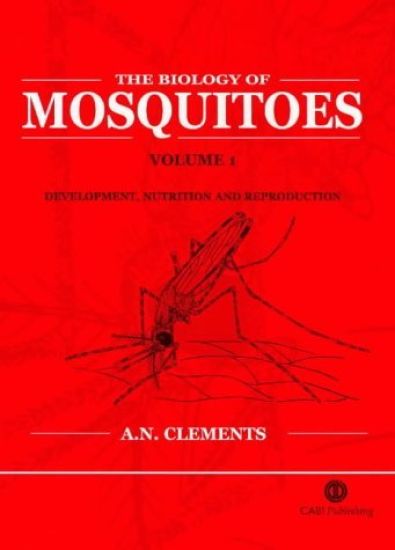
Biology of Mosquitoes, Volume 1

Biology of Mosquitoes, Volume 1

Alan Clements

CABI Publishing
1992
sidottu
A detailed account of the embryology, growth and metamorphosis of mosquitoes, the nutrition of larvae and adults, and egg production by the adult females. Physiological adaptations of larvae to their aquatic environment are also described. Written in a manner to be comprehensible to any informed biologist, the book has received glowing reviews.
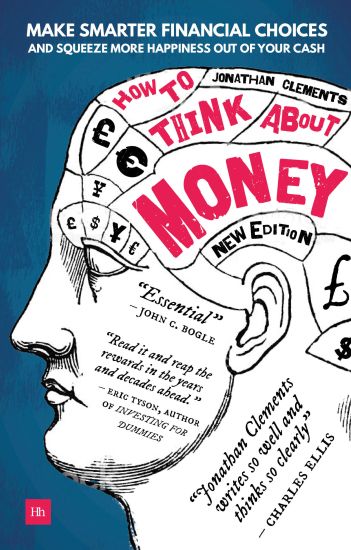
How to Think About Money

How to Think About Money

Jonathan Clements

Harriman House Publishing
2018
pokkari
NEW INTERNATIONAL EDITION*** A cult smash in the US, How to Think About Money is the ultimate smart thinking book for those who want a more prosperous and less stressful financial life. ***There are those who think the goal of investing is to beat the market and amass as much wealth as possible, that street smarts and hard work ensure investment success, and that the road to happiness is paved with more of everything. And then there are those who get it.Want a richer, calmer financial life? Jonathan Clements, longtime personal finance columnist for the Wall Street Journal, is here to help. His goal: to provide readers with a coherent way to think about their finances, so they worry less about money, make smarter financial choices and squeeze more happiness out of the cash they have.How to Think About Money is built around five key ideas:- Money can buy happiness, but we need to spend with great care.- Most of us will enjoy an extraordinarily long life – and that has profound financial implications.- We are hardwired for financial failure, so sensible money management takes great mental strength.- We need to bring order to our financial life – by focusing on our paycheque, or lack thereof.- If we want to add to our wealth, we should strive to minimise the subtractions.With rave reviews from readers (including over 75 five-star ratings), praise from some of the greatest investors of all time ("Easy to understand, essential to follow." – Jack Bogle), this is the ultimate smart thinking book for everyone interested in making their money work for them rather than the other way around.
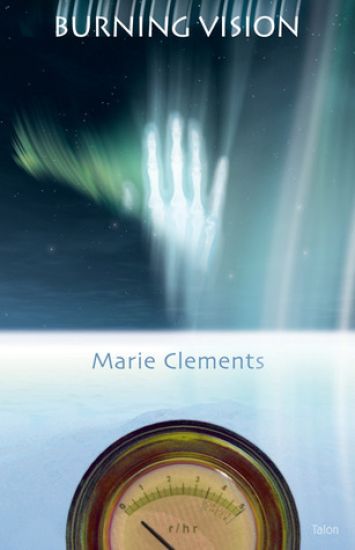
Burning Vision

Burning Vision

Marie Clements

Talonbooks
2003
pokkari
Marie Clements's latest play sears a dramatic swath through the reactionary identity politics of race, gender and class, using the penetrating yellow-white light, the false sun of uranium and radium, derived from a coal black rock known as pitchblende, as a metaphor for the invisible, malignant evils everywhere poisoning our relationship to the earth and to each other. Burning Vision unmasks both the great lies of the imperialist power-elite (telling the miners they are digging for a substance to "cure cancer" while secretly using it to build the atomic bombs that devastated Hiroshima and Nagasaki); and the seemingly small rationalizations and accommodations people of all cultures construct to make their personal circumstances yield the greatest benefit to themselves for the least amount of effort or change on their part. It is also a scathing attack on the "public apology" as yet another mask, as a manipulative device, which always seeks to conceal the maintenance and furtherance of the self-interest of its wearer.Clements's powerful visual sets and soundscapes contain curtains of flames which at times assume the bodies of a chorus passing its remote judgment, devoid of both pity and fear, on the action: a merciless indictment of the cross-cultural, buried worm of avarice and self-interest hidden within the terrorism of the push to "go with the times," to accept the iconography of a reality defined, contextualized and illuminated by others. Marie Clements writes, or, perhaps more accurately, composes, with an urbane, incisive and sophisticated intellect deeply rooted in the particulars of her place, time and history. Cast of five women and 12 men.
The Unnatural and Accidental Women

The Unnatural and Accidental Women

Marie Clements

Talonbooks
2005
pokkari
The Unnatural and Accidental Women is a surrealist dramatization of a thirty-year murder case involving many mysterious deaths in the "Skid Row" area of Vancouver. All the victims were found dead with a blood-alcohol reading far beyond safe levels, and all were last seen in the company of Gilbert Paul Jordan, who frequented the city's bars preying on primarily middle-aged Native women. The coroner's reports listed the cause of death of many of these women as "unnatural and accidental." Marie Clements reconstructs the lives of these women as shaped by lost connections--to loved ones, to the land, to a way of life--lives of at times desperate, at times tender yearning for ties of communication, belonging and shelter gone dead. These are precariously vulnerable lives, so easily drawn to their end by the heat and light of a flame, lives that thirst for an end of searching in forgetfulness.
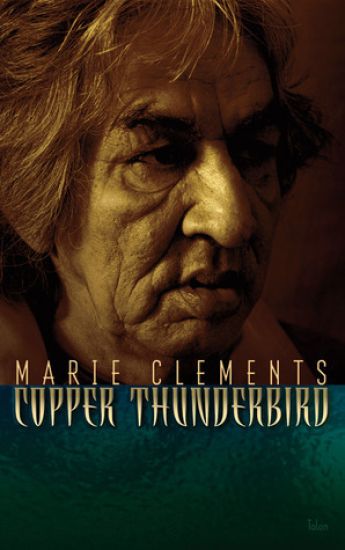
Copper Thunderbird

Copper Thunderbird

Marie Clements

Talonbooks
2007
pokkari
Copper Thunderbird is a play on canvases based on the life of Norval Morrisseau. Inside the power-lines which Morrisseau boldly defined in his art were the colours he experienced between his Ojibwa cosmology, his life on the street, and his spiritual and philosophical transformations to become the Father of Contemporary Native Art and a Grand Shaman. Appearing simultaneously in this multi-layered drama as a small boy, a young warrior and an old man, Morrisseau confronts his many selves over the Faustian destiny he encountered during his vision quest--a momentary terror that led to a life wracked by both triumph and ordeal, drawing his vibrant colours, both luminous and dark, from the life-force within him. Norval Morrisseau is notorious for the life he has led, the company he has kept, the wives, lovers, parasitic drinking buddies and abusive family members he has had and passed through as if they were merely insubstantial phantoms. The paintings he has sold to buy another bottle of alcohol, to get through another brutal day, hang in galleries around the world, a phenomenon Morrisseau himself simply took for granted.Framed variously with the identities of Indian, Artist and Shaman, Copper Thunderbird interrogates both the stereotypes and the politically correct judgments that have manufactured Morrisseau's public personae, creating a power-figure that transcends culture and morality, earth and water, fire and air.
The Edward Curtis Project

The Edward Curtis Project

Marie Clements

Talonbooks
2010
pokkari
Edward Curtis saw his job as that of creating a photographic record of "the vanishing race of the North American Indian." His work therefore became as much a projection of colonial attitudes upon aboriginal peoples as it was an authentic record of their lives. The Edward Curtis Project began when the Presentation House Theatre commissioned Marie Clements to write a play that would stage the issues raised by Curtis' monumental but controversial achievement--to dramatize not only the creation of his twenty-volume photographic and ethnographic epic and the enormous commitment, unwavering vision, sacrifice, poverty and ultimate disappointment it represented for the photographer, but also the devastating legacy that his often misrepresentative and imposed vision had on the lives of the people he touched. Upon receiving the commission, Marie Clements immediately asked photojournalist Rita Leistner to create a parallel photographic investigation of Curtis' work--to question the practice of documentary photography with the very medium under scrutiny.After two years of retracing Curtis' footsteps, travelling to First Nations communities throughout North America, Clements finally felt that between them: "We were making our own pictures out of our own beliefs and they were adding up. We were inside the lies and beauty of history, of gender and class, we were making a case for the future." This collaborative work of two artists, to take Curtis' photographs to heart and to see who and what might live inside them today, resulted in a profoundly moving new drama by Marie Clements, and a spectacular contemporary photo exhibit by Rita Leistner. Published together here, they illustrate the trauma that the notion of a "vanishing race" has inflicted on an entire people, and celebrate the triumph of a future in which North American First Nations communities "are everywhere and it is beautiful."
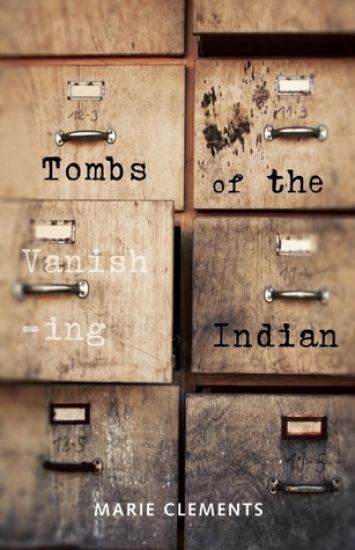
Tombs of the Vanishing Indian

Tombs of the Vanishing Indian

Marie Clements

Talonbooks
2013
pokkari
Three young Native American sisters and their mother board a bus bound for Los Angeles, leaving home as part of a 1950s government mandate to relocate reserve Indians to urban centres. This assimilationist policy was one focus of Metis playwright Marie Clements's research when she was commissioned to create a new play for the tenth anniversary of the Native Voices series at the Autry National Center, Los Angeles. Clements dramatizes the emotional, psychological, and social repercussions of this, and subsequent, bureaucratic incursions into the girls' lives. Their arrival in California takes a tragic turn when their mother is suddenly killed, and the girls are arbitrarily placed in different foster homes, never to see each other again. We follow Janey, Miranda, and Jessie as they lead very disparate adult lives: Janey, a troubled vagrant; Miranda, a burgeoning actress fighting typecasting in Hollywood; Jessie, an idealist physician who's married to a medical colleague. As it was bureaucratic policy that had dismantled their secure family unit and sent each girl into the unknown, so too did a government paper ultimately bring them together, if only symbolically.Clements casts the sisters' narrative against the backdrop of another historical injustice: the forced sterilization of thousands of Native women in the 1970s, a practice that was only abolished in 1981. Clements's play is a compelling, and poetic, investigation of the coldly bureaucratic machinations that have, throughout history, attempted to facilitate the disappearance of Native people. Though Tombs of the Vanishing Indian focuses on specific policies and locations, it speaks eloquently to broader themes of Aboriginal displacement. There are, indeed, echoes of Canadian policy aimed at the dissolution of First Nations families and culture: the potlatch ban, residential schools, and the ban on Native language, whose profoundly damaging ramifications are our shared legacy. Cast of 4 women and 3 men.
Every Bush Is Burning

Every Bush Is Burning

Brandon Clements

Twisted Beam Press
2011
nidottu
A story about forgiveness, satisfaction, and the sins of the church.Jack Bennett has a wife, two kids, the perfect job-and the perfect affair. When he is caught and it all comes crashing down, Jack is left with no one to turn to. No friends. No family, except his recovering drug addict of a sister. On a Sunday morning drive, he sees a homeless man locked out of a church service, banging on the door. He stops and offers the guy a cup of coffee. He asks the man his name, and the guy says Yeshua. As in, Jesus.Jack's not stupid. This isn't the real Jesus. But with nowhere else to turn, Jack forms an unlikely friendship-one that will test his idea of truth, faith, love, and forgiveness. And Jack is completely unprepared for the real-life twists his story is going to take.Watch the trailer, get a free sampler, and find out more at EveryBushIsBurning.com.About the Author: Brandon Clements lives in Columbia, SC. This is his first novel.
The Protector of Peace

The Protector of Peace

Scott Clements

Brown Dog Sound, Inc.
2015
nidottu
Just weeks after Trip, Josh, and Sarah watched Gonzalez's body turn to dust and blow away in the breeze, the dead man himself walked through the door of Pappy's apartment. Is The Destroyer still alive? Can Trip stay focused and strengthen his connection with The Protector? Can he stay one step ahead of the evil presence bent on destroying him? The Protector of Peace is packed with adventure as Trip follows clues left by the Founding Fathers of the United States, in hope of stopping The Destroyer from ruling the world. If he fails and The Destroyer unites all three pieces of The Triumvirate, the world as we know it will change forever.
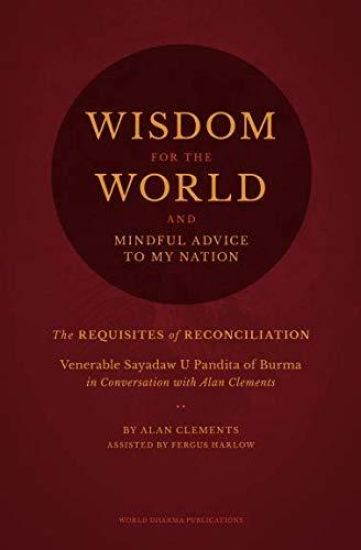
Wisdom for the World

Wisdom for the World

Alan Clements

Buddha Sasana Foundation (Aka) Bsf
2019
pokkari
The Venerable Sayadaw U Pandita of Burma (also known as Myanmar), was one of the foremost authorities on vipassana (insight) meditation and a pioneer of the Western mindfulness movement. With thousands of students in centers worldwide, Burma's most senior Buddhist monk also trained hundreds of leading meditation teachers in both the East and West. Yet, despite all of this, and numerous influential books compiled from his public talks, he rarely gave interviews. In Wisdom for the World: The Requisites of Reconciliation, he breaks his silence to reveal some of his most compelling insights, delivered as his final teaching for the people of the world and his native country, Burma. Over 9 consecutive nights before he passed away in April 2016 at the age of 95, the Venerable Sayadaw weighed in on some of the most critical issues facing Burma and the world today through exceptionally rare and remarkable conversations with his first Western student, journalist, and friend of nearly 40 years, Alan Clements. Covering topics from religious extremism to systemic oppression, and the requisites for surmounting them, the Venerable Sayadaw deftly elaborated on the Mahasi Sayadaw system of mindfulness meditation and its application in our troubled world. "More important than victory of others is to be victorious over oneself," he says, illuminating the difference between right and wrong mindfulness and calling for a worldwide revolution in Spiritual Intelligence, or "SQ" (a key component of his teachings over the past 15 years). As the principle spiritual adviser to many of the leading figures in Burma's decades long non-violent democratic revolution, Wisdom for the World speaks a final time to those leaders and fosters hope for a country still convulsing from decades of dictatorship. Here, this beloved teacher elucidates the role of reconciliation in calming the turmoil of conflict faced by so many in the world today. With forbearance, wisdom and compassion, the Venerable Sayadaw outlines the theory and practice of gaining mindful control of one's own mind so that we may all move towards a more peaceful society. Essentially, Wisdom for the World provides the timeless psychological and spiritual guidance - the mindful intelligence - for anyone desiring to surmount intolerance, hatred and discrimination, in whatever form they take.Alan Clements Clements was among the first Westerners to ordain as a Buddhist monk in Burma, where he lived in a monastery practicing mindfulness meditation for nearly five years, before being expelled from the country in 1984 by the dictatorship, with no reason given. Leaving the monastic life, Clements returned to the West, becoming a spiritual maverick, journalist, and human rights activist engaged in Burma's nonviolent struggle for freedom while speaking up for political prisoners worldwide. Clements co-authored The Voice of Hope with Burma's Aung San Suu Kyi - the former political prisoner and Nobel Peace Laureate. In addition, his books include, Burma: The Next Killing Fields, and Revolution of the Spirit, both with forewords by the Dalai Lama and endorsed by 8 Noble Peace Laureates and former President Jimmy Carter. He's also written Instinct for Freedom and A Future To Believe In: 108 Reflections on the Art and Activism of Freedom. Clements has been interviewed on ABC National, Talk to America, CBC, VOA, BBC, the New York Times, Time and Newsweek magazines, the Sydney Morning Herald, Utne Reader, Yoga Journal, and scores of other media worldwide. He also delivered a keynote at Amnesty International's 30th Year Anniversary at the John Ford Theater in LA. You can learn more about Alan's work on his website: www.AlanClements.com. Contributing editor Fergus Harlow is a long time assistant to Alan Clements and World Dharma.