Kirjojen hintavertailu. Mukana 12 119 619 kirjaa ja 12 kauppaa.

Kirjahaku

Etsi kirjoja tekijän nimen, kirjan nimen tai ISBN:n perusteella.

1000 tulosta hakusanalla David L. Goetsch

CompTIA A+ 220-801 and 220-802 Practice Questions Exam Cram
CompTIA A+ 220-801 and 220-802 Practice Questions Exam Cram, Fifth Edition complements any A+ study plan with 700 practice test questions in the book and on the CD-all supported by complete explanations of every answer. This package's highly realistic questions cover every area of knowledge for both new A+ exams: 220-801 and 220-802. Limited Time Offer: Buy CompTIA A+ 220-801 and 220-802 Practice Questions Exam Cram and receive a 10% off discount code for the CompTIA A+ 220-801 and 220-802 exams. To receive your 10% off discount code: Register your product at pearsonITcertification.com/register Follow the instructions Go to your Account page and click on "Access Bonus Content" Master Your Knowledge of the A+ Exam!Features 700 questions, organized to reflect the newest objectives for the A+ exams, so you can easily assess your knowledge of every topic. Each question includes a detailed answer explanation. Provides complete coverage of all objectives for the 220-801 and 220-802 A+ exams. CD Features 700 Practice Questions!700 questions from this book are included on the CD, giving you yet another effective tool to assess your readiness for the A+ exam. Test engine features multiple test modes, questions that simulate actual A+ exams, and detailed answer explanations, among other features. David L. Prowse is an author, a computer network specialist, and a technical trainer. Over the past several years he has authored several titles for Pearson Education, including the well-received CompTIA A+ Exam Cram and CompTIA Security+ Cert Guide. As a consultant, he installs and secures the latest in computer and networking technology. Over the past decade he has also taught CompTIA A+, Network+, and Security+ certification courses, both in the classroom and via the Internet. He runs the website www.davidlprowse.com, where he gladly answers questions from students and readers.

Richard Rorty

Richard Rorty

David L. Hall

State University of New York Press
1993
pokkari
This book is a discussion of the nature and import of Richard Rorty's philosophy, particularly as it relates to his reevaluation of American pragmatism. Rorty's thinking is assessed within the context of both modern and postmodern intellectual trends, and his thought is contrasted with that of his principal contemporaries in America and Europe, including Donald Davidson, W. V. O. Quine, Jürgen Habermas, Michel Foucault, Martin Heidegger, and Jacques Derrida.
Anticipating China

Anticipating China

David L. Hall; Roger T. Ames

State University of New York Press
1995
pokkari
By providing parallel accounts of the contrasting developments of classical Chinese and Western traditions, Anticipating China offers a means of avoiding the implicit cultural biases which so often distort Western understanding of Chinese intellectual culture. The book shows that failure to assess the significant cultural differences between China and the West has seriously affected our understanding of both classical and contemporary China, and makes the translation of attitudes, concepts, and issues extremely problematic.
Thinking from the Han

Thinking from the Han

David L. Hall; Roger T. Ames

State University of New York Press
1997
pokkari
This book continues a comparative project begun with the authors' Thinking Through Confucius and Anticipating China. It continues the comparative discussions by focusing upon three concepts--self, truth, transcendence--which best illuminate the distinctive characters of the two cultures. "Self" specifies the meaning of the human subject, "truth" considers that subject's manner of relating to the world of which it is a part, and "transcendence" raises the issue as to whether the self/world relationship is grounded in something other than the elements resourced immediately in self and world. Considered together, the discussions of these concepts advertise in a most dramatic fashion the intellectual barriers currently existing between Chinese and Western thinkers. More importantly, these discussions reformulate Chinese and Western vocabularies in a manner that will enhance the possibilities of intercultural communication.
The Econometrics of Demand Systems

The Econometrics of Demand Systems

David L. Edgerton; Bengt Assarsson; Anders Hummelmose; Ilkka P. Laurila; Kyrre Rickertsen; Per Halvor Vale

Springer
1996
sidottu
This book contains some of the results from the research project "Demand for Food in the Nordic Countries", which was initiated in 1988 by Professor Olof Bolin of the Agricultural University in Ultuna, Sweden and by Professor Karl Iohan Weckman, of the University of Helsinki, Finland. A pilot study was carried out by Bengt Assarsson, which in 1989 led to a successful application for a research grant from the NKJ (The Nordic Contact Body for Agricultural Research) through the national research councils for agricultural research in Denmark, Finland, Norway and Sweden. We are very grateful to Olof Bolin and Karl Iohan Weckman, without whom this project would not have come about, and to the national research councils in the Nordic countries for the generous financial support we have received for this project. We have received comments and suggestions from many colleagues, and this has improved our work substantially. At the start of the project a reference group was formed, consisting of Professor Olof Bolin, Professor Anders Klevmarken, Agr. lie. Gert Aage Nielsen, Professor Karl Iohan Weckman and Cando oecon. Per Halvor Vale. Gert Aage Nielsen left the group early in the project for a position in Landbanken, and was replaced by Professor Lars Otto, while Per Halvor Vale soon joined the research staff. The reference group has given us useful suggestions and encouraged us in our work. Weare very grateful to them.
Documents for the Study of the Gospels

Documents for the Study of the Gospels

David L. Dungan

Augsburg Fortress
1994
pokkari
This collection of freshly translated texts leads to a new appreciation of the richness and variety of the religious world within which Christianity emerged as a powerful new force. Bringing together for the first time under a single cover documents from Jewish, Greek, Roman, Egyptian, Syrian, and little-known early Christian sources, the material is arranged to bring out as clearly as possible the ways in which early Christian worship of Jesus Christ as Savior and God both echoed contemporary worship of other savior gods and at the same time stood in sharp contrast to such worship. This revised and enlarged edition contains a new introduction on texts and traditions in late antiquity, a reworked translation of The Gospel of Peter, selections from Ovid's Metamorphoses, plus such documents as Papyrus Egerton 2, Oxyrhynchus Papyrus 840, and The Apocryphon of James. In addition, the table of contents has been expanded to allow easier access to the documents contained herein.
Matthew

Matthew

David L. Turner

Baker Academic, Div of Baker Publishing Group
2008
sidottu
New Testament scholar and professor David L. Turner offers a substantive yet highly accessible commentary on Matthew in this latest addition to the BECNT series. With extensive research and thoughtful chapter-by-chapter exegesis, Turner leads readers through all aspects of the Gospel of Matthew--sociological, historical, and theological--to help them better understand and explain this key New Testament book. He also includes important insights into the Jewish background of this Gospel.As with all BECNT volumes, Matthew features the author's detailed interaction with the Greek text. This commentary admirably achieves the dual aims of the series--academic sophistication with pastoral sensitivity and accessibility--making it a useful tool for students, professors, and pastors. The user-friendly design includes shaded-text chapter introductions summarizing the key themes of each thought unit.
I Love Mormons – A New Way to Share Christ with Latter–day Saints

I Love Mormons – A New Way to Share Christ with Latter–day Saints

David L. Rowe

Baker Books, a division of Baker Publishing Group
2005
nidottu
David L. Rowe asserts that many Mormons view Christian witnessing as Bible bashing. What Christians need to understand, he suggests, is that Latter-day Saints are an entirely separate ethnic group with their own history, values, and customs. Evangelizing Mormons can be so much more effective if Christians first know, understand, and respect Mormon heritage.With helpful illustrations and discussions of Mormon values and theology, Rowe calls Christians away from confrontational evangelism and instead suggests active listening and respect as a way to bridge Christian beliefs and Mormon culture. A glossary in the back of the book and discussion questions at the end of each chapter will help readers apply these concepts in their own witnessing experiences. In the end, Christians will be more approachable representatives of Christ.
Passage Through Hell

Passage Through Hell

David L. Pike

Cornell University Press
1997
sidottu
Taking the culturally resonant motif of the descent to the underworld as his guiding thread, David L. Pike traces the interplay between myth and history in medieval and modernist literature. Passage through Hell suggests new approaches to the practice of comparative literature, and a possible escape from the current morass of competing critical schools and ideologies. Pike's readings of Louis Ferdinand Céline and Walter Benjamin reveal the tensions at work in the modern appropriation of structures derived from ancient and medieval descents. His book shows how these structures were redefined in modernism and persist in contemporary critical practice. In order to recover the historical corpus of modernism, he asserts, it is necessary to acknowledge the attraction that medieval forms and motifs held for modernist literature and theory. By pairing the writings of the postwar German dramatist and novelist Peter Weiss with Dante's Commedia, and Christine de Pizan with Virginia Woolf, Pike argues for a new level of complexity in the relation between medieval and modern poetics. Pike's supple and persuasive reading of the Commedia resituates that text within the contradictions of medieval tradition. He contends that the Dantean allegory of conversion, altered to suit the exigencies of modernism, maintains its hold over current literature and theory. The postwar writers Pike treats—Weiss, Seamus Heaney, and Derek Walcott—exemplify alternate strategies for negotiating the legacy of modernism. The passage through hell emerges as a way of disentangling images of the past from their interpretation in the present.
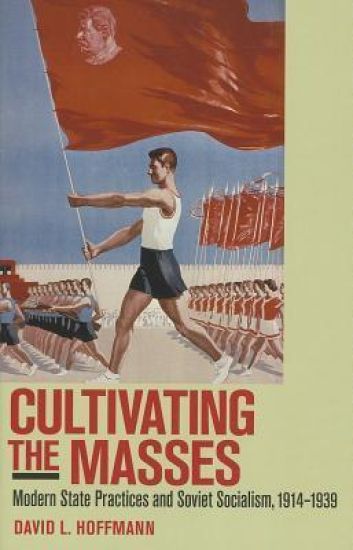
Cultivating the Masses

Cultivating the Masses

David L. Hoffmann

Cornell University Press
2011
sidottu
Under Stalin's leadership, the Soviet government carried out a massive number of deportations, incarcerations, and executions. Paradoxically, at the very moment that Soviet authorities were killing thousands of individuals, they were also engaged in an enormous pronatalist campaign to boost the population. Even as the number of repressions grew exponentially, Communist Party leaders enacted sweeping social welfare and public health measures to safeguard people's well-being. Extensive state surveillance of the population went hand in hand with literacy campaigns, political education, and efforts to instill in people an appreciation of high culture. In Cultivating the Masses, David L. Hoffmann examines the Party leadership's pursuit of these seemingly contradictory policies in order to grasp fully the character of the Stalinist regime, a regime intent on transforming the socioeconomic order and the very nature of its citizens. To analyze Soviet social policies, Hoffmann places them in an international comparative context. He explains Soviet technologies of social intervention as one particular constellation of modern state practices. These practices developed in conjunction with the ambitions of nineteenth-century European reformers to refashion society, and they subsequently prompted welfare programs, public health initiatives, and reproductive regulations in countries around the world. The mobilizational demands of World War I impelled political leaders to expand even further their efforts at population management, via economic controls, surveillance, propaganda, and state violence. Born at this moment of total war, the Soviet system institutionalized these wartime methods as permanent features of governance. Party leaders, whose dictatorship included no checks on state power, in turn attached interventionist practices to their ideological goal of building socialism.
Urban America Reconsidered

Urban America Reconsidered

David L. Imbroscio

Cornell University Press
2010
sidottu
The aftermath of Hurricane Katrina laid bare the tragedy of American cities. What the storm revealed about the social conditions in New Orleans shocked many Americans. Even more shocking is how widespread these conditions are throughout much of urban America. Plagued by ineffectual and inegalitarian governance, acute social problems such as extreme poverty, and social and economic injustice, many American cities suffer a fate similar to that of New Orleans before and after the hurricane. Gentrification and corporate redevelopment schemes merely distract from this disturbing reality. Compounding this tragedy is a failure in urban analysis and scholarship. Little has been offered in the way of solving urban America's problems, and much of what has been proposed or practiced remains profoundly misguided, in David Imbroscio's view. In Urban America Reconsidered, he offers a timely response. He urges a reconsideration of the two reigning orthodoxies in urban studies: regime theory, which provides an understanding of governance in cities, and liberal expansionism, which advocates regional policies linking cities to surrounding suburbs. Declaring both approaches to be insufficient—and sometimes harmful—Imbroscio illuminates another path for urban America: remaking city economies via an array of local economic alternative development strategies (or LEADS). Notable LEADS include efforts to build community-based development institutions, worker-owned firms, publicly controlled businesses, and webs of interdependent entrepreneurial enterprises. Equally notable is the innovative use of urban development tools to generate indigenous, stable, and balanced growth in local economies. Urban America Reconsidered makes a strong case for the LEADS approach for constructing progressive urban regimes and addressing America's deepest urban problems.
Urban America Reconsidered

Urban America Reconsidered

David L. Imbroscio

CORNELL UNIVERSITY PRESS
2010
muu
The aftermath of Hurricane Katrina laid bare the tragedy of American cities. What the storm revealed about the social conditions in New Orleans shocked many Americans. Even more shocking is how widespread these conditions are throughout much of urban...
Subterranean Cities

Subterranean Cities

David L. Pike

Cornell University Press
2005
pokkari
The underground has been a dominant image of modern life since the late eighteenth century. A site of crisis, fascination, and hidden truth, the underground is a space at once more immediate and more threatening than the ordinary world above. In Subterranean Cities, David L. Pike explores the representation of underground space in the nineteenth and early twentieth centuries, a period during which technology and heavy industry transformed urban life.The metropolis had long been considered a moral underworld of iniquity and dissolution. As the complex drainage systems, underground railways, utility tunnels, and storage vaults of the modern cityscape superseded the countryside of caverns and mines as the principal location of actual subterranean spaces, ancient and modern converged in a mythic space that was nevertheless rooted in the everyday life of the contemporary city. Writers and artists from Felix Nadar and Charles Baudelaire to Charles Dickens and Alice Meynell, Gustave Doré and Victor Hugo, George Gissing and Emile Zola, and Jules Verne and H. G. Wells integrated images of the urban underworld into their portrayals of the anatomy of modern society. Illustrated with photographs, movie stills, prints, engravings, paintings, cartoons, maps, and drawings of actual and imagined urban spaces, Subterranean Cities documents the emergence of a novel space in the subterranean obsessions and anxieties within nineteenth-century urban culture. Chapters on the subways, sewers, and cemeteries of Paris and London provide a detailed analysis of these competing centers of urban modernity. A concluding chapter considers the enduring influence of these spaces on urban culture at the turn of the twenty-first century.
Metropolis on the Styx

Metropolis on the Styx

David L. Pike

Cornell University Press
2007
pokkari
In Metropolis on the Styx,David L. Pike considers how underground spaces and their many myths have organized ways of seeing, thinking about, and living in the modern city. Expanding on the cultural history of underground construction in his acclaimed previous book, Subterranean Cities, Pike details the emergence of a vertical city in the imagination of nineteenth-century Paris and London, a city overseen by hosts of devils and undermined by subterranean villains, a city whose ground level was replete with passages between above and below. Metropolis on the Styx brings together a rich variety of visual and written sources ranging from pulp mysteries and movie serials to the poetry of Charles Baudelaire and the novels of Marcel Proust, F. Scott Fitzgerald, and Elinor Glyn to the broadsheets and ephemera of everyday urban life. From these materials, Pike conjures a working theory of modern underground space that explains why our notions about urban environments remain essentially nineteenth-century in character, even though cities themselves have since changed almost beyond recognition.Highly original in subject matter, methodology, and conclusions, Metropolis on the Styx synthesizes a number of critical approaches, periods of study, and disciplines in the analysis of a single category of space—the underground. Pike studies the built environments and the textual and visual ephemera (including little-known or unknown archival material) of Paris, London, and other cities in conjunction with canonical modern literature and art. This book integrates a rich visual component—photographs, movie stills, prints, engravings, paintings, cartoons, maps, and drawings of actual and imagined subterranean spaces—into the fabric of the argument.
Urban America Reconsidered

Urban America Reconsidered

David L. Imbroscio

Cornell University Press
2010
pokkari
The aftermath of Hurricane Katrina laid bare the tragedy of American cities. What the storm revealed about the social conditions in New Orleans shocked many Americans. Even more shocking is how widespread these conditions are throughout much of urban America. Plagued by ineffectual and inegalitarian governance, acute social problems such as extreme poverty, and social and economic injustice, many American cities suffer a fate similar to that of New Orleans before and after the hurricane. Gentrification and corporate redevelopment schemes merely distract from this disturbing reality. Compounding this tragedy is a failure in urban analysis and scholarship. Little has been offered in the way of solving urban America's problems, and much of what has been proposed or practiced remains profoundly misguided, in David Imbroscio's view. In Urban America Reconsidered, he offers a timely response. He urges a reconsideration of the two reigning orthodoxies in urban studies: regime theory, which provides an understanding of governance in cities, and liberal expansionism, which advocates regional policies linking cities to surrounding suburbs. Declaring both approaches to be insufficient—and sometimes harmful—Imbroscio illuminates another path for urban America: remaking city economies via an array of local economic alternative development strategies (or LEADS). Notable LEADS include efforts to build community-based development institutions, worker-owned firms, publicly controlled businesses, and webs of interdependent entrepreneurial enterprises. Equally notable is the innovative use of urban development tools to generate indigenous, stable, and balanced growth in local economies. Urban America Reconsidered makes a strong case for the LEADS approach for constructing progressive urban regimes and addressing America's deepest urban problems.
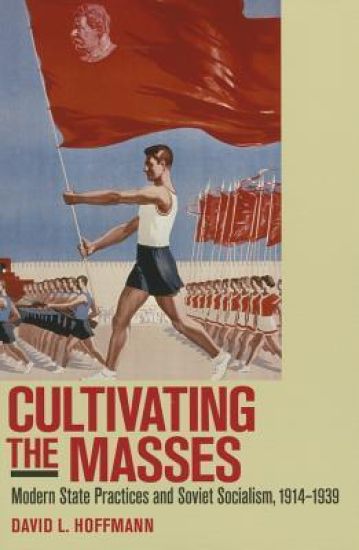
Cultivating the Masses

Cultivating the Masses

David L. Hoffmann

Cornell University Press
2014
pokkari
Under Stalin's leadership, the Soviet government carried out a massive number of deportations, incarcerations, and executions. Paradoxically, at the very moment that Soviet authorities were killing thousands of individuals, they were also engaged in an enormous pronatalist campaign to boost the population. Even as the number of repressions grew exponentially, Communist Party leaders enacted sweeping social welfare and public health measures to safeguard people's well-being. Extensive state surveillance of the population went hand in hand with literacy campaigns, political education, and efforts to instill in people an appreciation of high culture. In Cultivating the Masses, David L. Hoffmann examines the Party leadership's pursuit of these seemingly contradictory policies in order to grasp fully the character of the Stalinist regime, a regime intent on transforming the socioeconomic order and the very nature of its citizens. To analyze Soviet social policies, Hoffmann places them in an international comparative context. He explains Soviet technologies of social intervention as one particular constellation of modern state practices. These practices developed in conjunction with the ambitions of nineteenth-century European reformers to refashion society, and they subsequently prompted welfare programs, public health initiatives, and reproductive regulations in countries around the world. The mobilizational demands of World War I impelled political leaders to expand even further their efforts at population management, via economic controls, surveillance, propaganda, and state violence. Born at this moment of total war, the Soviet system institutionalized these wartime methods as permanent features of governance. Party leaders, whose dictatorship included no checks on state power, in turn attached interventionist practices to their ideological goal of building socialism.
Peasant Metropolis

Peasant Metropolis

David L. Hoffmann

Cornell University Press
2000
pokkari
During the 1930's, 23 million peasants left their villages and moved to Soviet cities, where they comprised almost half the urban population and more than half the nation's industrial workers. Drawing on previously inaccessible archival materials, David L. Hoffmann shows how this massive migration to the cities—an influx unprecedented in world history—had major consequences for the nature of the Soviet system and the character of Russian society even today. Hoffmann focuses on events in Moscow between the launching of the industrialization drive in 1929 and the outbreak of war in 1941. He reconstructs the attempts of Party leaders to reshape the social identity and behavior of the millions of newly urbanized workers, who appeared to offer a broad base of support for the socialist regime. The former peasants, however, had brought with them their own forms of cultural expression, social organization, work habits, and attitudes toward authority. Hoffmann demonstrates that Moscow's new inhabitants established social identities and understandings of the world very different from those prescribed by Soviet authorities. Their refusal to conform to the authorities' model of a loyal proletariat thwarted Party efforts to construct a social and political order consistent with Bolshevik ideology. The conservative and coercive policies that Party leaders adopted in response, he argues, contributed to the Soviet Union's emergence as an authoritarian welfare state.
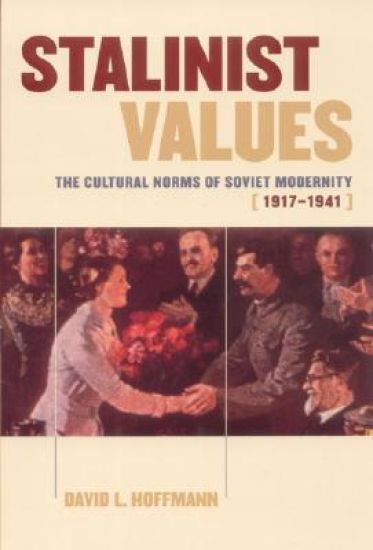
Stalinist Values

Stalinist Values

David L. Hoffmann

Cornell University Press
2003
pokkari
Soviet official culture underwent a dramatic shift in the mid-1930s, when Stalin and his fellow leaders began to promote conventional norms, patriarchal families, tsarist heroes, and Russian literary classics. For Leon Trotsky—and many later commentators—this apparent embrace of bourgeois values marked a betrayal of the October Revolution and a retreat from socialism. In the first book to address these developments fully, David L. Hoffmann argues that, far from reversing direction, the Stalinist leadership remained committed to remaking both individuals and society—and used selected elements of traditional culture to bolster the socialist order. Melding original archival research with new scholarship in the field, Hoffmann describes Soviet cultural and behavioral norms in such areas as leisure activities, social hygiene, family life, and sexuality. He demonstrates that the Soviet state's campaign to effect social improvement by intervening in the lives of its citizens was not unique but echoed the efforts of other European governments, both fascist and liberal, in the interwar period. Indeed, in Europe, America, and Stalin's Russia, governments sought to inculcate many of the same values—from order and efficiency to sobriety and literacy. For Hoffmann, what remains distinctive about the Soviet case is the collectivist orientation of official culture and the degree of coercion the state applied to pursue its goals.
Inside Agitators

Inside Agitators

David L. Chappell

Johns Hopkins University Press
1996
pokkari
Winner of the Outstanding Book on the Subject of Human Rights in North America Award from the Gustavus Myers Center "In the movement, we always said that, like in a washing machine, it was the agitator that got the dirt out. David Chappell's book shows how the inside agitators helped cleanse the society of an extreme injustice. It is an enlightening and important look at a less publicized part of this history." -Andrew Young"A superb study done with subtlety and keen insight, it is absolutely essential for understanding the vital role white Southerners played in the civil rights movement." -C. Vann Woodward, Yale University"Chappell's argument is insightful and worth serious attention. It makes particularly fascinating reading from the perspective of the 1990s." -David R. Colburn, Reviews in American History"In this engaging work on Southern whites who sympathized with the Civil Rights Movement, Chappell argues that moderate whites, though lacking a moral commitment to civil rights, played a key role in the movement's success at both the local and national levels." -Virginia Quarterly Review