Kirjojen hintavertailu. Mukana 12 016 292 kirjaa ja 12 kauppaa.

Kirjahaku

Etsi kirjoja tekijän nimen, kirjan nimen tai ISBN:n perusteella.

1000 tulosta hakusanalla David-Michael Harding

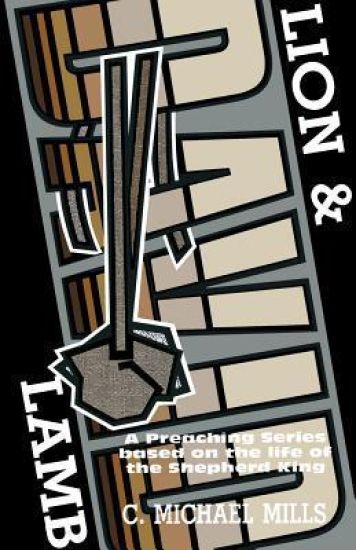
David Lion and Lamb

David Lion and Lamb

Michael Mills; C Michael Mills

CSS Publishing Company
1988
pokkari
Few biblical characters are as popular as David, and this set of 27 complete messages covers all Cycle B texts in the Common Lectionary -- as well as several others -- dealing with this popular Bible personality. Each message incorporates thorough biblical scholarship with popular reference points and concerns, and addresses the reader in a comfortable, personable style -- making this versatile resource appropriate for Cycle B lectionary preaching, independent sermon series preparation, and individual or group Bible study. C. Michael Mills is pastor of Grace United Presbyterian Church in Clarksville, Indiana. He is a graduate of the University of Louisville nad Louisville Presbyterian Seminary.
Michael Collins

Michael Collins

David Butler; Mario Corrigan

O'BRIEN PRESS LTD
2022
nidottu
A thrilling tale of passion, courage and determination. Michael Collins became a hero: a soldier, a freedom-fighter, a ghost: Ireland’s Rebel Son. In life, in death, a legend. Raised on songs and stories of Irish heroes and the struggle for Irish independence, young Michael Collins was sworn into the IRB in London by Sam Maguire. As Joseph Plunkett’s aide-de-camp he took his place in the GPO at Easter 1916. He rose through the ranks in the universities of Revolution, the prisons of Stafford and Frongoch, and returned to the work of independence when released. Mick was the man behind the scenes: creator of the Intelligence network, the Squad and orchestrated the war against the British. When De Valera demanded he take his place as a negotiator of the Treaty, he did his duty, and then defended his beliefs as the country degenerated to Civil War. Cut down by his countrymen in his own country, the Big Fella died on 22 August 1922 at Béal na mBláth, but his legend continues to grow. This graphic novel chronicles the life and legacy of the legendary Michael Collins.
David Gray

David Gray

Michael Heatley

Omnibus Press
2004
nidottu
In a world dominated by industry created pop idols, the story of David Gray is a heartwarming one of passionate belief in music and a healthy mistrust of celebrity. In this first major account of Gray's life and work, Michael Heatley examines the cult singer/songwriter's Manchester roots, his Welsh upbringing and his unique popularity in Ireland. Here too are the stories behind the four legendary albums that preceded the phenomenally successful White Ladder, recorded in the summer of 1998. Heatley assesses the imact of global success on Gray, who faced with following up his surprise multi-million seller, achieved the near-impossible. The chart-topping A New Day At Midnight, acclaimed by The Guardian as 'Darker, stronger, bleaker and more powerful than White Ladder's wistful sadness,' reflected personal changes in Gray's life and pointed to a fascinating future. Fully illustrated with a comprehensive discography.
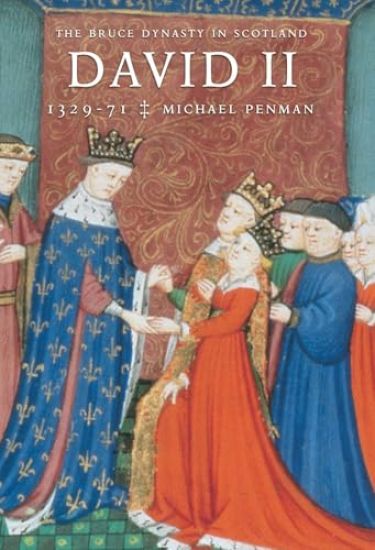
David II

David II

Michael Penman

JOHN DONALD PUBLISHERS LTD
2025
nidottu
David II (1329–1371), son of the hero King of Scots, Robert Bruce (1306–1329), has suffered a harsh historical press, condemned as a disastrous general, a womaniser and a sympathiser with Scotland’s ‘auld enemy’, England. Bringing together evidence from Scotland, England and France, Michael Penman offers a different view: that of a child king who survived usurpation, English invasion, exile and eleven years of English captivity after defeat in battle in 1326 to emerge as a formidable ruler of Scotland. Learning from Philip VI of France and Edward III of England in turn, David became the charismatic patron of a vibrant court focused on the arts of chivalry: had he lived longer, Scotland’s political landscape and national outlook might have been very different to that which emerged under his successors, the Stewart kings. But David’s was also a reign of internal tensions fuelled by his increasingly desperate efforts to determine the royal succession, overawe great magnates like his heir presumptive, Robert the Steward, and persuade his subjects of the need for closer relations with England after sixty years of war.
David Imrie (1787-1862) Tenant Farmer and Millmaster of Haughmill and Bankhead: By His Distant First Cousin
He was a well-known and respected agriculturalist, miller and corn dealer of Markinch Parish, Fife for many years. David Imrie was a tenant farmer of Bankhead and Haughmill since the early 1800s as well as the Dams of Holekettle in Kettle Parish. He would marry into another well-established Fife farming family, the Arnots. After his marriage, the couple returned to Markinch Parish where they had ten children who were all born at Haughmill. Haughmill was a noted corn mill and Imrie was an accomplished miller of his time and a corn dealer of the area. This then is the narrative of the life and times of David Imrie.
David Ballingall (1721-1805): Of Wester Ballingall, Kettle Parish and Drummaird, Kennoway Parish, Fife: By His Sixth Great Nephew
He was the second son of Thomas Ballingall (c.1670-1752), a tenant farmer and was the first child to be born at Clatto farm in Kettle Parish. After growing up, David Ballingall became a tenant farmer of Wester Ballingall, known as Balmalcolm, and of Drummaird in Kennoway Parish. David would marry Rachel Durie and settle at Drummaird where they had six children who were all born there. By 1756 the family relocated to Warout in Markinch Parish where their next three children were born. In June of 1757, David Ballingall formally received through a Disposition which had been granted to him by his father to seize the lands of Gourlays Rigg, commonly known as Drummaird. "A curious relic of David Ballingall existed, for it was seen by the Rev. James Ballingall 1846-1926], 'but I fear it has perished.' It was a portrait of him as a very old man, modelled in wax high relief. The portrait showed a pale, lean and worn face, with a touch of red on the cheekbones, nose rather prominent and fleshing, and a high broad forehead. The costume, blue coat, brass buttons, a high stock and ample neckcloth, gave a suggestion of a man of substance; well to do in his status." This then is the narrative of the life and times of David Ballingall.
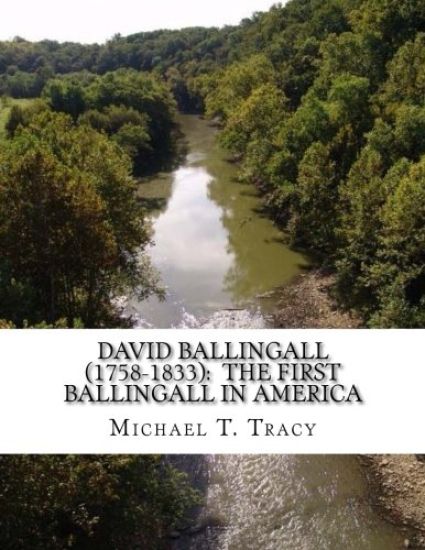
David Ballingall (1758-1833): The First Ballingall in America: By His Distant First Cousin
The area of the Upper and Lower Blue Licks is steeped in the early history of frontier Kentucky. Ten months after British Commanding General Cornwallis had surrendered at Yorktown; on Monday, 19 August 1782 a bloody frontier battle took place here in this region and is noted as one of the final battles of the American Revolutionary War. Fourteen years later, a young Scotsman and his new bride settled in the frontier lands of Nicholas County. Only four years earlier, Kentucky was admitted to the Union as its 15th state. David Ballingall was the eighth child of David Ballingall (1721-1805) and Rachel Durie, born at Warout in Markinch Parish, Fifeshire. After growing up in Markinch, the young man seeking a new life in America, most likely read accounts about the exciting frontier lands in America. Ballingall, it seems left Scotland in circa 1792-93, although it could have been earlier and first settled in Madison County, Kentucky where he met Frances Jones Williams who was also of Madison County. Shortly after their marriage, they relocated to Nicholas County where David began farming and established a mill named the land after his family, Ballingall's Mill, where they had four children. The family stayed at Ballingall's Mill for nine years until deciding to move across the Licking River to the Lower Blue Licks region. Also in 1805 David Ballingall was appointed as an Assistant Judge, and known throughout the region simply as "Judge." He held this position for eight years until he was addressed out of office because as a Scotsman he was un-naturalized, and not a United States citizen at the time. David was also mentioned in the Acts passed by the Kentucky General Assembly in 1825 as his residence in the Lower Blue Licks was a place of voting. This then is the narrative of the life and times of David Ballingall.
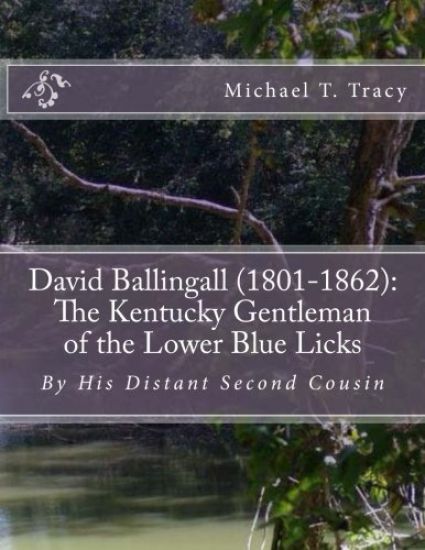
David Ballingall (1801-1862): The Kentucky Gentleman of the Lower Blue Licks: By His Distant Second Cousin
The Licking River winds through the rolling hills of northern Nicholas County, Kentucky as it did when the area was first explored in 1773. This river, however, tells the story of a Scottish family who first settled in the area by the fall of 1796. David Ballingall (1758-1833) named the lands he first settled at as Ballingall's Mill and here in 1801 his eldest son, David, was born. David Ballingall spent his first four years here until October of 1805 when the growing family relocated to the Lower Blue Licks. The first settlement occurred around 1784 and the Blue Licks, which has been known as Salt Springs, Lower Blue Lick Springs and Blue Lick Springs and received its name from the blue-grey deposit left by mineral water between the original spring and the Licking River. By 1807 the family purchased 100 acres of land near Johnson's Fork and along the Licking River. David Ballingall did not follow his father in farming and milling but rather became the Postmaster of the Lower Blue Licks as early as 1828 although he might have been in the position much earlier than that. Ballingall would marry Mary Ann Paton in 1841 and they would have one child before Mary died leaving him a widower. In 1844 the residents of the Lower Blue Licks region elected him to the Kentucky State House of Representatives where he served for two terms in Frankfort. Ballingall, after serving in the House, came back home to the Lower Blue Licks region. With Kentucky declaring its neutrality at the beginning of the Civil War, the 59-year-old Ballingall decided to enlist in the Confederate Army in the fall of 1861. This decision would prove to be a fatal mistake in his life as he would not survive. This then is the narrative of the life and times of David Ballingall, the Kentucky gentleman of the Lower Blue Licks.
Michael Oakeshott and Leo Strauss

Michael Oakeshott and Leo Strauss

David McIlwain

Springer Nature Switzerland AG
2019
sidottu
This book compares the thought of Michael Oakeshott and Leo Strauss, bringing Oakeshott’s desire for a renaissance of poetic individuality into dialogue with Strauss’s recovery of the universality of philosophical enlightenment. Starting from the conventional understanding of these thinkers as important voices of twentieth-century conservatism, McIlwain traces their deeper and more radical commitments to the highpoints of human achievement and their shared concerns with the fate of traditional inheritances in modernity, the role and meaning of history, the intention and meaning of political philosophy, and the problem of politics and religion. The book culminates in an articulation of the positions of Oakeshott and Strauss as part of the quarrel of poetry and philosophy, revealing the ongoing implications of their thinking in terms of the profound spiritual and political questions raised by modern thinkers such as Hobbes, Hegel, Nietzsche and Heidegger and leading back to foundational figures of Western civilization including St. Augustine and Socrates.
Michael Oakeshott and Leo Strauss

Michael Oakeshott and Leo Strauss

David McIlwain

Springer Nature Switzerland AG
2020
nidottu
This book compares the thought of Michael Oakeshott and Leo Strauss, bringing Oakeshott’s desire for a renaissance of poetic individuality into dialogue with Strauss’s recovery of the universality of philosophical enlightenment. Starting from the conventional understanding of these thinkers as important voices of twentieth-century conservatism, McIlwain traces their deeper and more radical commitments to the highpoints of human achievement and their shared concerns with the fate of traditional inheritances in modernity, the role and meaning of history, the intention and meaning of political philosophy, and the problem of politics and religion. The book culminates in an articulation of the positions of Oakeshott and Strauss as part of the quarrel of poetry and philosophy, revealing the ongoing implications of their thinking in terms of the profound spiritual and political questions raised by modern thinkers such as Hobbes, Hegel, Nietzsche and Heidegger and leading back to foundational figures of Western civilization including St. Augustine and Socrates.
The Music and Thought of Michael Tippett

The Music and Thought of Michael Tippett

David Clarke

Cambridge University Press
2006
nidottu
Tippett is often cast as a composer with a strong visionary streak, but what does that mean for a twentieth-century artist? In this multi-faceted study, David Clarke explores Tippett's complex creative imagination - its dialogue between a romantic's aspirations to the ideal and absolute, and a modernist's sceptical realism. He shows how the musical formations of works such as The Midsummer Marriage, King Priam, and The Vision of Saint Augustine resonate with the aesthetic and theoretical ideas of key figures in modern Western culture - some known to have been influential to the composer (such as Jung, Wagner and Yeats), others not usually associated with him (such as Kant, Nietzsche and Adorno). Analyses of late works such as the Triple Concerto and Byzantium also speculate on Tippett's sexuality as a (literally) critical element in his creative and political consciousness.