Kirjojen hintavertailu. Mukana 11 699 587 kirjaa ja 12 kauppaa.

Kirjahaku

Etsi kirjoja tekijän nimen, kirjan nimen tai ISBN:n perusteella.

1000 tulosta hakusanalla Edith Piaf

In Morocco (1920). By: Edith Wharton: Illustrated (Original Classics)

In Morocco (1920). By: Edith Wharton: Illustrated (Original Classics)

Edith Wharton

Createspace Independent Publishing Platform
2017
nidottu
Edith Wharton ( born Edith Newbold Jones; January 24, 1862 - August 11, 1937) was an American novelist, short story writer, and designer. Wharton combined an insider's view of American aristocracy with a powerful prose style. Her novels and short stories realistically portrayed the lives and morals of the late nineteenth century, an era of decline and faded wealth. She won the Pulitzer Prize for Literature in 1921, and was the first woman to receive this honor. Wharton was acquainted with many of the well-known people of her day, both in America and in Europe, including President Theodore Roosevelt. Edith Wharton was born Edith Newbold Jones to George Frederic Jones and Lucretia Stevens Rhinelander at their brownstone at 14 West Twenty-third Street in New York City. She had two older brothers, Frederic Rhinelander, who was sixteen, and Henry Edward, who was eleven. She was baptized April 20, 1862, Easter Sunday, at Grace Church. To her friends and family she was known as "Pussy Jones." The saying "keeping up with the Joneses" is said to refer to her father's family. She was also related to the Rensselaers, the most prestigious of the old patroon families, who had received land grants from the former Dutch government of New York and New Jersey. She had a lifelong friendship with her niece, the landscape architect Beatrix Farrand of Reef Point in Bar Harbor, Maine. Wharton was born during the Civil War; she was three years old when the Confederate States surrendered. After the war, the family traveled extensively in Europe. From 1866 to 1872, the Jones family visited France, Italy, Germany, and Spain. During her travels, the young Edith became fluent in French, German, and Italian. At the age of ten, she suffered from typhoid fever while the family was at a spa in the Black Forest. After the family returned to the United States in 1872, they spent their winters in New York and their summers in Newport, Rhode Island.While in Europe, she was educated by tutors and governesses. She rejected the standards of fashion and etiquette that were expected of young girls at the time, which were intended to allow women to marry well and to be put on display at balls and parties. She considered these fashions superficial and oppressive. Edith wanted more education than she received, so she read from her father's library and from the libraries of her father's friends. Her mother forbade her to read novels until she was married, and Edith obeyed this command.Wharton began writing poetry and fiction as a young girl, and attempted to write her first novel at age eleven. At age 15, her first published work appeared, a translation of a German poem "Was die Steine Erz hlen" ("What the Stones Tell") by Heinrich Karl Brugsch, for which which she was paid $50. Her family did not want her name to appear in print, since writing was not considered a proper occupation for a society woman of her time. Consequently, the poem was published under the name of a friend's father, E. A. Washburn, a cousin of Ralph Waldo Emerson who supported women's education. He played a pivotal role in Edith's efforts to educate herself and encouraged her ambition to write professionally. In 1877, at the age of 15, she secretly wrote a 30,000 word novella "Fast and Loose." In 1878 her father arranged for a collection of two dozen original poems and five translations, Verses, to be privately published. In 1880 she had five poems published anonymously in the Atlantic Monthly, an important literary magazine. Despite these early successes, she was not encouraged by her family or her social circle, and though she continued to write, she did not publish anything more until her poem "The Last Giustiniani" was published in Scribner's Magazine in October 1889.On 29 April 1885, at age 23, she married Edward (Teddy) Robbins Wharton, who was 12 years her senior, at the Trinity Chapel Complex...
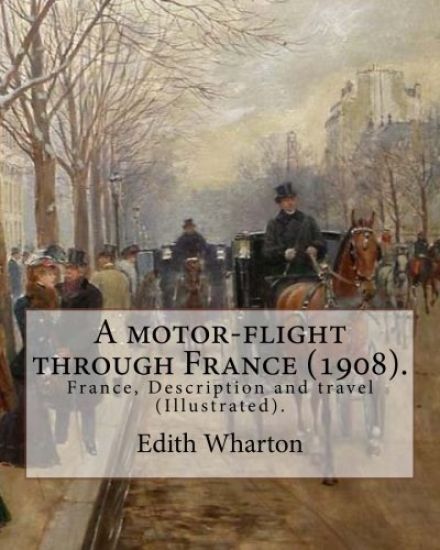
A motor-flight through France (1908). By: Edith Wharton (Illustrated).: France, Description and travel
Edith Wharton ( born Edith Newbold Jones; January 24, 1862 - August 11, 1937) was an American novelist, short story writer, and designer. Wharton combined an insider's view of American aristocracy with a powerful prose style. Her novels and short stories realistically portrayed the lives and morals of the late nineteenth century, an era of decline and faded wealth. She won the Pulitzer Prize for Literature in 1921, and was the first woman to receive this honor. Wharton was acquainted with many of the well-known people of her day, both in America and in Europe, including President Theodore Roosevelt.Edith Wharton was born Edith Newbold Jones to George Frederic Jones and Lucretia Stevens Rhinelander at their brownstone at 14 West Twenty-third Street in New York City. She had two older brothers, Frederic Rhinelander, who was sixteen, and Henry Edward, who was eleven. She was baptized April 20, 1862, Easter Sunday, at Grace Church. To her friends and family she was known as "Pussy Jones."The saying "keeping up with the Joneses" is said to refer to her father's family. She was also related to the Rensselaers, the most prestigious of the old patroon families, who had received land grants from the former Dutch government of New York and New Jersey. She had a lifelong friendship with her niece, the landscape architect Beatrix Farrand of Reef Point in Bar Harbor, Maine. Wharton was born during the Civil War; she was three years old when the Confederate States surrendered. After the war, the family traveled extensively in Europe. From 1866 to 1872, the Jones family visited France, Italy, Germany, and Spain. During her travels, the young Edith became fluent in French, German, and Italian. At the age of ten, she suffered from typhoid fever while the family was at a spa in the Black Forest. After the family returned to the United States in 1872, they spent their winters in New York and their summers in Newport, Rhode Island. While in Europe, she was educated by tutors and governesses. She rejected the standards of fashion and etiquette that were expected of young girls at the time, which were intended to allow women to marry well and to be put on display at balls and parties. She considered these fashions superficial and oppressive. Edith wanted more education than she received, so she read from her father's library and from the libraries of her father's friends.Her mother forbade her to read novels until she was married, and Edith obeyed this command.Wharton began writing poetry and fiction as a young girl, and attempted to write her first novel at age eleven. At age 15, her first published work appeared, a translation of a German poem "Was die Steine Erz hlen" ("What the Stones Tell") by Heinrich Karl Brugsch, for which which she was paid $50. Her family did not want her name to appear in print, since writing was not considered a proper occupation for a society woman of her time. Consequently, the poem was published under the name of a friend's father, E. A. Washburn, a cousin of Ralph Waldo Emerson who supported women's education. He played a pivotal role in Edith's efforts to educate herself and encouraged her ambition to write professionally. In 1877, at the age of 15, she secretly wrote a 30,000 word novella "Fast and Loose." In 1878 her father arranged for a collection of two dozen original poems and five translations, Verses, to be privately published. In 1880 she had five poems published anonymously in the Atlantic Monthly, an important literary magazine.Despite these early successes, she was not encouraged by her family or her social circle, and though she continued to write, she did not publish anything more until her poem "The Last Giustiniani" was published in Scribner's Magazine in October 1889....
Fighting France; from Dunkerque to Belfort (1915). By: Edith Wharton (Illustrated).: World War, 1914-1918. (Personal narratives)
Edith Wharton ( born Edith Newbold Jones; January 24, 1862 - August 11, 1937) was an American novelist, short story writer, and designer. Wharton combined an insider's view of American aristocracy with a powerful prose style. Her novels and short stories realistically portrayed the lives and morals of the late nineteenth century, an era of decline and faded wealth. She won the Pulitzer Prize for Literature in 1921, and was the first woman to receive this honor. Wharton was acquainted with many of the well-known people of her day, both in America and in Europe, including President Theodore Roosevelt.Edith Wharton was born Edith Newbold Jones to George Frederic Jones and Lucretia Stevens Rhinelander at their brownstone at 14 West Twenty-third Street in New York City. She had two older brothers, Frederic Rhinelander, who was sixteen, and Henry Edward, who was eleven. She was baptized April 20, 1862, Easter Sunday, at Grace Church. To her friends and family she was known as "Pussy Jones."The saying "keeping up with the Joneses" is said to refer to her father's family. She was also related to the Rensselaers, the most prestigious of the old patroon families, who had received land grants from the former Dutch government of New York and New Jersey. She had a lifelong friendship with her niece, the landscape architect Beatrix Farrand of Reef Point in Bar Harbor, Maine. Wharton was born during the Civil War; she was three years old when the Confederate States surrendered. After the war, the family traveled extensively in Europe. From 1866 to 1872, the Jones family visited France, Italy, Germany, and Spain. During her travels, the young Edith became fluent in French, German, and Italian. At the age of ten, she suffered from typhoid fever while the family was at a spa in the Black Forest. After the family returned to the United States in 1872, they spent their winters in New York and their summers in Newport, Rhode Island. While in Europe, she was educated by tutors and governesses. She rejected the standards of fashion and etiquette that were expected of young girls at the time, which were intended to allow women to marry well and to be put on display at balls and parties. She considered these fashions superficial and oppressive. Edith wanted more education than she received, so she read from her father's library and from the libraries of her father's friends.Her mother forbade her to read novels until she was married, and Edith obeyed this command.Wharton began writing poetry and fiction as a young girl, and attempted to write her first novel at age eleven. At age 15, her first published work appeared, a translation of a German poem "Was die Steine Erz hlen" ("What the Stones Tell") by Heinrich Karl Brugsch, for which which she was paid $50. Her family did not want her name to appear in print, since writing was not considered a proper occupation for a society woman of her time. Consequently, the poem was published under the name of a friend's father, E. A. Washburn, a cousin of Ralph Waldo Emerson who supported women's education. He played a pivotal role in Edith's efforts to educate herself and encouraged her ambition to write professionally. In 1877, at the age of 15, she secretly wrote a 30,000 word novella "Fast and Loose." In 1878 her father arranged for a collection of two dozen original poems and five translations, Verses, to be privately published. In 1880 she had five poems published anonymously in the Atlantic Monthly, an important literary magazine.Despite these early successes, she was not encouraged by her family or her social circle, and though she continued to write, she did not publish anything more until her poem "The Last Giustiniani" was published in Scribner's Magazine in October 1889....
Edith: Time

Edith: Time

Ivan Asarov

Independently Published
2018
nidottu
Edith Eris works in a water treatment facility where she is from, nothing glamorous but it provides an income. Then a disaster forces a change, for Edith and other survivors that meant escaping to the unknown, a place none of them had thought they would end up. But as time goes on things don't go well, something is different about Edith, and as governments learn this, they will kill to get her. Earth is not as welcoming as Edith thought it would be.
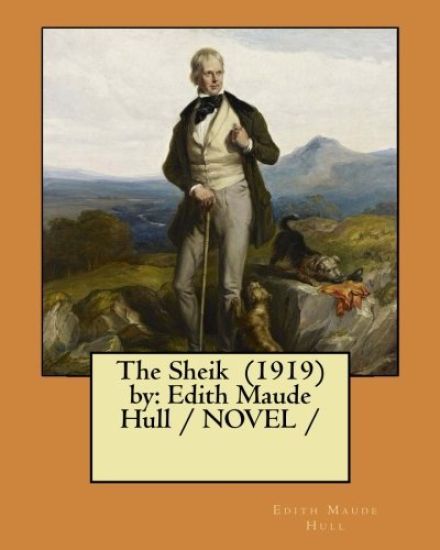
The Sheik (1919) by: Edith Maude Hull / NOVEL /

The Sheik (1919) by: Edith Maude Hull / NOVEL /

Edith Maude Hull

Createspace Independent Publishing Platform
2018
nidottu
The Sheik is a 1919 novel by Edith Maude Hull, an English novelist of the early twentieth century. It was the first of a series of novels she wrote with desert settings that set off a major revival of the "desert romance" genre of romantic fiction. It was a huge best-seller and the most popular of her books, and it served as the basis for the film of the same name starring Rudolph Valentino in the title role.The novel opens in a hotel in the Algerian city of Biskra. A dance is being held, hosted by a young woman named Diana Mayo and her brother, Sir Aubrey Mayo. It transpires that Diana is planning to leave on a month-long trip into the desert, taking no one with her but an Arab guide. Nobody thinks this is a sensible idea, and Lady Conway-a real person who appears in the book as a minor character-disapprovingly attributes Diana's adventurous plan to her "scandalous" upbringing. Diana's mother had died giving birth to her and her father had killed himself from grief, with the result that Diana grew up tomboyish, with a freedom that at the time was normally only allowed to boys. Before Diana leaves on her journey, her independent character is further established when she refuses a proposal of marriage, explaining that she doesn't know what love is and doesn't want to know. Once she begins travelling in the desert, it is not long before she is kidnapped by the eponymous Sheik, Ahmed Ben Hassan. It turns out her guide had been bribed. Ahmed takes Diana to his tent and rapes her, an event that happens off stage, between the second and third chapters. Diana spends a few months as Ahmed's captive, being raped regularly and brooding on her hatred for him and her self-loathing. Eventually, she is allowed increasing liberty and starts going riding with Ahmed's valet, Gaston. One day, she manages to escape Gaston on one of these rides and gallops away. She is quickly recaptured by Ahmed, however, and as they are riding back to camp, she is overcome by the sudden realisation that she is in love with him. She knows she can say nothing of this, as Ahmed-who claims to find love dull-will send her away if he learns of her love.
Edith Stein y el "De veritate" de Tomás de Aquino: Resúmenes, introducciones y comentarios de Edith Stein al "De veritate" de Tomás de Aquino
Con esta obra aparece el primer volumen de la serie "Filosof a Realista Fenomenol gica: Investigaciones filos ficas del Instituto Dietrich von Hildebrand para Filosof a e Investigaci n Filos fica Realista en la Gustav Siewerth Akademie, Bierbronnen". El trabajo realizado por Miriam Ramos G mez, y editado por IAP-Press, ofrece la primera versi n biling e alem n-espa ol de las introducciones, res menes, comentarios, notas a pie de p gina y de la advertencia preliminar escritos por Edith Stein en el trascurso de su traducci n de las "Quaestiones disputatae de veritate" de Tom s de Aquino. La traducci n supuso para la autora un paso gigantesco de su inmersi n progresiva en el mundo filos fico de Tom s de Aquino y de su asimilaci n desde la fenomenolog a de E. Husserl. Para posibilitar al lector una mirada a ese paso gigante dado por Stein, Miriam Ramos aporta un estudio filos fico introductorio y una nota t cnica sobre la traducci n y la edici n.
Choc: Le Jardin d'Edith

Choc: Le Jardin d'Edith

Edith Ulkei; Bak Nguyen

Ba Khoa Nguyen
2019
nidottu
Je dois vous dire que je suis surpris et tr s fi re de l' volution d'Edith. D'une femme g n e et timide une artiste qui s'ouvre corps et me, et qui nous partage son aventure d'adaptation en faisant des aller-retours entre la Transylvanie et l'Am rique. Le r cit d'une femme qui compose entre ses d sirs et ses r ves, et la r alit d'une nouvelle vie pour elle et sa famille.Nous sommes une terre d'accueil et de tol rance. Un pays o le droit civil reconna t une place et une chance tous et chacun. Qu'avons-nous fait pour contribuer? Prenons-nous m me le temps de le c l brer?C'est la raison de mon cheminement avec Edith. Cette visite l'exposition des ses oeuvres color es et des ses fresques humaines nous rappellent la grandeur et la beaut de notre sort."je n'ai pas le droit, je suis le produit d'une soci t et du r ve de ceux qui m'ont pr c d ."Dr. Bak NguyenEdith a commenc un parcours qu'elle peut colorer sa guise et modifier autant de fois qu'elle le souhaite. Enlevez votre masque et go tez vous aussi la nourriture des dieux, celle de l'extase de l' me Bienvenu dans le Jardin d'Edith.
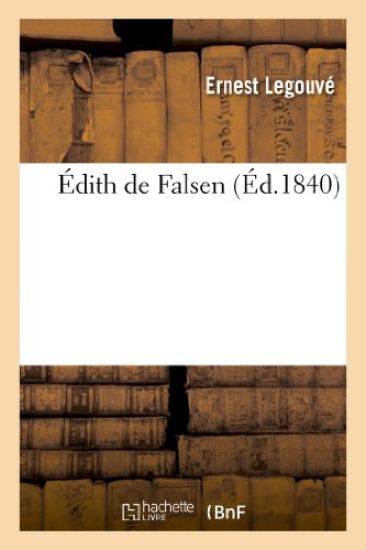
Édith de Falsen

Édith de Falsen

Ernest Legouvé

Hachette Livre - BNF
2013
pokkari
Edith de Falsen, par M. Ernest LegouveDate de l'edition originale: 1840Ce livre est la reproduction fidele d'une oeuvre publiee avant 1920 et fait partie d'une collection de livres reimprimes a la demande editee par Hachette Livre, dans le cadre d'un partenariat avec la Bibliotheque nationale de France, offrant l'opportunite d'acceder a des ouvrages anciens et souvent rares issus des fonds patrimoniaux de la BnF.Les oeuvres faisant partie de cette collection ont ete numerisees par la BnF et sont presentes sur Gallica, sa bibliotheque numerique.En entreprenant de redonner vie a ces ouvrages au travers d'une collection de livres reimprimes a la demande, nous leur donnons la possibilite de rencontrer un public elargi et participons a la transmission de connaissances et de savoirs parfois difficilement accessibles.Nous avons cherche a concilier la reproduction fidele d'un livre ancien a partir de sa version numerisee avec le souci d'un confort de lecture optimal. Nous esperons que les ouvrages de cette nouvelle collection vous apporteront entiere satisfaction.Pour plus d'informations, rendez-vous sur www.hachettebnf.fr
The Custom of the Country by Edith Wharton (Annotated)
The Custom of the Country by Edith Wharton's novel is a complicated work of fiction which exposes a crucial viewpoint on early twentieth century American society. A review of its primary themes, characters as well as narrative format: Here is the analysis: Social Critique and Class Dynamics: The novel looks at a tremendous topic: the critique of social class structures, particularly the difference between old money as well as brand new money. Undine Spragg is a character who Wharton depicts as societal climbing and materialism of the nouvelle riche. The novel examines the values as well as actions of the established elite and the newly landed, exposing the superficiality and moral bankruptcy that might lie behind the quest for social status.Undine Spragg: Character bio: Undine is a complicated character, generally viewed as an anti-heroine. She is driven by a need for wealth & status and is ardent, manipulative. Wharton utilizes her character as a means of examining themes of ambition and greed and also the social expectations placed on women. Wharton accomplishes a level of sympathy for Undine despite her usually unfavorable characteristics, displaying the limitations placed on women in her society.Marriage as a Social Tool: The novel discusses marriage not as hot union but as a tool of social advancement. Marriages within Undine are merely transactions, a means of ascending socially. The portrayal mirrors the mercantile nature of relationships within some social groups and criticises the commodityization of marriage.Contrast Between American as well as European Values: Wharton compared American and European societal values and normative. The novel indicates that European society is grounded in tradition and more stable, while American culture is fluid and centered on newness and wealth. Undine's marriages to both American and European males and her adaptation to various cultural expectations are a clear illustration of this contrast.Consumerism as well as Materialism: The book is an examination of American consumerism. Undine's constant pursuit of luxury and standing illustrates the larger societal aversion to appearance and material possessions. Wharton critiques this materialism, indicating it results in moral emptiness and personal dissatisfaction.Realism as well as Narrative Style: Wharton's story style brings together realism with thorough social observation. She meticulously captures the settings and social customs in the time, offering a vivid backdrop against which the story of her characters unfolds. Irony and subtle humor are used to deepen her social criticism.Gender Roles as well as Feminism: The novel isn't explicitly feminist but does examine the limited roles that women played in early 20th century society. Despite being morally questionable, Undine's actions may be viewed as a response - towards the limitations put on her as a woman. Her drive for independence contrasts with the established roles of women.The American Dream: The novel may be regarded as a look at the American Dream. Undine's continuous quest for upward mobility and happiness via money as well as power eventually does not gratify her, indicating the hollowness of this dream when based entirely on material accomplishment.
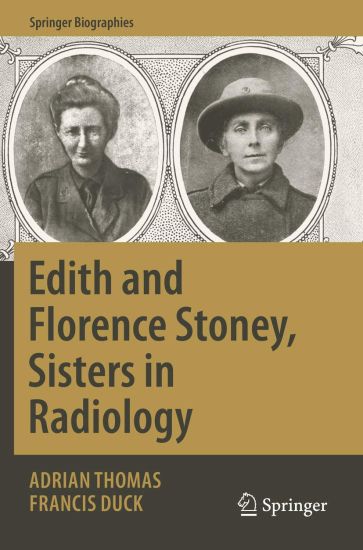
Edith and Florence Stoney, Sisters in Radiology

Edith and Florence Stoney, Sisters in Radiology

Adrian Thomas; Francis Duck

Springer Nature Switzerland AG
2019
sidottu
This book explores the lives and achievements of two Irish sisters, Edith and Florence Stoney, who pioneered the use of new electromedical technologies, especially X-rays but also ultraviolet radiation and diathermy. In addition, the narrative follows several intertwined themes as experienced by the sisters during their lifetimes. Their upbringing, influenced by their liberal-minded scientist father, set the tone for both their lives. Irish independence fractured their family heritage. Their professional experiences, fulfilling for Florence as a qualified doctor but often frustrating for Edith as a Cambridge-educated scientist, mirrored those of other aspiring women during this period, when the suffragist movement expanded and women’s lobby groups were formed. World War I created an environment in which their unusual specialist knowledge was widely needed, and the sisters’ war experiences are carefully examined in the book. But ultimately this is the extraordinary story of two independent but closely bonded sisters and their abiding love and support for one another.
Edith and Florence Stoney, Sisters in Radiology

Edith and Florence Stoney, Sisters in Radiology

Adrian Thomas; Francis Duck

Springer Nature Switzerland AG
2020
nidottu
This book explores the lives and achievements of two Irish sisters, Edith and Florence Stoney, who pioneered the use of new electromedical technologies, especially X-rays but also ultraviolet radiation and diathermy. In addition, the narrative follows several intertwined themes as experienced by the sisters during their lifetimes. Their upbringing, influenced by their liberal-minded scientist father, set the tone for both their lives. Irish independence fractured their family heritage. Their professional experiences, fulfilling for Florence as a qualified doctor but often frustrating for Edith as a Cambridge-educated scientist, mirrored those of other aspiring women during this period, when the suffragist movement expanded and women’s lobby groups were formed. World War I created an environment in which their unusual specialist knowledge was widely needed, and the sisters’ war experiences are carefully examined in the book. But ultimately this is the extraordinary story of two independent but closely bonded sisters and their abiding love and support for one another.
Edith Stein’s An Investigation Concerning the State: Sociality, Nationhood, Ethics
This book explores Edith Stein's phenomenology of the state. It features chapters on the application of Stein’s political philosophy to real issues and questions affecting nations today. The contributors also situate Stein’s political theory within her larger philosophical corpus. The collection examines An Investigation Concerning the State from various angles. Scholars first consider some of the direct claims Stein makes about social and political ontology. They mine her work for its implications for and applications to contemporary debates. Then, the contributors position her work in relation to other figures in phenomenology, including Edmund Husserl and Max Scheler. Finally, Stein’s views are brought to bear on other disciplines, including feminism, theology, and literature. The contributors also use her theory of the state to address various contemporary issues, including bioethics and rights, globalization, as well as social and political inequality. The view of the state that emerges has implications for how we do politics and make ethical decisions. Moreover, Stein's work has an impact on our views of sociality (as opposed to the sociality of contractarian views of the state), pedagogy, women, theories of justice and law, as well as social psychology and religion. This volume helps readers better understand this vital voice in political philosophy and appeals to students, professors, and researchers working in the field.
Edith Stein’s An Investigation Concerning the State: Sociality, Nationhood, Ethics
This book explores Edith Stein's phenomenology of the state. It features chapters on the application of Stein’s political philosophy to real issues and questions affecting nations today. The contributors also situate Stein’s political theory within her larger philosophical corpus. The collection examines An Investigation Concerning the State from various angles. Scholars first consider some of the direct claims Stein makes about social and political ontology. They mine her work for its implications for and applications to contemporary debates. Then, the contributors position her work in relation to other figures in phenomenology, including Edmund Husserl and Max Scheler. Finally, Stein’s views are brought to bear on other disciplines, including feminism, theology, and literature. The contributors also use her theory of the state to address various contemporary issues, including bioethics and rights, globalization, as well as social and political inequality. The view of the state that emerges has implications for how we do politics and make ethical decisions. Moreover, Stein's work has an impact on our views of sociality (as opposed to the sociality of contractarian views of the state), pedagogy, women, theories of justice and law, as well as social psychology and religion. This volume helps readers better understand this vital voice in political philosophy and appeals to students, professors, and researchers working in the field.