Looking to the 2030 2040 time frame, U.S. policy and military strategy will need to strike a balance among maintaining a cooperative relationship with China, deterring Chinese aggression in regional disputes, and preparing for the possibility that China could become more assertive. The U.S. Army will have an important role to play in preparing for these developments and for protecting and furthering U.S. interests in the region."
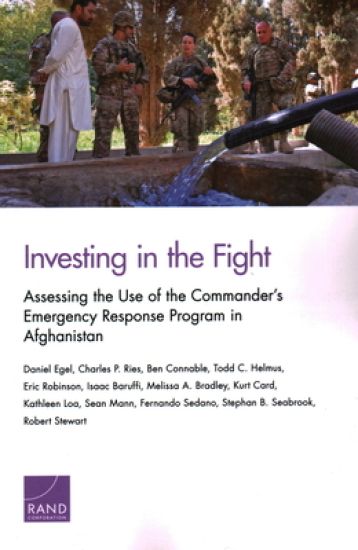
Daniel Egel; Charles P. Ries; Ben Connable; Todd C. Helmus; Eric Robinson; Isaac Baruffi; Melissa A. Bradley; Kurt Card; Kathleen Loa; Sean Mann; Fernando Sedano; Stephan B. Seabrook; Robert Stewart
This report examines the use of the Commander's Emergency Response Program (CERP) in Afghanistan. It explores the effectiveness of CERP in supporting tactical operations in Afghanistan during the counterinsurgency-focused 2010-2013 time frame using both qualitative and quantitative methods and describes CERP's origins, history, and existing research on the effectiveness of CERP in Iraq and Afghanistan.
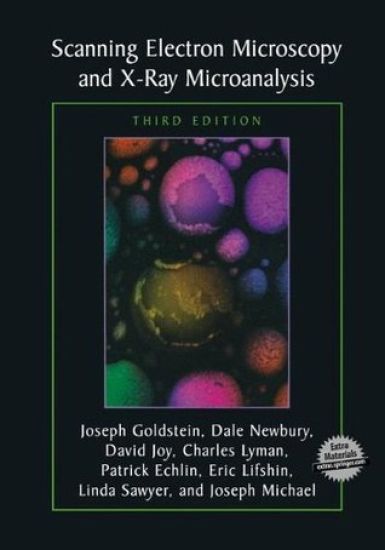
This book has evolved by processes of selection and expansion from its predecessor, Practical Scanning Electron Microscopy (PSEM), published by Plenum Press in 1975. The interaction of the authors with students at the Short Course on Scanning Electron Microscopy and X-Ray Microanalysis held annually at Lehigh University has helped greatly in developing this textbook. The material has been chosen to provide a student with a general introduction to the techniques of scanning electron microscopy and x-ray microanalysis suitable for application in such fields as biology, geology, solid state physics, and materials science. Following the format of PSEM, this book gives the student a basic knowledge of (1) the user-controlled functions of the electron optics of the scanning electron microscope and electron microprobe, (2) the characteristics of electron-beam-sample inter actions, (3) image formation and interpretation, (4) x-ray spectrometry, and (5) quantitative x-ray microanalysis. Each of these topics has been updated and in most cases expanded over the material presented in PSEM in order to give the reader sufficient coverage to understand these topics and apply the information in the laboratory. Throughout the text, we have attempted to emphasize practical aspects of the techniques, describing those instru ment parameters which the microscopist can and must manipulate to obtain optimum information from the specimen. Certain areas in particular have been expanded in response to their increasing importance in the SEM field. Thus energy-dispersive x-ray spectrometry, which has undergone a tremendous surge in growth, is treated in substantial detail.
Lennis G. Echterling; Jack Presbury; Eric W. Cowan; A. Renee Staton; Debbie C. Sturm; Michele L. Kielty; J. Edson McKee; Anne L. (Leona) Stewart; William F. Evans
Written in a conversational and engaging style, this updated and expanded Third Edition of Thriving! helps future counselors and therapists to succeed in their training and professional development throughout their graduate careers. This informative and inspirational book includes an overview of the literature, personal accounts from students, practical tips/activities, and the latest coverage of such topics as advances in neuroscience research, crisis intervention, and more!
Raymond T. Ng; Patricia C. Arocena; Denilson Barbosa; Giuseppe Carenini; Luiz Gomes; Stephan Jou; Anthony Leung; Evangelos Milios; Renée J. Miller; John Mylopoulos; Rachel A Pottinger; Frank Tompa; Eric Yu
In the 1980s, traditional Business Intelligence (BI) systems focused on the delivery of reports that describe the state of business activities in the past, such as for questions like "How did our sales perform during the last quarter?" A decade later, there was a shift to more interactive content that presented how the business was performing at the present time, answering questions like "How are we doing right now?" Today the focus of BI users are looking into the future. "Given what I did before and how I am currently doing this quarter, how will I do next quarter?" Furthermore, fuelled by the demands of Big Data, BI systems are going through a time of incredible change. Predictive analytics, high volume data, unstructured data, social data, mobile, consumable analytics, and data visualization are all examples of demands and capabilities that have become critical within just the past few years, and are growing at an unprecedented pace. This book introduces research problems and solutions on various aspects central to next-generation BI systems. It begins with a chapter on an industry perspective on how BI has evolved, and discusses how game-changing trends have drastically reshaped the landscape of BI. One of the game changers is the shift toward the consumerization of BI tools. As a result, for BI tools to be successfully used by business users (rather than IT departments), the tools need a business model, rather than a data model. One chapter of the book surveys four different types of business modeling. However, even with the existence of a business model for users to express queries, the data that can meet the needs are still captured within a data model. The next chapter on vivification addresses the problem of closing the gap, which is often significant, between the business and the data models. Moreover, Big Data forces BI systems to integrate and consolidate multiple, and often wildly different, data sources. One chapter gives an overview of several integration architectures for dealing with the challenges that need to be overcome. While the book so far focuses on the usual structured relational data, the remaining chapters turn to unstructured data, an ever-increasing and important component of Big Data. One chapter on information extraction describes methods for dealing with the extraction of relations from free text and the web. Finally, BI users need tools to visualize and interpret new and complex types of information in a way that is compelling, intuitive, but accurate. The last chapter gives an overview of information visualization for decision support and text.
In the decade since the publication of the second edition of Scanning Electron Microscopy and X-Ray Microanalysis, there has been a great expansion in the capabilities of the basic scanning electron microscope (SEM) and the x-ray spectrometers. The emergence of the variab- pressure/environmental SEM has enabled the observation of samples c- taining water or other liquids or vapor and has allowed for an entirely new class of dynamic experiments, that of direct observation of che- cal reactions in situ. Critical advances in electron detector technology and computer-aided analysis have enabled structural (crystallographic) analysis of specimens at the micrometer scale through electron backscatter diffr- tion (EBSD). Low-voltage operation below 5 kV has improved x-ray spatial resolution by more than an order of magnitude and provided an effective route to minimizing sample charging. High-resolution imaging has cont- ued to develop with a more thorough understanding of how secondary el- trons are generated. The ?eld emission gun SEM, with its high brightness, advanced electron optics, which minimizes lens aberrations to yield an - fective nanometer-scale beam, and “through-the-lens” detector to enhance the measurement of primary-beam-excited secondary electrons, has made high-resolution imaging the rule rather than the exception. Methods of x-ray analysis have evolved allowing for better measurement of specimens with complex morphology: multiple thin layers of different compositions, and rough specimens and particles. Digital mapping has transformed classic x-ray area scanning, a purely qualitative technique, into fully quantitative compositional mapping.
Walter L. Perry; Stuart E. Johnson; Keith Crane; David C. Gompert; John Gordon; Robert E. Hunter; Dalia Dassa Kaye; Terrence K. Kelly; Eric Peltz; Howard J. Shatz
Since 2007, security has improved dramatically in Iraq. The U.S. and Iraqi governments - and most Iraqis - want to see both the U.S. presence there reduced and the Iraqi government and security forces assuming a greater role in providing for public security. The challenge is to effect this drawdown while preserving security and stability in the country and in the region. In response to tasking from the U.S. Congress, RAND researchers conducted an independent study to examine drawdown schedules, risks, and mitigating strategies. They identified logistical constraints on moving equipment out of the country, assessed trends in insurgent activity and the ability of Iraqi security forces to counter it, and examined the implications for the size of the residual U.S. force and for security in Iraq and the region. This book presents alternative drawdown schedules - one consistent with the Obama administration's stated intentions and two others, one somewhat slower and another faster - that are responsive to these factors.It also recommends steps that the United States can take to alleviate anticipated constraints, overcome likely resistance, and reduce the potential risks associated with a drawdown. For more than 60 years, decisionmakers in the public and private sectors have turned to the RAND Corporation for objective analysis and effective solutions that address the challenges facing the nation and the world.
Given the unprecedented demands on the U.S. military since 2001 and the risks posed by stress and trauma, there has been growing concern about the prevalence and consequences of sleep problems. This first-ever comprehensive review of military sleep-related policies and programs, evidence-based interventions, and barriers to achieving healthy sleep offers a detailed set of actionable recommendations for improving sleep across the force.
In the last decade, since the publication of the first edition of Scanning Electron Microscopy and X-ray Microanalysis, there has been a great expansion in the capabilities of the basic SEM and EPMA. High resolution imaging has been developed with the aid of an extensive range of field emission gun (FEG) microscopes. The magnification ranges of these instruments now overlap those of the transmission electron microscope. Low-voltage microscopy using the FEG now allows for the observation of noncoated samples. In addition, advances in the develop ment of x-ray wavelength and energy dispersive spectrometers allow for the measurement of low-energy x-rays, particularly from the light elements (B, C, N, 0). In the area of x-ray microanalysis, great advances have been made, particularly with the "phi rho z" [Ij)(pz)] technique for solid samples, and with other quantitation methods for thin films, particles, rough surfaces, and the light elements. In addition, x-ray imaging has advanced from the conventional technique of "dot mapping" to the method of quantitative compositional imaging. Beyond this, new software has allowed the development of much more meaningful displays for both imaging and quantitative analysis results and the capability for integrating the data to obtain specific information such as precipitate size, chemical analysis in designated areas or along specific directions, and local chemical inhomogeneities.
In the decade since the publication of the second edition of Scanning Electron Microscopy and X-Ray Microanalysis, there has been a great expansion in the capabilities of the basic scanning electron microscope (SEM) and the x-ray spectrometers. The emergence of the variab- pressure/environmental SEM has enabled the observation of samples c- taining water or other liquids or vapor and has allowed for an entirely new class of dynamic experiments, that of direct observation of che- cal reactions in situ. Critical advances in electron detector technology and computer-aided analysis have enabled structural (crystallographic) analysis of specimens at the micrometer scale through electron backscatter diffr- tion (EBSD). Low-voltage operation below 5 kV has improved x-ray spatial resolution by more than an order of magnitude and provided an effective route to minimizing sample charging. High-resolution imaging has cont- ued to develop with a more thorough understanding of how secondary el- trons are generated. The ?eld emission gun SEM, with its high brightness, advanced electron optics, which minimizes lens aberrations to yield an - fective nanometer-scale beam, and “through-the-lens” detector to enhance the measurement of primary-beam-excited secondary electrons, has made high-resolution imaging the rule rather than the exception. Methods of x-ray analysis have evolved allowing for better measurement of specimens with complex morphology: multiple thin layers of different compositions, and rough specimens and particles. Digital mapping has transformed classic x-ray area scanning, a purely qualitative technique, into fully quantitative compositional mapping.
Laurent Bedoussac; E-P. Journet; H. Hauggaard-Nielsen; C. Naudin; G. Corre Hellou; E. S. Jensen; Eric Justes; Abeya Temesgen; Shu Fakai; Daniel Rodriguez; Gilbert G. Sigua; Diomy S. Zamora; Samuel C. Allen; Kent G. Apostol; Shibu Jose; Gary Wyatt
This collection features four peer-reviewed reviews on intercropping.The first chapter summarises data from over 50 field experiments undertaken since 2001 on cereal–grain legume intercropping using spring and winter cereal–grain legume intercrops. The chapter addresses the effects of intercropping on yields and quality, the agronomical performance of intercropping and cultivation practices in intercropping.The second chapter reviews the existing evidence on systems productivity, resource capture and use efficiency, between intercrops and sole crops for maize–legume-dominated cropping systems. The chapter also considers intercropping under different conditions, including those with heightened or reduced levels of moisture and nitrogen.The third chapter considers the effects of crop rotation and intercropping management practices on soil health, focussing on their impact on crop productivity, soil health enhancement and stability. The chapter also highlights the importance of leguminous crops and soil organic matter in maintaining healthy soils, sustaining crop productivity and enhancing biodiversity.The final chapter provides an overview of the economic and ecological benefits, challenges and major considerations of implementing alley cropping systems within North America. A case study detailing the performance evaluation of a pecan-cotton alley cropping system is also included.
Charles E. Lyman; Dale E. Newbury; Joseph Goldstein; David B. Williams; Alton D. Romig Jr.; John Armstrong; Patrick Echlin; Charles Fiori; David C. Joy; Eric Lifshin; Klaus-Rüdiger Peters
During the last four decades remarkable developments have taken place in instrumentation and techniques for characterizing the microstructure and microcomposition of materials. Some of the most important of these instruments involve the use of electron beams because of the wealth of information that can be obtained from the interaction of electron beams with matter. The principal instruments include the scanning electron microscope, electron probe x-ray microanalyzer, and the analytical transmission electron microscope. The training of students to use these instruments and to apply the new techniques that are possible with them is an important function, which. has been carried out by formal classes in universities and colleges and by special summer courses such as the ones offered for the past 19 years at Lehigh University. Laboratory work, which should be an integral part of such courses, is often hindered by the lack of a suitable laboratory workbook. While laboratory workbooks for transmission electron microscopy have-been in existence for many years, the broad range of topics that must be dealt with in scanning electron microscopy and microanalysis has made it difficult for instructors to devise meaningful experiments. The present workbook provides a series of fundamental experiments to aid in "hands-on" learning of the use of the instrumentation and the techniques. It is written by a group of eminently qualified scientists and educators. The importance of hands-on learning cannot be overemphasized.
Authored by some of the state’s top wildlife scientists, The Upland and Webless Migratory Game Birds of Texas presents the most up-to-date and comprehensive information covering twenty-one species of game birds. Ranging from the most well-known, like the Wild Turkey and Mourning Dove, to the marsh-loving rails and other more elusive species, these birds have widespread appeal among both hunters and birders and underscore the diverse challenges facing wildlife scientists, land managers, and conservationists in Texas today. From cultural significance to taxonomy and evolutionary history, this volume provides a wealth of background information on these species. Additionally, the book offers illustrated species accounts, detailed range maps, and information about habitat and management requirements, hunting regulations, and research priorities. Readers will gain a deeper understanding of these game birds and the array of terrestrial and wetland landscapes key to their survival. This will serve as a convenient and thorough reference volume for wildlife biologists and enthusiasts, as well as landowners and hunters.
Jonathan P Wong; Michael J Mazarr; Nathan Beauchamp-Mustafaga; Michael Bohnert; Scott Boston; Christian Curriden; Derek Eaton; Gregory Weider Fauerbach; Joslyn Fleming; Katheryn Giglio; Dahlia Anne Goldfeld; Derek Grossman; Timothy R Heath; John C Jackson; Michael E Linick; Eric Robinson; Lisa Saum-Manning; Ryan A Schwankhart; Michael Schwille; Stephan B Seabrook; Alice Shih; Jonathan Welch
This report seeks to address how the U.S. Army can most effectively project and employ land power in the Indo-Pacific, during competition and conflict, with a focus on scenarios involving China. The authors developed three concepts to guide the Army's ground force role in the theater, offering the essential architecture of basing, information, relationships, and flexible combat power needed to make the joint force effective.
Diego T. Santos; Ádina L. Santana; M. Angela A. Meireles; Ademir José Petenate; Eric Keven Silva; Juliana Q. Albarelli; Júlio C. F. Johner; M.Thereza M. S. Gomes; Ricardo Abel Del Castillo Torres; Tahmasb Hatami
This book provides deep insights on the fundamentals, applications and perspectives of the Supercritical AntiSolvent (SAS) Precipitation Process. Chapter 1 provides recent (2013-2018) reports on the use of supercritical CO2 (SC-CO2) antisolvent for micronization, coprecipitation and fractionation of high-value products for the food, cosmetic and pharmaceutical industries. Chapter 2 discusses another variant of the SAS precipitation process called Supercritical fluid extraction of emulsions (SFEE). This chapter provides recent data from 2016-2018 reports investigation of supercritical extraction of emulsions (SFEE) to encapsulate compounds of great interest to the food and non-food industry. Chapter 3 details the design and construction of a SAS Precipitation equipment. Chapter 4 presents experimental results regarding the validation of the supercritical particle formation equipment. Chapter 5 shows the effects of process parametersduring particle precipitation using Combined High Turbulence Extraction Assisted by Ultrasound and Supercritical Antisolvent Fractionation (SAF) processes applied to semi-defatted annatto seeds, as a model raw material plant, were investigated. Chapter 6 shows experimental results regarding the process Ultrasound Emulsification Assisted by Nitrogen Hydrostatic Pressure (UEANHP), during the emulsification preparation step of the Supercritical Fluid Extraction of Emulsions (SFEE) process, one of the options of the SAS Precipitation-based process. Finally, Chaptesr 7 and 8 present some perspectives about the economics and process integration with other processes aiming the development of novel conceptual biorefinering approaches for plant materials valorization.
En utvecklande bok för alla med namnet Eri(c)k att ta del av. Här kan du få insikter, råd och stöd för olika situationer som du befinner dig i, på den nivå du själv är. Och kanske hittar du här även styrkan att ta tag i en situation som du vill ändra på. Lycka till! Carina Skoglund
This is the bestselling story of Eric, a boy with leukemia who refused to give up living--as told by the person who was with him through it all, his mother. Eric was seventeen when he heard the doctor's verdict about the disease that wanted his life. At first he and his family could not believe it. Eric was the picture of everything a youth should be--a champion athlete, a splendid human being, vibrant with energy and loved by all who knew him. The doctors could promise little. They would do as much as was medically possible. Eric had to do as much as was humanly possible. But if the odds were not good, they were good enough for Eric. Given the choice between life and death, Eric chose to live.