As the floodwaters rise, Paris needs a hero . . . Frederic and his friends will have to battle an escaped zoo animal and fight off pickpockets and looters. But, as the danger escalates, can he find justice for his father and discover what courage really means?
Edward Frederic "E. F." Benson (24 July 1867 - 29 February 1940) was an English novelist, biographer, memoirist, archaeologist and short story writer. Early life: E. F. Benson was born at Wellington College in Berkshire, the fifth child of the headmaster, Edward White Benson (later Chancellor of Lincoln Cathedral, Bishop of Truro and Archbishop of Canterbury), and his wife born Mary Sidgwick ("Minnie"). E. F. Benson was the younger brother of Arthur Christopher Benson, who wrote the words to "Land of Hope and Glory", Robert Hugh Benson, author of several novels and Roman Catholic apologetic works, and Margaret Benson (Maggie), an author and amateur Egyptologist. Two other siblings died young. Benson's parents had six children and no grandchildren. Benson was educated at Temple Grove School, then at Marlborough College, where he wrote some of his earliest works and upon which he based his novel David Blaize. He continued his education at King's College, Cambridge. At Cambridge, he was a member of the Pitt Club, and later in life he became an honorary fellow of Magdalene College. WORKS: Benson's first book published was Sketches From Marlborough. He started his novel writing career with the (then) fashionably controversial Dodo (1893), which was an instant success, and followed it with a variety of satire and romantic and supernatural melodrama. He repeated the success of Dodo, which featured a scathing description of composer and militant suffragette Ethel Smyth (which she "gleefully acknowledged", according to actress Prunella Scales), with the same cast of characters a generation later: Dodo the Second (1914), "a unique chronicle of the pre-1914 Bright Young Things" and Dodo Wonders (1921), "a first-hand social history of the Great War in Mayfair and the Shires". The Mapp and Lucia series, written relatively late in his career, consists of six novels and two short stories. The novels are: Queen Lucia, Lucia in London, Miss Mapp (including the short story "The Male Impersonator"), Mapp and Lucia, Lucia's Progress (published as The Worshipful Lucia in the United States) and Trouble for Lucia. The short stories are "The Male Impersonator" and "Desirable Residences". Both appear in anthologies of Benson's short stories, and the former is also often appended to the end of the novel Miss Mapp. The last three novels were produced as a television series by London Weekend Television for the recently-initiated Channel 4 during 1985-6 with the series title Mapp and Lucia and featuring Nigel Hawthorne, Geraldine McEwan and Prunella Scales; the first four have been adapted for BBC Radio 4 by both Aubrey Woods and (most recently) Ned Sherrin; the fifth, Lucia's Progress, was adapted for BBC Radio 4 during 2008 by John Peacock. During 2007, the television series was rerun by the British digital channel ITV3. A new 3-part adaptation written by Steve Pemberton was broadcast during three nights on BBC One; 29th, 30th, and 31 December 2014. Benson was also known as a writer of atmospheric and at times humorous or satirical ghost stories, which were often first published in story magazines such as Pearson's Magazine or Hutchinson's Magazine, 20 of which were illustrated by Edmund Blampied. These "spook stories", as they were also termed, were then reprinted in collections by his principal publisher, Walter Hutchinson. His 1906 short story, "The Bus-Conductor", a fatal-crash premonition tale about a person haunted by a hearse driver, has been adapted several times, notably during 1944 (for the movie Dead of Night and as an anecdote in Bennett Cerf's Ghost Stories anthology published the same year) and for a 1961 episode of The Twilight Zone. The catchphrase from the story, "Room for one more", created a legend, and also occurs in the 1986 Oingo Boingo song, "Dead Man's Party".
Edward Frederic "E. F." Benson (24 July 1867 - 29 February 1940) was an English novelist, biographer, memoirist, archaeologist and short story writer. Early life: E. F. Benson was born at Wellington College in Berkshire, the fifth child of the headmaster, Edward White Benson (later Chancellor of Lincoln Cathedral, Bishop of Truro and Archbishop of Canterbury), and his wife born Mary Sidgwick ("Minnie"). E. F. Benson was the younger brother of Arthur Christopher Benson, who wrote the words to "Land of Hope and Glory", Robert Hugh Benson, author of several novels and Roman Catholic apologetic works, and Margaret Benson (Maggie), an author and amateur Egyptologist. Two other siblings died young. Benson's parents had six children and no grandchildren. Benson was educated at Temple Grove School, then at Marlborough College, where he wrote some of his earliest works and upon which he based his novel David Blaize. He continued his education at King's College, Cambridge. At Cambridge, he was a member of the Pitt Club, and later in life he became an honorary fellow of Magdalene College.
Biography of Bishop Fredric Baraga, a short history of his legacy, and architectural history of Baraga's house in Marquette Michigan. Chapter one covers Father Edward Jacker's eulogy and biography of Baraga. Chapter two details Baraga's lasting legacy in the mid-west. Chapter three describes the history of Baraga's house in Marquette Michigan.
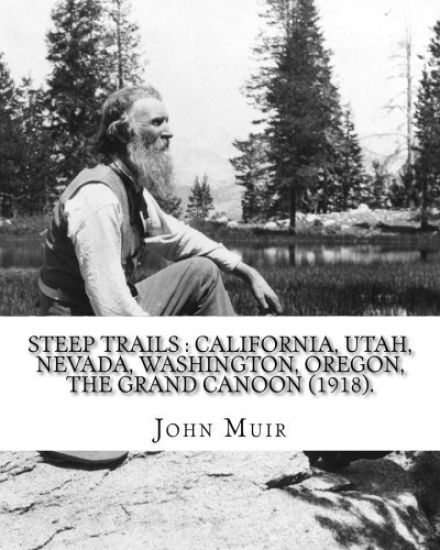
William Frederic Bad (January 22, 1871 - March 4, 1936), perhaps best known as the literary executor and biographer of John Muir, was a versatile scholar of wide interests. As an archaeologist, he led the excavation of Tell en-Nasbeh in Palestine, now believed on the basis of his work to be the biblical city of Mizpah in Benjamin. He was also an ordained Moravian minister, a professor of ancient languages, a theologian and bible scholar, a mountaineer, a conservationist and a naturalist. Born and raised in Minnesota, he studied at Moravian College and its seminary as well as other universities. He served on the faculties of Moravian Theological Seminary and then the Pacific School of Religion. He also served as interim president and subsequently as dean of the Pacific School of Religion and was founding director of the school's Palestine Institute. He was president of the Sierra Club 1919-1922 and edited the Sierra Club Bulletin for 12 years.................. John Muir ( April 21, 1838 - December 24, 1914) also known as "John of the Mountains", was a Scottish-American naturalist, author, environmental philosopher, glaciologist and early advocate for the preservation of wilderness in the United States. His letters, essays, and books describing his adventures in nature, especially in the Sierra Nevada, have been read by millions. His activism has helped to preserve the Yosemite Valley, Sequoia National Park and many other wilderness areas. The Sierra Club, which he co-founded, is a prominent American conservation organization. The 211-mile (340 km) John Muir Trail, a hiking trail in the Sierra Nevada, was named in his honor. Other such places include Muir Woods National Monument, Muir Beach, John Muir College, Mount Muir, Camp Muir, Muir Grove, and Muir Glacier. In Scotland, the John Muir Way, a 130-mile-long route, was named in honor of him. In his later life, Muir devoted most of his time to the preservation of the Western forests. As part of the campaign to make Yosemite a national park, Muir published two landmark articles on wilderness preservation in The Century Magazine, "The Treasures of the Yosemite" and "Features of the Proposed Yosemite National Park"; this helped support the push for U.S. Congress to pass a bill in 1890 establishing Yosemite National Park. The spiritual quality and enthusiasm toward nature expressed in his writings has inspired readers, including presidents and congressmen, to take action to help preserve large nature areas.Today Muir is referred to as the "Father of the National Parks" and the National Park Service has produced a short documentary about his life. John Muir has been considered "an inspiration to both Scots and Americans". Muir's biographer, Steven J. Holmes, believes that Muir has become "one of the patron saints of twentieth-century American environmental activity," both political and recreational. As a result, his writings are commonly discussed in books and journals, and he is often quoted by nature photographers such as Ansel Adams. "Muir has profoundly shaped the very categories through which Americans understand and envision their relationships with the natural world," writes Holmes. Muir was noted for being an ecological thinker, political spokesman, and religious prophet, whose writings became a personal guide into nature for countless individuals, making his name "almost ubiquitous" in the modern environmental consciousness. According to author William Anderson, Muir exemplified "the archetype of our oneness with the earth", while biographer Donald Worster says he believed his mission was "...saving the American soul from total surrender to materialism." On April 21, 2013, the first ever John Muir Day was celebrated in Scotland, which marked the 175th anniversary of his birth, paying homage to the conservationist.....................
The Damnation of Theron Ware (published in England as Illumination) is an 1896 novel by American author Harold Frederic. The novel reveals a great deal about late 19th century provincial America, religious life, and the depressed state of intellectual and artistic culture in small towns. It is similar to Samuel Butler's The Way of All Flesh and Sinclair Lewis's Elmer Gantry. It is written in a realistic style. The novel centers on the life of a Methodist pastor named Theron Ware who has recently moved to a fictional small town in the Adirondack Mountains of upstate New York, which Frederic modeled after Utica, New York. A promising young pastor recently married, Theron has a number of experiences that cause him to begin to question the Methodist religion, his role as a minister and even the very existence of God. His moral decline (or illumination) is heightened through his dealings with Father Forbes, the town's Catholic priest; Dr. Ledsmar, a local atheist, philosopher, and man of science; and Celia Madden, a local Irish Catholic girl, a species of aesthete, with whom Theron becomes hopelessly infatuated. In the end, these three "advanced" characters find Theron a bore, and tell him so. He goes on a binge, and is saved by Brother and Sister Soulsby, common-sensical fund-raisers for Methodist congregations. Their feet are on the ground, and they pack Theron and his wife off to the new state of Washington, where-who knows?--he might end up in politics. The name "Theron Ware" was later used by author James Blish for his "villain" in the novel Black Easter. In this novel Ware brings about the death of God and the triumph of Satan. The book was adapted into a play in 1979 by a Troy University theatre professor and produced by the school's drama department....... Harold Frederic (born Harold Henry Frederick; August 19, 1856 - October 19, 1898) was an American journalist and novelist. Life and career: Frederic was born in Utica, New York, to Presbyterian parents. After his father was killed in a railroad accident when Frederic was 18 months old, the boy was raised primarily by his mother. He finished school at age fifteen, and soon began work as a photographer. For four years he was a photographic touch-up artist in his hometown and in Boston. In 1875, he began work as a proofreader for the newspaper The Utica Herald and then The Utica Daily Observer. Frederic later became a reporter. Frederic married Grace Green Williams in 1877, and they had five children together. By 1882 he was editor of the newspaper The Albany Evening Journal in the state capital. In 1884 Frederic went to live in England as London correspondent of the New York Times, and worked at this position for the rest of his life. He brought his family to London by 1889. Afterward he met Kate Lyon, who became his mistress. Frederic and Lyon established a second household, living openly together; and they had three illegitimate children. Frederic wrote several early stories, but it was not until he published Illumination (1896), better known by its American title, The Damnation of Theron Ware, followed by Gloria Mundi (1898), that his talent as a novelist was fully realized. Critic Jonathan Yardley called Damnation "a minor classic of realism". Kate Lyon was a Christian Scientist. Frederic suffered a stroke in 1898. After his death, she was tried on charges of manslaughter brought by his wife Grace Frederic, and acquitted at trial................
In the Valley (1890) is a historical novel by Anglo-American novelist Harold Frederic. It is set in the United States in the Mohawk Valley and in Albany, New York, from 1757 to 1777. Plot A Mohawk Valley Dutchman finds himself pitted against a brilliant villain, a British officer, who for a time wins the affections of the heroine who has been thrown among "Tories" and British but steadfastly loyal to her native colony, though in the end he loses her to the less-worldly though courageous and honorable Douw Mauverensen, who is historian as well as hero of the tale. The climax of the book is the Battle of Oriskany. 1] The book adheres to the New York tradition, early set down in Irving and Cooper, of respect for Dutch prudence, suspicion of British perfidy and active prejudice against all New Englanders, particularly those from Connecticut. There are also faithful black slaves and ferocious Indians................... Harold Frederic (born Harold Henry Frederick; August 19, 1856 - October 19, 1898) was an American journalist and novelist. Life and career: Frederic was born in Utica, New York, to Presbyterian parents. After his father was killed in a railroad accident when Frederic was 18 months old, the boy was raised primarily by his mother. He finished school at age fifteen, and soon began work as a photographer. For four years he was a photographic touch-up artist in his hometown and in Boston. In 1875, he began work as a proofreader for the newspaper The Utica Herald and then The Utica Daily Observer. Frederic later became a reporter. Frederic married Grace Green Williams in 1877, and they had five children together. By 1882 he was editor of the newspaper The Albany Evening Journal in the state capital. In 1884 Frederic went to live in England as London correspondent of the New York Times, and worked at this position for the rest of his life. He brought his family to London by 1889. Afterward he met Kate Lyon, who became his mistress. Frederic and Lyon established a second household, living openly together; and they had three illegitimate children. Frederic wrote several early stories, but it was not until he published Illumination (1896), better known by its American title, The Damnation of Theron Ware, followed by Gloria Mundi (1898), that his talent as a novelist was fully realized. Critic Jonathan Yardley called Damnation "a minor classic of realism". Kate Lyon was a Christian Scientist. Frederic suffered a stroke in 1898. After his death, she was tried on charges of manslaughter brought by his wife Grace Frederic, and acquitted at trial............................