Kirjojen hintavertailu. Mukana 12 016 292 kirjaa ja 12 kauppaa.

Kirjahaku

Etsi kirjoja tekijän nimen, kirjan nimen tai ISBN:n perusteella.

1000 tulosta hakusanalla George Michell

George Washington Carver Selected Bulletins
This book is a compilation of three of the many bulletins Dr. George Washington Carver produced entitled: 1916 Experiment Station: How to Grow the Peanut & 105 Ways of Preparing it for Human Consumption; How To Grow The Tomato & 115 Ways to Prepare it for the Table; and How to Make Sweet Potato Flour, Starch, Sugar Bread & Mock Cocoanut. Dr. Carver produced these bulletins from 1898 to 1943 while a professor and agronomist at Tuskegee Institute. Dr. Carver dedicated his life to working in agriculture and the cultivation of soil for the fruit that it bears. He indicated that soil "can be built up and be made much more productive, and thus bring about a more ideal type of general prosperity and happiness for those whose labors are spent in the tilling of the soils." It is in that spirit that we hope to share with you just a smidgen of his enormous body of work. We hope that you, too, will benefit in general prosperity and happiness from his work and share it widely with others.
George Crabbe and his Times 1754-1832
This book was first published in 1968 First appearing in 1907, René Huchon with the help of original manuscripts rewrote the biography of Crabbe published by his son in 1834. As the title suggests, however, Huchon was not merely concerned with the presentation of Crabbe as a literary figure in isolation, and by conjuring up the atmosphere and background of the eighteenth century he is able to shed new light on Crabbe's poetry.There are descriptions of Aldborough, of the desolate heaths and marshy wastes where Crabbe spent his unhappy youth, which together with his background of poverty, and familiarity with the life of the country poor, led him to revolt against the current trend of pastoral poetry.At the time the most detailed study of Crabbe, this work is of foremost importance, for rarely is a poety placed so securely in his setting, and both followers of the poet, and devotees of the eighteenth century will welcome this being freely available agian.
George Crabbe and his Times 1754-1832
This book was first published in 1968 First appearing in 1907, René Huchon with the help of original manuscripts rewrote the biography of Crabbe published by his son in 1834. As the title suggests, however, Huchon was not merely concerned with the presentation of Crabbe as a literary figure in isolation, and by conjuring up the atmosphere and background of the eighteenth century he is able to shed new light on Crabbe's poetry.There are descriptions of Aldborough, of the desolate heaths and marshy wastes where Crabbe spent his unhappy youth, which together with his background of poverty, and familiarity with the life of the country poor, led him to revolt against the current trend of pastoral poetry.At the time the most detailed study of Crabbe, this work is of foremost importance, for rarely is a poety placed so securely in his setting, and both followers of the poet, and devotees of the eighteenth century will welcome this being freely available agian.
George Du Maurier: Illustrator, Author, Critic

George Du Maurier: Illustrator, Author, Critic

Simon Cooke; Paul Goldman

Routledge
2019
nidottu
Though well-known as the author of Trilby and the creator of Svengali, the writer-artist George Du Maurier had many other accomplishments that are less familiar to modern audiences. This collection traces Du Maurier’s role as a participant in the wider cultural life of his time, restoring him to his proper status as a major Victorian figure. Divided into sections, the volume considers Du Maurier as an artist, illustrator and novelist who helped to form some of the key ideas of his time. The contributors place his life and work in the context of his treatment of Judaism and Jewishness; his fascination with urbanization, Victorian science, technology and clairvoyance; his friendships and influences; and his impact on notions of consumerism and taste. As an illustrator, Du Maurier collaborated with Thomas Hardy, Elizabeth Gaskell and sensational writers such as M. E. Braddon and the author of The Notting Hill Mystery. These partnerships, along with his reflections on the art of illustration, are considered in detail. Impossible to categorize, Du Maurier was an Anglo-Frenchman with cultural linkages in France, England, and America; a social commentator with an interest in The New Woman; a Punch humourist; and a friend of Henry James, with whom he shared a particular interest in the writing of domesticity and domestic settings. Closing with a consideration of Du Maurier’s after-life, notably the treatment of his work in film, this collection highlights his diverse achievements and makes a case for his enduring significance.
The Plays of George Colman the Younger
Originally composed and published in 1981, this second book makes up two volumes of the plays of George Colman the Younger. Versatile, industrious, talented, George Colman the Younger (1762-1836) followed Sheridan as England's most popular playwright. He wrote not only monologues, farces, pantomimes, comic operas, and straight comedies, but also hybrid three-act anticipations of melodrama.
The Plays of George Colman the Younger

The Plays of George Colman the Younger

George Colman

TAYLOR FRANCIS LTD
2021
nidottu
Originally composed and published in 1981, this second book makes up two volumes of the plays of George Colman the Younger. Versatile, industrious, talented, George Colman the Younger (1762-1836) followed Sheridan as England's most popular playwright. He wrote not only monologues, farces, pantomimes, comic operas, and straight comedies, but also hybrid three-act anticipations of melodrama.
The Plays of George Colman the Younger
Originally composed and published in 1981, this second book makes up two volumes of the plays of George Colman the Younger. Versatile, industrious, talented, Goerge Colman the Younger (1762-1836) followed Sheridan as England's most popular playwright. He wrote not only monologues, farces, pantomimes, comic operas, and straight comedies, but also hybrid three-act anticipations of melodrama.
The Plays of George Colman the Younger

The Plays of George Colman the Younger

George Colman

TAYLOR FRANCIS LTD
2021
nidottu
Originally composed and published in 1981, this second book makes up two volumes of the plays of George Colman the Younger. Versatile, industrious, talented, Goerge Colman the Younger (1762-1836) followed Sheridan as England's most popular playwright. He wrote not only monologues, farces, pantomimes, comic operas, and straight comedies, but also hybrid three-act anticipations of melodrama.
George W. Bush's Foreign Policies

George W. Bush's Foreign Policies

Donette Murray; David Brown; Martin A. Smith

Routledge
2021
nidottu
This book offers a fresh assessment of George W. Bush’s foreign policies.It is not designed to offer an evaluation of the totality of George W. Bush’s foreign policy. Instead, the analysis will focus on the key aspects of his foreign and security policy record, in each case considering the interplay between principle and pragmatism. The underpinning contention here is that policy formulation and implementation across Bush’s two terms can more usefully be analysed in terms of shades of grey, rather than the black and white hues in which it has often been painted. Thus, in some key policy areas it will be seen that the overall record was more pragmatic and successful than his many critics have been prepared to give him credit for. The president and his advisers were sometimes prepared to alter and amend their policy direction, on occasion significantly. Context and personalities, interpersonal and interagency, both played a role here. Where these came together most visibly – for instance in connection with dual impasses over Iraq and Iran – exigencies on the ground sometimes found expression in personnel changes. In turn, the changing fortunes of Bush’s first term principals presaged policy changes in his second. What emerges from a more detached study of key aspects of the Bush administration – during a complicated and challenging period in the United States’ post-Cold War history, marked by the dramatic emergence of international Islamist terrorism as the dominant international security threat – is a more complex picture than any generalization can ever hope to sustain, regardless of how often it is repeated.This book will be of much interest to students of US foreign policy, international politics and security studies.
George W Bush Administration Propaganda for an Invasion of Iraq
Hartenian’s history of George W Bush propaganda for an invasion of Iraq returns the administration’s approach to its conceptual origins. Hartenian places "evidence" in the center of his analysis, showing that Rumsfeld’s "the absence of evidence is not evidence of absence" meant that no evidence was necessary to justify an invasion. The 9/11 attacks, indeed, "changed everything" for the Bush administration and in its aftermath the time for regime change in Iraq had simply come. With no good evidence to support its fears, the administration was certain of a post-9/11-conceived Iraq–al Qaeda "nexus," just as with no evidence except the "absence of evidence" it was certain of Iraqi mastery of "denial and deception" that hid "Saddam’s" "evil" activities. Resting on Cheney’s "one percent doctrine," administration "certainty" of the threat from Iraq required a US invasion.The policy offices of Douglas Feith at the Pentagon, with the help of George Tenet at CIA, would generate a case of such fright and enormity—the "mushroom cloud"—that required administration action. Manipulating intelligence and ignoring the growing body of evidence undermining its case, the Bush administration invaded Iraq to bring about "regime change."
George W Bush Administration Propaganda for an Invasion of Iraq
Hartenian’s history of George W Bush propaganda for an invasion of Iraq returns the administration’s approach to its conceptual origins. Hartenian places "evidence" in the center of his analysis, showing that Rumsfeld’s "the absence of evidence is not evidence of absence" meant that no evidence was necessary to justify an invasion. The 9/11 attacks, indeed, "changed everything" for the Bush administration and in its aftermath the time for regime change in Iraq had simply come. With no good evidence to support its fears, the administration was certain of a post-9/11-conceived Iraq–al Qaeda "nexus," just as with no evidence except the "absence of evidence" it was certain of Iraqi mastery of "denial and deception" that hid "Saddam’s" "evil" activities. Resting on Cheney’s "one percent doctrine," administration "certainty" of the threat from Iraq required a US invasion.The policy offices of Douglas Feith at the Pentagon, with the help of George Tenet at CIA, would generate a case of such fright and enormity—the "mushroom cloud"—that required administration action. Manipulating intelligence and ignoring the growing body of evidence undermining its case, the Bush administration invaded Iraq to bring about "regime change."
George Eliot’s Moral Aesthetic

George Eliot’s Moral Aesthetic

Constance Fulmer

Routledge
2020
nidottu
George Eliot’s serious readers have been intrigued by the fact that she declared that she had lost her faith in God and had renounced her hope for a traditional Christian heaven and yet she continued to preach her own version of morality in everything she wrote, to hope for an immortality which allowed her to join an invisible choir which would influence generations to come, and to be concerned about the moral growth of her characters. This is only one of the many compelling contradictions in her life and in her artistry. This volume aims to investigate Eliot’s ethical and artistic principles by defining her moral aesthetic as it relates to her self-concept and exploring Eliot’s narrative decisions and the decisions made by her characters and the circumstances which prompt those choices. Dr. Fulmer includes chapters on her clerical figures and other types of individuals such as musicians, and politicians. Dr. Fulmer also illuminates the paradoxes and contradictions in George Eliot’s life and in her philosophy by focusing on Eliot's use of animals, mirrors, windows, jewelry, wills and other tangible images in her poetry as well as her novels. George Eliot’s Moral Aesthetic contends that everything about her moral philosophy is related to her writing and that everything about her writing is related to her moral philosophy.
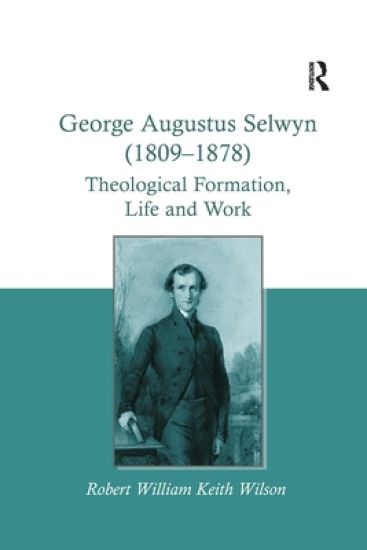
George Augustus Selwyn (1809-1878)

George Augustus Selwyn (1809-1878)

Robert William Keith Wilson

Routledge
2021
nidottu
The conventional portrayal of George Augustus Selwyn, the first Anglican bishop of New Zealand, focuses upon his significance as a missionary bishop who pioneered synodical government in New Zealand and acted as a mediator between settlers and Maori. George Augustus Selwyn (1809-1878) focuses on Selwyn’s theological formation, which places him in the context of the world of traditional high churchmanship, rather than the Oxford Movement narrowly conceived. It argues that his distinctiveness lay in the way in which he was able to transplant his vision of Anglicanism to the colonial context. Making use of Selwyn’s personal correspondence and papers, as well as his unpublished sermons, the book analyses his theological formation, his missionary policy, his role within the formation of the colonial episcopate, his attitude to conciliar authority and his impact upon the diocesan revival in England. The study places Selwyn alongside other likeminded high churchmen who shaped the framework for the transformation of Anglicanism from State Church to worldwide communion in the nineteenth century.
George Augustus Sala and the Nineteenth-Century Periodical Press
In his study of the journalist George Augustus Sala, Peter Blake discusses the way Sala’s personal style, along with his innovations in form, influenced the New Journalism at the end of the nineteenth century. Blake places Sala at the centre of nineteenth-century newspapers and periodicals and examines his prolific contributions to newspapers and periodicals in the context of contemporary debates and issues surrounding his work. Sala’s journalistic style, Blake argues, was a product of the very different mediums in which he worked, whether it was the visual arts, bohemian journalism, novels, pornographic plays, or travel writing. Harkening back to a time when journalism and fiction were closely connected, Blake’s book not only expands our understanding of one of the more prominent and interesting journalists and personalities of the nineteenth century, but also sheds light on prominent nineteenth-century writers and artists such as Charles Dickens, Mathew Arnold, William Powell Frith, Henry Vizetelly, and Mary Elizabeth Braddon.
George Gissing and the Woman Question

George Gissing and the Woman Question

Christine Huguet

Routledge
2019
nidottu
Approaching its subject both contextually and comparatively, George Gissing and the Woman Question reads Gissing's novels, short stories and personal writings as a crux in European fiction's formulations of gender and sexuality. The collection places Gissing alongside nineteenth- and twentieth-century authors as diverse as Paul Bourget, Ella Hepworth Dixon, May Sinclair and Theodore Dreiser, theorizing the ways in which late-Victorian sexual difference is challenged, explored and performed in Gissing's work. In addition to analyzing the major novels, essays make a case for Gissing as a significant short story writer and address Gissing's own life and afterlife in ways that avoid biographical mimetics. The contributors also place Gissing's work in relation to discourses of subjectivity and intersubjectivity, identity, public space, class and labour, especially literary production. Increasingly viewed as a key chronicler of the late Victorian period's various redefinitions of sexual difference, Gissing is here recognized as a sincere, uncompromising chronicler of social change.
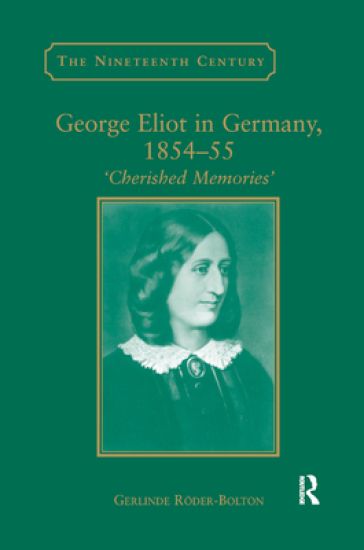
George Eliot in Germany, 1854?55

George Eliot in Germany, 1854?55

Gerlinde Roder-Bolton

Routledge
2019
nidottu
From 1854 to 1855, George Eliot spent eight months in Germany, a period that marked the start of her life with George Lewes. Though Eliot documented this journey more extensively than any other, it has remained an under-researched part of Eliot's biography. In her meticulously documented and engaging book, Gerlinde Röder-Bolton draws on Eliot's own writings, as well as on extensive original research in German archives and libraries, to provide the most thorough account yet published of the couple's visit. Rich in historical, social, and cultural detail, George Eliot in Germany, 1854-55 not only records the couple's travels but supplies a context for their encounters with people and places. In the process, Röder-Bolton shows how the crossing of geographical boundaries may be read as symbolic of Eliot's transition from single woman to social outcast and from translator and critic to writer of fiction.