Kirjojen hintavertailu. Mukana 12 595 353 kirjaa ja 12 kauppaa.

Kirjahaku

Etsi kirjoja tekijän nimen, kirjan nimen tai ISBN:n perusteella.

1000 tulosta hakusanalla Greg Mitchell

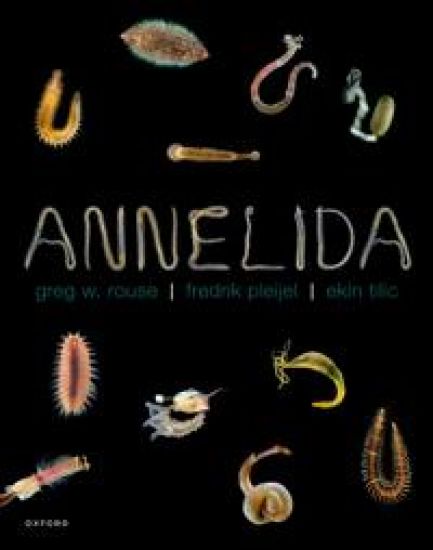
Annelida

Annelida

Greg Rouse; Fredrik Pleijel; Ekin Tilic

Oxford University Press
2024
nidottu
Annelids (the segmented worms) exist in a remarkably diverse range of mostly marine but also freshwater and terrestrial habitats, varying greatly in size and form. Annelida provides a fully updated and expanded taxonomic reference work which broadens the scope of the classic Polychaetes (OUP, 2001) to encompass wider groups including Clitellata (comprising more than a third of total annelid diversity), Sipuncula, and Thalassematidae (formerly Echiura). It reflects the enormous amount of research on these organisms that has burgeoned since the millennium, principally due to their use as model organisms to address wider and more general evolutionary and ecological questions. Beginning with a clear introduction to the phylum and an outline of annelid taxonomy, this authoritative text describes their collection, the methods to ensure their optimal preservation, and an overview of anatomy with its relevant terminology. The core of the work comprises 77 fully up-to-date taxonomic chapters, informed by anatomy and the latest molecular phylogenomic evidence and carefully organised based on a new, robust phylogenetic hypothesis. Lavishly illustrated throughout with hundreds of previously unpublished high-resolution colour images and SEM micrographs, the sheer beauty and diversity of the annelids is nowhere better presented. Annelida is the definitive reference work for annelid biologists, whilst being of interest to a broader audience of invertebrate zoologists, systematists, and organismal biologists.
Valuations, Mergers and Acquisitions

Valuations, Mergers and Acquisitions

Greg Beech; Dave Thayser

Oxford University Press Southern Africa
2015
nidottu
Valuations, mergers and acquisitions deals with the valuation of businesses for the purpose of mergers and acquisitions transactions, shareholder exits, capital raising and initial public offerings and covers the key principles involved in valuing businesses as going concerns. The book addresses the valuation of debt and derivative instruments, and provides insights into valuing specialised assets such as property. These principles are illustrated using extensive real-life examples and case studies. Valuations, mergers and acquisitions is relevant to senior undergraduate students taking modules in Valuations and Mergers and Acquisitions as part of Financial Management courses, MBA and MBL students, and SAICA seminar students. The book is also of practical use to corporate financiers and company executives who wish to clarify or research particular areas of concern in valuing a business in practice.
Writing Under Tyranny

Writing Under Tyranny

Greg Walker

Oxford University Press
2007
nidottu
Writing Under Tyranny: English Literature and the Henrician Reformation spans the boundaries between literary studies and history. It looks at the impact of tyrannical government on the work of poets, playwrights, and prose writers of the early English Renaissance. It shows the profound effects that political oppression had on the literary production of the years from 1528 to 1547, and how English writers in turn strove to mitigate, redirect, and finally resist that oppression. The result was the destruction of a number of forms that had dominated the literary production of late-medieval England, but also the creation of new forms that were to dominate the writing of the following centuries. Paradoxically, the tyranny of Henry VIII gave birth to many modes of writing now seen to be characteristic of the English literary Renaissance.
Writing Under Tyranny

Writing Under Tyranny

Greg Walker

Oxford University Press
2005
sidottu
Writing Under Tyranny: English Literature and the Henrician Reformation spans the boundaries between literary studies and history. It looks at the impact of tyrannical government on the work of poets, playwrights, and prose writers of the early English Renaissance. It shows the profound effects that political oppression had on the literary production of the years from 1528 to 1547, and how English writers in turn strove to mitigate, redirect, and finally resist that oppression. The result was the destruction of a number of forms that had dominated the literary production of late-medieval England, but also the creation of new forms that were to dominate the writing of the following centuries. Paradoxically, the tyranny of Henry VIII gave birth to many modes of writing now seen to be characteristic of the English literary Renaissance.
Entertaining Judgment

Entertaining Judgment

Greg Garrett

Oxford University Press Inc
2015
sidottu
It is far more common nowadays to see references to the afterlife--angels playing harps, demons brandishing pitchforks, God among heavenly clouds, the fires of hell--in New Yorker cartoons than in serious Christian theological scholarship. Speculation about death and the afterlife seems to embarrass many of America's less-evangelical theologians, yet as Greg Garrett shows, popular culture in the U.S. has found rich ground for creative expression in what happens to us after death. The rock music of U2, Iron Maiden, and AC/DC, the storylines of TV's Lost, South Park, and Fantasy Island, the implied theology in films such as The Corpse Bride, Ghost, and Field of Dreams, the heavenly half-light of Thomas Kinkade's popular paintings, and the supernatural landscape of ghosts, shades, and waystations in the Harry Potter novels all speak to our hopes and fears about what comes next. Greg Garrett scrutinizes a wide array of cultural productions to find the stories being told about what awaits us: depictions of heaven, hell, and purgatory, angels, demons, and ghosts, all offering at least an implied theology of life after death. The citizens of the imagined afterlife, whether in heaven, hell, on earth, or in between, are telling us about what awaits us, at once shaping and reflecting our deeply held--if sometimes inchoate--beliefs. They teach us about reward and punishment, about divine assistance in this life, about diabolical interference, and about other ways of being after we die. Especially fascinating are the frequent appearances of purgatory, limbo, and other in-between places. Such beliefs are dismissed by the Protestant majority, and quietly disparaged even by many Catholics. Yet many pop culture narratives represent departed souls who must earn some sort of redemption, complete some unfinished task, before passing on. Garrett's incisive analysis sheds new light on what popular culture can tell us about the startlingly sharp divide between what modern people profess to believe and what they truly hope to find after death.
Between Empires

Between Empires

Greg Fisher

Oxford University Press
2011
sidottu
In Between Empires Greg Fisher tackles the problem of pre-Islamic Arab identity by examining the relationship between the Roman Empire and the Empire of Sasanian Iran, and a selection of their Arab allies and neighbours, the Jafnids, Nasrids, and Hujrids. Fisher focuses on the last century before the emergence of Islam and stresses the importance of a Near East dominated by Rome and Iran for the formation of early concepts of Arab identity. In particular, he examines cultural and religious integration, political activities, and the role played by Arabic as factors in this process. He concludes that interface with the Roman Empire, in particular, played a key role in helping to lay the foundation for later concepts of Arab identity, and that the world of Late Antiquity is, as a result, of enduring interest in our understanding of what we now call the Middle East.
The Life and Death of Ancient Cities

The Life and Death of Ancient Cities

Greg Woolf

Oxford University Press
2020
sidottu
The human race is on a 10,000 year urban adventure. Our ancestors wandered the planet or lived scattered in villages, yet by the end of this century almost all of us will live in cities. But that journey has not been a smooth one and urban civilizations have risen and fallen many times in history. The ruins of many of them still enchant us. This book tells the story of the rise and fall of ancient cities from the end of the Bronze Age to the beginning of the Middle Ages. It is a tale of war and politics, pestilence and famine, triumph and tragedy, by turns both fabulous and squalid. Its focus is on the ancient Mediterranean: Greeks and Romans at the centre, but Phoenicians and Etruscans, Persians, Gauls, and Egyptians all play a part. The story begins with the Greek discovery of much more ancient urban civilizations in Egypt and the Near East, and charts the gradual spread of urbanism to the Atlantic and then the North Sea in the centuries that followed. The ancient Mediterranean, where our story begins, was a harsh environment for urbanism. So how were cities first created, and then sustained for so long, in these apparently unpromising surroundings? How did they feed themselves, where did they find water and building materials, and what did they do with their waste and their dead? Why, in the end, did their rulers give up on them? And what it was like to inhabit urban worlds so unlike our own - cities plunged into darkness every night, cities dominated by the temples of the gods, cities of farmers, cities of slaves, cities of soldiers. Ultimately, the chief characters in the story are the cities themselves. Athens and Sparta, Persepolis and Carthage, Rome and Alexandria: cities that formed great families. Their story encompasses the history of the generations of people who built and inhabited them, whose short lives left behind monuments that have inspired city builders ever since - and whose ruins stand as stark reminders to the 21st century of the perils as well as the potential rewards of an urban existence.
The Life and Death of Ancient Cities

The Life and Death of Ancient Cities

Greg Woolf

Oxford University Press
2022
nidottu
The human race is on a 10,000 year urban adventure. Our ancestors wandered the planet or lived scattered in villages, yet by the end of this century almost all of us will live in cities. But that journey has not been a smooth one and urban civilizations have risen and fallen many times in history. The ruins of many of them still enchant us. This book tells the story of the rise and fall of ancient cities from the end of the Bronze Age to the beginning of the Middle Ages. It is a tale of war and politics, pestilence and famine, triumph and tragedy, by turns both fabulous and squalid. Its focus is on the ancient Mediterranean: Greeks and Romans at the centre, but Phoenicians and Etruscans, Persians, Gauls, and Egyptians all play a part. The story begins with the Greek discovery of much more ancient urban civilizations in Egypt and the Near East, and charts the gradual spread of urbanism to the Atlantic and then the North Sea in the centuries that followed. The ancient Mediterranean, where our story begins, was a harsh environment for urbanism. So how were cities first created, and then sustained for so long, in these apparently unpromising surroundings? How did they feed themselves, where did they find water and building materials, and what did they do with their waste and their dead? Why, in the end, did their rulers give up on them? And what it was like to inhabit urban worlds so unlike our own - cities plunged into darkness every night, cities dominated by the temples of the gods, cities of farmers, cities of slaves, cities of soldiers. Ultimately, the chief characters in the story are the cities themselves. Athens and Sparta, Persepolis and Carthage, Rome and Alexandria: cities that formed great families. Their story encompasses the history of the generations of people who built and inhabited them, whose short lives left behind monuments that have inspired city builders ever since - and whose ruins stand as stark reminders to the 21st century of the perils as well as the potential rewards of an urban existence.
Between Empires

Between Empires

Greg Fisher

Oxford University Press
2013
nidottu
In Between Empires Greg Fisher tackles the problem of pre-Islamic Arab identity by examining the relationship between the Roman Empire and the Empire of Sasanian Iran, and a selection of their Arab allies and neighbours, the Jafnids, Nasrids, and Hujrids. Fisher focuses on the last century before the emergence of Islam and stresses the importance of a Near East dominated by Rome and Iran for the formation of early concepts of Arab identity. In particular, he examines cultural and religious integration, political activities, and the role played by Arabic as factors in this process. He concludes that interface with the Roman Empire, in particular, played a key role in helping to lay the foundation for later concepts of Arab identity, and that the world of Late Antiquity is, as a result, of enduring interest in our understanding of what we now call the Middle East.
Annelida

Annelida

Greg Rouse; Fredrik Pleijel; Ekin Tilic

Oxford University Press
2022
sidottu
Annelids (the segmented worms) exist in a remarkably diverse range of mostly marine but also freshwater and terrestrial habitats, varying greatly in size and form. Annelida provides a fully updated and expanded taxonomic reference work which broadens the scope of the classic Polychaetes (OUP, 2001) to encompass wider groups including Clitellata (comprising more than a third of total annelid diversity), Sipuncula, and Thalassematidae (formerly Echiura). It reflects the enormous amount of research on these organisms that has burgeoned since the millennium, principally due to their use as model organisms to address wider and more general evolutionary and ecological questions. Beginning with a clear introduction to the phylum and an outline of annelid taxonomy, this authoritative text describes their collection, the methods to ensure their optimal preservation, and an overview of anatomy with its relevant terminology. The core of the work comprises 77 fully up-to-date taxonomic chapters, informed by anatomy and the latest molecular phylogenomic evidence and carefully organised based on a new, robust phylogenetic hypothesis. Lavishly illustrated throughout with hundreds of previously unpublished high-resolution colour images and SEM micrographs, the sheer beauty and diversity of the annelids is nowhere better presented. Annelida is the definitive reference work for annelid biologists, whilst being of interest to a broader audience of invertebrate zoologists, systematists, and organismal biologists.
The Life and Death of Ancient Cities: A Natural History
The dramatic story of the rise and collapse of Europe's first great urban experiment The growth of cities around the world in the last two centuries is the greatest episode in our urban history, but it is not the first. Three thousand years ago most of the Mediterranean basin was a world of villages; a world without money or writing, without temples for the gods or palaces for the mighty. Over the centuries that followed, however, cities appeared in many places around the Inland Sea, built by Greeks and Romans, and also by Etruscans and Phoenicians, Tartessians and Lycians, and many others. Most were tiny by modern standards, but they were the building blocks of all the states and empires of antiquity. The greatest--Athens and Corinth, Syracuse and Marseilles, Alexandria and Ephesus, Persepolis and Carthage, Rome and Byzantium--became the powerhouses of successive ancient societies, not just political centers but also the places where ancient art and literatures were created and accumulated. And then, half way through the first millennium, most withered away, leaving behind ruins that have fascinated so many who came after. Based on the most recent historical and archaeological evidence, The Life and Death of Ancient Cities provides a sweeping narrative of one of the world's first great urban experiments, from Bronze Age origins to the demise of cities in late antiquity. Greg Woolf chronicles the history of the ancient Mediterranean city, against the background of wider patterns of human evolution, and of the unforgiving environment in which they were built. Richly illustrated, the book vividly brings to life the abandoned remains of our ancient urban ancestors and serves as a stark reminder of the fragility of even the mightiest of cities.
Harmonic Materials in Tonal Music
Created for introductory courses in basic music theory and harmonic practice, Part 1 of this self-paced, auto-instructional standalone text that comes in two volumes has become a “classic” in the field. Since the students work independently through the programmed format of the text, instructors can concentrate on the more creative aspects of their course. From the wealth of clearly laid-out lessons and exercises, students receive continual feedback and reinforcement as they work through the sequence at their own pace. Note: A set of musical examples on compact discs is available with each of the volumes if you order the ISBN's listed below, . ISBN 0205691056 / 9780205691050 Harmonic Materials in Tonal Music: A Programmed Course, Part 1 with Audio CD * Package consists of: 0205629717 / 9780205629718 Harmonic Materials in Tonal Music: A Programmed Course, Part 1 0205629725 / 9780205629725 Audio CD for Harmonic Materials in Tonal Music, Part 1 ISBN 020563818X / 9780205638185 Harmonic Materials in Tonal Music: A Programmed Course, Part 2 with CD * Package consists of 020562975X / 9780205629756 Harmonic Materials in Tonal Music: A Programmed Course, Part 2 0205629768 / 9780205629763 CD for Harmonic Materials in Tonal Music, Part 2
Harmonic Materials in Tonal Music
Created for introductory courses in basic music theory and harmonic practice, Part 2 of this self-paced, auto-instructional standalone text that comes in two volumes has become a “classic” in the field. Since the students work independently through the programmed format of the text, instructors can concentrate on the more creative aspects of their course. From the wealth of clearly laid-out lessons and exercises, students receive continual feedback and reinforcement as they work through the sequence at their own pace. Note: A set of musical examples on compact discs is available with each of the volumes if you order the ISBN's listed below, . ISBN 0205691056 / 9780205691050 Harmonic Materials in Tonal Music: A Programmed Course, Part 1 with Audio CD * Package consists of: 0205629717 / 9780205629718 Harmonic Materials in Tonal Music: A Programmed Course, Part 1 0205629725 / 9780205629725 Audio CD for Harmonic Materials in Tonal Music, Part 1 ISBN 020563818X / 9780205638185 Harmonic Materials in Tonal Music: A Programmed Course, Part 2 with CD * Package consists of 020562975X / 9780205629756 Harmonic Materials in Tonal Music: A Programmed Course, Part 2 0205629768 / 9780205629763 CD for Harmonic Materials in Tonal Music, Part 2
The Colorful Apocalypse

The Colorful Apocalypse

Greg Bottoms

University of Chicago Press
2007
sidottu
The Reverend Howard Finster was twenty feet tall, suspended in darkness. Or so he appeared in the documentary film that introduced a teenaged Greg Bottoms to the renowned outsider artist whose death would help inspire him, fourteen years later, to travel the country. Beginning in Georgia with a trip to Finster's famous "Paradise Gardens", his journey - of which "The Colorful Apocalypse" is a masterly chronicle - provides an unparalleled look into the lives and visionary works of some of Finster's contemporaries: the self-taught evangelical artists whose beliefs and oeuvres occupy the gray area between madness and Christian ecstasy. With his prodigious gift for conversation and quietly observant storytelling, Bottoms draws us into the worlds of such figures as William Thomas Thompson, a handicapped ex-millionaire who painted a 300-foot version of the book of Revelation; Norbert Kox, an ex-member of the Outlaws biker gang who now lives as a recluse in rural Wisconsin and paints apocalyptic visual parables; and Myrtice West, who began painting to express the revelatory visions she had after her daughter was brutally murdered. These artists' works are as wildly varied as their life stories, but without sensationalizing or patronizing them, Bottoms - one of today's finest young writers - gets at the heart of what they have in common: the struggle to make sense, through art, of their difficult personal histories. In doing so, he weaves a true narrative as powerful as the art of its subjects, a work that is at once an enthralling travelogue, a series of revealing biographical portraits, and a profound meditation on the chaos of despair and the ways in which creativity can help order our lives.
The Colorful Apocalypse – Journeys in Outsider Art

The Colorful Apocalypse – Journeys in Outsider Art

Greg Bottoms

University of Chicago Press
2015
nidottu
The Reverend Howard Finster was twenty feet tall, suspended in darkness. Or so be appeared in the documentary film that introduced a teenaged Greg Bottoms to the renowned outsider artist whose death would inspire him, fourteen years later, to travel the country. Beginning in Georgia with a trip to Finster's famous Paradise Gardens, his journey - of which The Colorful Apocalypse is a masterly chronicle - is an unparalleled look at the lives and works of some of Finster's contemporaries: the self-taught evangelical artists whose beliefs and neuvres occupy the gray area between madness and Christian ecstasy. Bottoms draws us into the worlds of such figures as William Thomas Thompson, a handicapped ex-millionaire who painted a 300-foot version of the book of Revelation, Norbert Kox, an ex-member of the Outlaws biker gang who now paints apocalyptic visual parables; and Myrtice West, who began painting to express the revelatory visions she had after her daughter's brutal murder. Along the way, Bottoms weaves a powerful narrative, a work that is at once an enthralling travelogue, a series of revealing biographical portraits, and a profound meditation on the chaos of despair and the ways in which creativity can help order our lives.
Angelhead

Angelhead

Greg Bottoms

University of Chicago Press
2005
nidottu
A taut, powerful memoir of madness, Angelhead documents the violent, drug-addled descent of the author's brother, Michael, into schizophrenia. Beginning with Michael's first psychotic break - seeing God in his suburban bedroom window while high on LSD - Greg Bottoms recounts, in gripping, dramatic prose, the bizarre disappearances, the suicide attempts, and the shocking crime that lands Michael in the psychiatric wing of a maximum security prison. A work of nonfiction with the form and imagery of a novel, Angelhead enables the reader to witness not only the fragmenting of a mind but of a family as well.
Performances

Performances

Greg Dening

University of Chicago Press
1996
sidottu
For Greg Dening, history saturates every moment of our cultural and personal existence. Throughout this text the author shows his awareness that the actual past remains fundamentally irreplicable. He asserts all histories to be culturally crafted artifacts, commensurate with folk tales, stage plays, or films. Whether derived from logbooks and letters, or displayed on music hall stages and Hollywood back lots, history is in essence our making sense of what has and continues to happen, creating for us a sense of our cultural and individual selves.
Performances

Performances

Greg Dening

University of Chicago Press
1996
nidottu
For Greg Dening, history saturates every moment of our cultural and personal existence. Throughout this text the author shows his awareness that the actual past remains fundamentally irreplicable. He asserts all histories to be culturally crafted artifacts, commensurate with folk tales, stage plays, or films. Whether derived from logbooks and letters, or displayed on music hall stages and Hollywood back lots, history is in essence our making sense of what has and continues to happen, creating for us a sense of our cultural and individual selves.
The Last Colonial Massacre

The Last Colonial Massacre

Greg Grandin

University of Chicago Press
2011
nidottu
After decades of bloodshed and political terror, many lament the rise of the left in Latin America. Since the triumph of Castro, politicians and historians have accused the left there of rejecting democracy, embracing communist totalitarianism, and prompting both revolutionary violence and a right-wing backlash. Through unprecedented archival research and gripping personal testimonies, Greg Grandin powerfully challenges these views in this classic work. In doing so, he uncovers the hidden history of the Latin American Cold War: of hidebound reactionaries holding on to their power and privilege; of Mayan Marxists blending indigenous notions of justice with universal ideas of equality; and, of a United States supporting new styles of state terror throughout the region. With Guatemala as his case study, Grandin argues that the Latin American Cold War was a struggle not between political liberalism and Soviet communism but two visions of democracy - one vibrant and egalitarian, the other tepid and unequal - and that the conflict's main effect was to eliminate homegrown notions of social democracy. Updated with a new preface by the author and an interview with Naomi Klein, "The Last Colonial Massacre" is history of the highest order - a work that will dramatically recast our understanding of Latin American politics and the role of the United States in the Cold War and beyond.
Watch

Watch

Greg Miller

University of Chicago Press
2009
nidottu
Strasbourg The yellow and green rose, and the pink rock, The chestnuts blooming, the cobblestone square, Our Lady's tower rising everywhere, Dark timbered fronts; the mechanical clock Whose rooster crows three times for Peter's flock, The Apostles, the old man's and the child's share Of time - aspire I'd say to make me stare And stop. I praise what I might otherwise mock, The locked contingencies, the stock of losses, Bright liquidity everywhere channeled, A storied cityscape of destinies Averted as when, turning, a young Turk tosses His hands in the air and my chest's pummeled, "My brother, forgive me!" and my thoughts freeze. In "Watch", Greg Miller describes a fresh purposefulness in his life and achieves a new level of poetic thinking and composition in his writing. Artfully combining the religious and secular worldviews in his own sense of human culture, Miller complicates our understanding of all three. The poems in "Watch" sift layers of natural and human history across several continents, observing paintings, archaeological digs, cityscapes, seascapes, landscapes - all in an attempt to envision a clear, grounded spiritual life. Employing an impressive array of traditional meters and various kinds of free verse, Miller's poems celebrate communities both invented and real.