Kirjahaku
Etsi kirjoja tekijän nimen, kirjan nimen tai ISBN:n perusteella.
1000 tulosta hakusanalla Helmut Isaak

The Shadow of Power: John F. Kennedy - the case is solved. The murders and connections.
Helmut Heiss
Createspace Independent Publishing Platform
2013
nidottu

Western Face - Eastern Heart: Erinnerungen an eine Reise durch Thailand
Helmut Buchberger
Createspace Independent Publishing Platform
2014
nidottu
Der Asienkenner 'Khun Samut' wie ihn seine thail ndischen Freunde nennen, bereist seit mehr als 50 Jahren die Welt, vor allem Asien und lebt seit 1995 in Thailand. In seinem jetzt publizierten Buch hat er seine Erinnerungen an eine aufregende Reise durch Thailand und ins Nachbarland Burma, dem heutigen Myanmar, niedergeschrieben, voller herrlicher Erlebnisse aber auch tragischer Ereignisse, die Einblicke in eine exotische und phantastische Welt vermitteln, die man nie mehr vergessen wird.

Learn the exciting and satisfying craft of wood sculpting with a chainsaw! This complete guide to chainsaw carving explains everything you need to know to carve amazing wood sculptures safely and successfully. Opening with helpful sections on chainsaw care, maintenance, safety, and other essential tips and tricks, Chainsaw Carving for Beginners will equip you with the fundamental knowledge and techniques of wood carving with a chainsaw! Featuring four projects with step-by-step instructions, coordinating photography, and expert insight throughout, this must-have resource will walk you through the entire process from start to finish for carving and sculpting an old shoe, a rabbit, an elegant lady, and a mountain goat. The perfect place to start for beginners, this guide will encourage and inform any woodworker on this exciting and rewarding craft!

Western Face - Eastern Heart: Memories of an unforgettable journey
Helmut Buchberger
Createspace Independent Publishing Platform
2014
nidottu
The Novel Experience introduces new approaches to the study of narrative fiction, for scholars, critics, teachers, and readers. At the heart of this concise book is a conception of experience that is influenced by the third-century Buddhist thinker Nagarjuna on the fictionality of truth and the emptiness of reality. Combining this insight with Nietzsche's method of intellectual genealogy and William James's transformation of emotion into "pure experience," Helmut Müller-Sievers proposes a way to talk about the experience of reading a novel that suspends the rush to judgment and ever-new "turns" in modes of interpretation. In its meditative corporeality, it is also beyond the grasp of any AI. For Müller-Sievers, every experience is novel and every novel is an experience. He explicates this parallelism through philosophical works that privilege experience over knowledge (without denying the importance of understanding). Interspersing analyses of Nagarjuna, Nietzsche, and James with personal essays about the lived experience of reading works like Ellison's Invisible Man and Kleist's The Marquise of O, The Novel Experience shows that reading about experiences in novels has a transformative effect on the reader's understanding of what it is to experience. Teachers and readers should attend to these changes, acknowledging their singularity while creating a community within which they can abide.
The Novel Experience introduces new approaches to the study of narrative fiction, for scholars, critics, teachers, and readers. At the heart of this concise book is a conception of experience that is influenced by the third-century Buddhist thinker Nagarjuna on the fictionality of truth and the emptiness of reality. Combining this insight with Nietzsche's method of intellectual genealogy and William James's transformation of emotion into "pure experience," Helmut Müller-Sievers proposes a way to talk about the experience of reading a novel that suspends the rush to judgment and ever-new "turns" in modes of interpretation. In its meditative corporeality, it is also beyond the grasp of any AI. For Müller-Sievers, every experience is novel and every novel is an experience. He explicates this parallelism through philosophical works that privilege experience over knowledge (without denying the importance of understanding). Interspersing analyses of Nagarjuna, Nietzsche, and James with personal essays about the lived experience of reading works like Ellison's Invisible Man and Kleist's The Marquise of O, The Novel Experience shows that reading about experiences in novels has a transformative effect on the reader's understanding of what it is to experience. Teachers and readers should attend to these changes, acknowledging their singularity while creating a community within which they can abide.
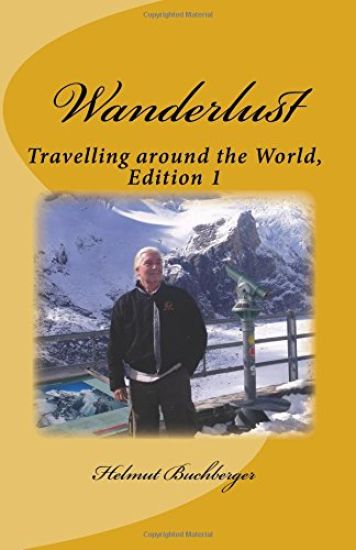
Wanderlust: Travelling around the World, Edition 1
Helmut Buchberger
Createspace Independent Publishing Platform
2014
nidottu
Unlike Phileas Fogg, the hero in a novel of the French writer Jules Verne, who needed only 80 days to circumnavigate the world, I travel more than fifty years now just to do the same, and while I have seen many countries already plenty are still on my travel list.Things may have changed in one country or another between the first journey in 1954 and now; some to the better and some to the worst.Anyhow, I still believe that every country in the world (with a few exemptions of course) has something which should be discovered or explored and therefore is worth the effort.
Wirtschaft für Jedefrau und Jedermann: Was Jedefrau und Jedermann vom globalen arbeitsteiligen Wirtschaften mindestens wissen und verstehen sollten
Helmut Dirschwigl
Createspace Independent Publishing Platform
2014
nidottu
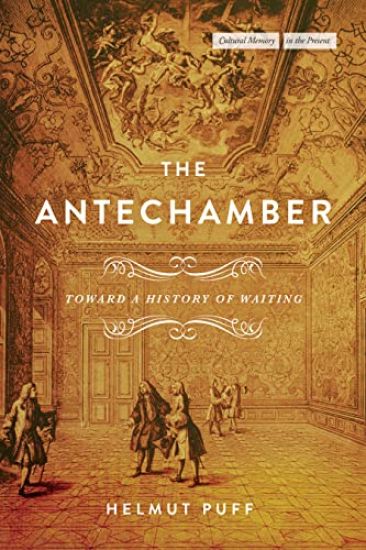
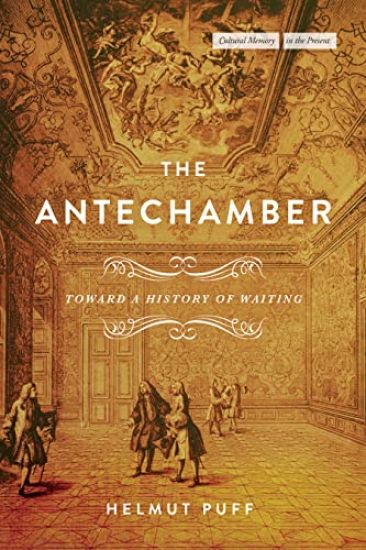
Helmut Puff invites readers to visit societies and spaces of the past through the lens of a particular temporal modality: waiting. From literature, memoirs, manuals, chronicles, visuals, and other documents, Puff presents a history of waiting anchored in antechambers—interior rooms designated and designed for people to linger. In early modern continental Western Europe, antechambers became standard in the residences of the elites. As a time-space infrastructure these rooms shaped encounters between unequals. By imposing spatial distance and temporal delays, antechambers constituted authority, rank, and power. Puff explores both the logic and the experience of waiting in such formative spaces, showing that time divides as much as it unites, and that far from what people have said about early moderns, they approached living in time with apprehensiveness. Unlike how contemporary society primarily views the temporal dimension, to early modern Europeans time was not an objective force external to the self but something that was tied to acting in time. Divided only by walls and doors, waiters sought out occasions to improve their lot. At other times, they disrupted the scripts accorded them. Situated at the intersection of history, literature, and the history of art and architecture, this wide-ranging study demonstrates that waiting has a history that has much to tell us about social and power relations in the past and present.
Helmut Puff invites readers to visit societies and spaces of the past through the lens of a particular temporal modality: waiting. From literature, memoirs, manuals, chronicles, visuals, and other documents, Puff presents a history of waiting anchored in antechambers—interior rooms designated and designed for people to linger. In early modern continental Western Europe, antechambers became standard in the residences of the elites. As a time-space infrastructure these rooms shaped encounters between unequals. By imposing spatial distance and temporal delays, antechambers constituted authority, rank, and power. Puff explores both the logic and the experience of waiting in such formative spaces, showing that time divides as much as it unites, and that far from what people have said about early moderns, they approached living in time with apprehensiveness. Unlike how contemporary society primarily views the temporal dimension, to early modern Europeans time was not an objective force external to the self but something that was tied to acting in time. Divided only by walls and doors, waiters sought out occasions to improve their lot. At other times, they disrupted the scripts accorded them. Situated at the intersection of history, literature, and the history of art and architecture, this wide-ranging study demonstrates that waiting has a history that has much to tell us about social and power relations in the past and present.
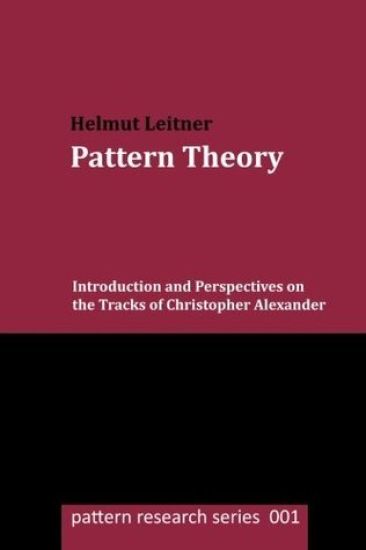
This book "Pattern Theory" summarizes the work of an important contemporary thinker, the architect and systems theorist Christopher Alexander, an emeritus professor at the University of Berkeley, California. In 1979 one of his books, "A Pattern Language", an 1100-page-essay on architecture and human life, became a non-fiction best seller that attracted half a million readers and continues to inspire people from many disciplines. The still broader four-volume essay "The Nature of Order" was published 2002-2004 as magnum opus. The life work of Alexander is outstanding. He develops a general theory of living systems, a systems theory based on the concepts center, wholeness and transformation by using design patterns and pattern languages as parts of the method. There is a whole new cosmos of thinking with astonishing bandwidth: Alexander suggests a new scientific paradigm that stands in opposition to the traditional causal mechanistic paradigm of natural science - and he offers a new knowledge format as a way to enable people and support their participation in design processes.Alexander's theories have already proven useful in education, organizational development, permaculture, and in software the design patterns have even become mainstream. Many disciplines are about to follow in this development. Pattern theory allows us to change our thinking, to rethink our world and to move towards a fairer society. This leads to more participation and higher sustainability. Alexander's concepts form a mental toolbox for societal change and innovation.
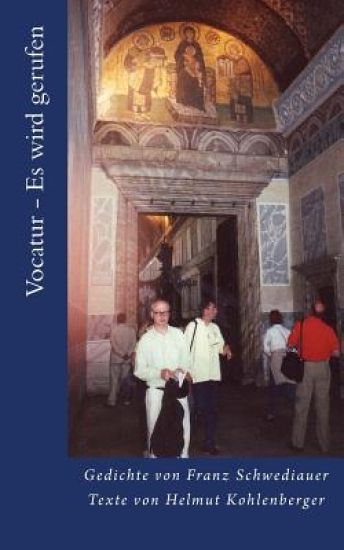
Vocatur - Es wird gerufen
Helmut Kohlenberger; Franz Schwediauer
Createspace Independent Publishing Platform
2015
nidottu
Poetry by Franz Schwediauer and philosophical prose by Helmut Kohlenberger.

In the wake of increasing globalisation, criminal law has become an internationalised subject. This revised and updated second edition highlights the most important aspects of European and international criminal law in order to provide the reader with a comprehensive, concise and solid introduction to this modern field of law. The book focuses on: - Rules determining the exercise of jurisdiction - ‘European Criminal Law’ dealing with the question if and how far the EU may create or harmonise criminal law - Evolution of European Criminal Procedure Law - Ne bis in idem-principle - Guarantees under the European Convention of Human Rights - Principles of International Criminal Law - Procedures and substantive law of the International Criminal Court (ICC)Praise for the first edition: ‘… it manages to give a good overview without being unduly long. The book is most definitly worth a read even for those with more specific interests in the topics covered, and it will serve well as a textbook….’ Annika Suominen, European Criminal Law Review‘This book is both an outstanding and demanding presentation of international criminal law and its current developments and trends caused by globalisation.’ Landeskriminalblatt Niedersachsen
Die Freiheit des Alters: Ein vorsichtig optimistischer Kartierungsversuch
Helmut Schreier
Createspace Independent Publishing Platform
2015
nidottu
This essay deals with new issues of the ancient business of getting old. The author draws both from books and from biographical experience. Topics include these cahallenges: - Medical progress makes us live longer, sometimes against the sufferers own wishes: What procedures are provided to navigate these issues at the present time? - Increasing longevity gives us the chance for continued intimacy and love, and the development of new forms of sexual gratification. What are these? - To deal with loneliness, we may accept nature's invitation for companionship, at the same time cultivating a changing community of friends. How do we stay away from becoming ever more isolated? - There is a way to stay forever young, even with the destruction of our bodies by old age. How do we manage to participate in social life while our own group of people is getting smaller and smaller? - In the end, we might find the distance to counterbalance engagement with our selves that philosophers call "Gelassenheit". Montaigne, in his Lukrecian essays, may guide us towards the kind of wisdom that accepts the idea of a life lived completely within this world. How can we manage to keep desparation at bay?