Kirjojen hintavertailu. Mukana 12 172 690 kirjaa ja 12 kauppaa.

Kirjahaku

Etsi kirjoja tekijän nimen, kirjan nimen tai ISBN:n perusteella.

1000 tulosta hakusanalla Herman Wouk

The Oxford Handbook of Herman Melville
Now more than a century since the revival that placed Herman Melville at the center of the US literary canon, his work stands as one of the most important touchstones of world literature. The Oxford Handbook of Herman Melville aims to reintroduce readers to a writer whom they think they know well by re-examining Melville's entire corpus--the novels, short prose, and poetry--in light of the diversity and vibrancy of global Melville studies. Bringing together the most innovative work of international scholars, The Oxford Handbook of Herman Melville offers a comprehensive survey of both Melville's writing and the new approaches it continues to introduce into literary studies. By engaging urgent discourses such as those around indigeneity and race, ecology and energy, gender and sexuality studies, and reimagining well-developed critical approaches to questions of literary history, politics, war, economics, aesthetics, and philosophy in Melville's work, this Handbook seeks to push the study of Melville's work into its second century. Attending to Melville's origins--biographical and textual, intellectual and aesthetic, historical and political--the Handbook also examines Melville's currency and contemporaneity, the ways that his writing continues to generate new thought and new art. This volume, in short, endeavors to present a new critical Melville for new critical times.
Student Companion to Herman Melville

Student Companion to Herman Melville

Sharon Talley

Greenwood Press
2006
sidottu
Student Companion to Herman Melville provides a critical introduction to the life and literary works of Herman Melville, the nineteenth-century American author of Moby-Dick, as well as nine other novels and numerous short stories and poems. In addition to providing an overview of Melville's life in relation to his literary works, the book places his writings within their historical and cultural contexts, and then examines each of his major works fully, at the level of the nonspecialist and generalist reader. The chapters that address major works by Melville feature close readings of the literary texts that include analysis of point of view, setting, plot, characters, symbolism, themes, and historical contexts when appropriate. In addition, the four chapters devoted to individual novels, as well as the chapter on Melville's poetry, feature alternate readings to introduce the reader to postcolonial, feminist, genre, reader response, and deconstructionist approaches to literary criticism. The book concludes with an extensive bibliography that includes lists of Melville's published works, biographies, contemporary reviews, and recent critical studies.-Early Narratives, from Typee to White Jacket -Moby Dick -Pierre -The Piazza Tales -Other magazine tales: I and My Chimney, The Paradise of Bachelors and the Tartarus of Maids, and Israel Potter -The Confidence-Man -Poetry, including
The Cambridge Introduction to Herman Melville

The Cambridge Introduction to Herman Melville

Kevin J. Hayes

Cambridge University Press
2007
pokkari
Despite its indifferent reception when it was first published in 1851, Moby Dick is now a central work in the American literary canon. This introduction offers readings of Melville's masterpiece, but it also sets out the key themes, contexts, and critical reception of his entire oeuvre. The first chapters cover Melville's life and the historical and cultural contexts. Melville's individual works each receive full attention in the third chapter, including Typee, Moby Dick, Billy Budd and the short stories. Elsewhere in the chapter different themes in Melville are explained with reference to several works: Melville's writing process, Melville as letter writer, Melville and the past, Melville and modernity, Melville's late writings. The final chapter analyses Melville scholarship from his day to ours. Kevin J. Hayes provides comprehensive information about Melville's life and works in an accessible and engaging book that will be essential for students beginning to read this important author.
The Cambridge Introduction to Herman Melville

The Cambridge Introduction to Herman Melville

Kevin J. Hayes

Cambridge University Press
2007
sidottu
Despite its indifferent reception when it was first published in 1851, Moby Dick is now a central work in the American literary canon. This introduction offers readings of Melville's masterpiece, but it also sets out the key themes, contexts, and critical reception of his entire oeuvre. The first chapters cover Melville's life and the historical and cultural contexts. Melville's individual works each receive full attention in the third chapter, including Typee, Moby Dick, Billy Budd and the short stories. Elsewhere in the chapter different themes in Melville are explained with reference to several works: Melville's writing process, Melville as letter writer, Melville and the past, Melville and modernity, Melville's late writings. The final chapter analyses Melville scholarship from his day to ours. Kevin J. Hayes provides comprehensive information about Melville's life and works in an accessible and engaging book that will be essential for students beginning to read this important author.
The Worlds of Herman Kahn

The Worlds of Herman Kahn

Sharon Ghamari-Tabrizi

Harvard University Press
2005
sidottu
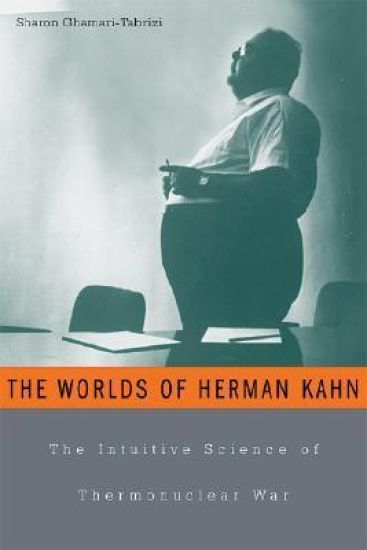
Herman Kahn was the only nuclear strategist in America who might have made a living as a standup comedian. Indeed, galumphing around stages across the country, joking his way through one grotesque thermonuclear scenario after another, he came frighteningly close. In telling the story of Herman Kahn, whose 1960 book On Thermonuclear War catapulted him into celebrity, Sharon Ghamari-Tabrizi captures an era that is still very much with us--a time whose innocence, gruesome nuclear humor, and outrageous but deadly serious visions of annihilation have their echoes in the "known unknowns and unknown unknowns" that guide policymakers in our own embattled world.Portraying a life that combined aspects of Lenny Bruce, Hitchcock, and Kubrick, Ghamari-Tabrizi presents not one Herman Kahn, but many--one who spoke the suffocatingly dry argot of the nuclear experts, another whose buffoonery conveyed the ingenious absurdity of it all, and countless others who capered before the public, ambiguous, baffling, always open to interpretation. This, then, is a story of one thoroughly strange and captivating man as well as a cultural history of our moment. In Herman Kahn's world is a critical lesson about how Cold War analysts learned to fill in the ciphers of strategic uncertainty, and thus how we as a nation learned to live with the peculiarly inventive quality of strategy, in which uncertainty generates extravagant threat scenarios.Revealing the metaphysical behind the dryly deliberate, apparently practical discussion of nuclear strategy, this book depicts the creation of a world where clever men fashion Something out of Nothing--and establishes Herman Kahn as our first virtuoso of the unknown unknowns.
The Civil War of Herman Melville

The Civil War of Herman Melville

Stanton Garner

University Press of Kansas
1993
sidottu
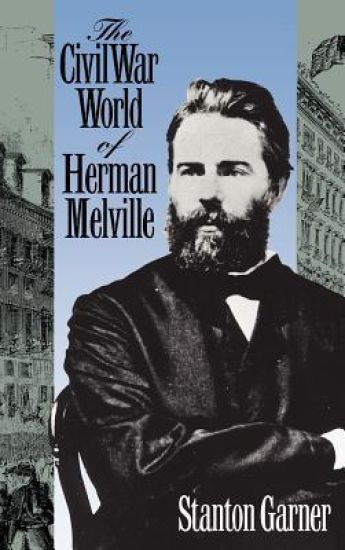
The culmination of more than a decade of research, Stanton Garner's magisterial study reveals the previously little-known world of one of America's greatest writers during its most devastating era - that of the Civil War. Contrary to popular belief, Garner contends, Melville was not intellectually and emotionally detached from the war. In actuality, Melville brooded over the war's enormous brutality and destructive power. At the same time, his passion for writing, which had suffered greatly in the wake of his grand failures of the 1850s, revived. With renewed purpose, Melville saw an opportunity to establish himself as the prophet-poet of rededicated America rising phoenix-like the ashes of destruction. The vehicle for this ambitious enterprise was ""Battle-Pieces"", an epically conceived book of poems that chronicles the war from John Brown's raid on Harper's Ferry through Lincoln's assassination. Despite its innovative style and powerful imagery, Melville's epic statement about the war was little noticed by a weary and unreceptive readership trying to move beyond the war's painful memories. Drawing upon previously unknown or neglected archival sources, Garner places Melville's experience within the larger contexts of his extended family, social circles, political beliefs, travels and reading. He establishes Melville's position in the rift among major Northern writers in which Emerson, Longfellow, Lowell and Whittier were on one side and Melville, Hawthorne, and - to some extent - Whitman were on the other. By delving into the complexities and apparent contradictions of Melville's personal life, Garner reveals why a man who was diametrically opposed to slavery, refused to side with the abolitionists and maintained the anti-administration attitude predominant in his Democratic family, while supporting the Union war effort.
The Essential Herman Kahn
By the time of his untimely death in 1983, Herman Kahn was recognized by both friends and intellectual adversaries as "one of the world's most creative and best minds." The current growing resurgence of interest in Kahn's ideas and intellectual legacy demonstrates the enduring relevance of his work. Yet, in spite of the constant influence of his arguments, there is a shortage of books summarizing Kahn's essential contributions, and thus his work is not as well known as it should be. The Essential Herman Kahn is an attempt to cope with this predicament and offer the public for the first time an anthology consisting of the essence of Kahn's work, organized thematically. The two decades that have passed since his death allow us today to approach his work undisturbed by the "sound and fury" of the many public debates and controversies he participated in and to focus on some of the deepest and most enduring dimensions of his intellectual contributions. The anthology will try to bring together, out of the several thousands pages published by Kahn during his life, the "essential Kahn," the most relevant, consequential and interesting themes, ideas and arguments defining his legacy. As such it will met the needs of those who are interested in Kahn's work but do not have the time and energy to access his out-of-print books, to make their way through the voluminous number of pages, and then to sort out the essential from the accidental, the perennial from the contextual.
The Essential Herman Kahn
By the time of his untimely death in 1983, Herman Kahn was recognized by both friends and intellectual adversaries as 'one of the world's most creative and best minds.' The current growing resurgence of interest in Kahn's ideas and intellectual legacy demonstrates the enduring relevance of his work. Yet, in spite of the constant influence of his arguments, there is a shortage of books summarizing Kahn's essential contributions, and thus his work is not as well known as it should be. The Essential Herman Kahn is an attempt to cope with this predicament and offer the public for the first time an anthology consisting of the essence of Kahn's work, organized thematically. The two decades that have passed since his death allow us today to approach his work undisturbed by the 'sound and fury' of the many public debates and controversies he participated in and to focus on some of the deepest and most enduring dimensions of his intellectual contributions. The anthology will try to bring together, out of the several thousands pages published by Kahn during his life, the 'essential Kahn,' the most relevant, consequential and interesting themes, ideas and arguments defining his legacy. As such it will met the needs of those who are interested in Kahn's work but do not have the time and energy to access his out-of-print books, to make their way through the voluminous number of pages, and then to sort out the essential from the accidental, the perennial from the contextual.
Alexander Girard Designs for Herman Miller

Alexander Girard Designs for Herman Miller

Leslie Piña

Schiffer Publishing Ltd
2002
sidottu
Among the great designers at Herman Miller in the 1950s and 1960s, Alexander Girard enhanced Eames' and Nelson's furniture with innovative textiles. As head of Herman Miller's Textile Division since it was formed in 1952, he designed some of the most colorful and exciting fabrics available anywhere. He also designed the 25-piece Girard Group of modern furniture, and the 40-item series of Environmental Enrichment Panels for Action Office 2. Girard's unmatched folk art collection adorned Herman Miller buildings, filled their Textiles & Objects Shop in New York, and over 100,000 items made up the famous Girard Foundation. His acclaimed work as an interior designer and architect and his remarkable textiles for Herman Miller make Girard one of the legendary designers of the twentieth century. With over 400 mostly color photographs of his textile and wallpaper designs, all of the EE panels and furniture, plus detailed text, timeline, and an updated value guide, this book is a comprehensive view of Girard's work at Herman Miller, and a must for anyone interested in mid-century design of textiles, interiors, or graphics.
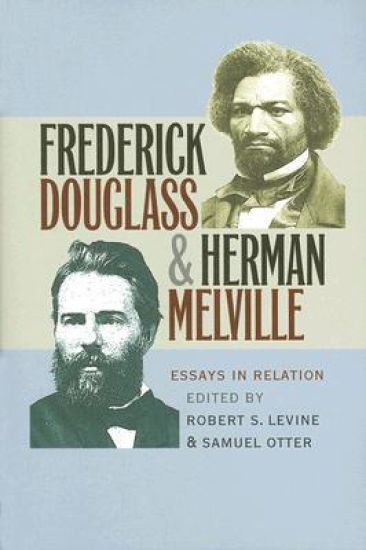
Frederick Douglass and Herman Melville

Frederick Douglass and Herman Melville

The University of North Carolina Press
2008
nidottu
Frederick Douglass (1818-1895) and Herman Melville (1819-1891) addressed in their writings a range of issues that continue to resonate in American culture: the reach and limits of democracy; the nature of freedom; the roles of race, gender, and sexuality; and the place of the United States in the world. Yet they are rarely discussed together, perhaps because of their differences in race and social position. Douglass escaped from slavery and tied his well-received nonfiction writing to political activism, becoming a figure of international prominence. Melville was the grandson of Revolutionary War heroes and addressed urgent issues through fiction and poetry, laboring in increasing obscurity.In eighteen original essays, the contributors to this collection explore the convergences and divergences of these two extraordinary literary lives. Developing new perspectives on literature, biography, race, gender, and politics, this volume ultimately raises questions that help rewrite the color line in nineteenth-century studies.The contributors are Elizabeth Barnes, Hester Blum, Russ Castronovo, John Ernest, William Gleason, Gregory Jay, Carolyn L. Karcher, Rodrigo Lazo, Maurice S. Lee, Robert S. Levine, Steven Mailloux, Dana D. Nelson, Samuel Otter, John Stauffer, Sterling Stuckey, Eric J. Sundquist, Elisa Tamarkin, Susan M. Ryan, David Van Leer, Maurice Wallace, Robert K. Wallace, and Kenneth W. Warren.
The Last Wolf & Herman

The Last Wolf & Herman

Laszlo Krasznahorkai

NEW DIRECTIONS PUBLISHING CORPORATION
2016
sidottu
The Last Wolf, translated by George Szirtes, features a classic, obsessed Krasznahorkai narrator, a man hired to write (by mistake, by a glitch of fate) the true tale of the last wolf of Extremadura, a barren stretch of Spain. This miserable experience (being mistaken for another, dragged about a cold foreign place, appalled by a species' end) is narrated--all in a single sentence--as a sad looping tale, a howl more or less, in a dreary wintry Berlin bar to a patently bored bartender. The Last Wolf is Krasznahorkai in a maddening nutshell--with the narrator trapped in his own experience (having internalized the extermination of the last creature of its kind and "locked Extremadura in the depths of his own cold, empty, hollow heart")--enfolding the reader in the exact same sort of entrapment to and beyond the end, with its first full-stop period of the book.Herman, "a peerless virtuoso of trapping who guards the splendid mysteries of an ancient craft gradually sinking into permanent oblivion," is asked to clear a forest's last "noxious beasts." In Herman I: the Game Warden, he begins with great zeal, although in time he "suspects that maybe he was 'on the wrong scent.'" Herman switches sides, deciding to track entirely new game...In Herman II: The Death of a Craft, the same situation is viewed by strange visitors to the region. Hyper-sexualized aristocratic officers on a very extended leave are enjoying a saturnalia with a bevy of beauties in the town nearest the forest. With a sense of effete irony, they interrupt their orgies to pitch in with the manhunt of poor Herman, and in the end, "only we are left to relish the magic bouquet of this escapade..." Translated by John Batki.
The Last Wolf & Herman

The Last Wolf & Herman

László Krasznahorkai

NEW DIRECTIONS PUBLISHING CORPORATION
2019
nidottu
The Last Wolf (translated by George Szirtes) is Krasznahorkai in a maddening nutshell--it features a classic obsessed narrator, a man hired (by mistake) to write the true tale of the last wolf in Spain. This miserable experience (being mistaken for another person, dragged about a cold foreign place, and appalled by a species's end) is narrated--all in a single sentence--as a sad looping tale, a howl more or less, in a dreary Berlin bar to a patently bored bartender. Herman (translated by John Batki), "a peerless virtuoso of trapping who guards the splendid mysteries of an ancient craft gradually sinking into permanent oblivion," is asked to clear a forest's last "noxious beasts." He begins with great zeal, although in time he "suspects that maybe he was 'on the wrong scent.'" Herman switches sides, deciding to track entirely new game ...
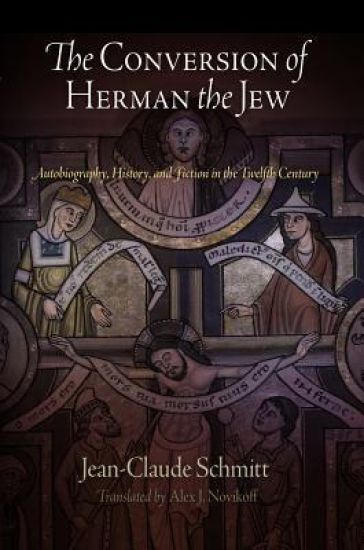
The Conversion of Herman the Jew

The Conversion of Herman the Jew

Jean-Claude Schmitt

University of Pennsylvania Press
2012
pokkari
Sometime toward the middle of the twelfth century, it is supposed, an otherwise obscure figure, born a Jew in Cologne and later ordained as a priest in Cappenberg in Westphalia, wrote a Latin account of his conversion to Christianity. Known as the Opusculum, this book purportedly by "Herman, the former Jew" may well be the first autobiography to be written in the West after the Confessions of Saint Augustine. It may also be something else entirely. In The Conversion of Herman the Jew the eminent French historian Jean-Claude Schmitt examines this singular text and the ways in which it has divided its readers. Where some have seen it as an authentic conversion narrative, others have asked whether it is not a complete fabrication forged by Christian clerics. For Schmitt the question is poorly posed. The work is at once true and fictional, and the search for its lone author-whether converted Jew or not-fruitless. Herman may well have existed and contributed to the writing of his life, but the Opusculum is a collective work, perhaps framed to meet a specific institutional agenda. With agility and erudition, Schmitt examines the text to explore its meaning within the society and culture of its period and its participation in both a Christian and Jewish imaginary. What can it tell us about autobiography and subjectivity, about the function of dreams and the legitimacy of religious images, about individual and collective conversion, and about names and identities? In The Conversion of Herman the Jew Schmitt masterfully seizes upon the debates surrounding the Opusculum (the text of which is newly translated for this volume) to ponder more fundamentally the ways in which historians think and write.
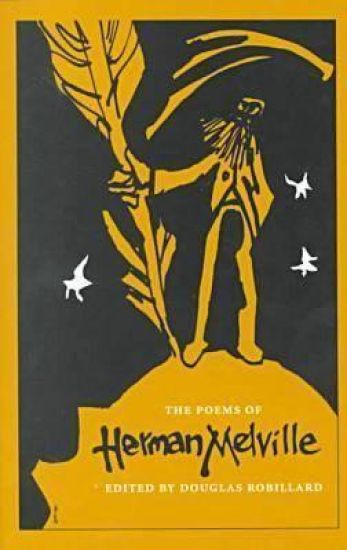
The Poems of Herman Melville

The Poems of Herman Melville

Douglas Robillard

Kent State University Press
2000
nidottu
Unlike his fiction, which has been popular and often reprinted, Melville’s poetry remains obscure. The last “collected poems” appeared in 1947 and “selected poems” in the 1970s, and only two books dealing exclusively with Melville’s poetry have appeared, both published in the 1970s. In this revised edition of his Poems of Herman Melville, Douglas Robillard updates the scholarship on the poetry through his introduction and notes and makes a case for revised estimate of the importance of Melville as a poet. The Poems of Herman Melville contains entire texts of “Battle-Pieces” (1866), “John Marr and Other Sailors” (1888), and “Timoleon” (1891). Selected cantos from “Clarel” are reprinted with accompanying notes and commentary.
North Star: St Herman of Alaska ^ha

North Star: St Herman of Alaska ^ha

Dorrie Papademe

St Vladimir's Seminary Press,U.S.
2001
nidottu
In 1794 a group of Russian orthodox missionaries landed on Kodiak Island, Alaska, with the intent of preaching to native Americans, baptizing those who would accept the Christian life and developing for them both academic and agricultural schools. Of these missionaries, Father Herman lived among the Aleut people for over 40 years, and earned the nickname Apa or "Grandfather". He was often involved with local authorities concerning the rights of local natives, who were constantly violated by explorers and foreign authorities. In this volume, author Dorrie Papademetriou captures the essence of the monk and the world of Apa and the Aleut people comes alive in illustrations of northern lights, Kodiak bears, giant cabbages and angel's wings.
La Filosofía de Herman Dooyeweerd

La Filosofía de Herman Dooyeweerd

D F M Strauss

Paideia Press
2021
pokkari
Por primera vez, en el siglo XX, el erudito jur dico y fil sofo Holand s Herman Dooyeweerd desarroll e introdujo al mundo una filosof a claramente b blica no contaminada por las s ntesis paganas, lo que podr a llamarse adecuadamente filosof a "reformacional". Pero esta filosof a ha permanecido oculta para la mayor a de los cristianos, mientras que la Iglesia en general ha bebido involuntariamente de las profundidades de la filosof a pagana ap stata vestida con atuendo religioso cristiano. Este libro de D.F.M. Strauss es una excelente introducci n y breve resumen de la filosof a cristiana, reformacional y b blica de Herman Dooyeweerd.