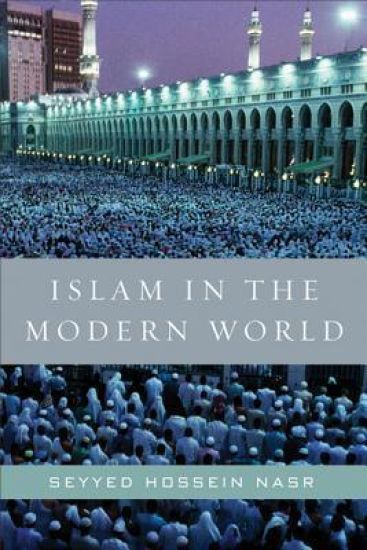
The foremost U.S. authority on Islam and, Seyyed Hossein Nasr discusses today's hot button issues--including holy wars, women's rights, the rise of Islamic fundamentalism, and the future of Moslems in the Middle East--in this groundbreaking discussion of the fastest-growing religion in the world. One of the great scholars in the modern Islamic intellectual tradition, and the acclaimed author of books such as The Garden of Truth and The Heart of Islam, Nasr brings incomparable insight to this exploration of Muslim issues and realities, delivering a landmark publication promoting cross-cultural awareness and world peace.
The current ecological crisis is a matter of urgent global concern, with solutions being sought on many fronts. In this book, Seyyed Hossein Nasr argues that the devastation of our world has been exacerbated, if not actually caused, by the reductionist view of nature that has been advanced by modern secular science. What is needed, he believes, is the recovery of the truth to which the great, enduring religions all attest; namely that nature is sacred. Nasr traces the historical process through which Western civilization moved away from the idea of nature as sacred and embraced a world view which sees humans as alienated from nature and nature itself as a machine to be dominated and manipulated by humans. His goal is to negate the totalitarian claims of modern science and to re-open the way to the religious view of the order of nature, developed over centuries in the cosmologies and sacred sciences of the great traditions. Each tradition, Nasr shows, has a wealth of knowledge and experience concerning the order of nature. The resuscitation of this knowledge, he argues, would allow religions all over the globe to enrich each other and co-operate to heal the wounds inflicted upon the Earth.
The current ecological crisis is a matter of urgent global concern, with solutions being sought on many fronts. In this book, Seyyed Hossein Nasr argues that the devastation of our world has been exacerbated, if not actually caused, by the reductionist view of nature that has been advanced by modern secular science. What is needed, he believes, is the recovery of the truth to which the great, enduring religions all attest; namely that nature is sacred. Nasr traces the historical process through which Western civilization moved away from the idea of nature as sacred and embraced a world view which sees humans as alienated from nature and nature itself as a machine to be dominated and manipulated by humans. His goal is to negate the totalitarian claims of modern science and to re-open the way to the religious view of the order of nature, developed over centuries in the cosmologies and sacred sciences of the great traditions. Each tradition, Nasr shows, has a wealth of knowledge and experience concerning the order of nature. The resuscitation of this knowledge, he argues, would allow religions all over the globe to enrich each other and co-operate to heal the wounds inflicted upon the Earth.
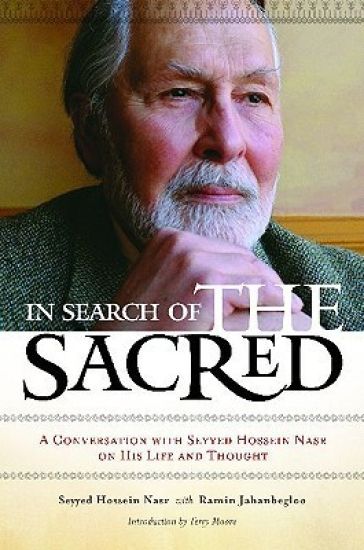
In this book, a series of interviews offers an accessible, revealing, human and intellectual biography of leading Islamic scholar Seyyed Hossein Nasr. Seyyed Hossein Nasr is one of the preeminent philosophers writing today. Sure to be a key resource for decades to come, In Search of the Sacred: A Conversation with Seyyed Hossein Nasr on His Life and Thought illuminates Nasr's experiences and shares his insights on topics from religion and philosophy to science and the arts. Based on a series of interviews, the book combines traditional autobiography with an exploration of the intellectual and spiritual trajectories of the author's thought during key periods of his life. In doing so, it presents a fascinating panorama, not only of the life and ideas of one man, but also of major events ranging from intellectual life in Iran during the Pahlavi period and the Iranian Revolution to some of the major religious and intellectual debates between Islam and modernism. Nasr writes that his "whole life has been a quest for the sacred." This work connects that quest with some of the most important issues of the day in encounters between Islam and the West.
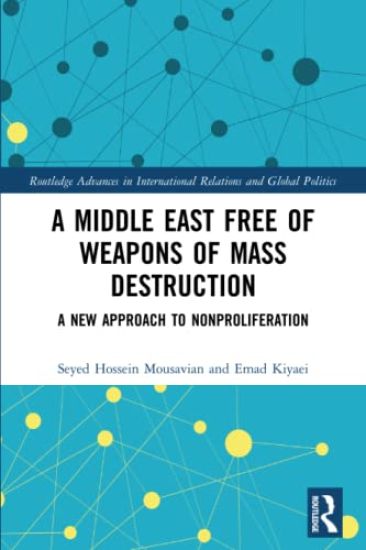
The establishment of a Middle East zone free of nuclear weapons, a concept more recently broadened to cover all weapons of mass destruction (WMD), has been before the international community for decades. In this book, two experts from the region explore why the matter remains unresolved, and outline a comprehensive yet achievable roadmap to a Middle East free of WMD.Weapons of mass destruction pose an existential threat to global peace and security. But nowhere is it more urgent to stem their spread than in the Middle East, a region fraught with mistrust and instability. Accounting for these geopolitical realities, including the ongoing talks to curb Iran’s nuclear program, the authors present a practical and innovative strategy to a Middle East free of weapons of mass destructions (WMD). They outline a phased approach toward disarmament in the region, prescribing confidence-building measures and verification tools to create trust among the region’s governments. Their vision also sees the realization of a WMD-free zone within a broader regional agenda for security and cooperation to advance socioeconomic and political progress.This book will be of great interest to students and scholars of international relations, politics and security studies in the Middle East.
The establishment of a Middle East zone free of nuclear weapons, a concept more recently broadened to cover all weapons of mass destruction (WMD), has been before the international community for decades. In this book, two experts from the region explore why the matter remains unresolved, and outline a comprehensive yet achievable roadmap to a Middle East free of WMD.Weapons of mass destruction pose an existential threat to global peace and security. But nowhere is it more urgent to stem their spread than in the Middle East, a region fraught with mistrust and instability. Accounting for these geopolitical realities, including the ongoing talks to curb Iran’s nuclear program, the authors present a practical and innovative strategy to a Middle East free of weapons of mass destructions (WMD). They outline a phased approach toward disarmament in the region, prescribing confidence-building measures and verification tools to create trust among the region’s governments. Their vision also sees the realization of a WMD-free zone within a broader regional agenda for security and cooperation to advance socioeconomic and political progress.This book will be of great interest to students and scholars of international relations, politics and security studies in the Middle East.
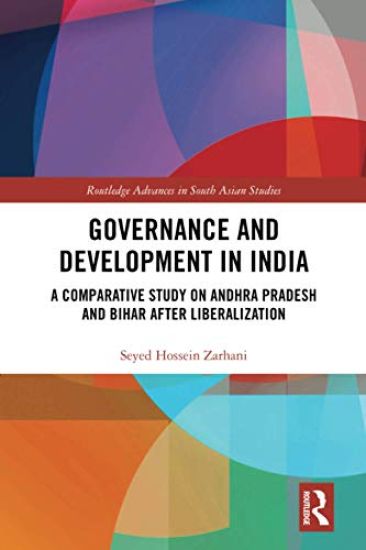
The study of the political economy of development in India is significant as India has emerged as one of the fastest-growing countries during the last three decades and the rate of economic growth and poverty reduction have not been matched in India’s subnational states. Although the Union Government has introduced and implemented several economic reforms since 1991 to enhance the economic development, the results of implantation have varied. Governance and Development in India compares two Indian subnational states, Andhra Pradesh and Bihar. The book does not consider the state as an aggregate entity; rather, it disaggregates the state relationally and spatially. Concentrating on the micro-institutional variables and the role of regional elites, the author investigates the political roots of the divergence of development trajectories among India’s subnational states since liberalization, as an essential aspect of the political economy of development in India. The book explores the black box of the multi-layered state of India and interactions among the Central Government, the states, regional leaders and other stakeholders and explains why the regional leaders have pursued divergent economic strategies using the analytical narrative research method and the subnational comparative research method. Firmly based on the theoretical foundations of the neo-institutional rational choice model of governance, polycentric hierarchy theory and the strategies for regional elite strategy analysis, combined with empirical research, this book is a valuable contribution to the fields of comparative political economy, state politics in India, governance and development in developing countries, and South Asian comparative politics.
This collection of essays by one of the best known contemporary Muslim scholars writing in English covers many facets of Islamic life and thought. The author has brought together studies dealing with the practical as well as intellectual aspects of Islam in both their historical and contemporary reality. The contemporary significance of themes such as religion and secularism, the meaning of freedom, and the tradition of Islamic science and philosophy is given particular attention.
Originally published 1987.The first part of the volume is concerned with "The Roots of the Islamic Tradition and Spirituality". These are seen to include the Qu’ran as the central theophany of Islam, the Prophet who received the word of God and made it known to mankind and the rites of Islam. The second part examines the divisions of the Islamic community with their distinctive pieties and emphases: Sunnism and Shi’ism and female spirituality. Part III is devoted to Sufism – its nature and origin, its early development, its various spiritual practices and its science of the soul.
This book provides an assessment of relations between Iran and Europe, identifying the areas of common interest as well as the issues of conflict, whilst putting contemporary relations into their proper context with an account of their development since the early years of the twentieth century. Written by a former diplomat who served as the first Iranian ambassador to post-reunification Germany, this book shows that despite the recent deterioration of relations between Iran and the West, Iran has enjoyed a long history of cultural, economic and political ties with many European nations such as Germany. The book explores important historical episodes, including Iran’s support of Germany in the years before the First World War; the burgeoning economic, commercial and scientific co-operation in the interwar years such that by the start of the Second World War Germany was Iran’s leading trade partner; the impact of the Islamic Revolution in 1979; and the attempts by the administration of President Rafsanjani to strengthen ties with Europe in the aftermath of the Iran-Iraq War. Iran-Europe Relations goes on to examine in detail the recent issues of conflict between Iran and Europe: disputes over weapons of mass destruction; allegations of Iranian support for terrorist groups in Afghanistan, Bosnia, Iraq and Lebanon; disagreements over human rights; the Arab-Israeli conflict and the Middle East peace process. It concludes by suggesting ways in which Iran-Europe relations can be encouraged to develop positively, overcome current obstacles and nourish the opportunities and common interests that lie beneath the surface.
This book provides an assessment of relations between Iran and Europe, identifying the areas of common interest as well as the issues of conflict, whilst putting contemporary relations into their proper context with an account of their development since the early years of the twentieth century. Written by a former diplomat who served as the first Iranian ambassador to post-reunification Germany, this book shows that despite the recent deterioration of relations between Iran and the West, Iran has enjoyed a long history of cultural, economic and political ties with many European nations such as Germany. The book explores important historical episodes, including Iran’s support of Germany in the years before the First World War; the burgeoning economic, commercial and scientific co-operation in the interwar years such that by the start of the Second World War Germany was Iran’s leading trade partner; the impact of the Islamic Revolution in 1979; and the attempts by the administration of President Rafsanjani to strengthen ties with Europe in the aftermath of the Iran-Iraq War. Iran-Europe Relations goes on to examine in detail the recent issues of conflict between Iran and Europe: disputes over weapons of mass destruction; allegations of Iranian support for terrorist groups in Afghanistan, Bosnia, Iraq and Lebanon; disagreements over human rights; the Arab-Israeli conflict and the Middle East peace process. It concludes by suggesting ways in which Iran-Europe relations can be encouraged to develop positively, overcome current obstacles and nourish the opportunities and common interests that lie beneath the surface.
This collection of essays by one of the best known contemporary Muslim scholars writing in English covers many facets of Islamic life and thought. The author has brought together studies dealing with the practical as well as intellectual aspects of Islam in both their historical and contemporary reality. The contemporary significance of themes such as religion and secularism, the meaning of freedom, and the tradition of Islamic science and philosophy is given particular attention.
This book provides a critique of the neoclassical explanations of the 2008 financial collapse, of the ensuing long recession and of the neoliberal austerity responses to it. The study argues that while the prevailing views of deregulation and financialization as instrumental culprits in the explosion and implosion of the financial bubble are not false, they fail to point out that financialization is essentially an indication of an advanced stage of capitalist development. These standard explanations tend to ignore the systemic dynamics of the accumulation of finance capital, the inherent limits to that accumulation, production and division of economic surplus, class relations, and the balance of social forces that mold economic policy.Instead of simply blaming the ‘irrational behavior’ of market players, as neoliberals do, or lax public supervision, as Keynesians do, this book focuses on the core dynamics of capitalist development that not only created the financial bubble, but also fostered the ‘irrational behavior’ of market players and subverted public policy.Due to its interdisciplinary perspective, this book will be of interest to students and researchers in economics, finance, politics and sociology.
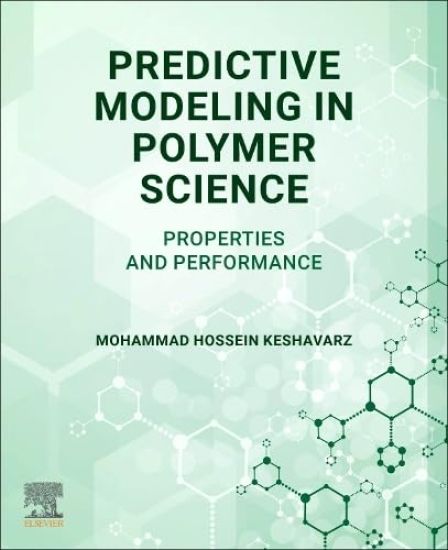
Predictive Modeling in Polymer Science: Properties and Performance offers an in-depth look at contemporary techniques used to forecast polymer characteristics, emphasizing their cost-effectiveness and suitability for specific design and manufacturing needs. The book explores diverse prediction approaches and models, equipping readers with a thorough understanding of how polymers behave and perform under various conditions. Key material attributes—such as flammability, solubility, intrinsic viscosity, glass transition temperature, and refractive index—are examined, helping users appreciate the science behind optimizing polymer properties for superior material performance. Beyond foundational methods, the book highlights practical strategies for designing polymers tailored to particular applications, ultimately saving research time and production resources. It serves as a comprehensive resource for scientists, engineers, and industry professionals seeking to predict, refine, and enhance polymer properties for innovative material solutions. By integrating theory with real-world examples, the guide supports informed decision-making in modern polymer science.
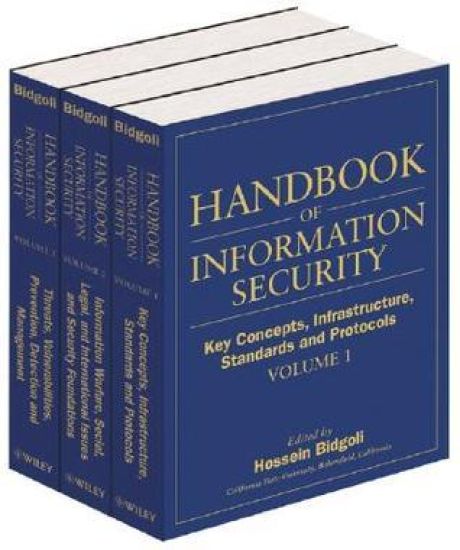
The Handbook of Information Security is a definitive 3-volume handbook that offers coverage of both established and cutting-edge theories and developments on information and computer security.The text contains 207 articles from over 200 leading experts, providing the benchmark resource for information security, network security, information privacy, and information warfare.
This is the only book to deal with classical Islamic cosmology as it was formulated by the Ikhwan al-S'afa al Biruni and Ibn Sina during the tenth and eleventh centuries. These figures influenced all the later centuries of Islamic history and in fact created the cosmological framework within which all later scientific activity in the Islamic world was carried out—the enduring image of the cosmos within which Muslims have lived during the past millennium.Nasr writes from within the Islamic tradition and demonstrates how, based on the teachings of the Quran and the Prophet, the figures treated in this work integrated elements drawn from various ancient schools of philosophy and the sciences. This book is unique in its treatment of classical Islamic cosmology as seen from within the Islamic world-view and provides a key for understanding of traditional Islamic thought.
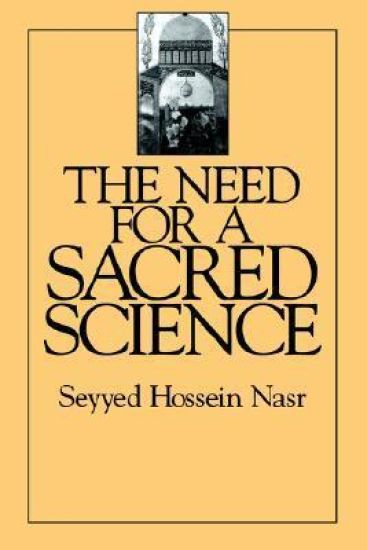
This book deals with the meaning of a science rooted in the sacred, the metaphysical foundation of such science, its contrast to modern science and its pertinence to some of the major issues facing humanity today. In the first part, the author turns to the fundamental question of the multiplicity of sacred forms. He discusses why it is necessary in the contemporary world to treat sacred science in the context of diverse religions. He also deals with the importance of sacred science in providing a meaningful study that would remain religiously significant of religions themselves.
A comprehensive overview of the Islamic philosophical tradition.AIslamic Philosophy from Its Origin to the Present offers a comprehensive overview of Islamic philosophy from the ninth century to the present day. As Seyyed Hossein Nasr attests, within this tradition, philosophizing is done in a world in which prophecy is the central reality of life-a reality related not only to the realms of action and ethics but also to the realm of knowledge. Comparisons with Jewish and Christian philosophies highlight the relation between reason and revelation, that is, philosophy and religion.Nasr presents Islamic philosophy in relation to the Islamic tradition as a whole, but always treats this philosophy as philosophy, not simply as intellectual history. In addition to chapters dealing with the general historical development of Islamic philosophy, several chapters are devoted to later and mostly unknown philosophers. The work also pays particular attention to the Persian tradition.Nasr stresses that the Islamic tradition is a living tradition with significance for the contemporary Islamic world and its relationship with the West. In providing this seminal introduction to a tradition little-understood in the West, Nasr also shows readers that Islamic philosophy has much to offer the contemporary world as a whole.