

Kirjahaku
Etsi kirjoja tekijän nimen, kirjan nimen tai ISBN:n perusteella.
1000 tulosta hakusanalla Howard Pollack

The Poems Of Henry Howard, Earl Of Surrey
Henry Howard; Frederick Morgan (EDT) Padelford
Kessinger Pub
2007
pokkari
This book, "The Poems Of Henry Howard, Earl Of Surrey. 1920", by H. Howard, is a replication of a book originally published before 1920. It has been restored by human beings, page by page, so that you may enjoy it in a form as close to the original as possible. This book was created using print-on-demand technology. Thank you for supporting classic literature.

Lucy Howard's Journal (1858)
Lydia Howard Sigourney; L. H. Sigourney
Kessinger Publishing
2008
sidottu
Opening on the wedding night of Henry VIII and his fourth wife, Anne of Cleves, and closing with the execution of his fifth wife, Katherine Howard, found guilty of adultery, this play takes a slice of history and turns it into theatre. There is romance, political intrigue, and betrayal.

Bessie Howard, Virtual Sorceress: Her amazing adventures through time and space!
Gib Check
Check It Out Publishing
2021
nidottu
TAKE A TRIP THROUGH REALITY Science whiz Bessie Howard has her life all figured out - college at a prestigious university where she'll learn to be a cyberneticist. But one day while playing a virtual reality game with her friends, something strange happens - she's teleported to wherever the game is set... the Age of Dinosaurs, the Battle of Gallipoli, the Civil War, Mars. As she tries to figure out why this happening to her, unscrupulous powers that be at Ultra Tech catch wind of her ability and seek to learn how it's happening for their own personal gain GIB CHECK, with the totally essential guidance from wife Ruthie, is a full-time freelance writer. Living on a lake in central Wisconsin, Gib and Ruthie fill their days hiking, biking, kayaking, and with inviting themselves to visit (sometimes unannounced) family members from coast to coast. This is Gib's first novel.

William Howard Taft's Constitutional Progressivism
Kevin J. Burns
University Press of Kansas
2021
sidottu
In William Howard Taft's Constitutional Progressivism Kevin J. Burns makes a compelling case that Taft's devotion to the Constitution of 1787 contributed to his progressivism. In contrast to the majority of scholarship, which has viewed Taft as a reactionary conservative because of his constitutionalism, Burns explores the ways Taft's commitment to both the Constitution and progressivism drove his political career and the decisions he made as president and chief justice. Taft saw the Constitution playing a positive role in American political life, recognizing that it created a national government strong enough to enact broad progressive reforms.In reevaluating Taft's career, Burns highlights how Taft rejected the 'laissez faire school,' which taught that 'the Government ought to do nothing but run a police force.' Recognizing that the massive industrial changes following the Civil War had created a plethora of socioeconomic ills, Taft worked to expand the national government's initiatives in the fields of trust-busting, land conservation, tariff reform, railroad regulations, and worker safety laws. Burns offers a fuller understanding of Taft and his political project by emphasizing Taft's belief that the Constitution could play a constructive role in American political life by empowering the government to act and by undergirding and protecting the reform legislation the government implemented. Moreover, Taft recognized that if the Constitution could come to the aid of progressivism, political reform might also redound to the benefit of the Constitution by showing its continued relevance and workability in modern America.Although Taft's efforts to promote significant policy-level reforms attest to his progressivism, his major contribution to American political thought is his understanding of the US Constitution as a fundamental law, not a policy-oriented document. In many ways Taft can be thought of as an originalist, yet his originalism was marked by a belief in robust national powers. Taft's constitutionalism remains relevant because while his principles seem foreign to modern legal discourse, his constitutional vision offers an alternative to contemporary political divisions by combining political progressivism-liberalism with constitutional conservatism.

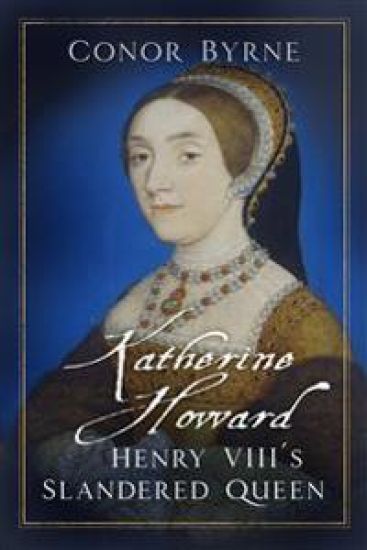
Over the years Katherine Howard, Henry VIII’s fifth wife, has been slandered as a ‘juvenile delinquent’, ‘empty-headed wanton’ and ‘natural born tart’, who engaged in promiscuous liaisons prior to her marriage and committed adultery after. Though she was bright, charming and beautiful, her actions in a climate of distrust and fear of female sexuality led to her ruin in 1542 after less than two years as queen. In this in-depth biography, Conor Byrne uses the results of six years of research to challenge these assumptions, arguing that Katherine’s notorious reputation is unfounded and redeeming her as Henry VIII’s most defamed queen. He offers new insights into her activities and behaviour as consort, as well as the nature of her relationships with Manox, Dereham and Culpeper, looking at her representations in media and how they have skewed popular opinion. Who was the real Katherine Howard and has society been wrong to judge her so harshly for the past 500 years?
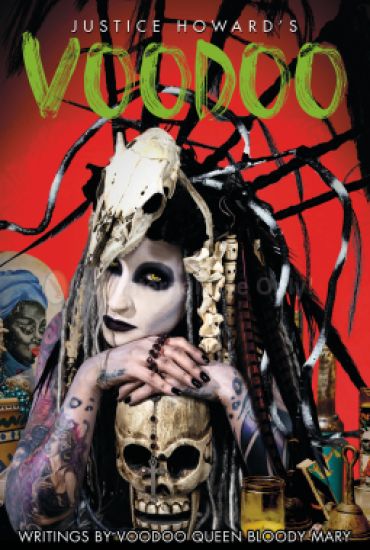
Peer behind the curtain and journey into Voodoo’s hidden world. A forbidden and often-misunderstood subject, Voodoo has never before been photographically depicted in this way. The people and the spirits of Voodoo are creatively conjured in dozens of photos from world-renowned photographer Justice Howard, coupled with the insightful words of Voodoo Queen Bloody Mary. Subjects include Papa Legba, gatekeeper of the crossroads, and the revered priestess Marie Laveau. See the realities behind Voodoo dolls and meet graveyard rulers Baron Samedi and Maman Brigitte. Voodoo priestess Bloody Mary shares intriguing background information for each of the concepts and explains the meaning of ritual items, from food offerings to libation to the misconceptions of animal sacrifice.

In the 1920s, the playwright Sidney Howard and his wife, actress Clare Eames, were at the heart of the movement to change the American theater from a commercial enterprise to one with art at its center. Sidney gained fame writing They Knew What They Wanted (which won the Pulitzer Prize) in 1924. A dramatist for the Theatre Guild, he wrote Ned McCobb's Daughter and The Silver Cord and became the voice of American theater's fight against censorship. Energetic and ambitious Clare played some of the greatest dramatic roles for women, including Queen Elizabeth, Lady MacBeth, and Hedda Gabler. For a time, Sidney and Clare were an ideal couple, collaborating on dramas and drawing admirers in both England and America. This dual biography illuminates the growth of the American art theater, gives intimate details into the work of the couple, and reveals a glamorous doomed romance. The letters interspersed throughout the text detail the couple's thoughts on the artistic process, acting, writing, and the social and theatrical circles in which they moved. Including many letters and reviews from the era, this study describes Sidney and Clare's relationships, careers, and the dramatic disintegration of their marriage, set against the background of one of the most artistically fertile periods of American drama.
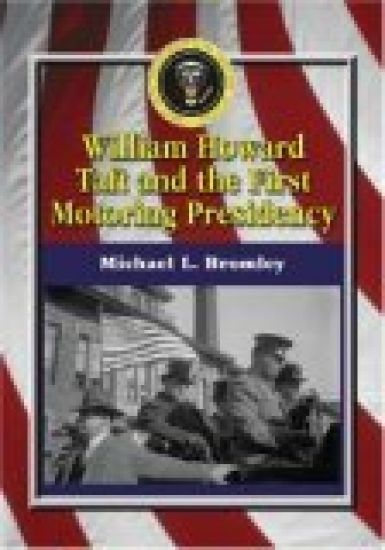
William Howard Taft and the First Motoring Presidency, 1909-1913
Michael L. Bromley
McFarland Co Inc
2007
pokkari
William Howard Taft declared, "I am sure the automobile coming in as a toy of the wealthier class is going to prove the most useful of them all to all classes, rich and poor." Unlike his predecessors, who made public their disdain for the automobile, Taft saw the automobile industry as a great source of wealth for this country. The first president to acquire a car in office (Congress granted him three automobiles), Taft is responsible for there being a White House garage in 1909. This is a meticulously researched reappraisal of the oft-maligned Taft presidency focusing particularly on his cars, his relationship to the automobile and the role of the automobile in the politics of his day. Appendices provide information on the White House garage and stable, Taft's speech to the Automobile Club of America and a glossary of terms and names.
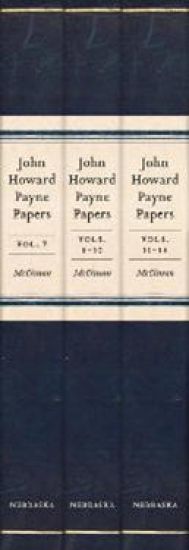
John Howard Payne Papers, 3-volume Set
University of Nebraska Press
2022
muu
This collection of John Howard Payne’s Papers is a significant recovery of firsthand political and social histories of Indigenous cultures, particularly the Cherokees, a southeastern tribe, whose ancestral lands included parts of the present-day states of Georgia, Alabama, Tennessee, and North Carolina. The papers enable readers to understand how the Cherokees and many other American Indians endured and persevered as they encountered forced removal in the 1830s due to the Indian Removal Act. The papers are also a source of cultural revitalization, elucidating the work of Sequoyah, a Cherokee genius, who in 1821 introduced his syllabary, a phonemic system with eighty-five symbols. John Howard Payne (1791–1852), an American actor, poet, and playwright, was so taken by the Cherokees’ story that he lobbied Congress to forgo their removal and wrote articles in contemporary newspapers supporting Cherokees. In 1835 Payne journeyed to the Cherokee Nation and met with John Ross, Cherokee chief from 1828 to 1866, who found in Payne a colleague to assist him and other Cherokees with their cause against removal and in preserving their ancient social, spiritual, and political heritages. Payne gathered and recorded correspondence between Cherokees such as Ross, who was fluent in English, and U.S. officials. These papers include multiple correspondences, ratified and unratified treaties, contemporary newspaper articles, and resolutions sent to Congress appealing for justice for the Cherokees. Payne also assembled letters and writings by New England Congregationalist missionaries who resided in mission stations throughout the Cherokee Nation. Available in print for the first time, this remarkable repository of information provides a fuller understanding of the political climates Cherokees encountered throughout the early to mid-nineteenth century.
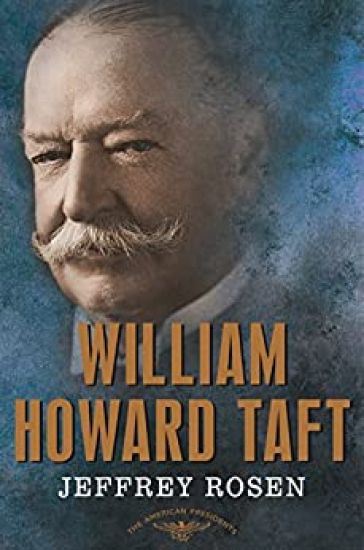
The only man to serve as president and chief justice, who approached every decision in constitutional terms, defending the Founders' vision against new populist threats to American democracy William Howard Taft never wanted to be president and yearned instead to serve as chief justice of the United States. But despite his ambivalence about politics, the former federal judge found success in the executive branch as governor of the Philippines and secretary of war, and he won a resounding victory in the presidential election of 1908 as Theodore Roosevelt's handpicked successor. In this provocative assessment, Jeffrey Rosen reveals Taft's crucial role in shaping how America balances populism against the rule of law. Taft approached each decision as president by asking whether it comported with the Constitution, seeking to put Roosevelt's activist executive orders on firm legal grounds. But unlike Roosevelt, who thought the president could do anything the Constitution didn't forbid, Taft insisted he could do only what the Constitution explicitly allowed. This led to a dramatic breach with Roosevelt in the historic election of 1912, which Taft viewed as a crusade to defend the Constitution against the demagogic populism of Roosevelt and Woodrow Wilson. Nine years later, Taft achieved his lifelong dream when President Warren Harding appointed him chief justice, and during his years on the Court he promoted consensus among the justices and transformed the judiciary into a modern, fully equal branch. Though he had chafed in the White House as a judicial president, he thrived as a presidential chief justice.
Originally published by Simon & Schuster in 1964, this is the ironic story of how William Howard Taft, the only man ever to be both President and Chief Justice of the Supreme Court, reformed judicial processes in this country so thoroughly that he helped to undermine the reactionary power of wealth and privilege in which he believed.
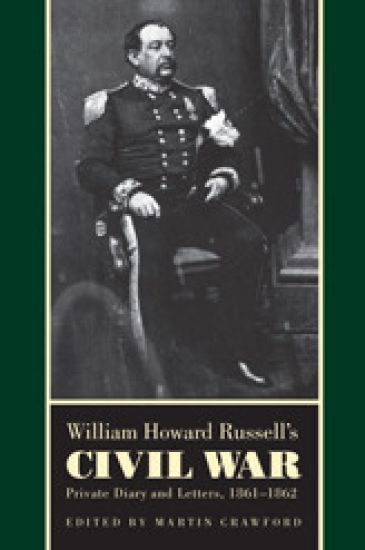
Having won renown in the 1850s for his vivid warfront dispatches from the Crimea, William Howard Russell was the most celebrated foreign journalist in America during the first year of the Civil War. As a special correspondent for The Times of London, Russell was charged with explaining the American crisis to a British audience, but his reports also had great impact in America. They so alienated both sides, North and South, that Russell was forced to return to England prematurely in April 1862.My Diary North and South (1863), Russell's published account of his visit, remains a classic of Civil War literature. It was not in fact a diary but a narrative reconstruction of the author's journeys and observations based on his private notebooks and published dispatches. Despite his severe criticisms of American society and conduct, Russell offered in that work generally sympathetic characterizations of the Northern and Southern leadership during the war. In this new volume, Martin Crawford brings together the journalist's original diary and a selection of his private correspondence to resurrect the fully uninhibited Russell and to provide, accordingly, a true documentary record of this important visitor's first impressions of America during the early months of its greatest crisis.Over the course of his American visit, Russell traveled widely throughout the Union and the new Confederacy, meeting political and social leaders on both sides. Included here are spontaneous—and often unflattering—comments on such prominent figures as William H. Seward, Jefferson Davis, Mary Todd Lincoln, and George B. McClellan, as well as quick sketches of New York, Washington, New Orleans, and other cities. Also revealed for the first time are the anxiety and despair that Russell experienced during his American visit—a state induced by his own self-doubt, by concern over the health and situation of his wife in England, and, finally, by the bitter criticism he received in the United States over his reports.A sometimes vain and pompous figure, Russell also emerges here as an individual of exceptionally tough spirit—a man who abhorred slavery and remained convinced of the essential rectitude of the Northern cause even as he criticized Northern leaders, their lack of preparedness for war, and the apparent disunity of the Northern population.
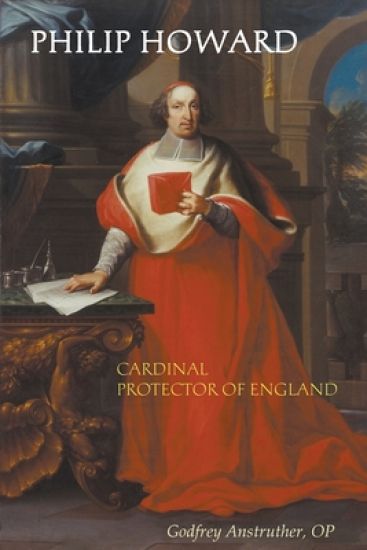
On 3 January 1666, Father Philip Howard, a Catholic priest trained on the Continent, was appointed Grand Almoner to Catherine of Braganza, Charles II's Catholic queen. Later that same year the Great Fire of London, maliciously attributed to Catholics, reduced much of the City to a smouldering ruin and papists were barred from the capital. The years that followed were not without difficulties for English Catholics, but by the time of the great crisis which ended in the deposition and exile of the Catholic James II the genial former Grand Almoner to James's sister-in-law had long left England, having been called to Rome and created a cardinal. Subsequently, in 1680, the pope appointed him Cardinal Protector of England, the first Englishman to hold this influential post. Born in 1629 into one of the pre-eminent families of England, the future Cardinal Howard was the great-grandson of the Catholic martyr, St Philip Howard, Earl of Arundel. Brought up as an Anglican, he left England in 1642 for the Continent where he came under Catholic influences, and at the age of 15, and despite the fierce opposition of his family, the young Philip determined to join the Dominican Order, which he did, going on to set in motion the revival of its English province. The restoration of the Stuart monarchy in 1660 had rekindled the hopes of English Catholics, and Howard returned to England to take up a career at court that was to flourish until 1675 when he was he raised to the Sacred College, the first Englishman to be appointed a cardinal since the death of William Allen in 1594. Although based in Rome, as Cardinal Protector of England, Howard was seen by the Holy See as the leading authority on all aspects of the life of the Catholic Church in England, a church ravaged by renewed persecution resulting from the explosive fabrications of the virtuoso liar Titus Oates and his deadly fictitious conspiracy, the 'Popish Plot'.