Kirjojen hintavertailu. Mukana 12 016 292 kirjaa ja 12 kauppaa.

Kirjahaku

Etsi kirjoja tekijän nimen, kirjan nimen tai ISBN:n perusteella.

923 tulosta hakusanalla Howarth Troy

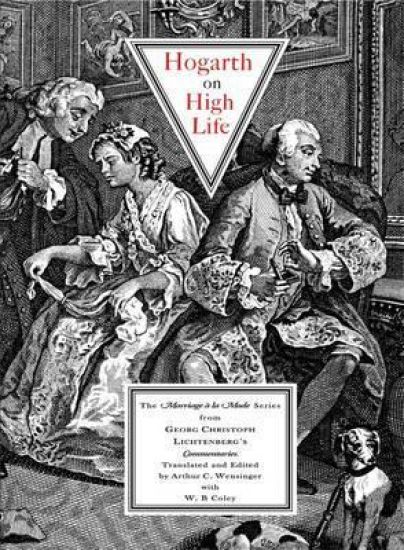
Hogarth on High Life

Hogarth on High Life

Georg Christoph Lichtenberg; Jean-Andre Rouquet; William Hogarth

Pallas Athene Arts
2012
nidottu
Marriage a la Mode is the most famous of William Hogarth's 'progresses' or series paintings, the story of a marriage de convenance and its unhappy consequences in fashionable 18th-century London. Contemporaries relished teasing out the meaning of all its rich detail, and the most extensive and popular of all the commentaries on the artist's accomplishment: was that of the witty, many-sided German, Georg Christoph Lichtenberg. Brilliantly translated, thoroughly annotated, this text is accompanied by the earlier and less-known commentary by Hogarth's friend, the French-Swiss enameller Jean-Andre Rouquet, and by a selection of Lichtenberg's remarks (in letters to friends) on his purposes and problems in interpreting Hogarth's work. Included also is another and very rare 'explanation' of the plates, an anonymous 1746 pamphlet titled Marriage A-la-Mode-An Humorous Tale, in Six Cantos. A foreword on Lichtenberg, and an historical essay on Hogarth's work by Mr. Coley, supply necessary background on artist and commentary. Of Hogarth's greatness there is little that need be said. But it is worth noting that, of his several 'progresses' or 'modern moral subjects', only Marriage a la Mode centres on the upper levels of British society - the aristocracy and the mercantile class.
Hogarth and Europe

Hogarth and Europe

Tate Publishing
2021
sidottu
It was a century of war (mostly) and peace (occasionally), of extraordinary wealth and grinding poverty, gargantuan appetites and desperate famines, high ideals and hypocrisy, a century of intellectual, social and religious turmoil. In this fertile turbulence flourished one of Britain's greatest artists: painter, printmaker, satirist, and social critic William Hogarth, of whom the essayist and poet Charles Lamb once said, 'Other pictures we look at; his pictures we read'. Illustrating the full range of Hogarth's most important paintings and prints, this book shows them in a new light, juxtaposed with work by major European contemporaries who influenced him or took their inspiration from him in their painting of modern life - including Watteau, Chardin, Troost and Longhi. Hogarth is revealed not only as a key figure in British art history, but also as a major European artist. It is also a tale of four cities: London, Paris, Venice and Amsterdam, represented in maps from the period. The themes of city life, social protest, sexuality and satire which come to the fore in the art of Hogarth and his contemporaries are very much live today.
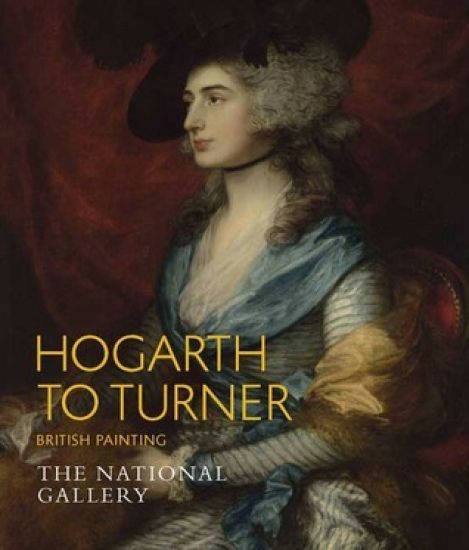
Hogarth to Turner

Hogarth to Turner

Govier Louise

National Gallery Company Ltd
2010
nidottu
This book traces some key developments in British 18th- and 19th-century painting, focusing in particular on the outstanding portraits and landscapes in the National Gallery’s collection. Compare what rival portrait painters Thomas Gainsborough and Sir Joshua Reynolds offered their sitters: the choice between shimmering colours and expressive brushwork, or ennobling classical references. Their techniques and philosophical ideals would be challenged and developed even further by the next generation. The ground-breaking landscapes that Constable and Turner produced inspired the French Impressionists, and are still among the world’s favourite paintings today.
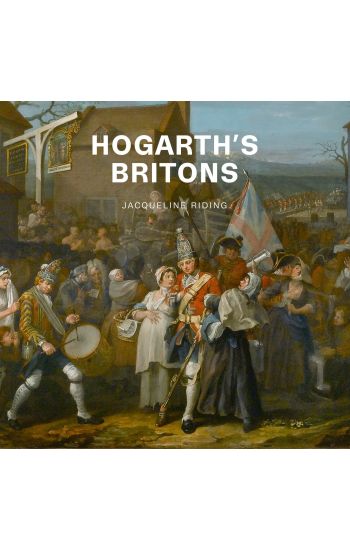
Hogarth's Britons

Hogarth's Britons

Jacqueline Riding

Paul Holberton Publishing Ltd
2023
nidottu
Hogarth’s Britons explores how the English painter and graphic satirist William Hogarth (1697–1764) set out to define British nationhood and identity at a time of division at home and conflict abroad. With notions of community cohesion, good citizenship and patriotism, wrapped up in a unifying idea of British national character and spirit in all its variety, and set alongside the ongoing national debate on Britain’s past, present and future within European and World affairs, Hogarth and his art has never been more relevant. In the summer of 1745, Prince Charles Edward Stuart ‘Bonnie Prince Charlie’ landed with his supporters, the ‘Jacobites’, in a remote corner of Scotland. This signalled the start of his audacious military campaign, with the backing of Britain’s global adversary France and during a Europe-wide war, to topple the Hanoverian, Protestant monarch George II and restore the Catholic Stuarts, exiled in France and then Rome since 1688, to the throne. The country descended into turmoil, with regional, local and family loyalty for these rival royal dynasties severely tested, and opposing visions for the new nation of Great Britain – since the Union of England and Scotland in 1707 – laid bare. By early December the prince and his 6,000 troops arrived in Derby, just 120 miles and five days’ march from London. For both sides everything was at stake. From the 1720s, through the crises of the early 1740s, to the civil war called the 1745 Jacobite Rebellion or Rising, Prince Charles’s defeat at Culloden in April 1746 and beyond, Hogarth created some of the most iconic images in British and European art, including Marriage A-La-Mode, O the Roast Beef of Old England (The Gate of Calais) and The March of the Guards to Finchley. Through such vibrant scenes, rich in topical commentary, he conveyed a sense of external threat (real and imagined) from foreign powers and internal political, social and cultural upheaval. At the same time he offered his fellow Britons a confident, reassuring idea of the rights and liberties they enjoyed under King George and his government: a flawed status quo, as Hogarth would readily admit, yet certainly better, he would argue, than the regime that would replace it under the ‘popish’ Stuarts as client monarchs of the self-serving French king, Louis XV. With British society and politics in flux, and the Union between Scotland and England arguably more vulnerable now than at any moment since 1746, the themes explored in Hogarth’s Britons have profound resonance with our own time.
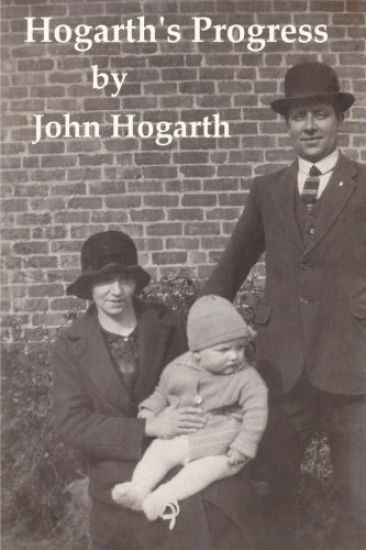
Hogarth's Progress

Hogarth's Progress

John Hogarth

Createspace Independent Publishing Platform
2018
nidottu
This is a history of my life, and family. At some time or other in our lives, usually when it is too late, we say "I wish I had talked to a now departed father, mother or some relation about their life, or the life of grandparents and other relations". Writing family history gives us an account of past events and social change, forming a first-hand record of how families lived through change and important events.
Hogarth's Progress: Black and White version

Hogarth's Progress: Black and White version

John Hogarth

Createspace Independent Publishing Platform
2018
nidottu
At some time or other in our lives, usually when it is too late, we say "I wish I had talked to a now departed father, mother or some relation about their life, or the life of grandparents and other relations". Writing family history gives us an account of past events and social change, forming a first-hand record of how families lived through change and important events. This is a history of my life, and family. The photographs in this book are printed in black and white. There is an additional version of the book with colour pictures.
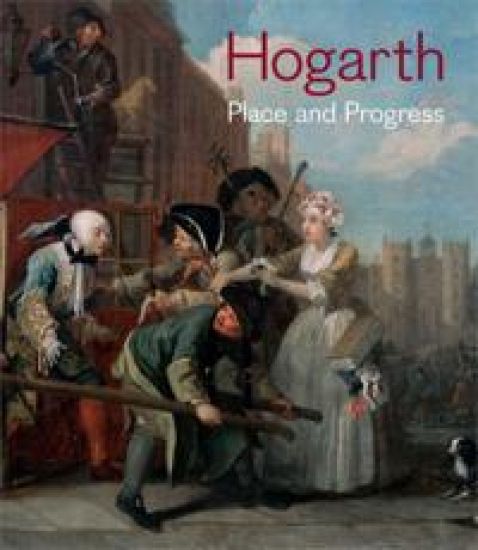
Hogarth, Place and Progress

Hogarth, Place and Progress

Sir John Soane's Museum
2019
nidottu
A highly illustrated journey through Hogarth’s series paintings and engravings, from the blockbuster Rake’s Progress and Marriage a la Mode to the enigmatic and lesser known Happy Marriage this book offers a close analysis of place and setting in Hogarth’s works’ in order to revisit the artist’s complex stance on morality, society, and the city, and the enduring appeal of his satires in the present. William Hogarth (1697-1764) remains one of Britain’s best loved painters. His most renowned works, the series relating to moral subjects, are rarely displayed together, and will be united at the Soane Museum for the first time in its history. The book also focusses tightly on Hogarth’s series; The Soane Museum’s own Rake’s Progress and An Election, as well as Marriage a la Mode, the Four Times of Day, as well as the three surviving paintings of The Happy Marriage engraved series such as Stages of Cruelty, Industry and Idleness and Gin Lane and Beer Street. It is edited by David Bindman, a world authority on Hogarth and comprises four essays by leading academics, along with Bindman’s own introduction to each of the series according to the themes of ‘place’ and ‘progress’. Hogarth’s concept of ‘progress’ was influenced by John Bunyan’s The Pilgrim’s Progress, where the word described a journey towards moral and spiritual redemption. Hogarth: Place and Progress will explore how Hogarth’s series explore as well a darker meaning of progress, with narratives that lead through moral abandon and social ostracism, to poverty, madness and death. Hogarth’s series present narratives with fully detailed characters, plots and changes of scene. Precise locations in London play a key role in a moral reading of Hogarth’s paintings. In A Rake’s Progress, the Rake moves from the City of London to an extravagant property in the west end, then a brothel in Covent Garden, and ultimately moves outside London, ending up in Bedlam, where his dissolute life has led him to insanity and death. The book will demonstrate how Hogarth’s ‘Modern Moral Subjects’ married the idea of progress with the moral geography of London, in a dynamic and evolving way throughout his own progress as an artist.
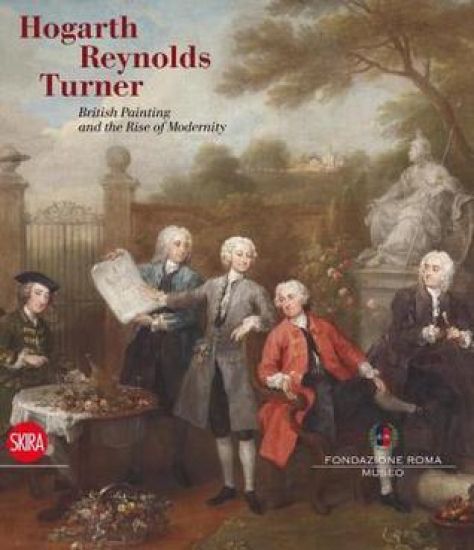
Hogarth, Reynolds, Turner

Hogarth, Reynolds, Turner

Ilaria Capi

Skira
2014
nidottu
From Hogarth to Reynolds, from Gainsborough to Turner, the great protagonists of English painting between the eighteenth and nineteenth centuries. This is the first comprehensive overview of the extraordinary development of British painting during the eighteenth century, which anticipated themes, styles and techniques that later became paradigms of modernity. This volume focuses on the English context at a time when the growth of artistic standing was accompanied by the country’s conquest of hegemony on a historical, political and economic plane. The volume is arranged chronologically in seven sections, which include a selection of over 100 masterpieces by the most significant English painters. The main objective is to enable readers to rediscover the genres of portrait and landscape, which have always characterized English art. Readers can admire the work of artists like William Hogarth, Henry Fuseli (Johann Heinrich Füssli), Sir Joshua Reynolds, Thomas Gainsborough, Joseph Wright of Derby, George Stubbs, John Constable and William Turner, who offer a completely original cross-section of eighteenthand early nineteenth-century painting in Great Britain.
Hogarth

Hogarth

Alexandre Dumas

Alpha Editions
2023
nidottu
Les Femmes qui tuent et les Femmes qui votent, un livre classique et rare qui a t consid r comme essentiel tout au long de l'histoire de l'humanit , pour que cet ouvrage ne soit jamais oubli , nous chez Alpha Editions avons fait des efforts pour sa pr servation en r ditant ce livre dans un format moderne pour les g n rations pr sentes et futures. Tout ce livre a t reformat , retap et con u. Ces livres ne sont pas constitu s de copies num ris es de leur oeuvre originale et le texte est donc clair et lisible.
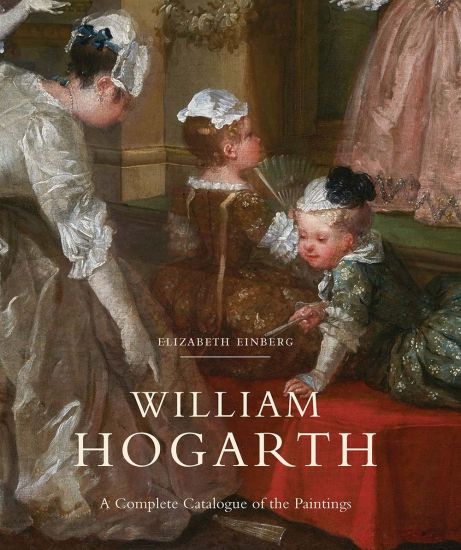
William Hogarth

William Hogarth

Elizabeth Einberg

Yale University Press
2016
sidottu
William Hogarth (1697–1764) was among the first British-born artists to rise to international recognition and acclaim and to this day he is considered one of the country’s most celebrated and innovative masters. His output encompassed engravings, paintings, prints, and editorial cartoons that presaged western sequential art. This comprehensive catalogue of his paintings brings together over twenty years of scholarly research and expertise on the artist, and serves to highlight the remarkable diversity of his accomplishments in this medium. Portraits, history paintings, theater pictures, and genre pieces are lavishly reproduced alongside detailed entries on each painting, including much previously unpublished material relating to his oeuvre. This deeply informed publication affirms Hogarth’s legacy and testifies to the artist’s enduring reputation. Published for the Paul Mellon Centre for Studies in British Art