This is a survey of the history of Taoism from approximately the third century B.C. to the fourteenth century A.D. For many years, it was customary to divide Taoism into "philosophical Taoism" and "religious Taoism." The author has long argued that this is a false division and that "religious" Taoism is simply the practice of "philosophical" Taoism. She sees Taoism as foremost a religion, and the present work traces the development of Taoism up to the point it reached its mature form (which remains intact today, albeit with modern innovations). The main aim of this history of Taoism is to trace the major lines of its doctrinal evolution, showing the coherence of its development, the wide varieties of factors that came into play over a long period of disconnected eras, the constant absorptions of outside contributions, and the progress that integrates them. The author shows how certain recurrent themes are treated in different ways in different eras and different sects. Among these themes are the Ultimate Truth, immortality, the Sage, the genesis and the end of the world, retribution for good and evil acts, representations of heavens and hells, and the connections between life and the spirit, between life and death, between man and society, and between mystical experience and the social form of religion. The plan of the book is chronological, but the chronology is somewhat fluid given the way Taoism evolved; as it assimilated new features in the course of its growth, it never ceased to continue to develop the old ones. Thus the Celestial Masters sect, which is chronologically the first to attain a structure, is treated at the outset of the book though it exists down to our day, and the Shangqing tradition took shape in the fourth century though its glory years were under the Tang (618-907).
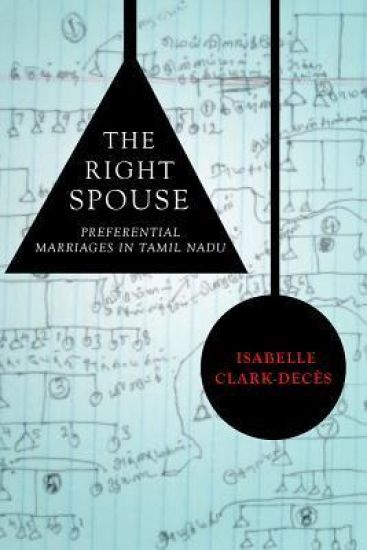
The Right Spouse is an engaging investigation into Tamil (South Indian) preferential close kin marriages, so-called Dravidian Kinship. This book offers a description and an interpretation of preferential marriages with close kin in South India, as they used to be arranged and experienced in the recent past and as they are increasingly discontinued in the present. Clark-Decès presents readers with a focused anthropology of this waning marriage system: its past, present, and dwindling future. The book takes on the main pillars of Tamil social organization, considers the ways in which Tamil intermarriage establishes kinship and social rank, and argues that past scholars have improperly defined "Dravidian" kinship. Within her critique of past scholarship, Clark-Decès recasts a powerful and vivid image of preferential marriage in Tamil Nadu and how those preferences and marital rules play out in lived reality. What Clark-Decès discovers in her fieldwork are endogamous patterns and familial connections that sometimes result in flawed relationships, contradictory statuses, and confused roles. The book includes a fascinating narration of the complex terrain that Tamil youth currently navigate as they experience the complexities and changing nature of marriage practices and seek to reconcile their established kinship networks to more individually driven marriages and careers.
The Right Spouse is an engaging investigation into Tamil (South Indian) preferential close kin marriages, so-called Dravidian Kinship. This book offers a description and an interpretation of preferential marriages with close kin in South India, as they used to be arranged and experienced in the recent past and as they are increasingly discontinued in the present. Clark-Decès presents readers with a focused anthropology of this waning marriage system: its past, present, and dwindling future. The book takes on the main pillars of Tamil social organization, considers the ways in which Tamil intermarriage establishes kinship and social rank, and argues that past scholars have improperly defined "Dravidian" kinship. Within her critique of past scholarship, Clark-Decès recasts a powerful and vivid image of preferential marriage in Tamil Nadu and how those preferences and marital rules play out in lived reality. What Clark-Decès discovers in her fieldwork are endogamous patterns and familial connections that sometimes result in flawed relationships, contradictory statuses, and confused roles. The book includes a fascinating narration of the complex terrain that Tamil youth currently navigate as they experience the complexities and changing nature of marriage practices and seek to reconcile their established kinship networks to more individually driven marriages and careers.
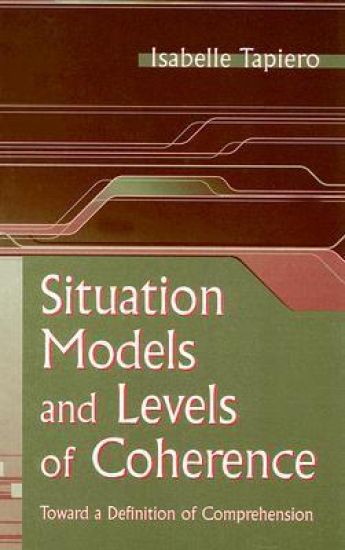
The mental representation of what one reads is called a "situation model" or a "mental model." The process of reading causes an interaction of the new knowledge with what is already known. Though a number of theories and models have been proposed to describe this interaction, Tapiero proposes a new model that assumes a variety of storage areas to previous knowledge, and that the reader picks and chooses which of these models is most relevant to what is being read. These are called "levels of coherence." It’s a dynamic process as well, as the reader chooses and abandons the storage units of previous knowledge as he or she reads on. Situation Models and Levels of Coherence is of professional and scholarly interest to cognitive scientists who specialize in reading, knowledge representation, mental models, discourse analysis, and metaphor/symbol.
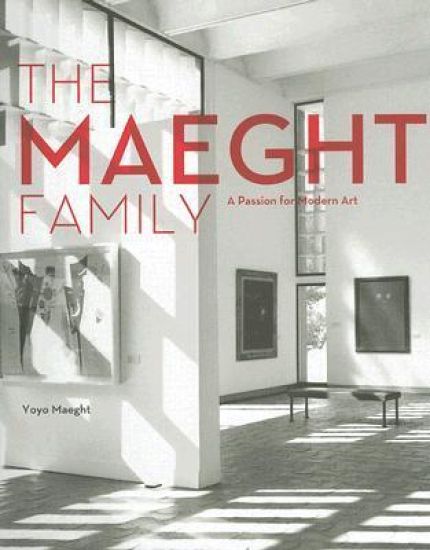
If modern art has a “first family,” it might very well be the Maeghts, whose gallery in Paris provided a literal and figurative base for so many 20th-century masters.Here for the first time ever in book form is the story of this extraordinary family, filled with illustrations and documents by some of the legendary artists associated with it: Matisse, Braque, Duchamp, Miró, Chagall, Calder, Kandinsky, Giacometti, and many others. Spinning this remarkable tale with an authority and in-depth knowledge that only family members could provide, Isabelle and Yoyo Maeght recount key events in the family’s life, including the Maeghts’ greatest legacy of all, the world-renowned Aimé and Marguerite Maeght Foundation, home to some of the greatest masterpieces of modern art and an architectural marvel in its own right.
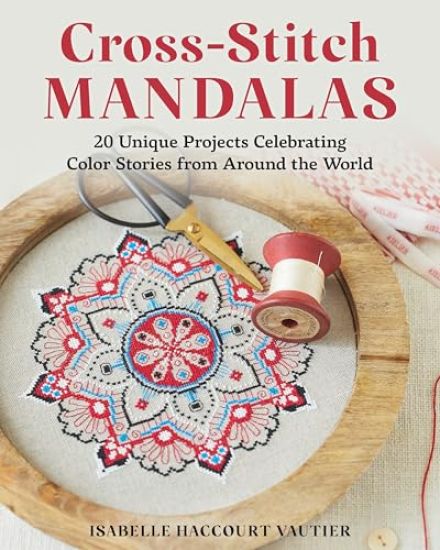
Bright, beautiful symmetry in cross-stitch!Mandalas are intricate circular designs used around the world to invoke calm centeredness through reflection. In recent times, drawing, coloring, and painting mandalas have become popular ways to seek out this inner serenity. It is in this spirit that the talented embroiderer Isabelle Haccourt Vautier offers 20 mandalas inspired by cities and countries she dreams of visiting. Using her imagination and knowledge of the places’ histories and traditions, she has created breathtaking mandalas that celebrate the spirit of each destination.A student of color research and crystal healing, Isabelle highlights the symbolism of the colors she has chosen and a stone that corresponds for each pattern. Completed pieces are shown finished in a variety of ways: wall hangings and banners, pouches and totes, pincushions, tea towels, and more. Each design includes a list of fabrics and embroidery floss colors used and detailed cross-stitch charts. Both stitching and admiring these stunning mandalas will transport you to a place of calm and joy!
Using the law of thermodynamics, Stengers sets out to explain the consequences of non-linear dynamics (or chaos theory) for philosophy and science. The author makes a case for the concept of complexity that transcends the conventional boundaries of scientific discourse and that clearly exposes the risks of scientific theories.
A sweeping critique of the role and authority of modern science in contemporary society From Einstein’s quest for a unified field theory to Stephen Hawking’s belief that we “would know the mind of God” through such a theory, contemporary science—and physics in particular—has claimed that it alone possesses absolute knowledge of the universe. In a sweeping work of philosophical inquiry, originally published in French in seven volumes, Isabelle Stengers builds on her previous intellectual accomplishments to explore the role and authority of science in modern societies and to challenge its pretensions to objectivity, rationality, and truth. For Stengers, science is a constructive enterprise, a diverse, interdependent, and highly contingent system that does not simply discover preexisting truths but, through specific practices and processes, helps shape them. She addresses conceptual themes crucial for modern science, such as the formation of physical-mathematical intelligibility, from Galilean mechanics and the origin of dynamics to quantum theory, the question of biological reductionism, and the power relations at work in the social and behavioral sciences. Focusing on the polemical and creative aspects of such themes, she argues for an ecology of practices that takes into account how scientific knowledge evolves, the constraints and obligations such practices impose, and the impact they have on the sciences and beyond. This perspective, which demands that competing practices and interests be taken seriously rather than merely (and often condescendingly) tolerated, poses a profound political and ethical challenge. In place of both absolutism and tolerance, she proposes a cosmopolitics—modeled on the ideal scientific method that considers all assumptions and facts as being open to question—that reintegrates the natural and the social, the modern and the archaic, the scientific and the irrational. Cosmopolitics I includes the first three volumes of the original work. Cosmopolitics II will be published by the University of Minnesota Press in Fall 2011.
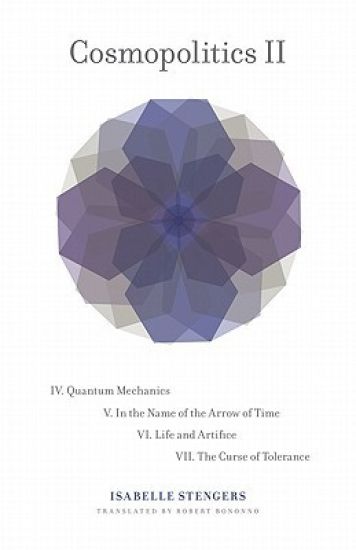
Originally published in French in seven volumes, Cosmopolitics investigates the role and authority of the sciences in modern societies and challenges their claims to objectivity, rationality, and truth. Cosmopolitics II includes the first English-language translations of the last four books: Quantum Mechanics: The End of the Dream, In the Name of the Arrow of Time: Prigogine’s Challenge, Life and Artifice: The Faces of Emergence, and The Curse of Tolerance. Arguing for an “ecology of practices” in the sciences, Isabelle Stengers explores the discordant landscape of knowledge derived from modern science, seeking intellectual consistency among contradictory, confrontational, and mutually exclusive philosophical ambitions and approaches. For Stengers, science is a constructive enterprise, a diverse, interdependent, and highly contingent system that does not simply discover preexisting truths but, through specific practices and processes, helps shape them. Stengers concludes this philosophical inquiry with a forceful critique of tolerance; it is a fundamentally condescending attitude, she contends, that prevents those worldviews that challenge dominant explanatory systems from being taken seriously. Instead of tolerance, she proposes a “cosmopolitics” that rejects politics as a universal category and allows modern scientific practices to peacefully coexist with other forms of knowledge.
Originally published in French in seven volumes, Cosmopolitics investigates the role and authority of the sciences in modern societies and challenges their claims to objectivity, rationality, and truth. Cosmopolitics II includes the first English-language translations of the last four books: Quantum Mechanics: The End of the Dream, In the Name of the Arrow of Time: Prigogine’s Challenge, Life and Artifice: The Faces of Emergence, and The Curse of Tolerance. Arguing for an “ecology of practices” in the sciences, Isabelle Stengers explores the discordant landscape of knowledge derived from modern science, seeking intellectual consistency among contradictory, confrontational, and mutually exclusive philosophical ambitions and approaches. For Stengers, science is a constructive enterprise, a diverse, interdependent, and highly contingent system that does not simply discover preexisting truths but, through specific practices and processes, helps shape them. Stengers concludes this philosophical inquiry with a forceful critique of tolerance; it is a fundamentally condescending attitude, she contends, that prevents those worldviews that challenge dominant explanatory systems from being taken seriously. Instead of tolerance, she proposes a “cosmopolitics” that rejects politics as a universal category and allows modern scientific practices to peacefully coexist with other forms of knowledge.
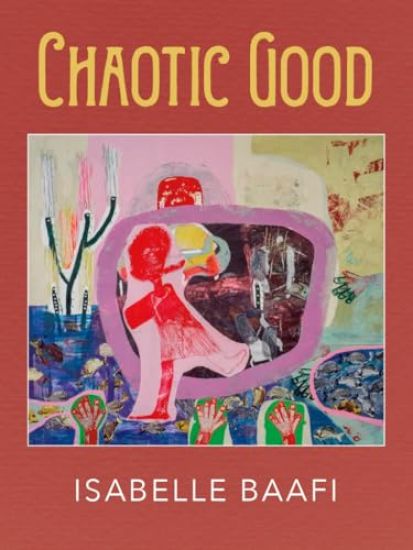
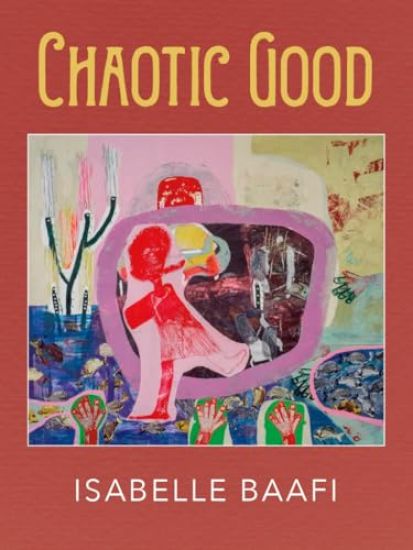
An evocative journey of self-discovery and reclamation in the wake of divorceThis fresh, dynamic debut poetry book from award-winning poet Isabelle Baafi explores the transformative journey of redefining one's identity following trauma and upheaval. This conversational collection simmers with energy and immediacy as it interrogates how much our identity is determined by the circumstances into which we are born. The book's five sections travel backwards and forwards in time: asking urgent questions of self-knowledge and change during a marital breakdown, revisiting the formation of a moral compass during childhood, navigating the pitfalls of powerlessness and conformity during adolescence, charting the rise and fall of a passionate marriage, and seeking revitalisation in the wake of divorce. Visceral scenes from childhood and adolescence are set against deeply resonant moments of love blossoming and love dying to explore desire, power, and self-perception in unexpected ways. This exquisite and moving collection marks the emergence of a distinctive poetic voice. Sample Poem]The way you say penAfter Irene P. Mathieu's 'Soil'it sounds like pain, as inall I ever wanted was to live by my pain.If you want to raze a city, all you need is some paper and a good pain.You once said that a woman with a pain is like a gun who soon finds more targets than mercy.Every day I lost another pain, but you gave me another to take its place.A child starts out writing in pencil, but mastery is rewarded with a pain.Aged six, first trip without Dad, my legs the canvas: lightning scratched into me with my mother's pain.My shadow from the day I learned to skip with bloodied knees - she was my pain pal all this time.The pain is mightier than the sword, and twice as likely to punish its owner.What a luxury and a curse, to live and die by the torrent of my pain.Rainclouds surround the registry. Organza-veiled and blister-footed, I am yours with the flick of a pain.'Fill out in block capitals with black ink.' Some truths are only valid when the right pain tells them.
An evocative journey of self-discovery and reclamation in the wake of divorceThis fresh, dynamic debut poetry book from award-winning poet Isabelle Baafi explores the transformative journey of redefining one's identity following trauma and upheaval. This conversational collection simmers with energy and immediacy as it interrogates how much our identity is determined by the circumstances into which we are born. The book's five sections travel backwards and forwards in time: asking urgent questions of self-knowledge and change during a marital breakdown, revisiting the formation of a moral compass during childhood, navigating the pitfalls of powerlessness and conformity during adolescence, charting the rise and fall of a passionate marriage, and seeking revitalisation in the wake of divorce. Visceral scenes from childhood and adolescence are set against deeply resonant moments of love blossoming and love dying to explore desire, power, and self-perception in unexpected ways. This exquisite and moving collection marks the emergence of a distinctive poetic voice. Sample Poem]The way you say penAfter Irene P. Mathieu's 'Soil'it sounds like pain, as inall I ever wanted was to live by my pain.If you want to raze a city, all you need is some paper and a good pain.You once said that a woman with a pain is like a gun who soon finds more targets than mercy.Every day I lost another pain, but you gave me another to take its place.A child starts out writing in pencil, but mastery is rewarded with a pain.Aged six, first trip without Dad, my legs the canvas: lightning scratched into me with my mother's pain.My shadow from the day I learned to skip with bloodied knees - she was my pain pal all this time.The pain is mightier than the sword, and twice as likely to punish its owner.What a luxury and a curse, to live and die by the torrent of my pain.Rainclouds surround the registry. Organza-veiled and blister-footed, I am yours with the flick of a pain.'Fill out in block capitals with black ink.' Some truths are only valid when the right pain tells them.
This lively guidebook surveys four hundred buildings within the Atlanta metropolitan area—from the sleek marble and glass of the Coca-Cola Tower to the lancet arches and onion domes of the Fox Theater, from the quiet stateliness of Roswell's antebellum mansions to the art-deco charms of the Varsity grill. Published in conjunction with the Atlanta chapter of the American Institute of Architects, it combines historical, descriptive, and critical commentary with more than 250 photographs and area maps.As the book makes clear, Atlanta has two faces: the "Traditional City," striving to strike a balance between the preservation of a valuable past and the challenge of modernization, and also the "Invisible Metropolis," a decentralized city shaped more by the isolated ventures of private business than by public intervention. Accordingly, the city's architecture reflects a dichotomy between the northern-emulating boosterism that made Atlanta a boom town and the genteel aesthetic more characteristic of its southern locale. The city's recent development continues the trend; as Atlanta's workplaces become increasingly "high-tech," its residential areas remain resolutely traditional.In the book's opening section, Dana White places the different stages of Atlanta's growth—from its beginnings as a railroad town to its recent selection as the site of the 1996 Summer Olympics—in their social, cultural, and economic context; Isabelle Gournay then analyzes the major urban and architectural trends from a critical perspective. The main body of the book consists of more than twenty architectural tours organized according to neighborhoods or districts such as Midtown, Druid Hills, West End, Ansley Park, and Buckhead.The buildings described and pictured capture the full range of architectural styles found in the city. Here are the prominent new buildings that have transformed Atlanta's skyline and neighborhoods: Philip John and John Burgee's revivalist IBM Tower, John Portman's taut Westin Peachtree Plaza, and Richard Meier's gleaming, white-paneled High Museum of Art, among others. Here too are landmarks from another era, such as the elegant residences designed in the early twentieth century by Neel Reid and Philip Shutze, two of the first Atlanta-based architects to achieve national prominence. Included as well are the eclectic skyscrapers near Five Points, the postmodern office clusters along Interstate 285, and the Victorian homes of Inman Park.Easy-to-follow area maps complement the descriptive entries and photographs; a bibliography, glossary, and indexes to buildings and architects round out the book. Whether first-time visitors or lifelong residents, readers will find in these pages a wealth of fascinating information about Atlanta's built environment.
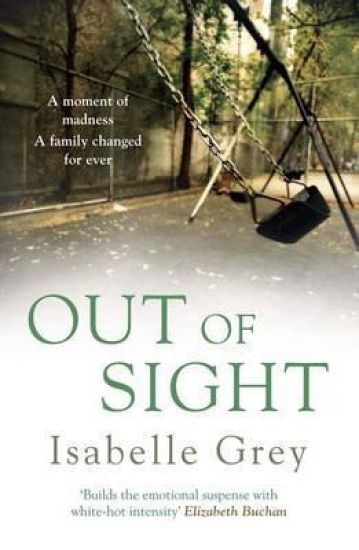
Who pays the price once tragedy strikes? In a small French town, Leonie is intrigued by a withdrawn Englishman who calls himself Patrice. He lives in a house inherited from his grandmother. He has no wife, no child, and refuses ever to get inside a car. Patrice tells Leonie little about his past, but she's certain her love will heal his emotional scars. Too late, she discovers that, five years before, Patrice was living in Brighton. He was called Patrick, and he had a wife and son. Until, one hot summer day, a moment of fatal forgetfulness changed his life forever.
Are there secrets that should never be told? If so, how far must a mother go to keep them? Tessa Parker runs a successful B&B in a seaside town. During a surprise visit, a long-lost aunt lets slip a family secret with devastating consequences. Navigating her own turmoil at a crucial moment in her children's lives, Tessa's search for her birth father forces her to decide who she really wants to be. But now her son is missing. Has she left it too late to be a good mother?
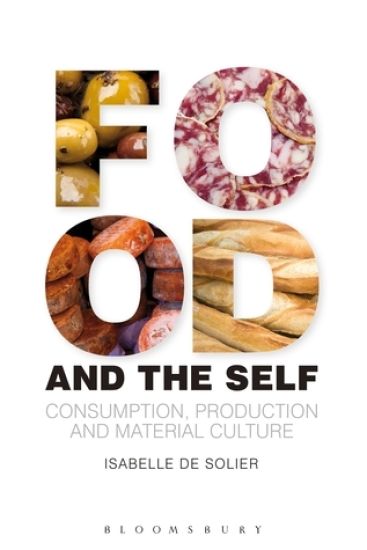
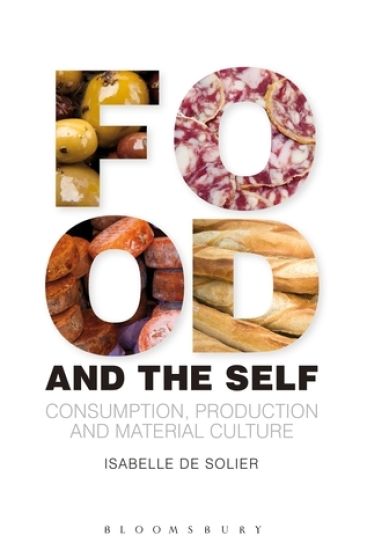
We often hear that selves are no longer formed through producing material things at work, but by consuming them in leisure, leading to 'meaningless' modern lives. This important book reveals the cultural shift to be more complex, demonstrating how people in postindustrial societies strive to form meaningful and moral selves through both the consumption and production of material culture in leisure. Focusing on the material culture of food, the book explores these theoretical questions through an ethnography of those individuals for whom food is central to their self: 'foodies'. It examines what foodies do, and why they do it, through an in-depth study of their lived experiences. The book uncovers how food offers a means of shaping the self not as a consumer but as an amateur who engages in both the production and consumption of material culture and adopts a professional approach which reveals the new moralities of productive leisure in self-formation. The chapters examine a variety of practices, from fine dining and shopping to cooking and blogging, and include rare data on how people use media such as cookbooks, food television, and digital food media in their everyday life.This book is ideal for students, scholars, and anyone interested in the meaning of food in modern life.
We often hear that selves are no longer formed through producing material things at work, but by consuming them in leisure, leading to 'meaningless' modern lives. This important book reveals the cultural shift to be more complex, demonstrating how people in postindustrial societies strive to form meaningful and moral selves through both the consumption and production of material culture in leisure. Focusing on the material culture of food, the book explores these theoretical questions through an ethnography of those individuals for whom food is central to their self: 'foodies'. It examines what foodies do, and why they do it, through an in-depth study of their lived experiences. The book uncovers how food offers a means of shaping the self not as a consumer but as an amateur who engages in both the production and consumption of material culture and adopts a professional approach which reveals the new moralities of productive leisure in self-formation. The chapters examine a variety of practices, from fine dining and shopping to cooking and blogging, and include rare data on how people use media such as cookbooks, food television, and digital food media in their everyday life.This book is ideal for students, scholars, and anyone interested in the meaning of food in modern life.