Kirjojen hintavertailu. Mukana 12 016 292 kirjaa ja 12 kauppaa.

Kirjahaku

Etsi kirjoja tekijän nimen, kirjan nimen tai ISBN:n perusteella.

1000 tulosta hakusanalla Isabelle Rowan

Alpha

Alpha

Isabelle Arsenault

Candlewick Press (MA)
2015
sidottu
Discover the NATO phonetic alphabet--and find layers of connection in every letter--in a stunning abecedarian from celebrated artist Isabelle Arsenault. Alpha, Bravo, Charlie . . . Since 1956, whenever time and clarity are of the essence, everyone from firefighters to air traffic controllers has spelled out messages using the NATO phonetic alphabet. Now, with equal precision--infused with a singular wit and whimsy--award-winning author-illustrator Isabelle Arsenault interprets this internationally recognized code and makes it her own. From the elegant Tangoto the enigmatic Echo, from the humorous Kilo to the haunting Romeo and Juliet, the striking art in this remarkable ABC book elicits laughter and curiosity, calls up endless associations, and will draw the viewer back again and again.
Applications and Case Studies in Clinical Nutrition

Applications and Case Studies in Clinical Nutrition

Isabelle Giroux

Lippincott Williams and Wilkins
2007
pokkari
This text engages students in activities that put their knowledge of clinical nutrition into action and prepare them for practice in any clinical setting. It serves as a practical educational resource in clinical nutrition that complements the classic textbooks and references widely used in the field of dietetics.At the core of this textbook are case studies and learning activities. These exercises not only encourage students to practice and develop their skills, they also ask students to explore resources they will use as practitioners, including many from the American Dietetic Association and Dietitians of Canada.
Taoist Meditation

Taoist Meditation

Isabelle Robinet

State University of New York Press
1993
pokkari
Isabelle Robinet's Taoist Meditation is the first and only scholarly study to discuss the ancient Mao-shan Taoist tradition of visionary meditation while, at the same time, helping to clarify the little understood relationship among the early Taoist classics, the Buddhist tradition, and the later Taoist religion. Most importantly, Taoist Meditation is a pioneering study that fully and accurately describes the unique visionary cosmology, bodily symbolism, astral journeys, internal alchemy, meditational techniques, and ritual practices of the Mao-shan or Shang-chi'ing (Great Purity) movement—one of the most important foundational traditions making up the overall Taoist religion.This English version of Robinet's work is more than a simple translation.Taoist Meditation presents a significantly expanded edition of the original French text which includes up-to-date bibliographies of Robinet's work and other Western scholarship on Taoism, additional illustrations, and a newly compiled list of textual citations.
The Encounter Never Ends

The Encounter Never Ends

Isabelle Clark-Decès

State University of New York Press
2007
sidottu
A reconsideration of the relationship between fieldwork and anthropological knowledge.The Encounter Never Ends offers a thoughtful meditation on the relationship between fieldwork and anthropological knowledge through the analysis of Tamil ritual practice in a South Indian village. Isabelle Clark-Decès revisits field notes taken more than fifteen years earlier, and reveals what she intended when she took the notes, what she came to understand and record, and why she proceeded to ignore her ethnography until recently. Returning to these notes with fresh eyes and matured experience, Clark-Decès gains insight into Tamil rural society that complicates anthropological analyses of the Indian village. She realizes that the village she lived in was neither a community nor a "system" but rather a loose hodgepodge of caste groups and advises that the social order is not necessarily the best place to start looking for important insights into the ways in which cultures construe ritual action. Drawing on the recent work of Don Handelman to discuss the two Tamil ritual complexes recovered from her field notes, a drought "removal" ritual and a post-funeral ceremony, the author shows how they articulate complex notions regarding knowledge, reflexivity, and action. Throughout, the author shares her own story, including the mixture of frustration and fascination she felt while conducting fieldwork, illustrating how extraordinarily difficult ethnographic description is.
The Encounter Never Ends

The Encounter Never Ends

Isabelle Clark-Decès

State University of New York Press
2008
pokkari
A reconsideration of the relationship between fieldwork and anthropological knowledge.The Encounter Never Ends offers a thoughtful meditation on the relationship between fieldwork and anthropological knowledge through the analysis of Tamil ritual practice in a South Indian village. Isabelle Clark-Decès revisits field notes taken more than fifteen years earlier, and reveals what she intended when she took the notes, what she came to understand and record, and why she proceeded to ignore her ethnography until recently. Returning to these notes with fresh eyes and matured experience, Clark-Decès gains insight into Tamil rural society that complicates anthropological analyses of the Indian village. She realizes that the village she lived in was neither a community nor a "system" but rather a loose hodgepodge of caste groups and advises that the social order is not necessarily the best place to start looking for important insights into the ways in which cultures construe ritual action. Drawing on the recent work of Don Handelman to discuss the two Tamil ritual complexes recovered from her field notes, a drought "removal" ritual and a post-funeral ceremony, the author shows how they articulate complex notions regarding knowledge, reflexivity, and action. Throughout, the author shares her own story, including the mixture of frustration and fascination she felt while conducting fieldwork, illustrating how extraordinarily difficult ethnographic description is.
The Blue Hour

The Blue Hour

Isabelle Simler

Eerdmans Books for Young Readers
2017
sidottu
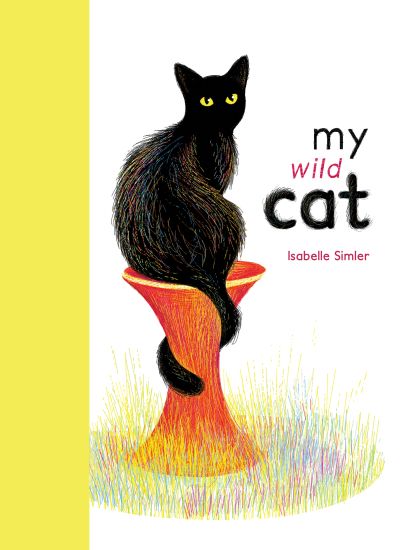
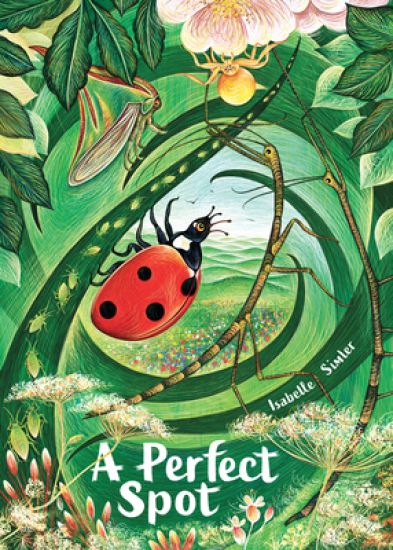
A lovely and tranquil celebration of nature The sun has set, the day has ended, but the night hasn't quite arrived yet. This magical twilight is known as the blue hour. Everything in nature--sky, water, flowers, birds, foxes--comes together in a symphony of blue to celebrate the merging of night and day. With its soothing text and radiant artwork, this elegant picture book displays the majesty of nature and reminds readers that beauty is fleeting but also worth savoring.
Plume

Plume

Isabelle Simler

William B Eerdmans Publishing Co
2019
sidottu
New York Times selection for Best Illustrated Children's Books of 2017 In this lovely book, young readers are introduced to a variety of beautiful birds, from the familiar chicken to the exotic ibis. But lurking in the background of every page is a cat, who also seems very interested in the birds. With its funny illustrations and engaging concepts, this clever counting book will invite readers to linger over every page.
Home

Home

Isabelle Simler

Eerdmans Books for Young Readers
2024
sidottu
ALSC Notable Children's Books List - Middle Readers (2025) A 2025 Mildred L. Batchelder Honor Book "Unites STEM learning with literary excellence . . . an essential purchase." -- School Library Journal (STARRED REVIEW) " A] beautiful work of natural history." -- The Wall Street Journal "Astounding, unusual, and breathtaking dwellings."-- Shelf Awareness (STARRED REVIEW) "Stunning . . . An exceptional exploration." -- Booklist (STARRED REVIEW) A spectacular tour through the dwellings of twenty-seven different animals, from a hermit crab's secondhand shell to a beaver's lakeside dam to a comet moth's silk cocoon. Acclaimed creator Isabelle Simler presents a poetic journey through amazing animal homes across the world. In Europe, alpine marmots stay safe in underground refuges. In southeast Asia, Sumatran orangutans doze off in treetop bedrooms. In Mexico and the southwestern US, elf owls nest in holes in saguaro cacti. On every continent but Antarctica, honeybees mold wax into palaces for their queens. No matter where you travel, some creature is making an extraordinary place to call home. With connections to life cycles, camouflage, and other biological concepts, Home is a spellbinding showcase of the wonders of the natural world. Enchanting poetry, fascinating back matter, and intricately detailed art invite young readers to be amazed by the creativity and diversity of our animal neighbors. Cooperative Children's Book Center CCBC Choices List - Poetry (2025)
Writings from the Sand, Volume 1

Writings from the Sand, Volume 1

Isabelle Eberhardt

University of Nebraska Press
2012
pokkari
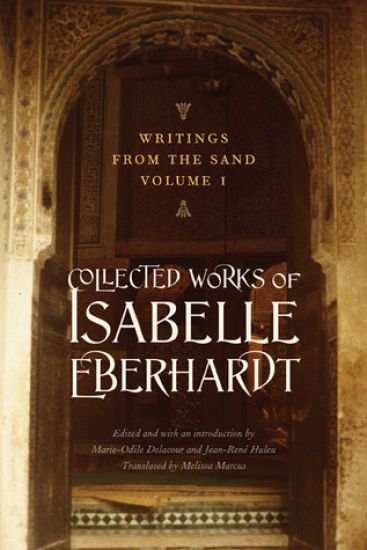
Born in 1877 in Geneva, Switzerland, Isabelle Eberhardt became a rebel at an early age. She dressed like a man so she could have access to areas forbidden to women, smoked in public, and scandalized Genevan society. Already multilingual (French, German, and Russian), she began studying Arabic language and Islamic culture and eventually converted to Islam and joined a Qadiriyya Sufi brotherhood. Eberhardt traveled throughout North Africa and wrote about her experiences in short stories, journals, and reflections. She married an Algerian and led a legendary and stormy life that included subversive political anarchism, the mysticism of Islam, numerous love affairs, and most importantly, writing unmatched by her contemporaries. Writings from the Sand, Volume 1, at once the document of a remarkable life and a literary treasure, appears here in English for the first time. Volume 1, including journals, diary entries, and observations of life in North Africa, offers a view of the culture and people of French Algeria rarely seen by outsiders—the peasants, prostitutes, mystics, criminals, and other marginalized members of a colonized society. This translation brings to life a brilliant woman ahead of her time while also raising questions—about North African history, colonialism, gender representation, and writing—that resonate in our day.
Writings from the Sand, Volume 2

Writings from the Sand, Volume 2

Isabelle Eberhardt

University of Nebraska Press
2014
pokkari
Born in 1877 in Geneva, Switzerland, Isabelle Eberhardt became a rebel at an early age, dressing like a man so she could have access to areas forbidden to women, smoking in public, and otherwise scandalizing Genevan society. Already multilingual, she studied the Arabic language and Islamic culture and eventually converted to Islam. Eberhardt traveled throughout North Africa, wrote about her experiences, and married an Algerian. Her legendary, short, and stormy life included subversive political anarchism, the mysticism of Islam, numerous love affairs, and, most importantly, writing unmatched by her contemporaries. The merit of Eberhardt's writings, similar to that of many artists, was neither known nor valued until after her death. The companion to volume 1, Writings from the Sand, Volume 2, showcases the prose of one of the twentieth century's most fascinating female wanderers and includes previously unpublished stories and an unfinished novel. This new volume exemplifies Eberhardt's creation of identity in fiction as her writing explores the world of prostitutes, Bedouins, and French colonists in exotic tales of love and conquest.
Taoism

Taoism

Isabelle Robinet

Stanford University Press
1997
sidottu
This is a survey of the history of Taoism from approximately the third century B.C. to the fourteenth century A.D. For many years, it was customary to divide Taoism into "philosophical Taoism" and "religious Taoism." The author has long argued that this is a false division and that "religious" Taoism is simply the practice of "philosophical" Taoism. She sees Taoism as foremost a religion, and the present work traces the development of Taoism up to the point it reached its mature form (which remains intact today, albeit with modern innovations). The main aim of this history of Taoism is to trace the major lines of its doctrinal evolution, showing the coherence of its development, the wide varieties of factors that came into play over a long period of disconnected eras, the constant absorptions of outside contributions, and the progress that integrates them. The author shows how certain recurrent themes are treated in different ways in different eras and different sects. Among these themes are the Ultimate Truth, immortality, the Sage, the genesis and the end of the world, retribution for good and evil acts, representations of heavens and hells, and the connections between life and the spirit, between life and death, between man and society, and between mystical experience and the social form of religion. The plan of the book is chronological, but the chronology is somewhat fluid given the way Taoism evolved; as it assimilated new features in the course of its growth, it never ceased to continue to develop the old ones. Thus the Celestial Masters sect, which is chronologically the first to attain a structure, is treated at the outset of the book though it exists down to our day, and the Shangqing tradition took shape in the fourth century though its glory years were under the Tang (618-907).
The Right Spouse

The Right Spouse

Isabelle Clark-Decès

Stanford University Press
2014
sidottu
The Right Spouse is an engaging investigation into Tamil (South Indian) preferential close kin marriages, so-called Dravidian Kinship. This book offers a description and an interpretation of preferential marriages with close kin in South India, as they used to be arranged and experienced in the recent past and as they are increasingly discontinued in the present. Clark-Decès presents readers with a focused anthropology of this waning marriage system: its past, present, and dwindling future. The book takes on the main pillars of Tamil social organization, considers the ways in which Tamil intermarriage establishes kinship and social rank, and argues that past scholars have improperly defined "Dravidian" kinship. Within her critique of past scholarship, Clark-Decès recasts a powerful and vivid image of preferential marriage in Tamil Nadu and how those preferences and marital rules play out in lived reality. What Clark-Decès discovers in her fieldwork are endogamous patterns and familial connections that sometimes result in flawed relationships, contradictory statuses, and confused roles. The book includes a fascinating narration of the complex terrain that Tamil youth currently navigate as they experience the complexities and changing nature of marriage practices and seek to reconcile their established kinship networks to more individually driven marriages and careers.
The Right Spouse

The Right Spouse

Isabelle Clark-Decès

Stanford University Press
2014
pokkari
The Right Spouse is an engaging investigation into Tamil (South Indian) preferential close kin marriages, so-called Dravidian Kinship. This book offers a description and an interpretation of preferential marriages with close kin in South India, as they used to be arranged and experienced in the recent past and as they are increasingly discontinued in the present. Clark-Decès presents readers with a focused anthropology of this waning marriage system: its past, present, and dwindling future. The book takes on the main pillars of Tamil social organization, considers the ways in which Tamil intermarriage establishes kinship and social rank, and argues that past scholars have improperly defined "Dravidian" kinship. Within her critique of past scholarship, Clark-Decès recasts a powerful and vivid image of preferential marriage in Tamil Nadu and how those preferences and marital rules play out in lived reality. What Clark-Decès discovers in her fieldwork are endogamous patterns and familial connections that sometimes result in flawed relationships, contradictory statuses, and confused roles. The book includes a fascinating narration of the complex terrain that Tamil youth currently navigate as they experience the complexities and changing nature of marriage practices and seek to reconcile their established kinship networks to more individually driven marriages and careers.
Situation Models and Levels of Coherence

Situation Models and Levels of Coherence

Isabelle Tapiero

Routledge Member of the Taylor and Francis Group
2007
sidottu
The mental representation of what one reads is called a "situation model" or a "mental model." The process of reading causes an interaction of the new knowledge with what is already known. Though a number of theories and models have been proposed to describe this interaction, Tapiero proposes a new model that assumes a variety of storage areas to previous knowledge, and that the reader picks and chooses which of these models is most relevant to what is being read. These are called "levels of coherence." It’s a dynamic process as well, as the reader chooses and abandons the storage units of previous knowledge as he or she reads on. Situation Models and Levels of Coherence is of professional and scholarly interest to cognitive scientists who specialize in reading, knowledge representation, mental models, discourse analysis, and metaphor/symbol.
The Maeght Family

The Maeght Family

Isabelle Maeght; Yoyo Maeght

Abrams
2007
sidottu
If modern art has a “first family,” it might very well be the Maeghts, whose gallery in Paris provided a literal and figurative base for so many 20th-century masters.Here for the first time ever in book form is the story of this extraordinary family, filled with illustrations and documents by some of the legendary artists associated with it: Matisse, Braque, Duchamp, Miró, Chagall, Calder, Kandinsky, Giacometti, and many others. Spinning this remarkable tale with an authority and in-depth knowledge that only family members could provide, Isabelle and Yoyo Maeght recount key events in the family’s life, including the Maeghts’ greatest legacy of all, the world-renowned Aimé and Marguerite Maeght Foundation, home to some of the greatest masterpieces of modern art and an architectural marvel in its own right.
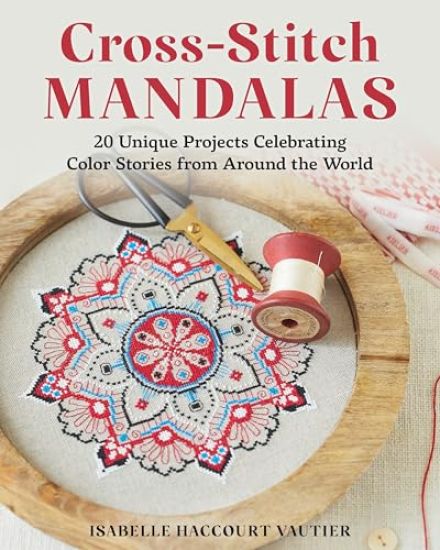
Cross-Stitch Mandalas

Cross-Stitch Mandalas

Isabelle Haccourt Vautier

STACKPOLE BOOKS
2025
pokkari
Bright, beautiful symmetry in cross-stitch!Mandalas are intricate circular designs used around the world to invoke calm centeredness through reflection. In recent times, drawing, coloring, and painting mandalas have become popular ways to seek out this inner serenity. It is in this spirit that the talented embroiderer Isabelle Haccourt Vautier offers 20 mandalas inspired by cities and countries she dreams of visiting. Using her imagination and knowledge of the places’ histories and traditions, she has created breathtaking mandalas that celebrate the spirit of each destination.A student of color research and crystal healing, Isabelle highlights the symbolism of the colors she has chosen and a stone that corresponds for each pattern. Completed pieces are shown finished in a variety of ways: wall hangings and banners, pouches and totes, pincushions, tea towels, and more. Each design includes a list of fabrics and embroidery floss colors used and detailed cross-stitch charts. Both stitching and admiring these stunning mandalas will transport you to a place of calm and joy!