This collection of essays is dedicated to Eibert Tigchelaar. Individual studies engage with new approaches to materiality, hermeneutics, digital humanities, and philology in the context of biblical research. The articles reflect on reading practices, methodological innovation, textual criticism, and ancient fragments. Particular attention has been given to new approaches to the material aspects of ancient manuscripts. There are also extensive treatments of translations and reconstructions across Hebrew, Greek, and Aramaic biblical traditions. Overall, the essays honour the work of Eibert Tigchelaar in the ways they build on his incisive insights and exemplary contributions.
This book has been considered by academicians and scholars of great significance and value to literature. This forms a part of the knowledge base for future generations. So that the book is never forgotten we have represented this book in a print format as the same form as it was originally first published. Hence any marks or annotations seen are left intentionally to preserve its true nature.
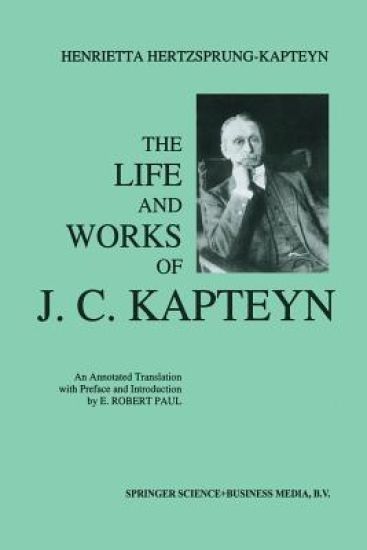
Among the most influential, world-renowned scientists during the early decades of the twentieth century was the Dutch astronomer Jacobus Cornelius Kapteyn (1851-1922). Kapteyn's influence resulted from and contributed to the golden age of Dutch science. In the words of the brilliant English astrophysicist, Arthur S. Eddington: `Holland has given many scientific leaders to the world: it is doubtful whether any other nation in proportion to its size can show so fine a record. J.C. Kapteyn was among the most distinguished of its sons -- a truly great astronomer'. The present text is an English translation of Kapteyn's 1928 (Dutch) biography by his daughter Henrietta Hertzsprung-Kapteyn. While the original biography suffers from -- but in many ways is also enriched by -- the emotional excesses of a loving daughter writing of her famous father, this new translation provides an annotated assessment of Kapteyn as family man, scientist and world leader. This new volume also opens up to a much wider reading public many of the enormously rich contributions, not only of Kapteyn the man but also of the Dutch, to the emergence of astronomy as a major intellectual force in the world. Perhaps equally important, the translated biography reproduces many biographical and technical details from Kapteyn's correspondence with numerous other scientists and scholars. Access to the Kapteyn biography becomes an archival treasure for future studies dealing with Kapteyn himself, as well as with the history of both modern and Dutch astronomy and with the rise of international astronomy.
Le pouvoir gyptien est entre les mains d' trangers, les Berb res, depuis le premier mill naire avant le Christ jusqu' l'arriv e d'Alexandre le Grand au troisi me si cle. Comment les Berb res, suppos s appartenir une civilisation africaine rudimentaire ont-ils pu s'installer en Egypte et y former un Etat fort en M diterran e durant pr s de mille ans ? Un d ferlement humain venu de l'Ouest m diterran en africain a envahi l'Egypte pharaonique vers 1200 avant le Christ puis s'y est impos e comme classe dirigeante du pouvoir gyptien. C'est ainsi qu'au premier mill naire, le pharaon d'origine berb re, Sheshonq 1er assoit son pouvoir en y associant les membres de sa famille aussi bien dans le clerg que dans l'aristocratie royale. Ses successeurs vont se maintenir au pouvoir et participer la grandeur de l'Egypte. Ils devront toutefois lutter contre certains pharaons d'origine thiopienne avec qui ils partageront le pouvoir puis contre la mont e grandissante ext rieure venue d'Asie: l'Assyrie puis les Ach m nides avec Darius. Pour cette lutte, l'un des pharaons, au sixi me si cle, fera creuser le Canal de Suez. Ils se maintiendront au pouvoir et feront finalement appel Alexandre le Grand qui deviendra pharaon et an antira l'ennemi asiatique. Et les Berb res sont toujours l et leurs pratiques et cultures semblent appartenir un monde m diterran en grandiose tr s ancien.
W ciągu ostatnich dziesięcioleci Iran i Izrael zawsze postrzegaly się nawzajem jako bezpośrednich rywali regionalnych, co zwiększalo ryzyko destabilizacji regionu i prowadzilo do konfliktu zbrojnego. Chociaż oba państwa nigdy nie stoczyly bezpośredniej walki i nie ma między nimi spor w terytorialnych, program jądrowy Iranu i potencjalne dążenie tego kraju do uzyskania broni jądrowej zaostrzyly napięcia między nimi. Nawet gdyby Iran opracowal zdolnośc do produkcji broni jądrowej, jej użycie w celach ofensywnych byloby nie do pomyślenia, biorąc pod uwagę r wnowagę sil na arenie międzynarodowej i w regionie. M wiąc wprost, Iran zostalby prawdopodobnie zr wnany z ziemią w wyniku użycia bomby radioaktywnej. Jakiekolwiek zdolności zbrojne są prawdopodobnie rozwijane w celu odstraszenia agresywnych państw, takich jak Stany Zjednoczone i Izrael, ponieważ Iran nie jest w stanie powstrzymac ich konwencjonalnymi środkami. Twierdzi się r wnież, że Izrael raczej nie przeprowadzi ataku militarnego na Iran, ponieważ Iran posiada zdolności militarne, aby odpowiedziec na izraelski atak. Iran zemścilby się, zachęcając swoich sojusznik w w regionie, zwlaszcza Hezbollah i Hamas.
Chociaż angielski jest językiem globalnym, nadal istnieją spoleczeństwa jednojęzyczne, w kt rych angielski nie jest językiem urzędowym. Spoleczeństwa jednojęzyczne mają jawne i ukryte powody, dla kt rych nie przyjęly angielskiego jako języka urzędowego lub drugiego języka. Niniejsza książka ma na celu przedstawienie badania przeprowadzonego w celu ujawnienia oporu i wewnętrznych warstw związanych z nauką języka angielskiego jako języka obcego (EFL) w Iranie jako spoleczeństwie jednojęzycznym.
Jęczmień jest jednym z najstarszych zb ż uprawianych na świecie i jest ważny w żywieniu ludzi i zwierząt. Warstwy peryferyjne (PL) są produktem ubocznym stosowanym do ochrony chemicznej bielma i zarodka, są ważnym źr dlem mikroelement w i oferują wiele korzyści zdrowotnych. Niewiele prac poświęcono skladowi strukturalnemu rozwijających się tkanek ziarna jęczmienia. Celem tego badania jest określenie skladnik w wyizolowanych (CP) pochodzących z fazy wypelniania jądra jęczmienia (Saida 183), a także obserwacja postępujących zmian zachodzących podczas tej fazy. W celu określenia czystości tkanek przeprowadzono obserwacje pod mikroskopem optycznym i skaningowym mikroskopem elektronowym. Maceracja etanolem, analizy fizykochemiczne (mineraly, wl kno surowe, kwas fitynowy, prolina i bialka).
Pour connaitre et comprendre le fonctionnement des institutions de l'Antiquite, d'innombrables textes eparpilles dans les recueils d'inscriptions, les Codes de l'Empire chretien ou les oeuvres litteraires livrent un temoignage direct sur les conduites publiques des Romains. A partir de ce temoignage vivant, un commentateur avise peut reconstruire la vie politique quotidienne des cites de l'Empire, et au-dela ebaucher ce qu'on serait tente d'appeler la " constitution " des Romains. Ce recueil est un outil de travail indispensable pour les etudiants de lettres et d'histoire, et un source d'information precieuse pour tous ceux qui reflechissent sur les principes de l'idee republicaine.
English summary: From Homer (8th century B.C.) to Augustine (5th century A.D .), the people of ancient Greece and Rome wondered nearly to the point of obsession about the mysterious proximity between the world of the gods and that of humans. Whether motivated by deference or boldness, they have left us portraits populated by a multitude of gods - some terrifying and others laughable - whose history helps us to understand the role which each of them played in the lives of individuals, with all of their hopes and fears, in their cities and in their world. Superstitions, spells, devotions, persecutions, secret cults from foreign lands which disrupted the public order - there were sects of every kind, the best-known of which is now called Christianity. Antiquity was a cult-filled cauldron from which we have drawn our present-day questions on the subject. In these pages, readers will find themselves confronted with questions about tolerance, fanaticism, the balance between temporal and spiritual powers and the answers contributed by ancient Greeks and Romans.Benefiting from the latest studies, this book is a compilation of some forty annotated Greek and Latin texts translated by Les Belles Lettres. French description: L'Antiquite est un veritable bouillon cultuel: d'Homere a Augustin, Grecs et Romains ont interroge de maniere continue le lien inextricable entre l'univers des dieux et celui des hommes. Avec deference ou impertinence, ils nous ont laisse les portraits colores d'une multitude de divinites, tantot terrifiantes, tantot risibles, le plus souvent partenaires de la vie quotidienne, dont l'histoire permet de penser la place de l'individu, avec ses espoirs et ses angoisses, dans la cite et dans le monde. Cultes officiels, superstitions, envoutements, persecutions, sectes en tout genre, dont la plus connue s'appelle aujourd'hui le christianisme: les Anciens se sont confrontes aux questions de la tolerance, du scepticisme, de l'equilibre entre les pouvoirs civiques et religieux. Leurs reponses ne sont pas les moins inactuelles.Proposant une reflexion conjointe sur les religions grecque et romaine, ce livre rassemble une quarantaine de textes en traduction, presentes et amplement commentes.
Pre-order the brand new chilling read from Queen of Horror, C. J. Tudor . . . --October 5th, 2005:Four pupils at the elustrius boarding school, Cutters Hill, discover a hidden chamber. When they emerge, they find their school abandoned except for the hungry killer that prowls the corridors hungry for his next victim.October 6th, 2005:DI Fred Dunn is called to investigate the case of four missing pupils. As a string of undelivered messages on one of their mobiles inexplicably appear, he realises something unearthly is at play here.--PRAISE FOR C.J. TUDOR'If you like my stuff, you'll like this' - STEPHEN KING'The wildest thriller of the year. Buckle up' - LINWOOD BARCLAY'A truly terrifying, ice-cold chiller from the master of macabre. C.J. Tudor should be on everyone's must-read list' - CHRIS WHITAKER'Some writers have it, and some don't. C. J. Tudor has it big time' - LEE CHILD'runaway train of a book' - JANE FALLON
Winner of theAFP/Skystone Partners Prize for Research on Fundraising and Philanthropy, Association of Fundraising Professionals, 2021Terry McAdam Book Award, given by the Alliance for Nonprofit Management2023 Peter Dobkin Hall History of Philanthropy Prize from the Association for Research on Nonprofit and Voluntary Action (ARNOVA). Founder of a beauty empire, Madam C. J. Walker was celebrated as America's first self-made female millionaire in the early 1900s. Known as a leading African American entrepreneur, Walker was also devoted to an activist philanthropy aimed at empowering African Americans and challenging the injustices inflicted by Jim Crow. Tyrone McKinley Freeman's biography highlights how giving shaped Walker's life before and after she became wealthy. Poor and widowed when she arrived in St. Louis in her twenties, Walker found mentorship among black churchgoers and working black women. Her adoption of faith, racial uplift, education, and self-help soon informed her dedication to assisting black women's entrepreneurship, financial independence, and activism. Walker embedded her philanthropy in how she grew her business, forged alliances with groups like the National Association of Colored Women, funded schools and social service agencies led by African American women, and enlisted her company's sales agents in local charity and advocacy work. Illuminating and dramatic, Madam C. J. Walker’s Gospel of Giving broadens our understanding of black women’s charitable giving and establishes Walker as a foremother of African American philanthropy.
Winner of theAFP/Skystone Partners Prize for Research on Fundraising and Philanthropy, Association of Fundraising Professionals, 2021Terry McAdam Book Award, given by the Alliance for Nonprofit Management2023 Peter Dobkin Hall History of Philanthropy Prize from the Association for Research on Nonprofit and Voluntary Action (ARNOVA). Founder of a beauty empire, Madam C. J. Walker was celebrated as America's first self-made female millionaire in the early 1900s. Known as a leading African American entrepreneur, Walker was also devoted to an activist philanthropy aimed at empowering African Americans and challenging the injustices inflicted by Jim Crow. Tyrone McKinley Freeman's biography highlights how giving shaped Walker's life before and after she became wealthy. Poor and widowed when she arrived in St. Louis in her twenties, Walker found mentorship among black churchgoers and working black women. Her adoption of faith, racial uplift, education, and self-help soon informed her dedication to assisting black women's entrepreneurship, financial independence, and activism. Walker embedded her philanthropy in how she grew her business, forged alliances with groups like the National Association of Colored Women, funded schools and social service agencies led by African American women, and enlisted her company's sales agents in local charity and advocacy work. Illuminating and dramatic, Madam C. J. Walker’s Gospel of Giving broadens our understanding of black women’s charitable giving and establishes Walker as a foremother of African American philanthropy.
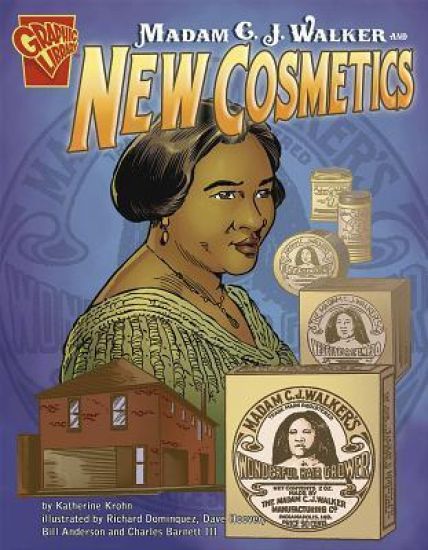
Tells the story of Madam C. J. Walker, an African American businesswoman who invented a line of hair products and cosmetics that led her to become the first self-made female millionaire of any race. Written in graphic-novel format.
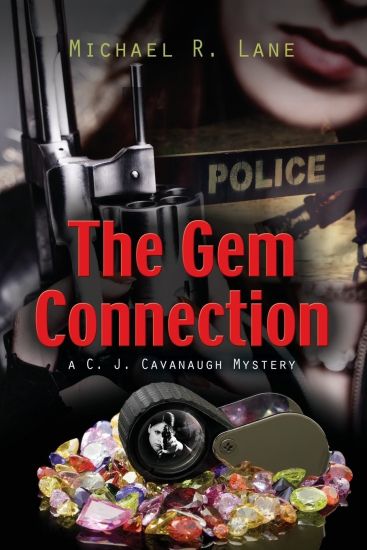
Clinton Windell is brutally murdered in his Southwest Hills mansion and robbed of twenty million dollars in uncut gems. An anonymous client hires ex-DEA agent turned private investigator, C. J. Cavanaugh and his junior partner, Renita Harris, to root out the Windell murderers. There's only one catch. C. J. and his partner must not reveal to anyone they are working on the case. To complicate matters further C. J. and Renita must deceive Cavanaugh's long-time lover and dogged Homicide Detective, Destini Pendleton, who is assigned to head the high profile investigation. To maintain normal appearances, C. J. and Renita arrange to do a standard insurance inquiry on Genevieve Windell, the primary benefactor of her late husband. When Mrs. Windell turns out to be a prime suspect in her husband's murder, C. J. and Renita find themselves boxed in. Between the killers, Detective Pendleton, the insurance company, and their omnipotent and ominous mystery client, C. J. has to utilize all of his cunning and training to keep him and his partner out of prison or the morgue long enough to capture the killers.