Kirjojen hintavertailu. Mukana 11 717 486 kirjaa ja 12 kauppaa.

Kirjahaku

Etsi kirjoja tekijän nimen, kirjan nimen tai ISBN:n perusteella.

1000 tulosta hakusanalla JAMES LINDSAY

James Joyce
James Augustine Aloysius Joyce (1882–1941) is a towering figure in the development of English-language modernist prose fiction. And his influence extends well beyond the anglophone literary world; like his alter ego, Stephen Dedalus, Joyce flew by the nets of nationality, language, and religion, and spent most of his life in continental Europe.The significance of Joyce’s oeuvre—particularly the later and more radical prose works—far outweighs the modesty of its bulk: only two books of verse, a play, one collection of short stories, and three novels (using that term in its most elastic sense) were published in his lifetime. But the combination of a modest output with an increasingly audacious experimentalism has generated interpretative and critical commentary on a vast and bewildering scale. Joyce attracted serious attention (not always favourable) from virtually every significant writer of the age: elder statesmen like Yeats recognized his importance, as did members of his own generation, such as Pound, Eliot, and Lawrence. The major American critics of the era, like Edmund Wilson and Lionel Trilling, and, in France, Eugene Jolas and Jacques Mercanton, also responded with enthusiasm to his work, as did Cyril Connolly and F. R. Leavis in Britain. Joyce’s work has also lent itself to approaches informed by contemporary theory—whether new critical, formalist, structuralist, deconstructionist, feminist, or materialist—such that the development of Joycean criticism maps the spread and transmutations of ‘theory’ and illustrates its applications.So, while the prospective reader of Ulysses or Finnegans Wake is likely to feel a compelling need for some preparation before consuming the text itself, the daunting quantity (and variable quality) of Joyce criticism makes it difficult to discriminate the useful from the tendentious, superficial, and otiose. That is why this new Routledge title is so urgently needed. In four volumes, the collection meets the need for an authoritative reference work to allow researchers and students to make sense of the vast Joycean literature and the continuing explosion in research output. Users will now be able easily and rapidly to locate the best and most influential critical scholarship, work that is otherwise often inaccessible or scattered throughout a variety of specialist journals and books. With material gathered into one easy-to-use set, researchers and students can now spend more of their time with the key journal articles, book chapters, and other pieces, rather than on time-consuming (and sometimes fruitless) archival searches.Fully indexed and with a comprehensive introduction newly written by the editor, which places the collected material in its historical and intellectual context, James Joyce is an essential reference work and is destined to be valued as a vital research resource.
The Collected Works of James E. Meade (Routledge Revivals)
This ten volume backlist collection brings together an assortment of seminal works by highly influential British economist and Nobel Laureate James Meade. This comprehensive and diverse collection encompasses everything from economic growth, through to international trade, property ownership and his work on the principles of political economy. Spanning more than 30 years in Professor Meade’s distinguished career, the reissued volumes in this collection, originally published between 1940 and 1976, offer a thorough and engaging insight into Professor Meade’s work, which will appeal to the general reader as well as to students of economics and professional economists.
James Stirling
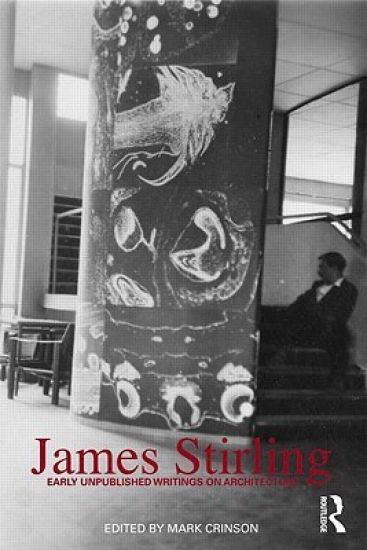
James Stirling (1924-1992) was, arguably, the most influential and controversial post-war British architect. Stirling’s reputation is based primarily on such seminal buildings as the Leicester University Engineering Building (1959-63, with James Gowan), at one end of his career, and the Neue Staatsgalerie Stuttgart (1977-83, with Michael Wilford) at the other. Although he denied both labels, his work is seen as central to New Brutalism and Post-Modernism and his buildings attracted commentary and theory from the leading architectural thinkers of the day (including Frampton, Tafuri, Eisenman and Banham). Despite his significance, however, there has been very little recent research or creative re-interpretation of his work. This fascinating insight into Stirling’s work presents previously unavailable writings by him as well as new research on his early career, including: 'The Black Notebook' – the journal he kept in the mid-1950s the recorded talk he gave to the 'Team 10' group in 1962, as well as the discussion that followed that talk three sets of notes for lectures he gave an interview with Stirling and Gowan essays by the editor placing the texts in the context of Stirling’s early work and discussing Stirling’s relation to Le Corbusier. Profusely illustrated, with many photographs taken by Stirling himself, this book gives fresh understanding of Stirling’s early career and the reasons why avant-garde architecture in post-war Britain became so widely influential outside the country.
James Stirling
James Stirling (1924-1992) was, arguably, the most influential and controversial post-war British architect. Stirling’s reputation is based primarily on such seminal buildings as the Leicester University Engineering Building (1959-63, with James Gowan), at one end of his career, and the Neue Staatsgalerie Stuttgart (1977-83, with Michael Wilford) at the other. Although he denied both labels, his work is seen as central to New Brutalism and Post-Modernism and his buildings attracted commentary and theory from the leading architectural thinkers of the day (including Frampton, Tafuri, Eisenman and Banham). Despite his significance, however, there has been very little recent research or creative re-interpretation of his work. This fascinating insight into Stirling’s work presents previously unavailable writings by him as well as new research on his early career, including: 'The Black Notebook' – the journal he kept in the mid-1950s the recorded talk he gave to the 'Team 10' group in 1962, as well as the discussion that followed that talk three sets of notes for lectures he gave an interview with Stirling and Gowan essays by the editor placing the texts in the context of Stirling’s early work and discussing Stirling’s relation to Le Corbusier. Profusely illustrated, with many photographs taken by Stirling himself, this book gives fresh understanding of Stirling’s early career and the reasons why avant-garde architecture in post-war Britain became so widely influential outside the country.
James Joyce and Nationalism

James Joyce and Nationalism

Emer Nolan

Routledge
2014
nidottu
James Joyce and Nationalism comprehensively revises our understanding of Joyce by re-examining his writing against Irish Nationalism. In this exciting and provocative book, Emer Nolan looks at the relationship between modernism and nationalism, tracing the applicability of alternative notions of nationalism to the various phases of Joyce's work. Nolan also brings post-colonial and feminist theories to a close re-reading of Joyce's works. This insightful and challenging work provides a polemical introduction to Joyce and is a much needed contribution to the vast field of Joyce studies. James Joyce and Nationalism is a ground-breaking and theoretically engaged intervention into debates about Joyce's politics and the politics of modernism.
James Joyce, Science, and Modernist Print Culture
This book makes an important intervention in the ongoing debates about modernism, science, and the divisions of early Twentieth-Century print culture. In order to establish Joyce's place in the nexus of modernism and scientific thought, Drouin uses the methods of periodical studies and textual criticism to examine the impact of Einstein's relativity theories on the development of Ulysses (1922) and Finnegans Wake (1939). Looking at experiments with space, time, motion, and perspective, it rigorously surveys discourse of science and the novel in the print culture networks connected to Joyce, with concrete analysis of avant-garde magazines, newspapers, popular science books, BBC pamphlets, and radio broadcasts between 1914 and 1939. These sources elucidate changes that Joyce made to the manuscripts, typescripts, and page proofs of certain episodes of his final two novels. The new evidence establishes for the first time the nature of the material link between Joyce and non-technical science, and the manner in which Ulysses and Finnegans Wake owe their structure and meaning to the humanistic issues associated with science during the wartime and inter-war years. In examining the relationships between Joyce's later work and the popular science industry, the book elucidates the often conflicting attitudes toward science in inter-war British print culture, filling in a piece of the puzzle that is modernism's relationship to the new physics and, simultaneously, the history of the novel.
James Merrill

James Merrill

Reena Sastri

Routledge
2007
sidottu
James Merrill: Knowing Innocence reevaluates the achievement of this important poet by showing how he takes up an old paradigm – innocence – and reinvents it in response to new historical, scientific, and cultural developments including the bomb, contemporary cosmology, and the question of agency. The book covers Merrill’s full career, emphasizing the late poetry, on which there remains little commentary. Illuminating both Merrill’s relation to a tradition of literary innocence from Milton to Blake and Wordsworth to Emerson and Stevens, and his relevance to contemporary cultural debates, the rubric of "knowing innocence" helps us to understand his achievement. Merrill undertakes a career-long effort to know innocence, and develops a thematic and stylistic attitude that is both innocent and knowing, combining attitudes of wonder and hope with reflexive wit, intellectual breadth, and an unflinching gaze at mortality. He ultimately imagines innocence as creative agency, a capacity for imagination, invention, and ethical responsibility. The book demonstrates how, addressing questions of sexual identity, childhood and memory; atomic science, the big bang, and black holes; environmental degradation; AIDS; and the notion of the death of history – while honoring poetry’s essential qualities of freedom and play – his poems perform cultural work crucial to his time and ours.
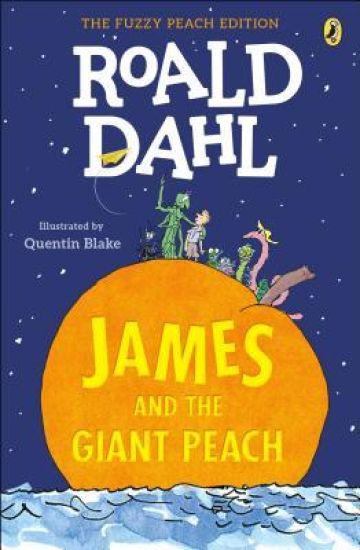
James and the Giant Peach

James and the Giant Peach

Roald Dahl

Viking Books for Young Readers
2016
sidottu
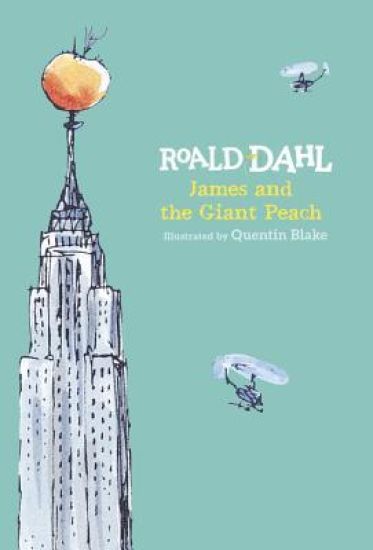
This collectable hardcover edition will feature a beautiful cover and deluxe packaging, including peach-colored interior text and illustrations From the bestselling author of Charlie and the Chocolate Factory and The BFG comes the story of a young boy on a magical adventure. After James Henry Trotter's parents are tragically eaten by a rhinoceros, he goes to live with his two horrible aunts, Spiker and Sponge. Life there is no fun, until James accidentally drops some magic crystals by the old peach tree and strange things start to happen. The peach at the top of the tree begins to grow, and before long it's as big as a house. Inside, James meets a bunch of oversized friends--Grasshopper, Centipede, Ladybug, and more. With a snip of the stem, the peach starts rolling away, and the great adventure begins
James the Red Engine

James the Red Engine

W. Awdry

EGMONT CHILDRENS BOOKS
2000
sidottu
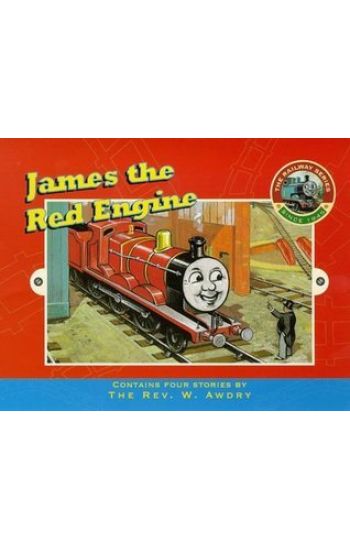
One of six titles published this month in the brand new re-vamped Thomas the Tank Engine, The Railway series, other titles 'The Three Railway Engines, 'Thomas the Tank Engine', 'Tank Engine Thomas Again', 'Troublesome Engines' and 'Henry the Green Engine'.
James and the Giant Peach: The Scented Peach Edition

James and the Giant Peach: The Scented Peach Edition

Roald Dahl

Viking Books for Young Readers
2018
nidottu
From the World's No. 1 Storyteller, James and the Giant Peach is a children's classic that has captured young reader's imaginations for generations. One of TIME MAGAZINE's 100 Best Fantasy Books of All Time After James Henry Trotter's parents are tragically eaten by a rhinoceros, he goes to live with his two horrible aunts, Spiker and Sponge. Life there is no fun, until James accidentally drops some magic crystals by the old peach tree and strange things start to happen. The peach at the top of the tree begins to grow, and before long it's as big as a house. Inside, James meets a bunch of oversized friends--Grasshopper, Centipede, Ladybug, and more. With a snip of the stem, the peach starts rolling away, and the great adventure begins This "peachy" scented edition is sure to bring readers along for the ride Roald Dahl is the author of numerous classic children's stories including Charlie and the Chocolate Factory, Matilda, The BFG, and many more "James and the Giant Peach remains a favorite among kids and parents alike nearly 60 years after it was first published, thanks to its vivid imagery, vibrant characters and forthright exploration of mature themes like death and hope." --TIME Magazine
James Madison

James Madison

Richard Brookhiser

Basic Books
2013
pokkari
James Madison led one of the most influential and prolific lives in American history, and his story,although all too often overshadowed by his more celebrated contemporaries,is integral to that of the nation. Madison helped to shape our country as perhaps no other Founder: collabourating on the Federalist Papers and the Bill of Rights, resisting government overreach by assembling one of the nation's first political parties (the Republicans, who became today's Democrats), and taking to the battlefield during the War of 1812, becoming the last president to lead troops in combat. In this penetrating biography, eminent historian Richard Brookhiser presents a vivid portrait of the Father of the Constitution," an accomplished yet humble statesman who nourished Americans' fledgling liberty and vigorously defended the laws that have preserved it to this day.
James Baldwin

James Baldwin

Bill Schwarz; Cora Kaplan

The University of Michigan Press
2011
nidottu
"This fine collection of essays represents an important contribution to the rediscovery of Baldwin's stature as essayist, novelist, black prophetic political voice, and witness to the Civil Rights era. The title provides an excellent thematic focus. He understood both the necessity, and the impossibility, of being a black 'American' writer. He took these issues 'Beyond'---Paris, Istanbul, various parts of Africa---but this formative experience only returned him to the unresolved dilemmas. He was a fine novelist and a major prophetic political voice. He produced some of the most important essays of the twentieth century and addressed in depth the complexities of the black political movement. His relative invisibility almost lost us one of the most significant voices of his generation. This welcome 'revival' retrieves it. Close call." ---Stuart Hall, Professor Emeritus, Open University This interdisciplinary collection by leading writers in their fields brings together a discussion of the many facets of James Baldwin, both as a writer and as the prophetic conscience of a nation. The core of the volume addresses the shifting, complex relations between Baldwin as an American—“as American as any Texas GI” as he once wryly put it—and his life as an itinerant cosmopolitan. His ambivalent imaginings of America were always mediated by his conception of a world “beyond” America: a world he knew both from his travels and from his voracious reading. He was a man whose instincts were, at every turn, nurtured by America; but who at the same time developed a ferocious critique of American exceptionalism. In seeking to understand how, as an American, he could learn to live with difference—breaking the power of fundamentalisms of all stripes—he opened an urgent, timely debate that is still ours. His America was an idea fired by desire and grief in equal measure. As the authors assembled here argue, to read him now allows us to imagine new possibilities for the future.With contributions by Kevin Birmingham, Douglas Field, Kevin Gaines, Briallen Hopper, Quentin Miller, Vaughn Rasberry, Robert Reid-Pharr, George Shulman, Hortense Spillers, Colm Tóibín, Eleanor W. Traylor, Cheryl A. Wall, and Magdalena Zaborowska.
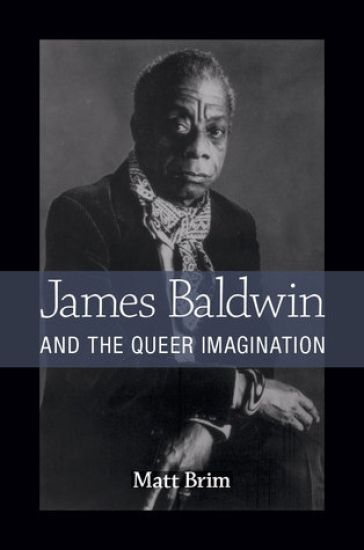
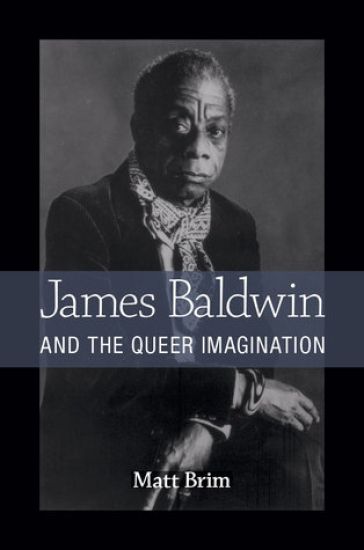
James Baldwin and the Queer Imagination

James Baldwin and the Queer Imagination

Matt Brim

The University of Michigan Press
2014
nidottu
The central figure in black gay literary history, James Baldwin has become a familiar touchstone for queer scholarship in the academy. Matt Brim’s James Baldwin and the Queer Imagination draws on the contributions of queer theory and black queer studies to critically engage with and complicate the project of queering Baldwin and his work. Brim argues that Baldwin animates and, in contrast, disrupts both the black gay literary tradition and the queer theoretical enterprise that have claimed him. More paradoxically, even as Baldwin’s fiction brilliantly succeeds in imagining queer intersections of race and sexuality, it simultaneously exhibits striking queer failures, whether exploiting gay love or erasing black lesbian desire. Brim thus argues that Baldwin’s work is deeply marked by ruptures of the “unqueer” into transcendent queer thought—and that readers must sustain rather than override this paradoxical dynamic within acts of queer imagination.
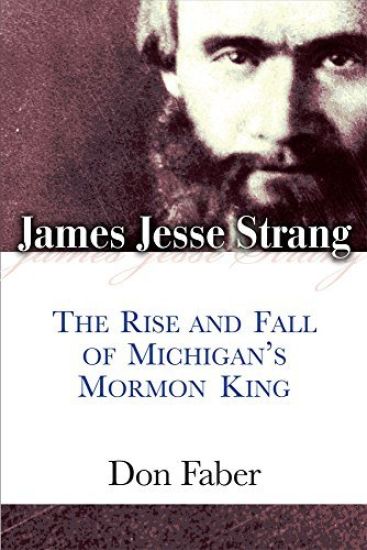
James Jesse Strang

James Jesse Strang

Don Faber

The University of Michigan Press
2016
nidottu
Few lives experience a meteoric rise and fall like that of James Jesse Strang’s. An unsuccessful lawyer from upstate New York, he converted to Mormonism in 1844 and quickly entered the inner circle of the controversial new faith’s founder, Joseph Smith Jr. Upon Smith’s assassination, Strang sought to be named his successor as leader of the Mormons. Instead, Strang was excommunicated in 1850, though not before gathering a group of followers, who settled with him on remote Beaver Island in northern Lake Michigan and ordained Strang king of the small enclave. King Strang elicited both ire and stubborn admiration from an ever-growing list of opponents, his actions closely monitored by President Millard Fillmore himself. In 1866, Strang was assassinated, seemingly with the assistance of federal authorities. This captivating new biography by Don Faber recounts the fascinating story of Strang’s path from impoverished New York farm boy to one of the most colorful and contentious personalities in Michigan history. Avoiding the nonsense, misinformation, and twisted facts so prevalent about the man, readers meet the historical Strang stripped of myth, demonization, and popular fancy—a true celebrity of the mid-nineteenth century who both shaped and was shaped by the colorful times in which he lived. This book will appeal to readers interested in the history of Michigan, the nineteenth century, and the Second Great Awakening.
James Baldwin

James Baldwin

Bill Schwarz; Cora Kaplan

The University of Michigan Press
2011
sidottu
"This fine collection of essays represents an important contribution to the rediscovery of Baldwin's stature as essayist, novelist, black prophetic political voice, and witness to the Civil Rights era. The title provides an excellent thematic focus. He understood both the necessity, and the impossibility, of being a black 'American' writer. He took these issues 'Beyond'---Paris, Istanbul, various parts of Africa---but this formative experience only returned him to the unresolved dilemmas. He was a fine novelist and a major prophetic political voice. He produced some of the most important essays of the twentieth century and addressed in depth the complexities of the black political movement. His relative invisibility almost lost us one of the most significant voices of his generation. This welcome 'revival' retrieves it. Close call." ---Stuart Hall, Professor Emeritus, Open University This interdisciplinary collection by leading writers in their fields brings together a discussion of the many facets of James Baldwin, both as a writer and as the prophetic conscience of a nation. The core of the volume addresses the shifting, complex relations between Baldwin as an American—“as American as any Texas GI” as he once wryly put it—and his life as an itinerant cosmopolitan. His ambivalent imaginings of America were always mediated by his conception of a world “beyond” America: a world he knew both from his travels and from his voracious reading. He was a man whose instincts were, at every turn, nurtured by America; but who at the same time developed a ferocious critique of American exceptionalism. In seeking to understand how, as an American, he could learn to live with difference—breaking the power of fundamentalisms of all stripes—he opened an urgent, timely debate that is still ours. His America was an idea fired by desire and grief in equal measure. As the authors assembled here argue, to read him now allows us to imagine new possibilities for the future.With contributions by Kevin Birmingham, Douglas Field, Kevin Gaines, Briallen Hopper, Quentin Miller, Vaughn Rasberry, Robert Reid-Pharr, George Shulman, Hortense Spillers, Colm Tóibín, Eleanor W. Traylor, Cheryl A. Wall, and Magdalena Zaborowska.
James Baldwin and the Queer Imagination

James Baldwin and the Queer Imagination

Matt Brim

The University of Michigan Press
2014
sidottu
The central figure in black gay literary history, James Baldwin has become a familiar touchstone for queer scholarship in the academy. Matt Brim’s James Baldwin and the Queer Imagination draws on the contributions of queer theory and black queer studies to critically engage with and complicate the project of queering Baldwin and his work. Brim argues that Baldwin animates and, in contrast, disrupts both the black gay literary tradition and the queer theoretical enterprise that have claimed him. More paradoxically, even as Baldwin’s fiction brilliantly succeeds in imagining queer intersections of race and sexuality, it simultaneously exhibits striking queer failures, whether exploiting gay love or erasing black lesbian desire. Brim thus argues that Baldwin’s work is deeply marked by ruptures of the “unqueer” into transcendent queer thought—and that readers must sustain rather than override this paradoxical dynamic within acts of queer imagination.
James Hall on The Self-Portrait

James Hall on The Self-Portrait

James Hall

THAMES HUDSON LTD
2024
sidottu
Excerpts from art critic, historian, lecturer and broadcaster James Hall’s lively and comprehensive cultural history of self-portraiture, including such artists as Dürer, Gentileschi, Van Gogh and Kahlo. Surprising, questioning, challenging, enriching: the Pocket Perspectives series celebrates writers and thinkers who have helped shape the conversation across the arts. Mixing classic and contemporary texts, reissues and abridgements, these are bite-sized, fully illustrated reads in an attractive, affordable and highly collectable package.