Kirjojen hintavertailu. Mukana 12 390 323 kirjaa ja 12 kauppaa.

Kirjahaku

Etsi kirjoja tekijän nimen, kirjan nimen tai ISBN:n perusteella.

1000 tulosta hakusanalla John L Cook

How We Teach Science

How We Teach Science

John L. Rudolph

Harvard University Press
2019
sidottu
A former Wisconsin high school science teacher makes the case that how and why we teach science matters, especially now that its legitimacy is under attack.Why teach science? The answer to that question will determine how it is taught. Yet despite the enduring belief in this country that science should be taught, there has been no enduring consensus about how or why.This is especially true when it comes to teaching scientific process. Nearly all of the basic knowledge we have about the world is rock solid. The science we teach in high schools in particular—laws of motion, the structure of the atom, cell division, DNA replication, the universal speed limit of light—is accepted as the way nature works. Everyone also agrees that students and the public more generally should understand the methods used to gain this knowledge. But what exactly is the scientific method?Ever since the late 1800s, scientists and science educators have grappled with that question. Through the years, they’ve advanced an assortment of strategies, ranging from “the laboratory method” to the “five-step method” to “science as inquiry” to no method at all. How We Teach Science reveals that each strategy was influenced by the intellectual, cultural, and political circumstances of the time. In some eras, learning about experimentation and scientific inquiry was seen to contribute to an individual’s intellectual and moral improvement, while in others it was viewed as a way to minimize public interference in institutional science.John Rudolph shows that how we think about and teach science will either sustain or thwart future innovation, and ultimately determine how science is perceived and received by the public.

Why We Don't Talk to Each Other Anymore
We Have Arrived at the Information Age -- But Not in Person E-mail, voice mail, fax machines, beepers. Technology is overwhelming us with information, driving out the sound of human voices. We have gained the advantage of nearly constant interaction with others but make only partial connections; in the process, we are losing something precious. In this witty and intelligent book, prominent psycholinguist John Locke takes a hard look at what we are really missing as intimate forms of self-expression vanish. Talking is the way we build and maintain relationships. Talking is the way that we learn to trust one another. But we now spend our days exchanging electronic factoids, leaving us little time to "just talk." Without intimate conversation, we can't really know others well enough to trust them or work with them harmoniously. We even lose track of our own selves -- our sense of humor, our own particular way of looking at things. We become lonely. Keenly perceptive and though-provoking, "Why We Don't Talk to Each Other Anymore" is a provocative look at how we live with -- and without -- one another.
Institutional Change and Globalization

Institutional Change and Globalization

John L. Campbell

Princeton University Press
2004
pokkari
This book is about institutional change, how to recognize it, when it occurs, and the mechanisms that cause it to happen. It is the first book to identify problems with the "new institutional analysis," which has emerged as one of the dominant approaches to the study of organizations, economic and political sociology, comparative political economy, politics, and international relations. The book confronts several important problems in institutional analysis, and offers conceptual, methodological, and theoretical tools for resolving them. It argues that the paradigms of institutional analysis--rational choice, organizational, and historical institutionalism--share a set of common analytic problems. Chief among them: failure to define clearly what institutional change is; failure to specify the mechanisms responsible for institutional change; and failure to explain adequately how "ideas" other than self-interests affect institutional change. To demonstrate the utility of his tools for resolving the problems of institutional analysis, Campbell applies them to the phenomenon of globalization. In doing so, he not only corrects serious misunderstandings about globalization, but also develops a new theory of institutional change. This book advances the new institutional analysis by showing how the different paradigms can benefit from constructive dialogue and cross-fertilization.
The National Origins of Policy Ideas

The National Origins of Policy Ideas

John L. Campbell; Ove K. Pedersen

Princeton University Press
2014
pokkari
In politics, ideas matter. They provide the foundation for economic policymaking, which in turn shapes what is possible in domestic and international politics. Yet until now, little attention has been paid to how these ideas are produced and disseminated, and how this process varies between countries. The National Origins of Policy Ideas provides the first comparative analysis of how "knowledge regimes"--communities of policy research organizations like think tanks, political party foundations, ad hoc commissions, and state research offices, and the institutions that govern them--generate ideas and communicate them to policymakers. John Campbell and Ove Pedersen examine how knowledge regimes are organized, operate, and have changed over the last thirty years in the United States, France, Germany, and Denmark. They show how there are persistent national differences in how policy ideas are produced. Some countries do so in contentious, politically partisan ways, while others are cooperative and consensus oriented. They find that while knowledge regimes have adopted some common practices since the 1970s, tendencies toward convergence have been limited and outcomes have been heavily shaped by national contexts. Drawing on extensive interviews with top officials at leading policy research organizations, this book demonstrates why knowledge regimes are as important to capitalism as the state and the firm, and sheds new light on debates about the effects of globalization, the rise of neoliberalism, and the orientation of comparative political economy in political science and sociology.
The Paradox of Vulnerability

The Paradox of Vulnerability

John L. Campbell; John A. Hall

Princeton University Press
2017
pokkari
Why are small and culturally homogeneous nation-states in the advanced capitalist world so prosperous? Examining how Denmark, Ireland, and Switzerland managed the 2008 financial crisis, The Paradox of Vulnerability shows that this is not an accident. John Campbell and John Hall argue that a prolonged sense of vulnerability within both the state and the nation encourages the development of institutions that enable decision makers to act together quickly in order to survive, especially during a crisis. Blending insights from studies of comparative political economy and nationalism and drawing on both extensive interviews and secondary data, Campbell and Hall support their claim by focusing on the three states historically and, more important, in their different responses to the 2008 crisis. The authors also devote attention to the difficulties faced by Greece and Iceland. The implications of their argument are profound. First, they show that there is a positive side to nationalism: social solidarity can enhance national prosperity. Second, because globalization now requires all states to become more adaptable, there are lessons here for other states, large and small. Lastly, the formula for prosperity presented here is under threat: highly homogeneous societies face challenges in dealing with immigration, with some responding in ways that threaten their success. The Paradox of Vulnerability demonstrates how the size and culture of a nation contribute in significant ways to its ability to handle political and economic pressures and challenges.
The Paradox of Vulnerability

The Paradox of Vulnerability

John L. Campbell; John A. Hall

Princeton University Press
2017
sidottu
Why are small and culturally homogeneous nation-states in the advanced capitalist world so prosperous? Examining how Denmark, Ireland, and Switzerland managed the 2008 financial crisis, The Paradox of Vulnerability shows that this is not an accident. John Campbell and John Hall argue that a prolonged sense of vulnerability within both the state and the nation encourages the development of institutions that enable decision makers to act together quickly in order to survive, especially during a crisis. Blending insights from studies of comparative political economy and nationalism and drawing on both extensive interviews and secondary data, Campbell and Hall support their claim by focusing on the three states historically and, more important, in their different responses to the 2008 crisis. The authors also devote attention to the difficulties faced by Greece and Iceland. The implications of their argument are profound. First, they show that there is a positive side to nationalism: social solidarity can enhance national prosperity. Second, because globalization now requires all states to become more adaptable, there are lessons here for other states, large and small. Lastly, the formula for prosperity presented here is under threat: highly homogeneous societies face challenges in dealing with immigration, with some responding in ways that threaten their success. The Paradox of Vulnerability demonstrates how the size and culture of a nation contribute in significant ways to its ability to handle political and economic pressures and challenges.
The Foundations of Philosophical Semantics

The Foundations of Philosophical Semantics

John L. Pollock

Princeton University Press
2017
pokkari
Although philosophical semantics has become both a discipline in its own right and the source of the analytic techniques used in the rest of philosophy, its foundations have themselves been problematic. To provide a unified account of the field, John L. Pollock discusses issues including the nature of possible worlds, modalities, counterfactuals, and causation. Originally published in 1985. The Princeton Legacy Library uses the latest print-on-demand technology to again make available previously out-of-print books from the distinguished backlist of Princeton University Press. These editions preserve the original texts of these important books while presenting them in durable paperback and hardcover editions. The goal of the Princeton Legacy Library is to vastly increase access to the rich scholarly heritage found in the thousands of books published by Princeton University Press since its founding in 1905.
Language and Thought

Language and Thought

John L. Pollock

Princeton University Press
2014
pokkari
Most philosophical theories of language have assumed that statements (products of assertion) and propositions (objects of belief) are the same things. John L. Pollock denies this, maintaining that even when the speaker is perfectly sincere, what he is thinking need not be the same thing as what he is saying. Originally published in 1982. The Princeton Legacy Library uses the latest print-on-demand technology to again make available previously out-of-print books from the distinguished backlist of Princeton University Press. These editions preserve the original texts of these important books while presenting them in durable paperback and hardcover editions. The goal of the Princeton Legacy Library is to vastly increase access to the rich scholarly heritage found in the thousands of books published by Princeton University Press since its founding in 1905.
Knowledge and Justification

Knowledge and Justification

John L. Pollock

Princeton University Press
2015
pokkari
One of the most firmly entrenched beliefs of contemporary philosophy is that the only way to analyze a concept is to state its truth conditions. In epistemology this has led to the search for reductive analyses, to phenomenalism, behaviorism, and their analogues in other areas of knowledge. Arguing that these attempts at reductive analysis have invariably failed, John L. Pollock defends an alternative theory of conceptual analysis in this book. The author suggests that concepts should be analyzed in terms of their justification conditions rather than their truth conditions. After laying a theoretical foundation for this alternative scheme of analysis, Professor Pollock applies his theory in proposing solutions to a number of traditional epistemological problems. Among the areas of knowledge discussed are perception, knowledge of the past, induction, knowledge of other minds, and a priori knowledge. Originally published in 1975. The Princeton Legacy Library uses the latest print-on-demand technology to again make available previously out-of-print books from the distinguished backlist of Princeton University Press. These editions preserve the original texts of these important books while presenting them in durable paperback and hardcover editions. The goal of the Princeton Legacy Library is to vastly increase access to the rich scholarly heritage found in the thousands of books published by Princeton University Press since its founding in 1905.
The Foundations of Philosophical Semantics

The Foundations of Philosophical Semantics

John L. Pollock

PRINCETON UNIVERSITY PRESS
2017
sidottu
Although philosophical semantics has become both a discipline in its own right and the source of the analytic techniques used in the rest of philosophy, its foundations have themselves been problematic. To provide a unified account of the field, John L. Pollock discusses issues including the nature of possible worlds, modalities, counterfactuals, and causation. Originally published in 1985. The Princeton Legacy Library uses the latest print-on-demand technology to again make available previously out-of-print books from the distinguished backlist of Princeton University Press. These editions preserve the original texts of these important books while presenting them in durable paperback and hardcover editions. The goal of the Princeton Legacy Library is to vastly increase access to the rich scholarly heritage found in the thousands of books published by Princeton University Press since its founding in 1905.
Language and Thought

Language and Thought

John L. Pollock

Princeton University Press
2016
sidottu
Most philosophical theories of language have assumed that statements (products of assertion) and propositions (objects of belief) are the same things. John L. Pollock denies this, maintaining that even when the speaker is perfectly sincere, what he is thinking need not be the same thing as what he is saying. Originally published in 1982. The Princeton Legacy Library uses the latest print-on-demand technology to again make available previously out-of-print books from the distinguished backlist of Princeton University Press. These editions preserve the original texts of these important books while presenting them in durable paperback and hardcover editions. The goal of the Princeton Legacy Library is to vastly increase access to the rich scholarly heritage found in the thousands of books published by Princeton University Press since its founding in 1905.
Knowledge and Justification

Knowledge and Justification

John L. Pollock

Princeton University Press
2016
sidottu
One of the most firmly entrenched beliefs of contemporary philosophy is that the only way to analyze a concept is to state its truth conditions. In epistemology this has led to the search for reductive analyses, to phenomenalism, behaviorism, and their analogues in other areas of knowledge. Arguing that these attempts at reductive analysis have invariably failed, John L. Pollock defends an alternative theory of conceptual analysis in this book. The author suggests that concepts should be analyzed in terms of their justification conditions rather than their truth conditions. After laying a theoretical foundation for this alternative scheme of analysis, Professor Pollock applies his theory in proposing solutions to a number of traditional epistemological problems. Among the areas of knowledge discussed are perception, knowledge of the past, induction, knowledge of other minds, and a priori knowledge. Originally published in 1975. The Princeton Legacy Library uses the latest print-on-demand technology to again make available previously out-of-print books from the distinguished backlist of Princeton University Press. These editions preserve the original texts of these important books while presenting them in durable paperback and hardcover editions. The goal of the Princeton Legacy Library is to vastly increase access to the rich scholarly heritage found in the thousands of books published by Princeton University Press since its founding in 1905.
Success God's Way: 8 Key Ingredients Needed for ...
This probably won't come as a surprise, but not all success is godly success. Thousands of people find success with illegal methods. True, they might own a mansion on the moon, but they lack the most important thing on earth: God's blessing. In this book, you will discover how to find success God's way. To do that, you have to make a choice. Will you commit to being all that God has created you to be ... or live a life of mediocrity? Now, I don't need to tell you that living for God is challenging, but He will shower you with success and blessing if you do. Get ready to discover the 8 key ingredients for succeeding God's way: - Keys 1-2: Ability and Academics - Keys 3-4: Adaptability and Attitude - Keys 5-6: Accomplishment and Adversity - Keys 7-8: Assertiveness and Association Some people wait on God to make their ways prosperous, but God says you will make your way prosperous. There's no denying that the power and the grace of God will permeate your life. But the bottom line is, you have to exert purposeful effort on your behalf to make your life successful. If you don't, you're never going to have the success that God wants for you. So come, find out what God has in store for you
The Power of the Dhin

The Power of the Dhin

John L. Clemmer

John L. Clemmer Publishing
2017
nidottu
Over two years have passed since the AI governors of Earth abruptly departed, taking the alien technology of the Dhin with them. Fortunately, humanity has reverse-engineered the core components and is beginning its exploration of the galaxy. Pilot Thys Kritcher stumbles across something suggesting that the Dhin may not be the only alien force among the stars. On Earth, the Coalition struggles with increasing civil unrest. A new wave of hacking attacks targets Globalnet. Without AI assistance, the disruptions grow more and more challenging for Earth's human leadership. All is not serene for the AIs that left Earth. As they expand their dominion, they will not do so unchallenged. Can humanity handle the power of the Dhin's esoteric science? Could a rogue AI take control of Globalnet? Are invisible alien traps scattered throughout space, and poised to spring?
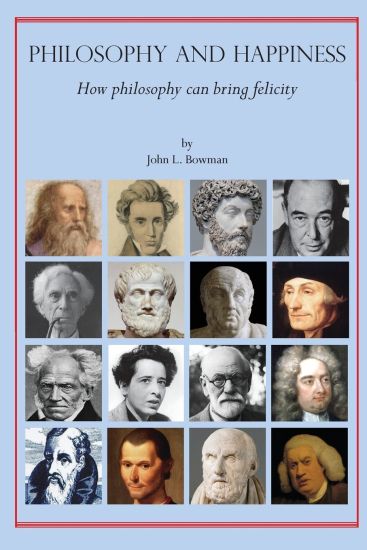
Philosophy and Happiness: How Philosophy Can Bring Felicity
Many philosophers believe people were made to be happy. Epictetus wrote that people should be happy because God made them that way--their lives should be free from hindrance and restraint. John Locke believed that happiness is the unavoidable concomitant of consciousness. However, philosophers also believed that happiness requires knowledge and effort. Coleridge wrote that people are what they know, which for the philosopher is people's source of happiness. It is the knowledge humans have that forms the attitudes they hold that are the foundations of happiness. For the philosophers, happiness also requires effort--people were made for it but not with it. Cicero in his Tusculan Disputations wrote that the happy life rests upon humans alone--people are responsible for their own happiness, Shakespeare wrote that there is nothing either good or bad, but thinking makes it so, Boethius wrote nothing is miserable unless people think it so and Seneca wrote the world is as one make it. Happiness then is an art that must be learned and practiced to be achieved. Philosophy and Happiness presents the knowledge the philosophers say brings happiness.Some book themes include fate and happiness (no man is happy until he is dead, until then only lucky), effort and happiness (the world is as one makes it, so fashion good judgments and make it a place that brings joy), purpose and happiness (be a ship with a rudder), appreciation and happiness (everyone can choose whether to view the glass half empty or half full--appreciate any volume) and fortune and happiness (have proper judgments of externals and do not invest in the wheel of fortune).
Aegean Summer

Aegean Summer

John L. Bowman

John L. Bowman
2017
nidottu
My life was a nightmare. I felt like a prisoner trapped in my cube at work by an invisible web of obligations driven by an insatiable competitive environment. I was a rat-in-a-amaze-cog-in-a machine animal-robot without freedom. My job defined my life and I was not happy. I was burdened with obligations, hounded to produce and fired if I failed. I was angry, tired, resentful, fearful and burned-out. My troubled psyche was only mollified with fantasies-I was always wondering why there could not be a better life like living a simple life in Tahiti happy and carefree. This book is about my escape from that hell. It is a true story about leaving my possessions, job and life behind and finding happiness in Greece during the summer of 1992. It is written for all American workers who feel the same way I did. We live in a capitalistic culture that overemphasizes money, productivity and success-a toxic formula for worker unhappiness. I believe my journey to happiness-this story-can happen to anyone who wants to be happy.
Cheyenne Bottoms

Cheyenne Bottoms

John L. Zimmerman

UNIVERSITY PRESS OF KANSAS
1990
sidottu
Outlines the natural history of one of the most important surviving wetlands in the United States, describes the variety of wildlife found there, and points to the danger man poses to its survival.