Many little girls dream of becoming a princess some day. Theresia Pointinger, the "Salt Princess", Reserl to her friends, made the dream come true. The daughter of an estate owner near Austria's Lake Mondsee, she cast her spell over one of the most powerful men of her age: Emperor Franz Joseph I of Austria. Skilfully, she arranged to become his lover, leaving nothing to chance. In the ten years they were together, she started a family with the emperor and had four children with him. The first-born son, Anton, was even given the privilege of being raised at the imperial court by the side of his father. In 1873, the emperor was prevented from visiting Theresia because of the World Exhibition in Vienna. Almost on a whim, she married Willi Buchwald, a comital hunter. But even this marriage did not stop Theresia from continuing her love affair with Franz Joseph when he returned from Vienna. The book tells this unique and fascinating story against the scenic backdrop of Austria's Salzkammergut region. It also describes the lives of the emperor's four children, some of which took a tragic course. The author, Hubert Pointinger, was born in 1961 and is married. He works as an airline pilot and lives in the Salzkammergut region. He is a direct male descendent of the emperor. This second edition is based on the first edition, published under the same title in May 2007 by Austrian publishers Ueberreuter. Contains 77 illustrations.
The Josef Twins seem to attract mystery and danger but they use their skill, intelligence and each other to overcome the many challenges thrown their way. In this adventure they encounter murder, terrorism, fraud and more than one scorned lover. Kris is a family lawyer who has put her practice on hold while raising her family and supporting her husband, emotionally and sometimes financially. He is trying to find his way from under his father's shadow and some of his own youthful indiscretions. Karen is a forensic accountant who has unraveled some of the most elegantly designed yet thoroughly illegal financial schemes. But few know her by name or by her past successes. This anonymity serves her well as she helps uncover the plans of terrorist cells in the U.S. This is all happening while one twin feels she is losing her marriage. Will moving to a new city for her husband's job save her family? Her twin sister just walked away from the love of her life. Can she get him back? Does he want her back? But how can she focus on her life when her sister and her family need her love and support? Enjoy the ride as you get to know the Josef Twins.
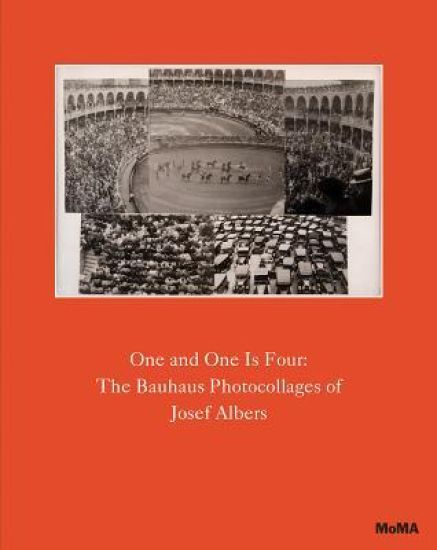
Josef Albers is widely recognized as a crucial figure in 20th-century art, both as an independent practitioner and as a teacher at the Bauhaus, Black Mountain College and Yale University. Albers made paintings, drawings and prints and designed furniture and typography. Arguably the least familiar aspect of his extraordinary career was his inventive engagement with photography, only widely known after his death, including his production of approximately 70 photocollages that feature photographs he made at the Bauhaus between 1928 and 1932. These works anticipate concerns that he would pursue throughout his career--the effects of adjacency, the exploration of color through white, black and gray, and the delicate balance between handcraft and mechanical production.Albers' photographs were first shown at MoMA in a modest exhibition in 1988, when the Museum acquired two photocollages. In 2015 the Museum acquired ten additional photocollages, making its collection the most substantial anywhere outside the Albers Foundation. This publication reproduces each of the photocollages Albers made at the Bauhaus, presenting the scope of this achievement for the first time. An introductory essay by Sarah Hermanson Meister situates them within the contexts of modernist photography, the Bauhaus ethos and of Albers' own practice.
The Fight of Exiled Journalist and Anti-Communist Activist Josef Josten: For Freedom, Democracy, and Human Rights (1948–1985) explores the life and work of exiled Czech journalist Josef Josten (1913-1985) and his fight against the communist Soviet regime in his homeland. Josten was a tireless journalist, activist, and organizer of campaigns and initiatives to expose communist strategy and tactics. During his exile, he set up the Free Czechoslovakia Information Service, which issued the regular bulletin Features and News from Behind the Iron Curtain. His work culminated in the Free Czechoslovakia Campaign, and the establishment of the British Committee for the Defense of the Unjustly Prosecuted. This book offers insight into the Soviet directives regarding their relationship with Great Britain, the struggles of the Czech exile community, and the infiltration of the exile movement by Soviet secret agents.
Die markante Silhouette der neugotischen ehemaligen Pfarrkirche St. Josef ragt im Südosten Aachens eindrucksvoll aus dem Stadtbild hervor. Der helle und weite Innenraum wurde durch den Verzicht auf figürliche Elemente und einfache Farbgebung beim Wiederaufbau nach ihrer Zerstörung im Zweiten Weltkrieg erreicht. 2 wurde die Umgestaltung zur Grabeskirche mit konsequent zeitgenössischen Elementen abgeschlossen, die sie in Harmonie mit der neugotischen Architektur heute zu einem besinnlichen Ort der Urnenbeisetzung macht.
Studienarbeit aus dem Jahr 2008 im Fachbereich Geschichte Europa - Deutschland - Nationalsozialismus, II. Weltkrieg, Note: 1,0, Universit t Vechta; fr her Hochschule Vechta (Institut f r Geschichte und historische Landesforschung), Veranstaltung: Politische Massenrituale im Europa des 20. Jahrhunderts, Sprache: Deutsch, Abstract: Das Thema dieser Hausarbeit ist ein Vergleich der Personenkulte um zwei der gr ten Diktatoren des 20. Jahrhunderts, Adolf Hitler und Josef Stalin. Dazu ist eine Kombination aus Mythen- und Kultforschung mit einem systematischen Diktaturvergleich angedacht. Im ersten Schritt soll das theoretische Korsett geschaffen werden. Dazu geh rt eine Ann herung an den Mythenbegriff, bei dem auch Vermittlungsformen und Grundfunktionen eines Mythos ber cksichtigt werden sollen. Im zweiten Schritt wird dann anhand der Theorie eine zun chst getrennte Analyse der beiden Diktatoren hinsichtlich ihrer Kulte erarbeitet. Zun chst soll sowohl f r Hitler als auch f r Stalin die chronologische Entwicklung des Personenkultes nachvollzogen werden. Die sich daraus ergebenden Phasen in der Entwicklung werden dann entsprechend erg nzt durch eine Betrachtung von Funktion, Form und Wirksamkeit der Kulte. Ein Vergleich der beiden Diktatoren und ihrer Kulte, auf die wichtigsten Gemeinsamkeiten und Unterschiede beschr nkt, soll dann den letzten Schritt vorbereiten. In diesem wird die Stimmigkeit und die Kongruenz von Theorie und Praxis gepr ft werden, um so n tigenfalls zu einer Redefinition bzw. zu einer Akzentverschiebung innerhalb der Theorieebene zu gelangen. Gerade dieser letzte Schritt ist von gro er Bedeutung. Der Mythenbegriff erlebt zwar momentan eine ungeheure Konjunktur und erscheint dementsprechend mit gro er Regelm igkeit in den Medien, die wahre Bedeutung und Funktion von Mythen wird aber zumeist unterschlagen. So ist der Mythenbegriff in der popul ren Kultur unscharf und selten klar definiert. Christopher Flood stellt fest, dass das Thema Mythos ein komple