Kirjojen hintavertailu. Mukana 11 717 486 kirjaa ja 12 kauppaa.

Kirjahaku

Etsi kirjoja tekijän nimen, kirjan nimen tai ISBN:n perusteella.

1000 tulosta hakusanalla Joyce Rodgers

Giacomo Joyce

Giacomo Joyce

James Joyce

Faber Faber
2019
nidottu
Faber Stories, a landmark series of individual volumes, presents masters of the short story form at work in a range of genres and styles. This heart is sore and sad. Crossed in love?The manuscript of 'Giacomo Joyce', written in James Joyce's best handwriting and folded between the covers of a school notebook, was discovered in Trieste. Most likely written in 1914, some of it served as a rehearsal for passages in Ulysses. Had Joyce meant to pillage it or publish it? Either way, this fragmented evocation of unrequited desire is, in the words of Joyce's biographer Richard Ellmann, a work of 'small, fragile, enduring perfection'.With a new introduction by Colm Tóibín.Bringing together past, present and future in our ninetieth year, Faber Stories is a celebratory compendium of collectable work.
James Joyce

James Joyce

Michael Seidel

Blackwell Publishers
2002
sidottu
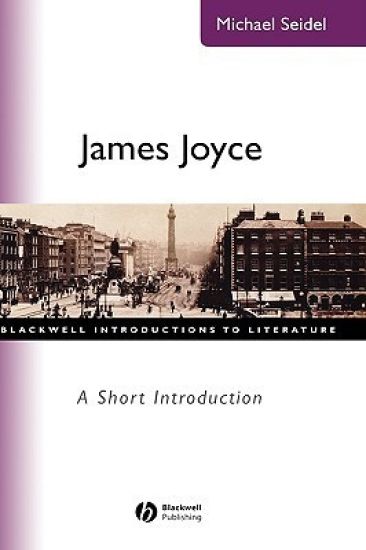
This reader-friendly introduction makes Joyce asscessible by combining the excitement of reading his words with the excitement of interpreting them.
James Joyce

James Joyce

Michael Seidel

Blackwell Publishers
2002
nidottu
This reader-friendly introduction makes Joyce asscessible by combining the excitement of reading his words with the excitement of interpreting them.
James Joyce

James Joyce

Frank Callanan; Robert Spoo

PRINCETON UNIVERSITY PRESS
2026
sidottu
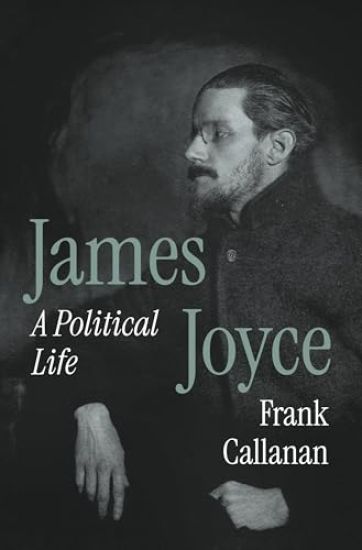
A major new biography that reveals how politics profoundly shaped Joyce’s life, thought and writings The young James Joyce (1882–1941) was forged in the smithy of Irish political controversies, and he took into his European exile a depth of political insight unrivalled among his fellow modernists. In this biography of Joyce in his youth and early exile, acclaimed Irish historian and biographer Frank Callanan reveals a Joyce who is markedly more politically conscious, informed and complex than the Joyce of Richard Ellmann’s classic account. Written in a sparkling style and rich with historical insights, Callanan’s deeply researched biography is the first sustained account of how Joyce’s Irish and European political and cultural context shaped his life, thought, and writings. Joyce was eight years old in 1890 when the O’Shea divorce scandal tore Irish nationalism apart, leading to the split in the Irish Parliamentary Party, the death of nationalist leader Charles Stewart Parnell, and a long, bitter period dominated by the anti-Parnellites. This was the Ireland that Joyce grew up in and rebelled against, and which determined his literary direction. Callanan uncovers a Joyce who was a highly original and dissenting Irish nationalist, who refused to avow or vaunt his nationalism and whose understanding was refined by the experience of living in multicultural Trieste with its fraught ethnic politics and differing models of statehood. Callanan’s Joyce is as heroic as Ellmann’s defiantly modernistic artist but in a more interesting way—a writer who didn’t lack political conviction but whose views didn’t yield to the expectations of his time. Energizing, witty, profound, and elegant, James Joyce: A Political Life is a magisterial biography that will transform how readers look at Joyce and his politics.
James Joyce

James Joyce

Steven Connor

Liverpool University Press
2012
nidottu
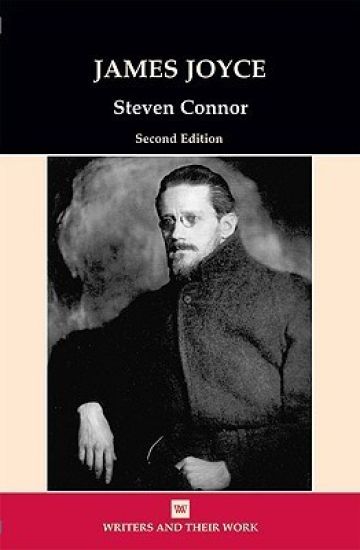
The works of James Joyce have long been regarded as central to European modernism. It is also clear what a continuing provocation and source of renewal Joyce’s works are for contemporary cultural theory, especially feminism, post modernism and postcolonialism. This new edition of Steven Connor’s book is an animated, accessible critique to the whole range of Joyce’s work, from Dubliners through to Finnegans Wake. It contains a revised bibliography and critical evaluation, taking account of the ever-rowing corpus of literary criticism of Joyce and his work. Steven Connor is a foremost scholar of modern literature, and his book traces the leading concerns of Joyce’s work with language, sexual and cultural identity, and the transforming experiences of modernity, and considers the relations between Joyce and postmodernity.
Lucia Joyce

Lucia Joyce

Carol Loeb Shloss

Bloomsbury Publishing PLC
2005
nidottu
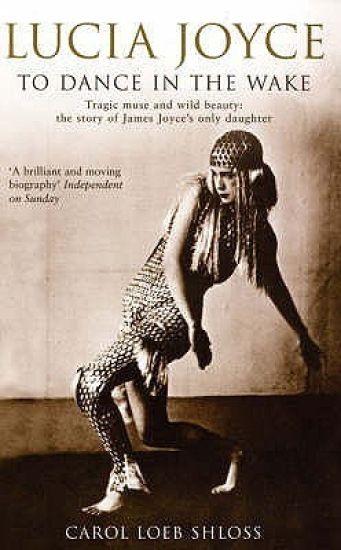
"Whatever spark or gift I possess has been transmitted to Lucia and it has kindled a fire in her brain" James Joyce, 1934 Most accounts of James Joyce's family portray Lucia Joyce as the mad daughter of a man of genius, a difficult burden. But Carol Loeb Shloss reveals a different and more dramatic truth: Joyce loved Lucia and they shared a deep creative bond. Lucia was born in a pauper's hospital and educated haphazardly across Europe as her penniless father pursued his art. She wanted to strike out on her own and in her twenties emerged, to Joyce's amazement, as a harbinger of expressive modern dance in Paris. Lucia was a child of the imaginative realms her father created, and even after emotional turmoil wrought havoc with her and she was hospitalised in the 1930s he saw in her a life lived in tandem with his own. Though most of the documents about Lucia have been destroyed, in this important book Shloss painstakingly reconstructs the poignant complexities of her life.
James Joyce

James Joyce

Lee Spinks

Edinburgh University Press
2009
sidottu
James Joyce: A Critical Guide presents a full and comprehensive account of the major writing of the great modernist novelist James Joyce. Ranging right across Joyce's literary corpus from his earliest artistic beginnings to his mature prose masterpieces Ulysses and Finnegans Wake, the book provides detailed textual analysis of each of his major works. It also provides an extended discussion of the biographical, historical, political and social contexts that inform Joyce's writing and a wide-ranging discussion of the multiple strands of Joyce criticism that have established themselves over the last eighty years. The book's combination of sustained close reading of individual texts and critical breadth makes it an ideal companion for both undergraduate students and the wider community of Joyce's readers. Key Features: *An extended discussion of Joyce's life, times and historical milieu *Detailed close readings of each of Joyce's major literary works *A thorough critical introduction to the style, plot and characterisation of Finnegans Wake *A comprehensive guide to the critical reception of Joyce's work
James Joyce

James Joyce

Lee Spinks

Edinburgh University Press
2009
nidottu
James Joyce: A Critical Guide presents a full and comprehensive account of the major writing of the great modernist novelist James Joyce. Ranging right across Joyce's literary corpus from his earliest artistic beginnings to his mature prose masterpieces Ulysses and Finnegans Wake, the book provides detailed textual analysis of each of his major works. It also provides an extended discussion of the biographical, historical, political and social contexts that inform Joyce's writing and a wide-ranging discussion of the multiple strands of Joyce criticism that have established themselves over the last eighty years. The book's combination of sustained close reading of individual texts and critical breadth makes it an ideal companion for both undergraduate students and the wider community of Joyce's readers. Key Features: *An extended discussion of Joyce's life, times and historical milieu *Detailed close readings of each of Joyce's major literary works *A thorough critical introduction to the style, plot and characterisation of Finnegans Wake *A comprehensive guide to the critical reception of Joyce's work
James Joyce's Techno-Poetics

James Joyce's Techno-Poetics

Donald Theall

University of Toronto Press
1997
sidottu
James Joyce's Techno-Poetics is on the cutting edge of an original and exciting new trend in Joycean studies, as it combines the study of literature, technology, and communication to reveal James Joyce as 'a key figure in the history of cyberculture.' Donald Theall examines for the first time how Joyce conceived of the artist as an engineer and the artist's works as constructions, and reveals the importance of Joyce's understanding of the direction of a developing technoculture. Theall explores the interrelationships between the machinic and the processes of encoding, decoding, reading, writing, and interpreting in Joyce's self-reflexive treatment of the book in Finnegans Wake. By situating this project in relation to memory and cultural production, Theall argues that Joyce's radical paramodern poetic practice has important implications for a wide variety of subsequent cultural and theoretical movements: dramatism, poststructuralism, semiology, and hypertextuality. Theall places Joyce in the context of other modern thinkers, such as Benjamin and Bataille, and draws a direct line of influence from Joyce to Marshall McLuhan and Neuromancer author William Gibson. This is a remarkable and innovative work that makes an important contribution not only to Joycean studies, but to literary theory, modernism, cultural analysis, the history of ideas, and the relationship between literature, science, and technology.
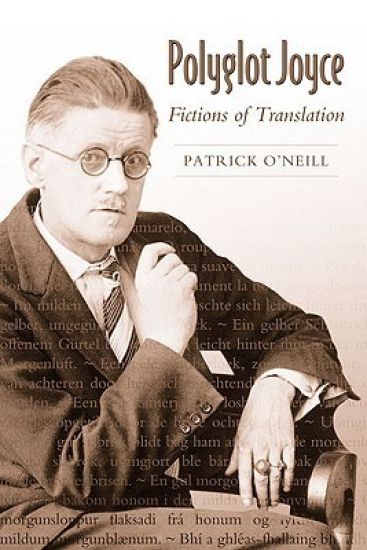
Polyglot Joyce

Polyglot Joyce

Patrick O'Neill

University of Toronto Press
2005
sidottu
James Joyce’s writings have been translated hundreds of times into dozens of different languages. Given the multitude of interpretive possibilities within these translations, Patrick O’Neill argues that the entire corpus of translations of Joyce’s work – indeed, of any author’s – can be regarded as a single and coherent object of study.Polyglot Joyce demonstrates that all the translations of a work, both in a given language and in all languages, can be considered and approached as a single polyglot macrotext.To respond to, and usefully deconstruct, a macrotext of this kind requires what O’Neill calls a ‘transtextual reading,’ a reading across the original literary text and as many as possible of its translations. Such a comparative reading explores texts that are at once different and the same, and thus simultaneously involves both intertextual and intratextual concerns. While such a model applies in principle to the work of any author, Joyce’s work from Dubliners to Finnegans Wake provides a particularly appropriate and challenging set of texts for discussion. Polyglot Joyce illustrates how a translation extends rather than distorts its original, opening many possibilities not only into the work of Joyce, but into the work of any author whose work has been translated.
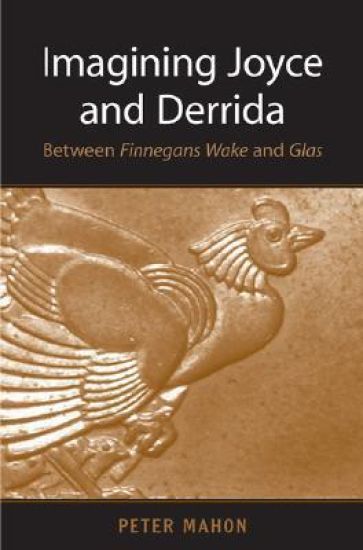
Imagining Joyce and Derrida

Imagining Joyce and Derrida

Peter Mahon

University of Toronto Press
2007
sidottu
How is meaning in one text shaped by another? Does intertextuality consist of more than simple references by one text to another? In Imagining Joyce and Derrida, Peter Mahon explores these questions through a comparative study of James Joyce's Finnegans Wake and the deconstructive texts of Jacques Derrida, with a particular emphasis on Glas. Mahon's reading of these works insists on thinking through Derrida's 'Hegelian' manner of understanding Joyce. Using key texts of Vico, Kant, and Heidegger, Mahon develops a theoretical framework that allows him to theorize and re-conceptualize the intertextuality between Joyce and Derrida in terms of the imagination. In order to test the flexibility of this imaginative framework, Mahon applies it to a sustained comparison of Finnegans Wake and Derrida's under-appreciated masterwork, Glas. In so doing, Mahon reconfigures and expands the intertextual terrain between Joyce and Derrida beyond a simple catalogue of those instances where Derrida cites Joyce. Engaging and innovative, this erudite study makes an important contribution to literary critical theory.
James Joyce's Judaic Other

James Joyce's Judaic Other

Marilyn Reizbaum

Stanford University Press
1999
sidottu
How does recent scholarship on ethnicity and race speak to the Jewish dimension of James Joyce's writing? What light has Joyce himself already cast on the complex question of their relationship? This book poses these questions in terms of models of the other drawn from psychoanalytic and cultural studies and from Jewish cultural studies, arguing that in Joyce the emblematic figure of otherness is "the Jew." The work of Emmanuel Levinas, Sander Gilman, Gillian Rose, Homi Bhabha, among others, is brought to bear on the literature, by Jews and non-Jews alike, that has forged the representation of Jews and Judaism in this century. Joyce was familiar with this literature, like that of Theodor Herzl. Joyce sholarship has largely neglected even these sources, however, including Max Nordau, who contributed significantly to the philosophy of Zionism, and the literature on the "psychobiology" of race—so prominent in the fin de siècle—all of which circulates around and through Joyce's depictions of Jews and Jewishness. Several Joyce scholars have shown the significance of the concept of the other for Joyce's work and, more recently, have employed a variety of approaches from within contemporary deliberations of the ideology of race, gender, and nationality to illuminate its impact. The author combines these approaches to demonstrate how any modern characterization of otherness must be informed by historical representations of "the Jew" and, consequently, by the history of anti-Semitism. She does so through a thematics and poetics of Jewishness that together form a discourse and method for Joyce's novel.
James Joyce’s Judaic Other

James Joyce’s Judaic Other

Marilyn Reizbaum

Stanford University Press
1999
pokkari
How does recent scholarship on ethnicity and race speak to the Jewish dimension of James Joyce’s writing? What light has Joyce himself already cast on the complex question of their relationship? This book poses these questions in terms of models of the other drawn from psychoanalytic and cultural studies and from Jewish cultural studies, arguing that in Joyce the emblematic figure of otherness is “the Jew.” The work of Emmanuel Levinas, Sander Gilman, Gillian Rose, Homi Bhabha, among others, is brought to bear on the literature, by Jews and non-Jews alike, that has forged the representation of Jews and Judaism in this century. Joyce was familiar with this literature, like that of Theodor Herzl. Joyce sholarship has largely neglected even these sources, however, including Max Nordau, who contributed significantly to the philosophy of Zionism, and the literature on the “psychobiology” of race—so prominent in the fin de siècle—all of which circulates around and through Joyce’s depictions of Jews and Jewishness. Several Joyce scholars have shown the significance of the concept of the other for Joyce’s work and, more recently, have employed a variety of approaches from within contemporary deliberations of the ideology of race, gender, and nationality to illuminate its impact. The author combines these approaches to demonstrate how any modern characterization of otherness must be informed by historical representations of “the Jew” and, consequently, by the history of anti-Semitism. She does so through a thematics and poetics of Jewishness that together form a discourse and method for Joyce’s novel.
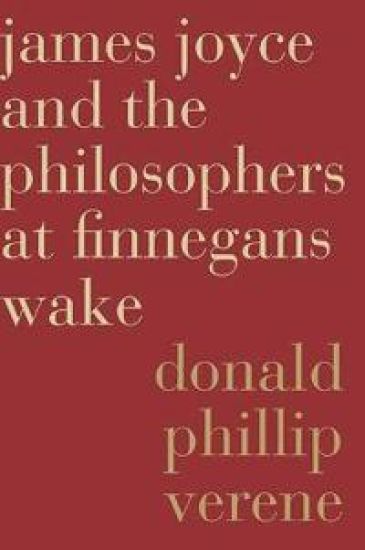
James Joyce and the Philosophers at Finnegans Wake

James Joyce and the Philosophers at Finnegans Wake

Donald Phillip Verene

Northwestern University Press
2016
nidottu
James Joyce and the Philosophers at Finnegans Wake explores how Joyce used the philosophers Nicholas Cusanus, Giordano Bruno, and Giambattista Vico as the basis upon which to write Finnegans Wake. Very few Joyce critics know enough about these philosophers and therefore often miss their influence on Joyce’s great work. Joyce embraces these philosophic companions to lead him through the underworld of history with all its repetitions and resurrections, oppositions and recombinations.We as philosophical readers of the Wake go along with them to meet everybody and in so doing are bound “to encounter for the millionth time the reality of experience and to forge in the smithy” of our souls the “uncreated conscience” of humankind. Verene builds his study on the basis of years of teaching Finnegans Wake side by side with Cusanus, Bruno, and Vico, and his book will serve as a guide to readers of Joyce’s novel.
James Joyce: A Critical Introduction

James Joyce: A Critical Introduction

Harry Levin

NEW DIRECTIONS PUBLISHING CORPORATION
1960
nidottu
Because Harry Levin's view is large, as opposed to the many necessary exegeses and close textual studies, he leads the reader easily into the delights to be found in Joyce, from the comparatively simple prose of Dubliners, through Ulysses and into the complexities of Finnegans Wake. The insight and brilliance of this "critical introduction," first published by New Directions in 1941, make it as rewarding for the expert as the student. For this revised edition, Mr. Levin, who is Irving Babbitt Professor of Comparative Literature at Harvard, has made revisions and added a new preface and a long "postscript" which he calls "Revising Joyce." He examines the works that have come to light in the last few years and some of the important later biographical writings about Joyce.
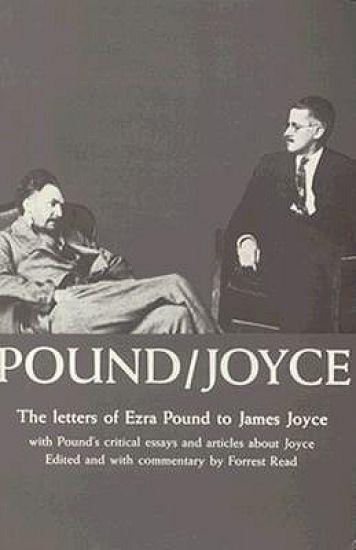
Pound/Joyce: Letters and Essays

Pound/Joyce: Letters and Essays

Ezra Pound

New Directions Publishing Corporation
1984
nidottu
This is the record of one of the most interesting personal relationships of modern literature. Between 1913, when Yeats first called Joyce’s work to Pound’s attention, and 1920 there was a steady flow of letters, in which we see Pound finding publishers for Joyce, collecting money for him, defending him against censorship, even sending spare clothes. More than sixty letters from Pound to Joyce have survived, while those from Joyce to Pound will be found in the Viking Press Joyce correspondence volumes. Perhaps the most remarkable letters are those in which Pound gives his spontaneous reactions as the scripts of Dubliners, Portrait of the Artist, Exiles and Ulysses first reached him. We can then trace how these judgments were refined and amplified in the series of pieces that Pound wrote on Joyce for various magazines, the earliest sustained criticism of his work. And finally there are the later insights of the Rome broadcast of 1941 and the references to Joyce in The Pisan Cantos. Pound/Joyce has been edited, with an introduction, extensive running commentary, notes, and a wealth of related material from many sources, by Forrest Read, who is Professor of English at the University of North Carolina.