Literarische Eigennamen sind kunstlerische Gestaltungselemente besonderer Art. Haufig erbringen sie Leistungen, die uber die blosse Benennung von Figuren und Schauplatzen hinausgehen. Der funktionalen und formalen Vielfalt literarischer Eigennamen widmet sich der erste, theoretische Teil dieser Arbeit. Grundlage der folgenden praktischen Analyse sind 100 Detektivgeschichten des englischen Schriftstellers Gilbert Keith Chesterton. Dabei werden nicht nur Figuren- und Ortsnamen, sondern alle auftretenden Namenklassen berucksichtigt. Wie die Studie verdeutlicht, ist Chestertons Namenlandschaft bunt und vielfach aussagekraftiger, als es auf den ersten Blick scheinen mag. Neben autorentypischen Besonderheiten der Namenverwendung werden genrespezifische Aspekte untersucht, wobei personliche Aussagen mehrerer lebender Kriminalschriftsteller weiteren Aufschluss geben."
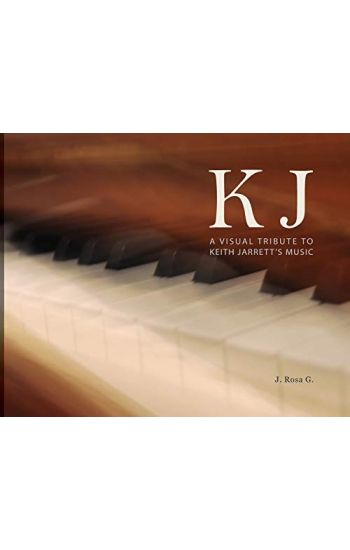
Taking the sequence of 88 piano keys as a reference, from the bass to treble, J. Rosa G. pays tribute to Keith Jarrett's music in the same number of images, meant to evoke the musical universe of the pianist.For the author Keith Jarrett replaces a missing link of primeval pantheism through an harmonious inner rhythm, not convertible to musical notation: spiritual union of Man with the enchantment of each moment in Life and with Nature, sublime and sacred place of the act of living.
Gilbert Keith Chesterton, KC*SG (29 May 1874 - 14 June 1936), better known as G. K. Chesterton, was an English writer, poet, philosopher, dramatist, journalist, orator, lay theologian, biographer, and literary and art critic. Chesterton is often referred to as the "prince of paradox". Time magazine has observed of his writing style: "Whenever possible G.K. Chesterton's collected essays on subjects ranging from detective stories and penny dreadfuls to heraldry and patriotism. The essays originally appeared in "The Speaker" but were edited and revised for republication.
Manalive (1912) is a book by G. K. Chesterton detailing a popular theme both in his own philosophy, and in Christianity, of the "holy fool", such as in Dostoevsky's The Idiot and Cervantes' Don Quixote.This is a book in two parts. The first, "The Enigma of Innocent Smith", concerns the arrival of a new tenant at Beacon House, a London boarding establishment. Like Mary Poppins, this man (who is tentatively identified by lodger Arthur Inglewood as an ex-schoolmate named Innocent Smith) is accompanied by a great wind, and he breathes new life into the household with his games and antics. During his first day in residence the eccentric Smith creates the High Court of Beacon; arranges to elope with Mary Gray, paid companion to heiress Rosamund Hunt; inspires Inglewood to declare his love for Diana Duke, the landlady's niece; and prompts a reconciliation between jaded journalist Michael Moon and Rosamund. However, when the household is at its happiest two doctors appear with awful news: Smith is wanted on charges of burglary, desertion of a spouse, polygamy, and attempted murder. The fact that Smith almost immediately fires several shots from a revolver at Inglewood's friend Dr. Herbert Warner seems to confirm the worst. Before Smith can be taken to a jail or an asylum, Michael Moon declares that the case falls under the purview of the High Court of Beacon and suggests that the household investigate the matter before involving the authorities or the press. The second part, "The Explanations of Innocent Smith", follows the trial. The prosecution consists of Moses Gould, a merrily cynical Jew who lives at Beacon House and considers Smith at best a fool and at worst a scoundrel, and Dr. Cyrus Pym, an American criminal specialist called in by Dr. Warner; Michael Moon and Arthur Inglewood act for the defence. The evidence consists of correspondence from people who witnessed or participated in the exploits that led to the charges against Smith. In every case, the defendant is revealed to be, as his first name states, innocent. He fires bullets near people to make them value life; the house he breaks into is his own; he travels around the world only to return with renewed appreciation for his house and family; and the women he absconded with are actually his wife Mary, posing as a spinster under different aliases so they may repeatedly re-enact their courtship.Smith is, needless to say, acquitted on all charges.... Gilbert Keith Chesterton, KC*SG (29 May 1874 - 14 June 1936), better known as G. K. Chesterton, was an English writer, poet, philosopher, dramatist, journalist, orator, lay theologian, biographer, and literary and art critic. Chesterton is often referred to as the "prince of paradox". Time magazine has observed of his writing style: "Whenever possible Chesterton made his points with popular sayings, proverbs, allegories-first carefully turning them inside out." Chesterton is well known for his fictional priest-detective Father Brown, and for his reasoned apologetics. Even some of those who disagree with him have recognised the wide appeal of such works as Orthodoxy and The Everlasting Man.Chesterton, as a political thinker, cast aspersions on both Progressivism and Conservatism, saying, "The whole modern world has divided itself into Conservatives and Progressives. The business of Progressives is to go on making mistakes. The business of the Conservatives is to prevent the mistakes from being corrected."Chesterton routinely referred to himself as an "orthodox" Christian, and came to identify this position more and more with Catholicism, eventually converting to Catholicism from High Church Anglicanism. George Bernard Shaw, Chesterton's "friendly enemy" according to Time, said of him, "He was a man of colossal genius."Biographers have identified him as a successor to such Victorian authors as Matthew Arnold, Thomas Carlyle, Cardinal John Henry Newman, and John Ruskin....
Orthodoxy (1908) is a book by G. K. Chesterton that has become a classic of Christian apologetics. Chesterton considered this book a companion to his other work, Heretics, writing it expressly in response to G.S. Street's criticism of the earlier work, "that he was not going to bother about his theology until I had really stated mine". 1] In the book's preface Chesterton states the purpose is to "attempt an explanation, not of whether the Christian faith can be believed, but of how he personally has come to believe it." In it, Chesterton presents an original view of Christian religion. He sees it as the answer to natural human needs, the "answer to a riddle" in his own words, and not simply as an arbitrary truth received from somewhere outside the boundaries of human experience. The book was written when Chesterton was an Anglican. He converted to Catholicism 14 years later. Chesterton chose the title, Orthodoxy, to focus instead on the plainness of the Apostles' Creed, though he admitted the general sound of the title was "a thinnish sort of thing". Gilbert Keith Chesterton, KC*SG (29 May 1874 - 14 June 1936), better known as G. K. Chesterton, was an English writer, poet, philosopher, dramatist, journalist, orator, lay theologian, biographer, and literary and art critic. Chesterton is often referred to as the "prince of paradox". Time magazine has observed of his writing style: "Whenever possible Chesterton made his points with popular sayings, proverbs, allegories-first carefully turning them inside out." Chesterton is well known for his fictional priest-detective Father Brown, and for his reasoned apologetics. Even some of those who disagree with him have recognised the wide appeal of such works as Orthodoxy and The Everlasting Man.Chesterton, as a political thinker, cast aspersions on both Progressivism and Conservatism, saying, "The whole modern world has divided itself into Conservatives and Progressives. The business of Progressives is to go on making mistakes. The business of the Conservatives is to prevent the mistakes from being corrected."Chesterton routinely referred to himself as an "orthodox" Christian, and came to identify this position more and more with Catholicism, eventually converting to Catholicism from High Church Anglicanism. George Bernard Shaw, Chesterton's "friendly enemy" according to Time, said of him, "He was a man of colossal genius."Biographers have identified him as a successor to such Victorian authors as Matthew Arnold, Thomas Carlyle, Cardinal John Henry Newman, and John Ruskin.
The Man Who Was Thursday: A Nightmare is a novel by G. K. Chesterton, first published in 1908. The book has been referred to as a metaphysical thriller. Although it deals with anarchists, the novel is not an exploration or rebuttal of anarchist thought; Chesterton's ad hoc construction of "Philosophical Anarchism" is distinguished from ordinary anarchism and is referred to several times not so much as a rebellion against government but as a rebellion against God. The novel has been described as "one of the hidden hinges of twentieth-century writing, the place where, before our eyes, the nonsense-fantastical tradition of Lewis Carroll and Edward Lear pivots and becomes the nightmare-fantastical tradition of Kafka and Borges."
The Club of Queer Trades is a collection of stories by G. K. Chesterton first published in 1905. Each story in the collection is centered on a person who is making his living by some novel and extraordinary means (a "queer trade", using the word "queer" in the sense of "peculiar"). To gain admittance one must have invented a unique means of earning a living and the subsequent trade being the main source of income.The framing narrative by "Cherub" Swinburne describes his quest for The Club of Queer Trades with his friend Basil Grant, a retired judge, and Rupert Grant, a private detective who is Basil's younger brother. Each of the stories describes their encounter with one of the trades.