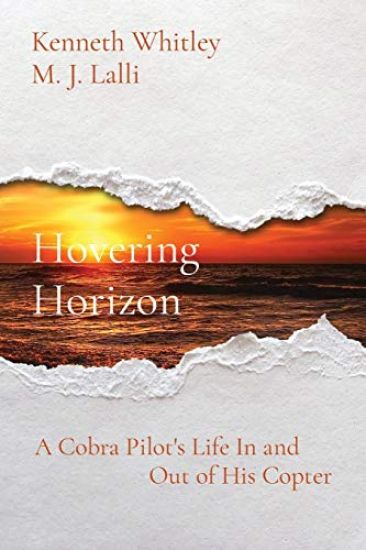
Hovering Horizons is the exciting, at times death-defying story of Kenneth Whitley, decorated Vietnam Veteran Cobra pilot. It details how his boyhood in a small Texas town helped create the warrior he became. It takes readers through the many perils and split second decisions that he needed to make to stay alive in Vietnam. It continues his journey as he flew choppers in Arabia and Africa, where he met with exciting challenges of a completely different nature. Hovering Horizons is an excellent read for veterans, pilots, thrill-seekers, history buffs, or anyone who has ever wondered what it's like to live (not just travel) around the world. His unique stories and insights will keep you turning the pages and wishing there were more.
This boxset contains seven of most popular novels ever written for children (and many adults). They are beautifully packaged in a rigid, matt-laminated slipcase, complete with strikingly attractive, bespoke artwork - the perfect gift for any book-lover. The set includes: 9781853261183 - Alice's Adventures in Wonderland 9781853261220 - The Wind in the Willows 9781853261039 - Treasure Island 9781853261091 - Black Beauty 9781853261190 - The Jungle Book 9781853261046 - The Secret Garden 9781853261206 - Peter Pan
Problems demanding globally optimal solutions are ubiquitous, yet many are intractable when they involve constrained functions having many local optima and interacting, mixed-type variables.The differential evolution (DE) algorithm is a practical approach to global numerical optimization which is easy to understand, simple to implement, reliable, and fast. Packed with illustrations, computer code, new insights, and practical advice, this volume explores DE in both principle and practice. It is a valuable resource for professionals needing a proven optimizer and for students wanting an evolutionary perspective on global numerical optimization.
Problems demanding globally optimal solutions are ubiquitous, yet many are intractable when they involve constrained functions having many local optima and interacting, mixed-type variables.The differential evolution (DE) algorithm is a practical approach to global numerical optimization which is easy to understand, simple to implement, reliable, and fast. Packed with illustrations, computer code, new insights, and practical advice, this volume explores DE in both principle and practice. It is a valuable resource for professionals needing a proven optimizer and for students wanting an evolutionary perspective on global numerical optimization.
The second edition of Hair Transplant 360: Volume 4 – Follicular Unit Extraction (FUE) is an illustrated guide to this minimally invasive procedure, involving the grafting of hair follicles that are genetically resistant to balding, onto a bald scalp. This book is edited by Samuel M Lam, from the Lam Institute for Hair Restoration, Texas, and Kenneth L Williams Jr from Orange County Hair Restoration, California. With the advent of hybrid-punch technology for follicular unit excision (FUE) in 2017, the first edition of this book became outdated and required a major revision. The new edition more than doubles the scope of the prior edition from 25 chapters in a single book, to 60 chapters in two hardcover volumes. The first volume updates and expands on the previous edition’s sections and is divided into the following: Basics, Operative Fundamentals, Practice Considerations, and Devices. The second volume is entirely new and is sectioned into Concepts, Techniques, Adjunctive Measures, Regional and Ethnic, Complications and Repair, and How I Do It and Special Topics. This unique, comprehensive text provides practical, up to date knowledge on FUE and incorporates over 100 videos that cover a range of subjects showcasing operative technique, interviews, video lectures and much more, all easily accessed via a QR code embedded in each chapter. In addition, full digital access is available on a mobile responsive web-browser.
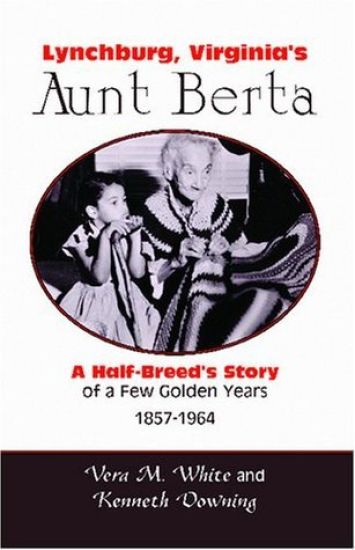
This true story recounts the trials, tribulations and the times of the authors' ancestor, Roberta Reed Edwards, better known as Aunt Berta. In her time, people in the Lynchburg, Virginia area called a charismatic and well-respected person Aunt. She earned
This manual derives many experiments and procedures from the classic Feiser lab text, giving it an unsurpassed reputation for solid, authoritative content. Featuring updated NMR spectra, new experiments that stress green chemistry and a Premium Website that includes glassware-specific videos with pre-lab, gradable exercises, this TECHNIQUES LABS edition of the authors' proven lab manual includes the most commonly used labs in the print manual and makes all the other experiments from MACROSCALE AND MICROSCALE ORGANIC EXPERIMENTS available for download on the companion website. Offering a flexible mix of macroscale and microscale options for most experiments, this proven manual emphasizes safety and allows users to save on the purchase and disposal of expensive, sometimes hazardous, organic chemicals. Macroscale versions can be used for less costly experiments, allowing users to get experience working with conventionally-sized glassware.
"'Classic Napoleonics' allows you to take command of the forces of the Napoleonic Period whether you are trying to recreate the famous battles of that era or are trying your hand at battle situations of your own making. Perhaps more importantly, these rules are FUN " - Gary Zaharek "Classic Napoleonics" is more than a set of wargame rules. It is a homage to the "Father of American Wargaming", Jack Scruby. And it contains the philosophical reasoning behind a given set of rules - how rules must strike a reasonable balance between a playable, enjoyable game, and historical accounts of actual battles, weapons, troop qualities and capabilities. All too often, this last component is ignored, leading to many a heated discussion during the heat of battle. These rules are being offered to miniature wargamers of all levels of experience, to other types of gamers and to the general public. Experienced miniature wargamers, being either amateur or professional history buffs, will appreciate a set of rules that not only evolved from rules from the "Golden Age" of miniature wargaming (1955 to 1970) but still maintains both the flavor and the feel of that era. "Classic Napoleonics" includes a full set of rules for large-scale wargaming plus "A Hole Runs Through It", rules for small-scale or individual figure gaming. Reproducible templates for rosters and handy reference sheets containing the movement and combat charts allow for quick, easy and fun gaming experiences.
Techniques of solid state nuclear magnetic resonance (NMR) spectroscopy are constantly being extended to a more diverse range of materials, pressing into service an ever-expanding range of nuclides including some previously considered too intractable to provide usable results. At the same time, new developments in both hardware and software are being introduced and refined. This book covers the most important of these new developments. With sections addressed to non-specialist researchers (providing accessible answers to the most common questions about the theory and practice of NMR asked by novices) as well as a more specialised and up-to-date treatment of the most important areas of inorganic materials research to which NMR has application, this book should be useful to NMR users whatever their level of expertise and whatever inorganic materials they wish to study.
Aging and Creativity examines the effects of aging on creative functioning, including age-related changes in cognition, personality, and motivation that affect performance or output. The book reviews and summarizes both lab-based and real-world-based studies. Changes in working memory, speed of processing, learning efficiency, and retrieval from long-term memory are all discussed as factors influencing creativity, as are health changes and changes in social roles with later age. The book concludes with practical implications of age effects on creativity for older people in work and everyday life.
The Canadian West and the American Northwest offer a valuable setting for considering issues of borders and borderlands. The regions contain certain similarities, and during the first half of the nineteenth century they were even grouped together as a distinct political and economic unit, called the "Oregon Country" by Americans and the "Columbia Department" of the Hudson's Bay Company by the British.The essays in this volume -- which grew out of a conference commemorating the Oregon Treaty of 1846 -- view the boundary between Canada and the United States as a dividing line and also as a regional backbone, with people on each side of the border having key experiences and attitudes in common. In their eloquence and scope, they illustrate how historical study of Canadian-American relations in the West calls into question the parameters of the nation-state.The border has not had a single constant meaning; rather, its significance has changed over time and varied from group to group. The essays in Part One concern the movement of peoples and capital across a relatively permeable boundary during the nineteenth century. Many people in this era--especially Natives, miners, immigrants, and capitalists--did not regard the international boundary as particularly important. Part Two considers how the United States and Canada took pains to strengthen and enforce the international boundary during the twentieth century. In this era, the nation-state became more assertive about defining and defending the borderline. Part Three offers considerations of the distinctions, both real and imagined, that emerged during the nineteenth and twentieth centuries between Canada and the United States. Its essays examine different schools of history, divergent ideas toward wilderness, and the influence of anti-Americanism on Canadians' view of national development in North America.
The Canadian West and the American Northwest offer a valuable setting for considering issues of borders and borderlands. The regions contain certain similarities, and during the first half of the nineteenth century they were even grouped together as a distinct political and economic unit, called the "Oregon Country" by Americans and the "Columbia Department" of the Hudson's Bay Company by the British.The essays in this volume -- which grew out of a conference commemorating the Oregon Treaty of 1846 -- view the boundary between Canada and the United States as a dividing line and also as a regional backbone, with people on each side of the border having key experiences and attitudes in common. In their eloquence and scope, they illustrate how historical study of Canadian-American relations in the West calls into question the parameters of the nation-state.The border has not had a single constant meaning; rather, its significance has changed over time and varied from group to group. The essays in Part One concern the movement of peoples and capital across a relatively permeable boundary during the nineteenth century. Many people in this era--especially Natives, miners, immigrants, and capitalists--did not regard the international boundary as particularly important. Part Two considers how the United States and Canada took pains to strengthen and enforce the international boundary during the twentieth century. In this era, the nation-state became more assertive about defining and defending the borderline. Part Three offers considerations of the distinctions, both real and imagined, that emerged during the nineteenth and twentieth centuries between Canada and the United States. Its essays examine different schools of history, divergent ideas toward wilderness, and the influence of anti-Americanism on Canadians' view of national development in North America.
Thinking Clearly and Biblically about Eternity, Afterlife, and DeathDid you know that the original biblical languages use several words for heaven and hell that mean different things? Did you know that there are different beliefs about how many heavens and hells there are?To make matters still more confusing, other religions and philosophies have contributed their own ideas to the mix until it's hard to separate sound biblical teaching from speculation, falsehood, and folklore.Sense and Nonsense about Heaven and Hell by Kenneth Boa—author of spiritual formation bestseller Conformed to His Image—helps you cut through the clutter to see what the Bible really reveals about heaven and hell, salvation, and judgment.In this book, you'll learn: Why Jesus is the only means of understanding heaven or hell.Different biblical words for heaven and hell and what they likely meant to the authors who wrote them.A biblical understanding of whether "the fires of hell" are literal or figurative.What we can and can't know about heaven from what's been revealed in Scripture.A better understanding of God's judgment: who will go where, and why. Get ready for some surprises! This book will help you set aside your preconceptions and pierce through the myths and misinformation to gain an accurate, truly biblical perspective on heaven and hell.
Thinking Clearly and Biblically about Heavenly Beings, Spirits, and Spiritual WarfareDoes Satan really exist? Do people have guardian angels? Should you believe the angle stories or demon possession stories you hear? Is the angel called "Michael" just another name for Jesus? Information on angels and demons is rampant today, but most of it isn’t trustworthy.Sense and Nonsense about Angels and Demons by Kenneth Boa—author of spiritual formation bestseller Conformed to His Image—helps you cut through the clutter to see what the Bible really reveals about angels, spirits, and demons.In this book, you'll learn about: The fascinating history of "angelology."What an angel is—and what it isn't.What angels do and why.What angels may look like at the rare times when they do appear.The "Angel of the Lord": when an angel is more than an angel.The devil and his angels.What the Bible really says about the origins of Satan. Get ready for some surprises! This book will help you set aside your preconceptions and pierce through the myths and misinformation to gain an accurate, truly biblical perspective on angles and demons.
Ken and Yetta Goodman’s professional work has been a lifelong collaboration, informed by shared philosophical strands. An overarching goal has been to provide access for all children to literacy and learning and to inform and improve teaching and learning. Each also is recognized for specific areas of focus and is known for particular concepts. This volume brings together a thoughtfully crafted selection of their key writings, organized around five central themes: research and theory on the reading process and written language development; teaching; curriculum and evaluation; the role of language; advocacy and the political nature of schooling.In the World Library of Educationalists, international scholars themselves compile career-long collections of what they judge to be their finest pieces – extracts from books, key articles, salient research findings, major theoretical and/practical contributions – so the world can read them in a single manageable volume. Readers will be able to follow the themes and strands of their work and see their contribution to the development of a field, as well as the development of the field itself.
"This book was among the first ten on investing I ever read. . . . It remains important for anyone seriously interested in capital markets, financial journalism, or even their own personal investments."—From the Foreword by Ken Fisher, CEO of Fisher Investments and Forbes columnist "Loeb tells us to put all our eggs in one basket, and watch the basket."—John Rothchild, Financial Columnist, Time magazine "This book is very special in my life. It is the very first Wall Street book I ever read. After reading 1,200 additional finance books, The Battle for Investment Survival's principles and concepts are still valid for consistent success."—Victor Sperandeo, Author of Trader Vic on Commodities In The Battle for Investment Survival, the turf is Wall Street, the goal is to preserve your capital at all costs, and to win is to "make a killing without being killed." This memorable classic, originally written in 1935, offers a fresh perspective on investing from times past. The Battle for Investment Survival treats investors to a straightforward account of how to profit—and how to avoid profit loss—in what Loeb would describe as the constant tug-of-war between rising and falling markets.
This is a revision of a classic! This text provides a single source for information on both the structure and management of quality systems and the use of statistics to control and improve quality. It incorporates an international flavor and a good balance of services and manufacturing coverage. The goal of the second edition remains the same as the first edition - to promote learning by means of practical, effective applications intended to develop, control, and improve quality systems and processes.
This book details the policy subsystems - links among members of Congress, interest groups, program beneficiaries, federal and subnational government agencies - that blanket the American political landscape. Robert Stein and Kenneth Bickers have constructed a new data base detailing federal outlays to Congressional districts for each federal program, and use it to examine four myths about the impact of policy subsystems on American government and democratic practice. These include the myth that policy subsystems are a major contributor to the federal deficit; that once created, federal programs grow inexorably and rarely die; that to garner support for their programs, subsystem actors seek to universalize the geographic scope of program benefits; and that the flow of program benefits to constituencies in congressional districts ensures the re-election of legislators.