THE SUNDAY TIMES BESTSELLER 'This is a proper piece of journalism. It's a fascinating book. I read it from start to finish in a single sitting' Alastair Campbell, THE REST IS POLITICS 'Anyone... wanting to understand the context of the US president's Greenland landgrab should buy POLAR WAR' THE TIMES Russian spies. Sabotaged pipelines. Troop movements and threats to 'take Greenland'. Tensions are building at the top of the world. The Arctic stands at the crossroads of geopolitical ambition and environmental catastrophe. President Trump's assertions on Greenland reveal a regional context where fast-moving climate change is opening up new trade routes, untapped natural resources and long-frozen biological weapons. Award-winning commentator Kenneth R. Rosen draws on first-hand reportage and testimony to document the race to control this strategically crucial territory. Can America, which since the 1990s has lagged behind on infrastructure, really reimpose its might against the superior technology and strategic engagement of Russia and China? Above the Arctic Circle, the world's superpowers stand on the brink of a new cold war - and every day it grows hotter. Timely and incisive, Polar War is an essential account of the interests, landscapes and people at the world's most extreme frontier. 'This reporting is indispensable' FINANCIAL TIMES 'A wake-up call to the West' JONATHAN BEALE, BBC Defence Correspondent
This book, first published in 1984, looks at the way in which food grains still provided the overwhelming proportion of food intake in China. In common with other countries at a similar stage of economic development, there was a marked rise in the demand for food grain, and consequent difficulties in ensuring a sufficient increase in supply. This book, written by the late Kenneth R. Walker, analyses how the Chinese Government through central planning attempted to supply its vast, rapidly growing population with adequate grain, from 1953 to 1980. The book provides provincial estimates of grain production, procurement and consumption and assesses the impact which redistribution had on consumption. It concludes by examining why, with higher grain output per head in the period 1978–1980 than in the 1950s, China continued to import large quantities of grain and why the policy of transferring grain internally seemed no longer viable.
This book is the first detailed study of Kant’s method of ‘transcendental reflection’ and its use in the Critique of Pure Reason to identify our basic human cognitive capacities, and to justify Kant’s transcendental proofs of the necessary a priori conditions for the possibility of self-conscious human experience. Kenneth Westphal, in a closely argued internal critique of Kant’s analysis, shows that if we take Kant’s project seriously in its own terms, the result is not transcendental idealism but (unqualified) realism regarding physical objects. Westphal attends to neglected topics - Kant’s analyses of the transcendental affinity of the sensory manifold, the ‘lifelessness of matter’, fallibilism, the semantics of cognitive reference, four externalist aspects of Kant’s views, and the importance of Kant’s Metaphysical Foundations for the Critique of Pure Reason - that illuminate Kant’s enterprise in new and valuable ways. His book will appeal to all who are interested in Kant’s theoretical philosophy.
The author presents a comprehensive picture of the furniture manufacturer's marketing policies and the framework of the industry out of which marketing policies evolve. He thoroughly investigates and critically analyzes the existing marketing policies of the industry and furnishes data on the industry's profitability.A UNC Press Enduring Edition -- UNC Press Enduring Editions use the latest in digital technology to make available again books from our distinguished backlist that were previously out of print. These editions are published unaltered from the original, and are presented in affordable paperback formats, bringing readers both historical and cultural value.
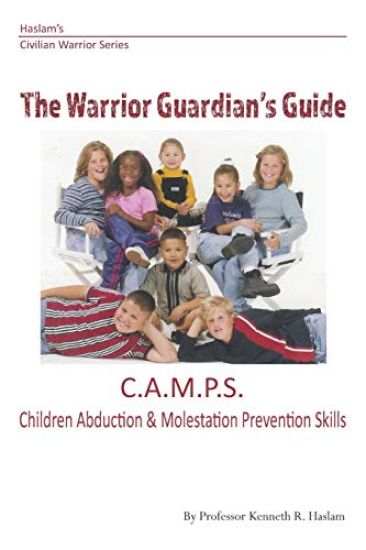
This to the point instruction book explains from the first chapter the essential ideas a parent, guardian or anyone working with children must teach to keep children safe from fear and violence in today's world. This is a straightforward reality-based instruction on the aspects of abduction and molestation prevention as taught by Professor Kenneth R. Haslam, World Martial Arts Hall of Fame Inductee who has been teaching parents and thousands of children over the last five decades. 1 in 5 girls and 1 in 7 boys succumb to sexual assault today, and 1 in 42 children go missing. Over 30% of sexual abuse is with children under 12 years of age. But, this is not a book of statistic or psychology, but a practical guide to what to teach and how. As a busy parent or guardian, you must get the facts and implement the safety tools without the need for hours of research. The work has been done for you. The ideas in this book can be use immediately. While this book is a quick read, every topic associated with abduction and molestation prevention has been discussed. The four steps in the ladder of protection, how to leave a veil of protection that no predator will dare try to pierce when you leave a child with others, how to discuss nudity and sex your way, so your child does not learn things someone else's way, teaching your child without fear, safety on the internet, what to do if your child is lost, what to do if your child is abducted, what are the symptoms to tell if a child is believed to be being molested, fifteen action steps your child must learn to prevent themselves from becoming a victim in the first place. These actions are described in detail, so you know exactly what to teach a child and these actions all come with support tools such as rhymes for little ones to learn. "If you touch me I will tell if you touch me I will yell," "Adults don't ask children for help, adults ask adults for help," are examples of the many tools a parent can use to teach their child without fear at an early age. More, the ten lures predators use to trick children are not only discussed but how to role-play (another valuable tool) to help guarantee your child understands and will carry out the tasks which will keep them safe. Included are the mistakes parents make every day as parents are unaware of the dangers in places taken for granted to be safe. Also, discussed are the mistakes other instructors teach such as the secret word which is an absolute dangerous tool and should not be used. A scenario-based method of teaching a child is presented to parents so a parent can take random opportunities throughout the day to teach valuable lessons through simple observations of others and quick conversations with their child. Additionally, there are thirty-four guidelines for keeping a child safe from both abduction and molestation. This book was written as the need became obvious as I was teaching children martial arts that preventing abduction and molestation was the reality for self-defense in a child's world. While a child could not physically box an adult there were many strategies a child could learn to prevent abduction and molestation, and none were about martial art fighting skills. This book is not about psychology, social science or theory but the tools I personally have used for over five decades that I taught my four children that I am sure will work and help guarantee the safety of your children.Professor Kenneth R. Haslam Founder of the 360X DEFENSE Smart N' Safe Children's Program and has taught thousands of children and adults over his five-decade career in reality-based martial arts. He is also the author of C.A.R.E.S., Children's Action Response and Escapes Skills, how to escape predators once it gets physical and the soon to be released book B.R.A.V.E., Bully Response, Attitudes, Value, and Empowerment.
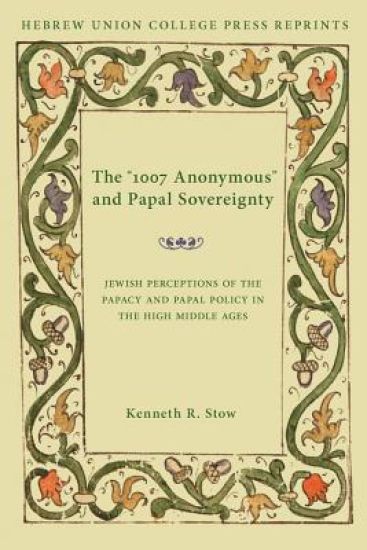
Papal policy toward Jews in the Middle Ages has long been understood as a function of protection. The papacy either serves as the Jews' foremost protector, wants assiduously to expel the Jews from Western Europe, or originally wanted to protect the Jews but allowed pressure from outside sources to sway them into a policy of repression instead. Kenneth R. Stow shows that these views result from a misreading of stock formulae found in the prefatory clauses of papal letters. When Jewish discussions are taken into account, it becomes clear that papal policy was much more elaborate and complex, seeking to fully define the role of Jews within an ideal, pure Christian society. Stow's sources include Meir ben Simeon of Narbonne (late 13th century) and the anonymous narrative of "The Terrible Event of 1007." Many Jews saw continuities linking the principles of papal theory to those governing papal policy on Jews. Unlike so many kings who had made arbitrary decisions against Jews, the popes were proving themselves to be consistent in the enforcement of their established policies, good and bad. Because of this quality, Jewish thinkers advocated the acquisition of papal support. The authority of papal canons was eventually challenged and the papal policy mandating a specific role for the Jews in Christian society ultimately failed. Against everything the popes and men like Augustine and Bernard of Clairvaux said and wrote, one by one, the Jews were partially or totally expelled from all of Western Europe. Eventually, the popes themselves abandoned their ideal of due legal process and succumbed to political realism.
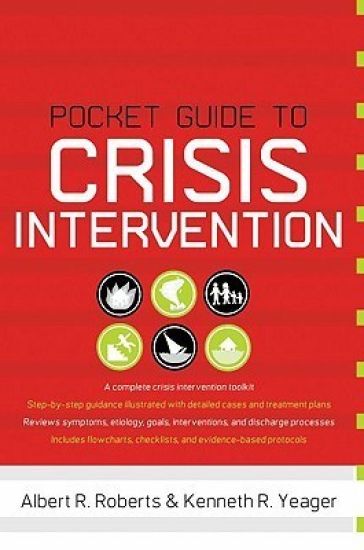
Crisis workers make split-second decisions every day that affect the mental health and well-being of individuals, families, and entire communities. They support and guide people through health diagnoses, bankruptcies, sexual assaults, deaths of loved ones, suicide attempts, and natural or man-made disasters from the front lines. While professions vary from mental health professionals, emergency responders, educators, business managers or volunteers such as suicide hotline workers, all have a common and urgent need for a rapid reference that covers every type of traumatic event they may be asked to respond to in the course of an unpredictable and highly stressful day. The Pocket Guide to Crisis Intervention is a complete crisis toolkit, a trusted resource to consult on the fly, packed with easy-to-follow, step-by-step evidence-based protocols for responding effectively to a broad range of traumatic events. Checklists, bullets, and boxes highlight symptoms & warning signs and provide action plans, do's & don'ts, and screening & assessment questions. The open layout and two-color design make this pocket guide as visually appealing as it practical, ensuring at-a-glance lookup of the essentials of managing the most common types of crisis. More than just a collection of action lists, though, this pocket guide explains theories and models in clear, jargon-free language, offering tips for clinical practice, treatment planning, referrals, and coordinating services as needed. It can be used as a field manual for seasoned professionals or as a training tool for new recruits and practitioners seeking to sharpen their skills.
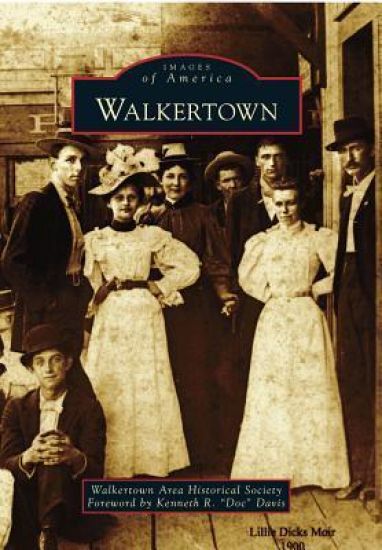
European settlers came into the area now known as Walkertown as early as the 1750s. From 1850 through the early 20th century, the local economy was dependent on farming, lumber manufacturing, grain milling, and merchandising. Tobacco manufacturing began early in the 19th century and became a thriving industry for the Sullivan, Booe, Poindexter, and Crews families. The Roanoke & Southern Railroad began serving Walkertown in 1889, and with it the availability of larger markets spurred the growth of industry. The Leight Lumber Company was established near the depot around 1890 and prospered by making boxes for manufacturers and lumber for construction. The Walkertown Chair Company, begun in 1903, flourished until a devastating fire destroyed most of the buildings in 1940. The Walkertown Roller Mill, built by Robah Payne around 1900, has changed hands a few times and is now the oldest continuously operating business in Walkertown. ?The Walkertown Area Historical Society has selected pictures and descriptive text that showcase early life in Walkertown and its evolution from the mid-1700s to 1950. Image sources include local family albums, personal memories, and recorded history.
Until now, trial and error has been the way most of us experiment with alternative healing techniques like vitamins, herbal supplements, and acupuncture. Other books offer encyclopedic information on different therapies. But, it is possible to create a personalized, holistic plan that works. Only Getting Whole, Getting Well shows you how to choose and use the ones that are right for you. No guesswork. No wandering in the wilderness. If you've been disappointed in your results or confused about the multitude of options available, learn how to adopt the total healing mindset necessary for optimal results; choose the alternative therapies that work best for you and your health issues; and avoid the No. 1 mistake most people make when using alternative therapies. Read this book if you have suffered with any chronic condition, including asthma, arthritis, cancer, chronic fatigue, diabetes, fibromyalgia, heart disease, irritable bowel, migraine headache, or multiple sclerosis.
KENNETH R. T. GORDON, SR. was born in Modesto, California. After high school Graduation he joined the U.S. Navy. He did Boot Camp in San Diego, then finished Signalman School. He was located on an LCT Flotilla Staff in the Western Pacific's 7th Fleet in World War II, then on USS Minx in devastated Manila Harbor. He attended Westmont College in Santa Barbara, California and Point Loma University, graduating in 1951. He enrolled in Fuller Theological Seminary in Pasadena, graduating in 1954. He also took studies at the University of Hawaii and Denver Seminary.After founding a church in Bishop, California in 1955, Kenneth reentered the U.S. Navy as a Chaplain in 1957, retiring in 1986 as a Navy Captain after serving the Navy and Marine Corps for 31 years. He pastored four other churches in California and Arizona, and one in Naples, Italy, where, with his wife, Joy, he also directed the Southern European Servicemen's Center. Kenneth and Joy were married in 1949. After 64 years, they have 3 children, 9 grandchildren and 19 great grandchildren. They live in San Diego. In 2014, Kenneth died unexpectedly.A true theologian, he loved nothing more than to be translating God's Word from the original languages.
Contrary to traditional belief, entrepreneurism is not just about making money, nor is it merely about starting up a venture or owning a small business — it is a way of life, applicable to all human economic activities. Living on a planet with finite resources, humanity is sustainable only if there is constant pursuit of innovation and creativity, not just for personal gain but also for the common good.This book provides concise definitions of ‘entrepreneurism’, ‘entrepreneurship’, ‘entrepreneur’ and ‘entrepreneurial’ for education and application within the framework of the market economy; acts as a signpost pointing the way toward balancing the short-term need for survival with the long-term need for sustainable growth; and serves as a philosophical beacon that will guide individuals, particularly, business leaders, toward actions in the interest of humanity.
Contrary to traditional belief, entrepreneurism is not just about making money, nor is it merely about starting up a venture or owning a small business — it is a way of life, applicable to all human economic activities. Living on a planet with finite resources, humanity is sustainable only if there is constant pursuit of innovation and creativity, not just for personal gain but also for the common good.This book provides concise definitions of ‘entrepreneurism’, ‘entrepreneurship’, ‘entrepreneur’ and ‘entrepreneurial’ for education and application within the framework of the market economy; acts as a signpost pointing the way toward balancing the short-term need for survival with the long-term need for sustainable growth; and serves as a philosophical beacon that will guide individuals, particularly, business leaders, toward actions in the interest of humanity.
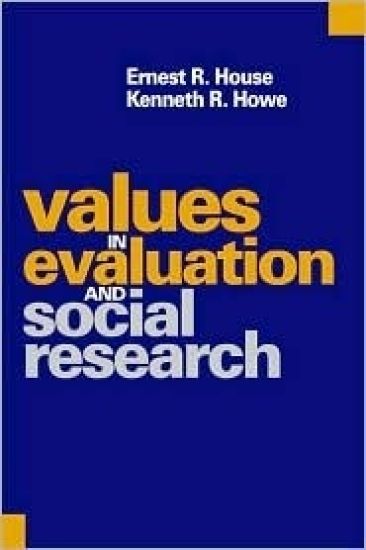
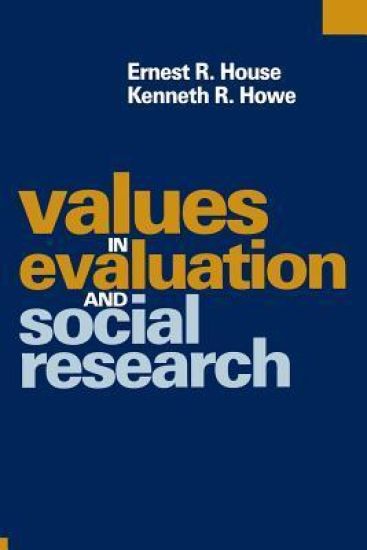
"Values in Evaluation is a breakthrough book that will change the way evaluators think about the relationship between facts and values. Using the tools of philosophy and insights from evaluation practice, the authors attack the inconsistencies in current thinking about the interplay of facts and values and give us an outline for reconstructing the approach to values within evaluation." --Gary T. Henry, Georgia State University "This book, as the title promises, unfurls the concept of value in the practice of program evaluation. The editors go well beyond recognizing that all data gathering and description are value laden and that all evaluators have value commitments shaping their designs. They examine the ethical and political burdens accompanying any evaluation contract. Out of an extended collaboration, Kenneth R. Howe and Ernest R. House together redirect their advocacy toward the pursuit of democracy." --Robert E. Stake, University of Illinois, Urbana-Champaign The authors use the tools of philosophy and the insights from evaluation practice to cut through current confusion about values and the interplay of facts and values. Four views of facts and values in evaluation are analyzed: those rooted in a fact-value dichotomy and those of radical constructivists, postmodernists, and deliberative democrats. The arguments are tough, the prose concise, and the insights compelling.
"Values in Evaluation is a breakthrough book that will change the way evaluators think about the relationship between facts and values. Using the tools of philosophy and insights from evaluation practice, the authors attack the inconsistencies in current thinking about the interplay of facts and values and give us an outline for reconstructing the approach to values within evaluation." --Gary T. Henry, Georgia State University "This book, as the title promises, unfurls the concept of value in the practice of program evaluation. The editors go well beyond recognizing that all data gathering and description are value laden and that all evaluators have value commitments shaping their designs. They examine the ethical and political burdens accompanying any evaluation contract. Out of an extended collaboration, Kenneth R. Howe and Ernest R. House together redirect their advocacy toward the pursuit of democracy." --Robert E. Stake, University of Illinois, Urbana-Champaign The authors use the tools of philosophy and the insights from evaluation practice to cut through current confusion about values and the interplay of facts and values. Four views of facts and values in evaluation are analyzed: those rooted in a fact-value dichotomy and those of radical constructivists, postmodernists, and deliberative democrats. The arguments are tough, the prose concise, and the insights compelling.