Kirjojen hintavertailu. Mukana 12 390 323 kirjaa ja 12 kauppaa.

Kirjahaku

Etsi kirjoja tekijän nimen, kirjan nimen tai ISBN:n perusteella.

1000 tulosta hakusanalla Leon Edel

Leon, Burgos and Salamanca a historical and descriptive account (Edition1)
The most dangerous threats to a business aren t the ones you see coming they re the ones quietly forming in the blind corners of your own decisions. From founder blindspots that distort judgment to subtle cultural shifts that weaken your team, the real killers of young companies are rarely dramatic they re silent, cumulative, and entirely avoidable if you know where to look. This book is a field guide to uncovering what most leaders miss. It exposes the hidden risks behind startup mistakes like hiring too quickly, feature creep product strategy that bloats your offering, misreading customer validation signals, or trusting revenue while ignoring startup cash flow management realities. Drawing on research, postmortems, and real-world cases, it reveals the patterns that sink companies early and the practical tools that keep them afloat. For founders, operators, and anyone building from zero to scale, this isn t theory. Each chapter translates complex psychology and business dynamics into actionable habits, from identifying hiring mistakes in startups before they erode culture, to spotting the warning signs of overbuilding, to creating a feedback system that tells you the truth before the market does. By the end, you ll have a sharper lens for decision-making, a framework to audit your own blindspots, and the ability to anticipate the problems others only recognize in hindsight. Whether you re navigating your first launch or steering a fast-growing team, this is your advantage in a world where early missteps can cost everything. If you want to avoid startup failure and build not just a product but a company that lasts, this is the book that will help you see what others miss and act before it s too late.
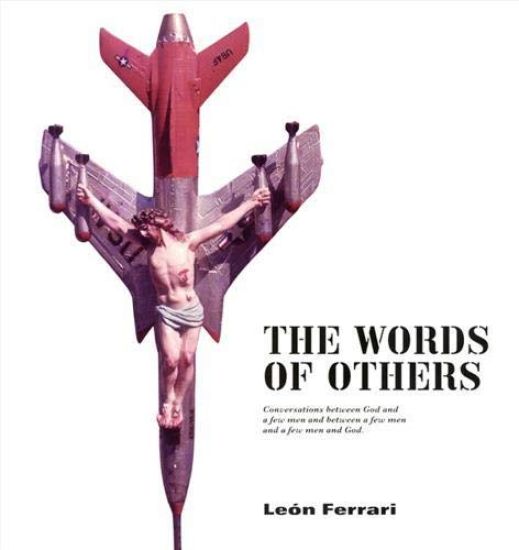
Leon Ferrari - The Words Of Others, Conversations Between God And A Few Men And Between A Few Men An
The Words of Others (Palabras ajenas)is the first full English translation of the Argentine artist Le n Ferrari's uncompromising literary masterpiece (1967). A critique of the Vietnam War and American imperial politics, the book weaves together hundreds of excerpts from newspapers, periodicals, works of history, the Bible, and other sources. Ferrari conceived a dialogue among supposed voices of authority, insisting on the equal complicity of individuals such as Hitler, Lyndon Johnson, Pope Paul VI, and God in perpetuating unending cycles of violence. This translation results from nearly three years of work, including thorough investigation of Ferrari's sources. It accompanies an exhibition of seminal works by Ferrari, curated by Ruth Est vez, Miguel A. L pez, and Agust n Diez Fischer at the Gallery at REDCAT as part of Pacific Standard Time's Los Angeles/Latin America initiative, which will see the text performed by a cast of over forty artists, actors, and other recognized figures.
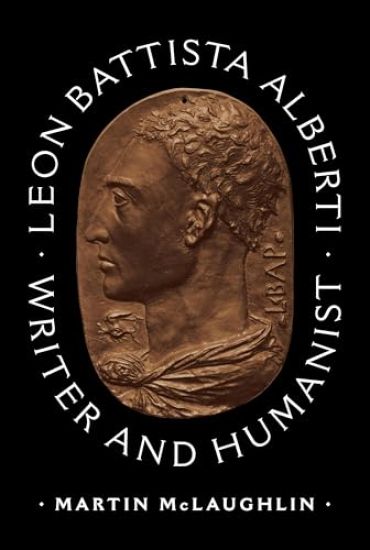
Leon Battista Alberti

Leon Battista Alberti

Martin McLaughlin

PRINCETON UNIVERSITY PRESS
2026
pokkari
The first book in English to examine Leon Battista Alberti’s major literary works in Latin and Italian, which are often overshadowed by his achievements in architecture Leon Battista Alberti (1404–1472) was one of the most prolific and original writers of the Italian Renaissance—a fact often eclipsed by his more celebrated achievements as an art theorist and architect, and by Jacob Burckhardt’s mythologizing of Alberti as a "Renaissance or Universal Man." In this book, Martin McLaughlin counters this partial perspective on Alberti, considering him more broadly as a writer dedicated to literature and humanism, a major protagonist and experimentalist in the literary scene of early Renaissance Italy. McLaughlin, a noted authority on Alberti, examines all of Alberti’s major works in Latin and the Italian vernacular and analyzes his vast knowledge of classical texts and culture. McLaughlin begins with what we know of Alberti’s life, comparing the facts laid out in Alberti’s autobiography with the myth created in the nineteenth century by Burckhardt, before moving on to his extraordinarily wide knowledge of classical texts. He then turns to Alberti’s works, tracing his development as a writer through texts that range from an early comedy in Latin successfully passed off as the work of a fictitious ancient author to later philosophical dialogues written in the Italian vernacular (a revolutionary choice at the time); humorous works in Latin, including the first novel in that language since antiquity; and the famous treatises on painting and architecture. McLaughlin also examines the astonishing range of Alberti's ancient sources and how this reading influenced his writing; what the humanist read, he argues, often explains what he wrote, and what he wrote reflected his relentless industry and pursuit of originality.