Kirjojen hintavertailu. Mukana 11 627 220 kirjaa ja 12 kauppaa.

Kirjahaku

Etsi kirjoja tekijän nimen, kirjan nimen tai ISBN:n perusteella.

1000 tulosta hakusanalla Louis F. Middlebrook

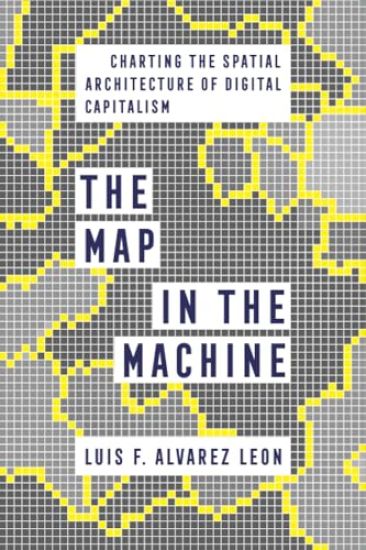
The Map in the Machine

The Map in the Machine

Luis F. Alvarez Leon

University of California Press
2024
pokkari
Digital technologies have changed how we shop, work, play, and communicate, reshaping our societies and economies. To understand digital capitalism, we need to grasp how advances in geospatial technologies underpin the construction, operation, and refinement of markets for digital goods and services. In The Map in the Machine, Luis F. Alvarez Leon examines these advances, from MapQuest and Google Maps to the rise of IP geolocation, ridesharing, and a new Earth Observation satellite ecosystem. He develops a geographical theory of digital capitalism centered on the processes of location, valuation, and marketization to provide a new vantage point from which to better understand, and intervene in, the dominant techno-economic paradigm of our time. By centering the spatiality of digital capitalism, Alvarez Leon shows how this system is the product not of seemingly intangible information clouds but rather of a vast array of technologies, practices, and infrastructures deeply rooted in place, mediated by geography, and open to contestation and change.
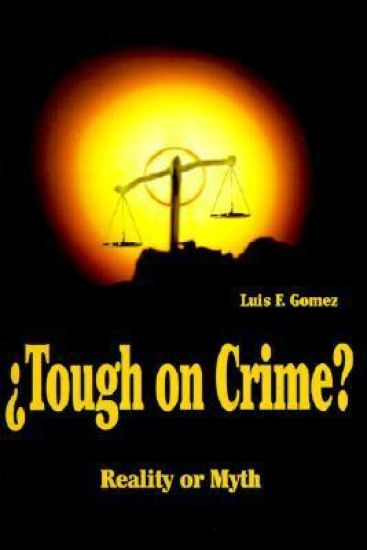
?Tough on Crime?

?Tough on Crime?

Luis F Gomez

iUniverse
2001
pokkari
Good people in trouble with the law, what a concept? Lousy, inept politicians can create the environment that puts you there. Read all about it!!Is the slogan "Equal Justice Under The Law" an honest claim? Read ¿Tough on Crime? Reality or Myth and find out.
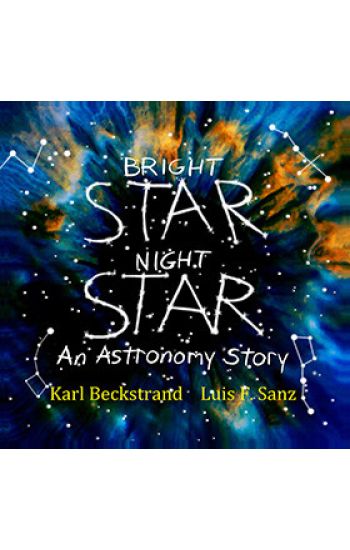
Bright Star, Night Star

Bright Star, Night Star

Luis F Sanz; Karl Beckstrand

Premio Publishing Gozo Books, LLC
2014
pokkari
"Guides readers into a world that is eye-opening and page-turning " - UP Authors' (2014 cover design award). A picture book introduction to the night sky-accompany a Native American child in identifying moons, meteors, constellations, galaxies, etc. (for children ages 4 - 9, preschool - 4th grade). Kids love this STEM book's finding activity and distinguishing between planets and stars. Online glossaryConstellation finding activityTongue twistersNative American charactersHard cover, soft cover, or ebookThis children's science book includes characters of color and rich illustrations of heavenly bodies by Spanish illustrator Luis F. Sanz (Why Juan Can't Sleep: A Mystery?) that aid vocabulary comprehension. About 400 read-aloud words by award-winning author and media professor Karl Beckstrand (see 60+ multicultural books-click Karl Beckstrand above).Discover Monument Valley and expose your child to the starry skies (and a little space science) tonight #3, Careers for Kids educational book series-get all four books Others in this grow up series: The Bridge of the Golden Wood: A Parable on How to Earn a Living; Ma MacDonald Flees the Farm; Great Cape o' Colors - Capa de colores (English-Spanish): ChildrenEarn.8.5"x8.5", 30 pg. full-color children's poem/astronomy book for kids/girls; Premio Publishing & Gozo Books (Worldwide rights under the sun (c) 2014). More inside images/video book trailer: PremioBooks, Baker & Taylor, B&N, Brodart, Follett, Gardner's, Herzberg/Perma-bound, Ingram, Biblio/EBSCO/ibooks/Kobo/Mackin/Smash/SCRIBD, libraries, Target and Walmart online. LCCN: 2013913403, JNF051040, JUV011040, JUV036000, JUV010000, JUV020000, JUV054000, GAM020000; ISBN Hard: 978-0985398880, ISBN Soft: 978-0615856155 (ebook ISBN: 978-1310128097)
How to Survive the Loss of a Parent

How to Survive the Loss of a Parent

Lois F. Akner

William Morrow Company
1994
nidottu
How to Survive the Loss of a Parent is a powerful, healing message for anyone going through or preparing for inevitable loss.Many people who usually function well are thrown for a loop when a parent dies. They're surprised at the complex feelings of love, loss, anger, and guilt, and at the unresolved issues that emerge. Therapist Lois F. Akner explains why the loss of a parent is different from other losses and, using examples from her experience, shows how it is possible to work through the grief.
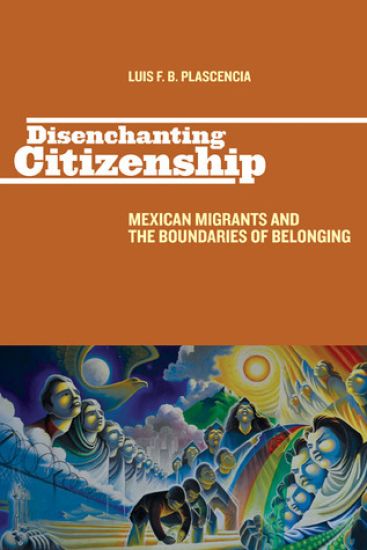
Disenchanting Citizenship

Disenchanting Citizenship

Luis F. B. Plascencia

Rutgers University Press
2012
sidottu
Central to contemporary debates in the United States on migration and migrant policy is the idea of citizenship, and—as apparent in the continued debate over Arizona’s immigration law SB 1070—this issue remains a focal point of contention, with a key concern being whether there should be a path to citizenship for “undocumented” migrants. In Disenchanting Citizenship, Luis F. B. Plascencia examines two interrelated issues: U.S. citizenship and the Mexican migrants’ position in the United States. The book explores the meaning of U.S. citizenship through the experience of a unique group of Mexican migrants who were granted Temporary Status under the “legalization” provisions of the 1986 IRCA, attained Lawful Permanent Residency, and later became U.S. citizens. Plascencia integrates an extensive and multifaceted collection of interviews, ethnographic fieldwork, ethno-historical research, and public policy analysis in examining efforts that promote the acquisition of citizenship, the teaching of citizenship classes, and naturalization ceremonies. Ultimately, he unearths citizenship’s root as a Janus-faced construct that encompasses a simultaneous process of inclusion and exclusion. This notion of citizenship is mapped on to the migrant experience, arguing that the acquisition of citizenship can lead to disenchantment with the very status desired. In the end, Plascencia expands our understanding of the dynamics of U.S. citizenship as a form of membership and belonging.
Disenchanting Citizenship

Disenchanting Citizenship

Luis F. B. Plascencia

Rutgers University Press
2012
nidottu
Central to contemporary debates in the United States on migration and migrant policy is the idea of citizenship, and—as apparent in the continued debate over Arizona’s immigration law SB 1070—this issue remains a focal point of contention, with a key concern being whether there should be a path to citizenship for “undocumented” migrants. In Disenchanting Citizenship, Luis F. B. Plascencia examines two interrelated issues: U.S. citizenship and the Mexican migrants’ position in the United States. The book explores the meaning of U.S. citizenship through the experience of a unique group of Mexican migrants who were granted Temporary Status under the “legalization” provisions of the 1986 IRCA, attained Lawful Permanent Residency, and later became U.S. citizens. Plascencia integrates an extensive and multifaceted collection of interviews, ethnographic fieldwork, ethno-historical research, and public policy analysis in examining efforts that promote the acquisition of citizenship, the teaching of citizenship classes, and naturalization ceremonies. Ultimately, he unearths citizenship’s root as a Janus-faced construct that encompasses a simultaneous process of inclusion and exclusion. This notion of citizenship is mapped on to the migrant experience, arguing that the acquisition of citizenship can lead to disenchantment with the very status desired. In the end, Plascencia expands our understanding of the dynamics of U.S. citizenship as a form of membership and belonging.
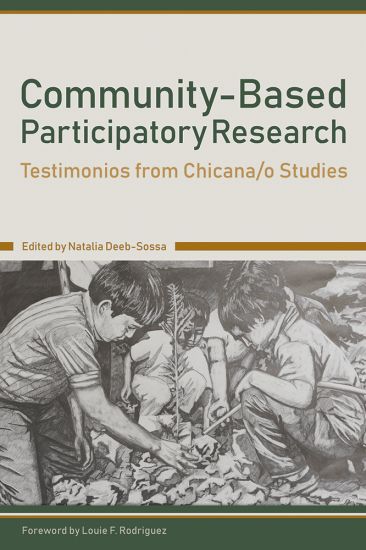
Community-Based Participatory Research

Community-Based Participatory Research

Louie F. Rodriguez

University of Arizona Press
2019
nidottu
Members of communities of color in the United States often struggle for equity, autonomy, survival, and justice. Community-Based Participatory Research is an edited volume from activist-scholars who present personal testimonies showcasing how community-based participatory research (CBPR) can lead to sustainable change and empowerment. Editor Natalia Deeb-Sossa has chosen contributors whose diverse interdisciplinary projects are grounded in politically engaged research in Chicanx and Latinx communities. The scholars' advocacy work is a core component of the research design of their studies, challenging the idea that research needs to be neutral or unbiased.The testimonies tell of projects that stem from community demands for truly collaborative research addressing locally identified issues and promoting community social change. Contributors share their personal experiences in conducting CBPR, focusing on the complexities of implementing this method and how it may create sustainable change and community empowerment. Along with a retrospective analysis of how CBPR has been at the center of the Chicana/o Movement and Chicana/o studies, the book includes a discussion of consejos y advertencias (advice and warnings). The most knowledgeable people on community issues are the very members of the communities themselves. Recognizing a need to identify the experiences and voices (testimonios) of communities of color, activist-­scholars showcase how to incorporate the perspectives of the true experts: the poor, women, farmworkers, students, activists, elders, and immigrants.
History of Macon County, Georgia

History of Macon County, Georgia

Louise F. Hays

Southern Historical Press
2023
nidottu
By: Louise F. Hays, Pub. 1935, reprinted 2023, 803 pages, Index, soft cover, ISBN #089308-776-9. Macon County was created in 1837 from Houston and Marion Counties. It is the parent to Peach and Taylor counties. Many of its the early settlers migrated from Newberry and Orangeburg Counties, South Carolina. This book begins with an account of the original inhabitants, the Muscogee, Euchee and Creek Indians, of the region. The book describes the rapid settlement of the area after the land between the Flint and Ocmulgee Rivers was secured by treaty and then disposed of by Lottery. A section of the book is devoted to lists of early settlers holding land grants in what was to become Macon County. The Civil War is given extensive coverage in chapters made up of excerpts from letters, unpublished stories, official documents, and personal reminiscences along with a chapter on Andersonville Prision which was located in the southern part of the county. Interwoven in and around the narrative is a vast amount of genealogical source material, such as lists of land lottery winners, county officials with dates of service, scores of Bible records and cemetery transcriptions, the Macon County tax list of 1838, marriage and will abstracts from 1858 to 1909. A Civil War Roster and a World War I veterans lit contain thousands of names. The genealogist of family historian will be delighted in the section entitled Families, it is approximately 178 pages of genealogies prepared by kinsfolk of the following Macon County families: Baldwin, Barksdale, Brown, Carmichael, Collins, Cornwell, Crocker, DeVaughn, Williams-Dawson, Derrick, DuPree, Dykes, Easterlin, Edwards, Edgeworth, Elsmore, English, Epting, Felton, Fokes, Frederick, Gardner, Greer, Griffin, Guerry, Haslam, Hays, Hall, Hamilton, Harrison, Harp, Haugabook, Hicks, Higgins, Hill, Johnson, Keen, King, Kleckley, Lewis, Lovejoy, Marshall, Massey, Maxwell, McCaskill, McKellar, McKenzie, Meadows, Moncrief, Montfort, Murray, Murph, Niles, Nixon, Osborne, Patrick, Peacock, Perry, Rice, Richardson, Robinson, Shealy, Slappey, Solomon, Smith, Sperry, Stubbs, Veal, Walker, Walters, Ware, Watts, Wicker, and Williams.
Social Rights in International Investment Law

Social Rights in International Investment Law

Luis F. Yanes

TAYLOR FRANCIS LTD
2025
sidottu
The book examines the complex relationship between international investment law and international human rights law, focusing on the privatisation of social rights services, such as water, health, education, and housing. Unlike other sectors, social rights services are subject to very specific human rights obligations under international law. Investment tribunals, however, have often overlooked these obligations. Through detailed analysis, the book demonstrates how investment law has been applied or interpreted in ways that hinder governments from adapting or improving social rights services, ultimately resulting in human rights violations. Nonetheless, the book proves that, within the existing scope of investment law, investment protections can be interpreted in a way that are compatible with human rights norms. Demonstrating how these two fields can be systemically integrated, the book provides a detailed method that can be used by investment tribunals to harmoniously interpret investment and human rights law. The book will be of interest to researchers and practitioners in the field of investment law, international law, and human rights law.
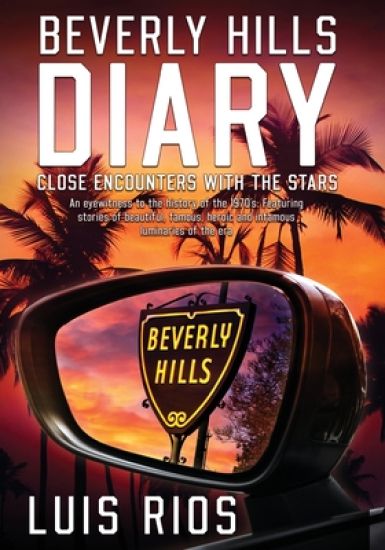
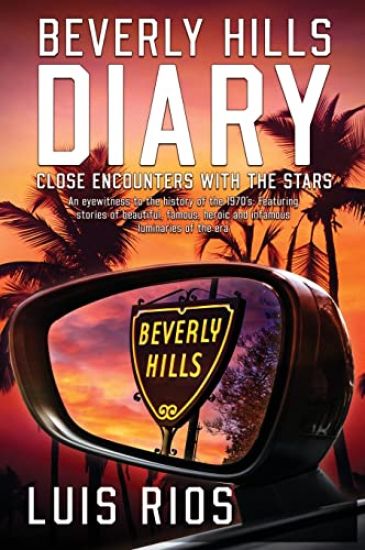
Beverly Hills Diary

Beverly Hills Diary

Luis F Rios

IngramSpark
2022
pokkari
Beverly Hills Diary: Close Encounters with the Stars is a fast-paced intimate account of meetings with luminaries and legendary individuals in the 1970s who shaped and influenced the history of the arts, film, literature and culture on a national and global scale both before and after the 1970's.The setting centers around the legendary Beverly Hills Hotel. The Hotel is an architecturally iconic gem that maintains a tradition going back over 100 years. The Hotel's historic Polo Lounge remains a place where leaders and celebrities of varied fields meet to socialize and make deals to this day.In Beverly Hills Diary you will meet fascinating culturally diverse individuals (some of whom were also villains) including Jack Nicholson, Orson Welles, Coronel Sanders, Sir Laurence Olivier, Mel Brooks, Ben Vereen, Farah Fawcett-Majors, Anthony Quinn, John Travolta, Clare Booth Luce, Steve Martin, Bernadette Peters, Michael Landon, Curtis Mayfield, Johnny Cash, Rita Hayworth, Bill Cosby, Rick Nelson, Adnan Khashogghi, Richard Harris, Connie Stevens, Margaux Hemingway, Chuck Norris, Halston, Angelica Huston, Patricia Hearst, Chevy Chase, Natalie Cole, George Benson, Peggy Lee, Eva Gabor, Bob Denver, Rich Little, Linda Carter, Chuck Barris, Jim Henson, Victoria Principal, Evel Knievel, Sally Struthers, Bo Diddley, Graham Kerr, Pat Boone, Burgess Meredith, Dyan Cannon, Jimi Hendrix, Burt Reynolds, Dave Clark, Louis L'Amour, President Jimmy Carter, and other historic personalities.
Beverly Hills Diary

Beverly Hills Diary

Luis F Rios

IngramSpark
2022
sidottu
Beverly Hills Diary: Close Encounters with the Stars is a fast-paced intimate account of meetings with luminaries and legendary individuals in the 1970s who shaped and influenced the history of the arts, film, literature and culture on a national and global scale both before and after the 1970's.The setting centers around the legendary Beverly Hills Hotel. The Hotel is an architecturally iconic gem that maintains a tradition going back over 100 years. The Hotel's historic Polo Lounge remains a place where leaders and celebrities of varied fields meet to socialize and make deals to this day.In Beverly Hills Diary you will meet fascinating culturally diverse individuals (some of whom were also villains) including Jack Nicholson, Orson Welles, Coronel Sanders, Sir Laurence Olivier, Mel Brooks, Ben Vereen, Farah Fawcett-Majors, Anthony Quinn, John Travolta, Clare Booth Luce, Steve Martin, Bernadette Peters, Michael Landon, Curtis Mayfield, Johnny Cash, Rita Hayworth, Bill Cosby, Rick Nelson, Adnan Khashogghi, Richard Harris, Connie Stevens, Margaux Hemingway, Chuck Norris, Halston, Angelica Huston, Patricia Hearst, Chevy Chase, Natalie Cole, George Benson, Peggy Lee, Eva Gabor, Bob Denver, Rich Little, Linda Carter, Chuck Barris, Jim Henson, Victoria Principal, Evel Knievel, Sally Struthers, Bo Diddley, Graham Kerr, Pat Boone, Burgess Meredith, Dyan Cannon, Jimi Hendrix, Burt Reynolds, Dave Clark, Louis L'Amour, President Jimmy Carter, and other historic personalities.
Composting and Recycling Municipal Solid Waste

Composting and Recycling Municipal Solid Waste

Luis F. Diaz; Clarence G. Golueke; George M. Savage; Linda L. Eggerth

CRC Press
2017
sidottu
Composting and Recycling Municipal Solid Waste is a comprehensive guide that identifies, describes, explains, and evaluates the options available when composting and recycling municipal solid waste (MSW). The book begins with an introductory chapter on the nature of MSW and the importance of solid waste management programs and resource recovery. Chapter 2 discusses MSW storage and collection, with emphasis on recyclables. Chapter 3 examines issues involved in determining the quantity, composition, and key physical characteristics of the MSW to be managed and processed. The book's other chapters cover topics such as the steps required for processing MSW for material recovery, the use of uncomposted organic matter as a soil amendment, composting and use of compost product, the marketing of recyclables, biogasification, and integrated waste management. Composting and Recycling Municipal Solid Waste provides essential information needed by solid waste professionals, consultants, regulators, and planners to arrive at rational decisions regarding available economic and technological resources for MSW composting and recycling.
Composting and Recycling Municipal Solid Waste

Composting and Recycling Municipal Solid Waste

Luis F. Diaz; Clarence G. Golueke; George M. Savage; Linda L. Eggerth

CRC Press
2019
nidottu
Composting and Recycling Municipal Solid Waste is a comprehensive guide that identifies, describes, explains, and evaluates the options available when composting and recycling municipal solid waste (MSW). The book begins with an introductory chapter on the nature of MSW and the importance of solid waste management programs and resource recovery. Chapter 2 discusses MSW storage and collection, with emphasis on recyclables. Chapter 3 examines issues involved in determining the quantity, composition, and key physical characteristics of the MSW to be managed and processed. The book's other chapters cover topics such as the steps required for processing MSW for material recovery, the use of uncomposted organic matter as a soil amendment, composting and use of compost product, the marketing of recyclables, biogasification, and integrated waste management. Composting and Recycling Municipal Solid Waste provides essential information needed by solid waste professionals, consultants, regulators, and planners to arrive at rational decisions regarding available economic and technological resources for MSW composting and recycling.
Resource Recovery From Municipal Solid Wastes

Resource Recovery From Municipal Solid Wastes

Luis F. Diaz; George M. Savage; Clarence G. Golueke

CRC Press
2017
sidottu
This text includes two volumes discussing resource recovery form municipal solid wastes. Volume 2 discusses in more detail the final processing including; incineration, preparation and use of refuse-derived fuel, biological resource recoveyr, biogas production, hydrolysis and single cell protein and ethanol production, composting, environmental aspects, and landfill.