Kirjojen hintavertailu. Mukana 12 390 323 kirjaa ja 12 kauppaa.

Kirjahaku

Etsi kirjoja tekijän nimen, kirjan nimen tai ISBN:n perusteella.

1000 tulosta hakusanalla Marian Keyes

Guidance of Young Children

Guidance of Young Children

Marian Marion

Pearson
2018
nidottu
Promote positive child guidance and management strategiesWritten in a conversational style, yet solidly grounded in child development theory and research, Guidance of Young Children, 10th Edition focuses on positive and developmentally appropriate guidance of young children. Based on the author’s belief that adults need to have realistic expectations of children, the book emphasizes understanding young children’s development in addition to major guidance theories. Real-world examples and case studies illustrate guidance in action, while analysis and application activities give readers a chance to construct their own basic approach to child guidance. With this foundation in place, teachers are encouraged to think critically and make intentional, informed decisions that positively impact the children in their care.The 10th Edition enhances its focus on positive guiding strategies with new information about the authoritative caregiving style, an emphasis on encouragement over praise, additional information about the high rate of childcare and preschool expulsions, and more school-based examples at the pre-K and K level.Also available with the Enhanced Pearson eTextThe Enhanced Pearson eText provides a rich, interactive learning environment designed to improve student mastery of content with embedded videos, reflection questions, and application exercises. Note: You are purchasing a standalone product; the Enhanced Pearson eText does not come packaged with this content. Students, if interested in purchasing this title with the Enhanced Pearson eText, ask your instructor to confirm the correct package ISBN and Course ID. Instructors, contact your Pearson representative for more information. If you would like to purchase both the physical text and the Enhanced Pearson eText, search for:013474733X / 9780134747330 Guidance of Young Children, with Enhanced Pearson eText -- Access Card PackagePackage consists of: 0134748115 / 9780134748115 Guidance of Young Children, Enhanced Pearson eText -- Access Card0134748158 / 9780134748153 Guidance of Young Children

Correspondence and Disquotation

Correspondence and Disquotation

Marian David

Oxford University Press Inc
1994
sidottu
Marian David defends the correspondence theory of truth against the disquotational theory of truth, its current major rival. The correspondence theory asserts that truth is a philosophically rich and profound notion which needs serious explanation. Disquotationalism is a radically deflationary philosophy of truth inspired by Tarski and propagated by Quine and others. It rejects the correspondence theory, insists truth is anemic, and advances an "anti-theory" of truth that is essentially a collection of platitudes: "Snow is white" is true only if snow is actually white; "Grass is green" is true only if grass is actually green. According to disquotationalists the only profound insight about truth is that it lacks profundity. David contrasts the correspondence theory with disquotationalism and then develops the latter position in rich detail - more than has been available in previous literature - to show its faults. He demonstrates that disquotationalism is not a tenable theory of truth, as it has too many absurd consequences.
The New Food Fight

The New Food Fight

Marian Tanofsky-Kraff; Natasha A. Schvey; Robyn O. Pashby; Natasha L. Burke

OXFORD UNIVERSITY PRESS INC
2025
sidottu
Eat this, not that. Enjoy all foods in moderation. Love yourself. Lose weight. These are just a few of the contradictory messages many of us face every day. No wonder we've never felt more confused about what to eat, how our bodies "should" look, and what it means to be "healthy." Through personal narratives, clinical examples, extant research, as well as expert and stakeholder insights, The New Food Fight offers an incisive guide to the complex and increasingly polarized fields of eating disorders and weight management. Written with both expertise and empathy, the authors unpack common myths, address misinformation, and provide compelling recommendations to unite two fields that, as it turns out, may be more alike than they are different. A must-read for anyone who has grappled with body image concerns, deliberated over what to eat, or found themselves torn between self-acceptance and wanting to change their body.
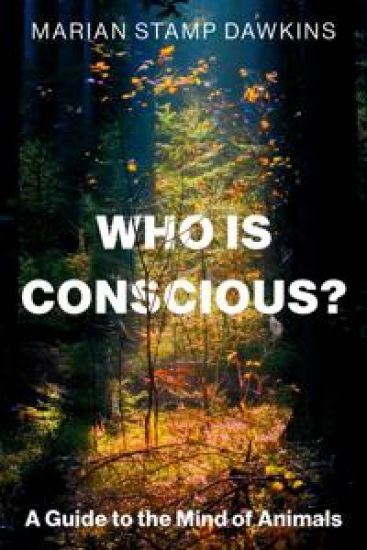
Who is Conscious?

Who is Conscious?

Marian Stamp Dawkins

OXFORD UNIVERSITY PRESS INC
2026
sidottu
Consciousness is the most fascinating but tantalizingly difficult topic in biology. Although many people now believe that mammals, birds, and possibly all vertebrates are conscious, there are also claims that many other animals such as crabs and insects may be conscious too. Such claims, if true, would have major implications for what we eat, how we control pests, and for our relationship with the animal world. Now, more than ever, it is important to question the evidence and ask: what do we really know about animal consciousness? Who is Conscious? is an adventure into animal minds. It is a guide into the conscious experiences of animals with no words to tell us what they might be thinking or feeling. It proposes some simple questions to help us decide which evidence to believe. It looks at recent evidence for consciousness in various animal species and asks how well it stands up to being challenged. It describes research on human consciousness and asks whether we should conclude that non-humans are conscious too.
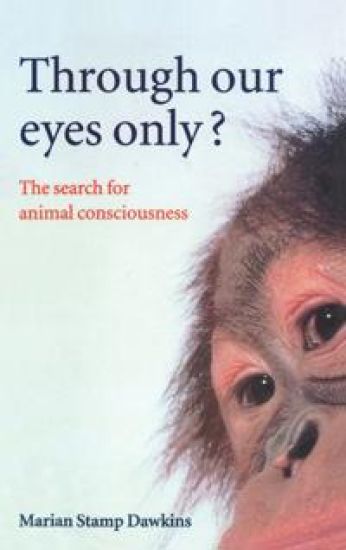
Through Our Eyes Only?

Through Our Eyes Only?

Marian Stamp Dawkins

Oxford University Press
1998
nidottu
Through Our Eyes Only? is an immensely engaging exploration of one of the greatest remaining biological mysteries: the possibility of conscious experiences in non-human animals. Dawkins argues that the idea of consciousness in other species has now progressed from a vague possibility to a plausible, scientifically respectable view. Written in an accessible and entertaining style, this book aims to show how near -- and how far -- we are to understanding what goes on in the minds of other animals. 'Her approach ... is impeccable ... Her writing is highly accessible, lively and illustrative.' - Booklist on the hardback edition.
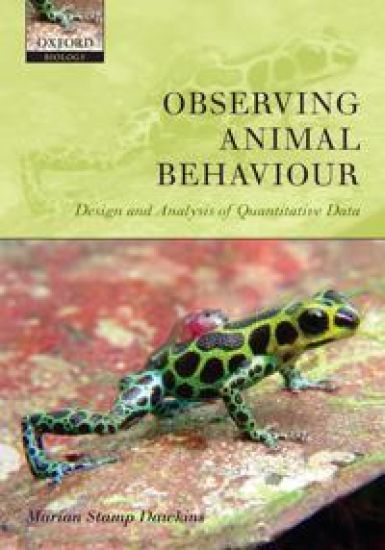
Observing Animal Behaviour

Observing Animal Behaviour

Marian Stamp Dawkins

Oxford University Press
2007
nidottu
This book introduces the reader to the power of observation before, and sometimes instead of, experimental manipulation in the study of animal behaviour. It starts with simple and easily accessible methods suitable for student projects, before going on to demonstrate the possibilities that now exist for far more sophisticated analyses of observational data. At a time when animal welfare considerations are attracting political as well as scientific debate, the potential for non-intrusive studies on animals is being increasingly recognized. Observation emerges as a valuable alternative approach, often yielding highly informative results in situations (such as on zoos, farms or for wild animals) where more invasive experimental techniques would be undesirable, unethical or just plain impossible. However, to justify its place alongside experimentation as a rigorous scientific method, observation needs to be just as disciplined and systematic and have just as much attention paid to project design in the way that observations are made and recorded. Observing Animal Behaviour takes the reader through all these stages: from the initial observations, to the formulation of hypotheses, and their subsequent testing with further systematic observations. Although designed principally as a companion text for advanced undergraduate and students taking courses in animal behaviour, this accessible text will be essential reading for anyone wanting to study animal behaviour using observational methods rather than experimentation, and assumes no previous knowledge of animals, statistics or scientific method. It will be of particular relevance and use to those professional researchers and consultants in the behavioural sciences who seek a compact but comprehensive introduction to the quantitative observation of animal behaviour.
Leadership

Leadership

Marian Iszatt-White; Christopher Saunders

Oxford University Press
2020
nidottu
Written by an author team from one of Europe's leading management schools, Leadership encourages critical appraisal of the mainstream viewpoints and personal reflection on leadership experience in a way that is both clear and highly engaging. Divided into four parts, the book brings together core themes and debates within the field and provides a wealth of diverse real-world case studies to help readers make the transition from theory to practice. The first part of the book, 'Defining the Terrain', lays the foundation for subsequent chapters by exploring what we mean by leadership, how it compares to management, and why we study it. The second and third parts of the book build on this, addressing core topics that have shaped leadership thinking for academics and practitioners over the last fifty years; as well as considering the cutting-edge debates within the field and tackling issues such as leadership-as-practice, strategic leadership, ethical leadership, and leading change. Finally, the fourth part, 'Developing Leaders', explores traditional and state-of-the-art development techniques, before encouraging the reader to consider their own leadership through identity work. Leadership mappings in the final chapter assimilate the range of theories and themes from the previous chapters, providing a framework for comparisons and connections throughout the book. In addition to the book's thematic approach, carefully designed learning features invite readers to exercise critical thinking skills and develop their own practice and perspectives on the material presented. This book has dedicated online resources, which include: Student resources: Web links to related sites Links to feeds from topical journals Online glossary Lecturer resources: Integrative case studies PowerPoint slides Suggestions for discussion points Video clips of inspirational speeches and discussions on leadership
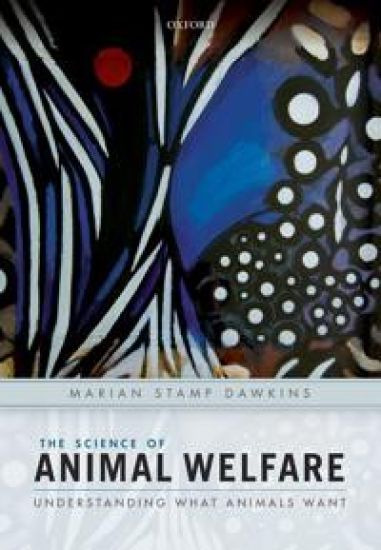
The Science of Animal Welfare

The Science of Animal Welfare

Marian Stamp Dawkins

Oxford University Press
2021
sidottu
What is animal welfare? Why has it proved so difficult to find a definition that everyone can agree on? This concise and accessible guide is for anyone who is interested in animals and who has wondered how we can assess their welfare scientifically. It defines animal welfare as 'health and animals having what they want', a definition that can be easily understood by scientists and non-scientists alike, expresses in simple words what underlies many existing definitions, and shows what evidence we need to collect to improve animal welfare in practice. Above all, it puts the animal's own point of view at the heart of an assessment of its welfare. But, can we really understand what animals want? A consistent theme running through the book is that not only is it possible to establish what animals want, but that this information is vital in helping us to make sense of the long and often confusing list of welfare measures that are now in use such as 'stress' and 'feel good hormones', expressive sounds and gestures, natural behaviour, cognitive bias, and stereotypies. Defining welfare as 'health and what animals want' allows us to distinguish between measures that are simply what an animal does when it is alert, aroused, or active and those measures that genuinely allow us to distinguish between situations the animals themselves see as positive or negative. Sentience (conscious feelings of pleasure, pain, and suffering) is for many people the essence of what is meant by welfare, but studying consciousness is notoriously difficult, particularly in non-human species. These difficulties are discussed in the context of our current - and as yet incomplete - knowledge of human and animal consciousness. Finally, the book highlights some key ideas in the relationship between animal welfare science and animal ethics and shows how closely the well-being of humans is linked to that of other animals. The Science of Animal Welfare is an ideal companion for undergraduate and graduate students taking courses in animal behaviour and welfare, as well as for professional researchers, practitioners and animal welfare consultants. At the same time, it is easily understandable to non-scientists and anyone without prior knowledge but with an interest in animals and the rapidly evolving science of animal welfare.
The Science of Animal Welfare

The Science of Animal Welfare

Marian Stamp Dawkins

Oxford University Press
2021
nidottu
What is animal welfare? Why has it proved so difficult to find a definition that everyone can agree on? This concise and accessible guide is for anyone who is interested in animals and who has wondered how we can assess their welfare scientifically. It defines animal welfare as 'health and animals having what they want', a definition that can be easily understood by scientists and non-scientists alike, expresses in simple words what underlies many existing definitions, and shows what evidence we need to collect to improve animal welfare in practice. Above all, it puts the animal's own point of view at the heart of an assessment of its welfare. But, can we really understand what animals want? A consistent theme running through the book is that not only is it possible to establish what animals want, but that this information is vital in helping us to make sense of the long and often confusing list of welfare measures that are now in use such as 'stress' and 'feel good hormones', expressive sounds and gestures, natural behaviour, cognitive bias, and stereotypies. Defining welfare as 'health and what animals want' allows us to distinguish between measures that are simply what an animal does when it is alert, aroused, or active and those measures that genuinely allow us to distinguish between situations the animals themselves see as positive or negative. Sentience (conscious feelings of pleasure, pain, and suffering) is for many people the essence of what is meant by welfare, but studying consciousness is notoriously difficult, particularly in non-human species. These difficulties are discussed in the context of our current - and as yet incomplete - knowledge of human and animal consciousness. Finally, the book highlights some key ideas in the relationship between animal welfare science and animal ethics and shows how closely the well-being of humans is linked to that of other animals. The Science of Animal Welfare is an ideal companion for undergraduate and graduate students taking courses in animal behaviour and welfare, as well as for professional researchers, practitioners and animal welfare consultants. At the same time, it is easily understandable to non-scientists and anyone without prior knowledge but with an interest in animals and the rapidly evolving science of animal welfare.
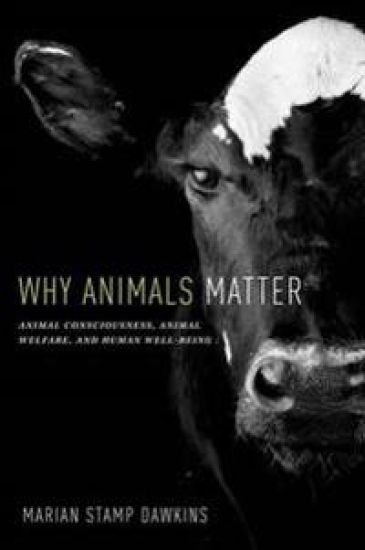
Why Animals Matter

Why Animals Matter

Marian Stamp Dawkins

Oxford University Press Inc
2012
nidottu
Renowned authority Marian Stamp Dawkins' new work presents an illuminating and urgent argument for the need to rethink animal welfare. In the vein of Temple Grandin's work, Dawkins explains that this welfare must be made to work in practice to have any effect, and cannot be tinged by anthropomorphism and claims of animal consciousness, which lack firm empirical evidence and are often freighted with controversy and high emotions. Instead, animal-welfare efforts must focus on science and on fully appreciating the critical role animals play in human welfare. With growing concern over such issues as climate change and food shortages, how we treat those animals on which we depend for survival needs to be put squarely on the public agenda. Dawkins seeks to do this by offering a more complete understanding of how animals help us. In the end, it is human self-interest that will drive changes in our treatment of animals. Taking positions that might surprise and will certainly challenge animal lovers, Dawkins presents a persuasive argument for why animals truly matter.
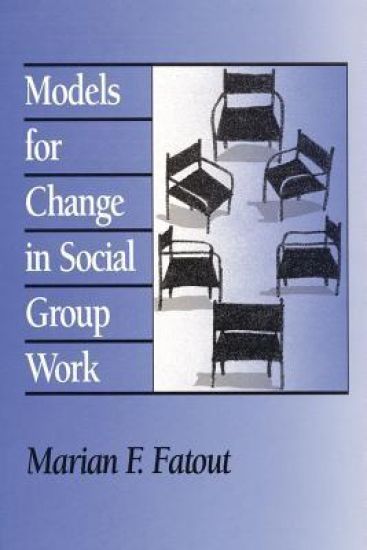
Models for Change in Social Group Work

Models for Change in Social Group Work

Marian Fatout

AldineTransaction
1992
sidottu
Intended for beginning students as was as for practitioners, this volume shows how to make maximum use of the various models available for social group work. Dr. Fatout explores and delineates the “mainstream model,” devotes separate and incisive sections to notable specific approaches, and offers suggestions on ways in which social workers can utilize these strategies in an effective and systematic fashion.
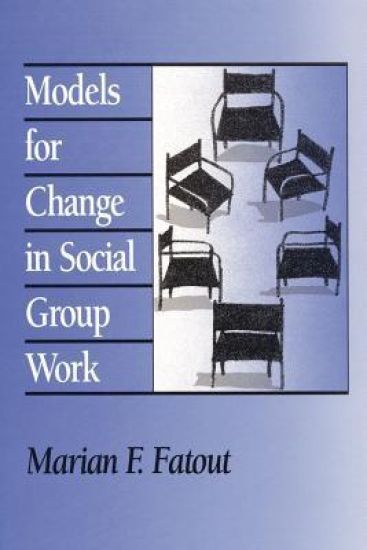
Models for Change in Social Group Work

Models for Change in Social Group Work

Marian Fatout

AldineTransaction
1992
nidottu
Intended for beginning students as was as for practitioners, this volume shows how to make maximum use of the various models available for social group work. Dr. Fatout explores and delineates the “mainstream model,” devotes separate and incisive sections to notable specific approaches, and offers suggestions on ways in which social workers can utilize these strategies in an effective and systematic fashion.
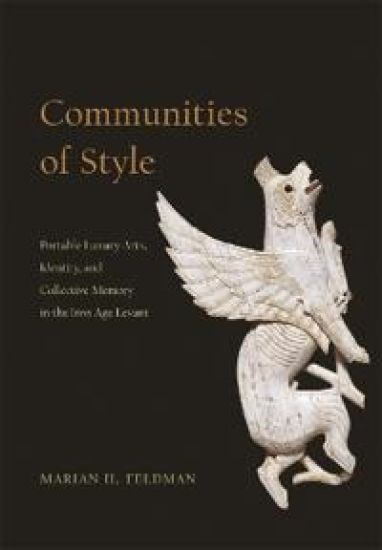
Communities of Style

Communities of Style

Marian H. Feldman

University of Chicago Press
2014
sidottu
Communities of Style examines the production and circulation of portable luxury goods throughout the Levant in the early Iron Age (1200-600 BCE). In particular it focuses on how societies in flux came together around the material effects of art and style, and their role in collective memory. Marian H. Feldman brings her dual training as an art historian and an archaeologist to bear on the networks that were essential to the movement and trade of luxury goods - particularly ivories and metal works - and how they were also central to community formation. The interest in, and relationships to, these art objects, Feldman shows, led to wide-ranging interactions and transformations both within and between communities. Ultimately, she argues, the production and movement of luxury goods in the period demands a rethinking of our very geo-cultural conception of the Levant, as well as its influence beyond what have traditionally been thought of as its borders.
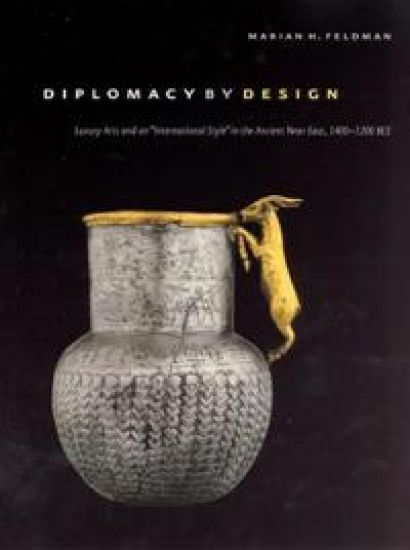
Diplomacy by Design

Diplomacy by Design

Marian H. Feldman

University of Chicago Press
2005
sidottu
Art and international relations during the Late Bronze Age formed a symbiosis as expanded travel and written communications fostered unprecedented cultural exchange across the Mediterranean. Diplomacy in these new political and imperial relationships was often maintained through the exchange of lavish art objects and luxury goods. The items bestowed during this time shared a repertoire of imagery that modern scholars call the first International Style in the history of art. Marian H. Feldman's "Diplomacy by Design" examines the profound connection between art produced during this period and its social context, revealing inanimate objects as catalysts - or even participants - in human dynamics. Feldman's fascinating study shows the ways in which the exchange of these works of art actively mediated and strengthened political relations, intercultural interactions, and economic negotiations. Previous studies of this international style have focused almost exclusively on stylistic attribution at the expense of social contextualization. Written by a specialist in ancient near Eastern art and archaeology who has excavated and traveled extensively in this area of the world, "Diplomacy by Design" provides a much broader consideration of the symbolic power of material culture and its centrality in the construction of human relations.
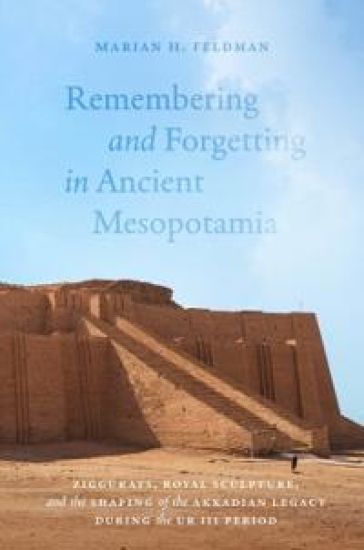
Remembering and Forgetting in Ancient Mesopotamia

Remembering and Forgetting in Ancient Mesopotamia

Marian H. Feldman

THE UNIVERSITY OF CHICAGO PRESS
2025
sidottu
A study of how our understanding of Akkadian history has been shaped by subsequent dynasties. In this innovative new study of ancient Mesopotamian art and architecture, Marian H. Feldman examines the complex legacy of the Akkadian dynasty, which spanned ca. 2350-2150 BCE in the region now known as southern Iraq. The Akkadian state played an essential role in the formation and expression of subsequent political entities in the region, yet our understanding of this period is based primarily on the historical lens of their successors, in particular the rulers of the Third Dynasty of Ur (ca. 2100-1000 BCE). Focusing on four remaining ziggurats in Ur, Eridu, Uruk, and Nippur, as well as surviving statues and steles, Feldman examines how the Ur III rulers selectively curated and erased Akkadian structures and monuments to serve their own political ambitions. Analyzing the archaeological evidence of Ur III building practices and the display of Akkadian royal sculpture, she considers the role of sacred spaces in our knowledge of the period and imagines how the cultivation of the Akkadian narrative helped the Ur III dynasty centralize its power. In so doing, this book proposes a new way to understand the impact of the survival—or erasure—of architectural and artistic remains on collective and historical memory.
Next. Now.

Next. Now.

Marian Salzman; Ira Matathia

Palgrave Macmillan
2007
nidottu
From the world-renowned trendspotting duo who has predicted everything from metrosexuality to the growth of global brands comes a new, enlightening look at the future. Based on intensive research and interviews as well as the authors' real-world and business experience in locations across the globe, this book yields surprising conclusions about everything from work (the end of permanent full-time employment) to sex (disappearing gender boundaries) to business (the emergence of true one-to-one marketing and the birth of 'Chindia'). It is essential reading for managers, marketers, and just about everyone else.
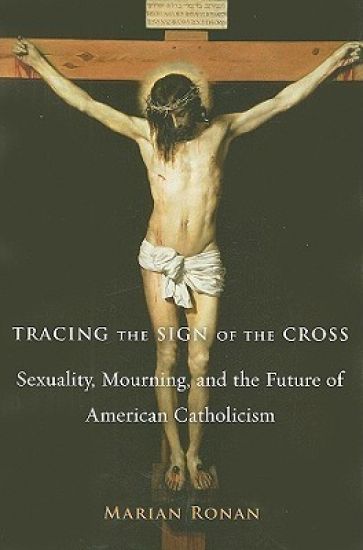
Tracing the Sign of the Cross

Tracing the Sign of the Cross

Marian Ronan

Columbia University Press
2009
sidottu
Following World War II, millions of U.S. Catholics were poised to attain the American dream, while at Vatican Council II, the liberal vision of the church seemed finally to triumph. Yet by the end of the twentieth century, American Catholicism was in crisis, plagued by grave ideological divisions; a dwindling pool of priests, nuns, and monks; and declining financial resources. What went wrong? In Tracing the Sign of the Cross, Marian Ronan identifies the roots of this crisis in an inability on the part of American Catholics to mourn a variety of losses suffered in the last third of the twentieth century. Drawing on the work of four writers with distinctively Catholic imaginations, Ronan argues that endless battles over sexuality and gender in particular have kept American Catholics from confronting these losses, thus jeopardizing the future of Catholicism. The writings of James Carroll, the archetypal liberal American Catholic, form the basis of Ronan's exploration of the church in the decades following Vatican II. Carroll's writings, especially his memoir, An American Requiem, seem to embody the very engagement with loss Ronan calls for-yet a highly gendered pattern of resistance to mourning emerges throughout Carroll's writing. Ronan discerns a similar Catholic "inability to mourn" in the early works of the novelist Mary Gordon, the feminist philosopher of science Donna Haraway, and the essayist Richard Rodriguez. While Gordon's characters gradually engage their profound losses, Haraway's female cyborg dons a crown of thorns, and Rodriguez confronts his own gay/brown identity-contributing in all cases to a new and chastened vision of the church. Framed by the author's own personal experience, Tracing the Sign of the Cross is an intimate and persuasive account of Catholic possibility in a postmodern world.
Racial Disproportionality in Child Welfare

Racial Disproportionality in Child Welfare

Marian S Harris

Columbia University Press
2014
sidottu
The number of children of color entering the child welfare system in the United States is disproportionately high. Not only are children of color removed from parental custody and placed in care more often than their white counterparts, but they also remain in care longer, receive fewer services, and have less contact with the caseworkers assigned to them. This book identifies the practice and policy changes required to successfully address the unequal treatment of children of color in the child welfare system and their implications for social work education, caseworker training, and institutional change. It critiques many of the existing social welfare acts and policies in terms of their treatment of children of color, and it provides best practices for each decision point in the child welfare process and for cultural competency measures and training. The text offers extensive measurement instruments that agencies can use to assess and correct institutional racism. To improve social work education, the book includes several model syllabi for the curriculum, and to deepen the discipline's engagement with the issue of institutional racism, the text concludes with a discussion of future directions for research and policy.
Racial Disproportionality in Child Welfare

Racial Disproportionality in Child Welfare

Marian S Harris

Columbia University Press
2014
pokkari
The number of children of color entering the child welfare system in the United States is disproportionately high. Not only are children of color removed from parental custody and placed in care more often than their white counterparts, but they also remain in care longer, receive fewer services, and have less contact with the caseworkers assigned to them. This book identifies the practice and policy changes required to successfully address the unequal treatment of children of color in the child welfare system and their implications for social work education, caseworker training, and institutional change. It critiques many of the existing social welfare acts and policies in terms of their treatment of children of color, and it provides best practices for each decision point in the child welfare process and for cultural competency measures and training. The text offers extensive measurement instruments that agencies can use to assess and correct institutional racism. To improve social work education, the book includes several model syllabi for the curriculum, and to deepen the discipline's engagement with the issue of institutional racism, the text concludes with a discussion of future directions for research and policy.