Kirjojen hintavertailu. Mukana 11 508 326 kirjaa ja 12 kauppaa.

Kirjahaku

Etsi kirjoja tekijän nimen, kirjan nimen tai ISBN:n perusteella.

1000 tulosta hakusanalla Mark Rowe

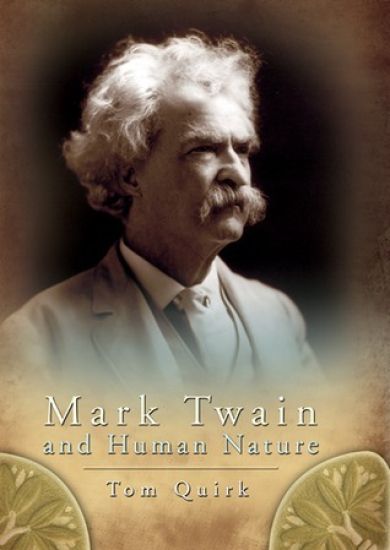
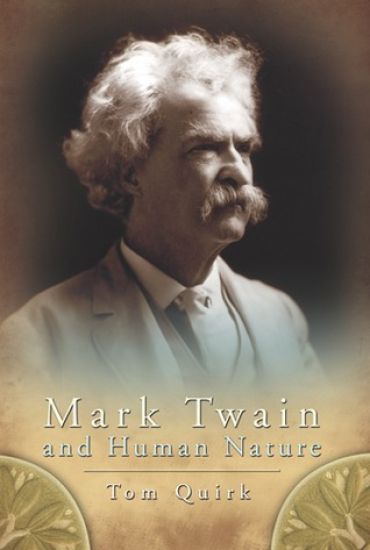
Mark Twain and Human Nature

Mark Twain and Human Nature

Tom Quirk

University of Missouri Press
2007
sidottu
Mark Twain once claimed that he could read human character as well as he could read the Mississippi River, and he studied his fellow humans with the same devoted attention. In both his fiction and his nonfiction, he was disposed to dramatize how the human creature acts in a given environment - and to understand why. Now one of America's preeminent Twain scholars takes a closer look at this icon's abiding interest in his fellow creatures. In seeking to account for how Twain might have reasonably believed the things he said he believed, Tom Quirk has interwoven the author's inner life with his writings to produce a meditation on how Twain's understanding of human nature evolved and deepened and to show that this was one of the central preoccupations of his life. Quirk charts the ways in which this humorist and occasional philosopher contemplated the subject of human nature from early adulthood until the end of his life, revealing how his outlook changed over the years. His travels, his readings in history and science, his political and social commitments, and his own pragmatic testing of human nature in his writing contributed to Twain's mature view of his kind. Quirk establishes the social and scientific contexts that clarify Twain's thinking, and he considers not only Twain's stated intentions about his purposes in his published works but also his ad hoc remarks about the human condition. Viewing both major and minor works through the lens of Twain's shifting attitude, Quirk provides refreshing new perspectives on the master's oeuvre. He offers a detailed look at the travel writings, including ""The Innocents Abroad"" and ""Following the Equator"", the novels, including ""The Adventures of Tom Sawyer"", ""Adventures of Huckleberry Finn"", and ""Pudd'nhead Wilson""; and an important review of works from Twain's last decade, including fantasies centering on man's insignificance in ""Creation"", works preoccupied with isolation - notably ""No. 44, The Mysterious Stranger"" and ""Eve's Diary"" - and polemical writings such as ""What is Man?"" Comprising the well-seasoned reflections of a mature scholar, this persuasive and eminently readable study comes to terms with the life-shaping ideas and attitudes of one of America's best-loved writers. ""Mark Twain and Human Nature"" offers readers a better understanding of Twain's intellect as it enriches our understanding of his craft and his ineluctable humor.
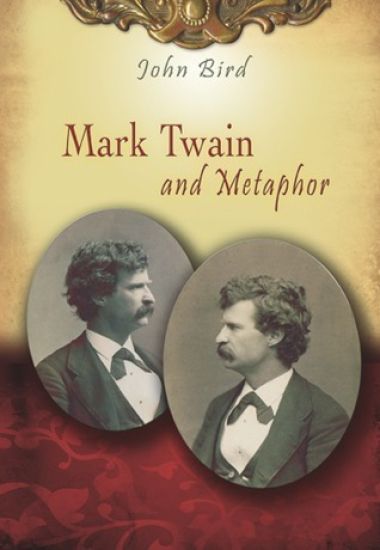
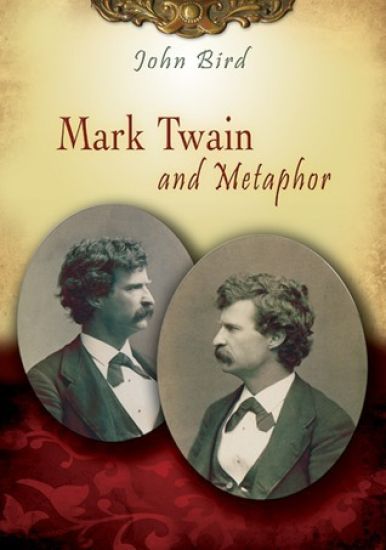
Mark Twain and Metaphor

Mark Twain and Metaphor

John Bird

University of Missouri Press
2007
sidottu
Metaphor theory, observes John Bird, is like Mark Twain: both seem simple upon first introduction. Now, in the most complete study to date of Twain's use of figurative language, a veteran Twain scholar tackles the core of his writing and explores it with theoretical approaches that have rarely been applied to Twain, providing new insights into how he imagined his world - and the singular ways in which he expressed himself. From ""The Jumping Frog"" to the late dream narratives, Bird considers Twain's metaphoric construction over his complete career and especially sheds new light on his central texts: Roughing It; The Adventures of Tom Sawyer; Adventures of Huckleberry Finn; A Connecticut Yankee in King Arthur's Court; Pudd'nhead Wilson; and No. 44, The Mysterious Stranger. He reconsiders ""Old Times on the Mississippi"" as the most purely metaphorical of Twain's writings, goes on to look at how Twain used metaphor and talked about it in a variety of works and genres, and even argues that Clemens' pseudonym is not so much an alter ego as a metaphorized self. By offering insight into how Twain handled figurative language during the composing process, Bird reveals not only hidden facets of his artistry but also new aspects of works that we think we know well - including some entirely new ideas regarding Huck Finn that draw on the recent discovery of the first half of the manuscript. In addition to dealing with issues currently central to Twain studies, such as race and gender, he also links metaphor to humor and dream theory to further illuminate topics central to his work. More than a study of Twain's language, the book delves into the psychological aspects of metaphor to reveal the writer's attitudes and thoughts, showing how using metaphor as a guide to Twain reveals much about his composition process. Applying the insights of metaphor theorists such as Roman Jakobson and Colin M. Turbayne, Bird offers readers not only new insights into Twain but also an introduction to this interdisciplinary field. In lively prose, Mark Twain and Metaphor provides a vital way to read Twain's entire corpus, allowing readers to better appreciate his style, humor, and obsession with dreams. It opens new ground and makes old ground fresh again, offering ways to see and resee this essential American writer.
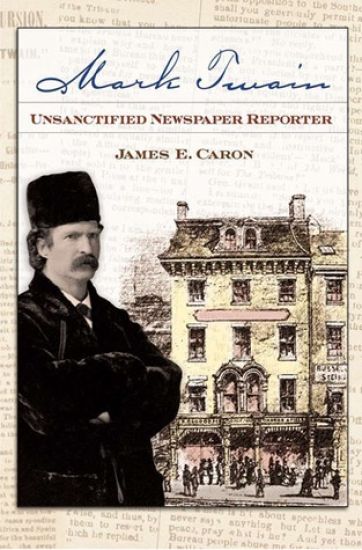
Mark Twain, Unsanctified Newspaper Reporter

Mark Twain, Unsanctified Newspaper Reporter

James E. Caron

University of Missouri Press
2008
sidottu
Before Mark Twain became a national celebrity with his best-selling ""The Innocents Abroad"", he was just another struggling writer perfecting his craft - but already ""playin' hell"" with the world. In the first book in more than fifty years to examine the initial phase of Samuel Clemens' writing career, James Caron draws on contemporary scholarship and his own careful readings to offer a fresh and comprehensive perspective on those early years - and to challenge many long-standing views of Mark Twain's place in the tradition of American humor.Tracing the arc of Clemens' career from self-described ""unsanctified newspaper reporter"" to national author between 1862 and 1867, Caron reexamines the early and largely neglected writings - especially the travel letters from Hawaii and the letters chronicling Clemens' trip from California to New York City. Caron connects those sets of letters with comic materials Clemens had already published, drawing on all known items from this first phase of his career - even the virtually forgotten pieces from the ""San Francisco Morning Call in 1864"" - to reveal how Mark Twain's humor was shaped by the sociocultural context and how it catered to his audience's sensibilities while unpredictably transgressing its standards.Caron reveals how Sam Clemens' contemporaries, notably Charles Webb, provided important comic models, and he shows how Clemens not only adjusted to but also challenged the guidelines of the newspapers and magazines for which he wrote, evolving as a comic writer who transmuted personal circumstances into literary art. Plumbing Mark Twain's cultural significance, Caron draws on anthropological insights from Victor Turner and others to compare the performative aspects of Clemens' early work to the role of ritual clowns in traditional societies.Brimming with fresh insights into such benchmarks as ""Our Fellow Savages of the Sandwich Islands"" and ""Jim Smiley and His Jumping Frog,"" this book is a gracefully written work that reflects both patient research and considered judgment to chart the development of an iconic American talent. ""Mark Twain, Unsanctified Newspaper Reporter"" should be required reading for all serious scholars of his work, as well as for anyone interested in the interplay between artistic creativity and the literary marketplace.
Mark Twain and Metaphor

Mark Twain and Metaphor

John Bird

University of Missouri Press
2011
nidottu
Metaphor theory, observes John Bird, is like Mark Twain: both seem simple upon first introduction. Now, in the most complete study to date of Twain's use of figurative language, a veteran Twain scholar tackles the core of his writing and explores it with theoretical approaches that have rarely been applied to Twain, providing new insights into how he imagined his world - and the singular ways in which he expressed himself. From 'The Jumping Frog' to the late dream narratives, Bird considers Twain's metaphoric construction over his complete career and especially sheds new light on his central texts: Roughing It; The Adventures of Tom Sawyer; Adventures of Huckleberry Finn; A Connecticut Yankee in King Arthur's Court; Pudd'nhead Wilson; and No. 44, The Mysterious Stranger. He reconsiders 'Old Times on the Mississippi' as the most purely metaphorical of Twain's writings, goes on to look at how Twain used metaphor and talked about it in a variety of works and genres, and even argues that Clemens's pseudonym is not so much an alter ego as a metaphorized self. By offering insight into how Twain handled figurative language during the composing process, Bird reveals not only hidden facets of his artistry but also new aspects of works that we think we know well - including some entirely new ideas regarding Huck Finn that draw on the recent discovery of the first half of the manuscript. In addition to dealing with issues currently central to Twain studies, such as race and gender, he also links metaphor to humor and dream theory to further illuminate topics central to his work. More than a study of Twain's language, the book delves into the psychological aspects of metaphor to reveal the writer's attitudes and thoughts, showing how using metaphor as a guide to Twain reveals much about his composition process. Applying the insights of metaphor theorists such as Roman Jakobson and Colin M. Turbayne, Bird offers readers not only new insights into Twain but also an introduction to this interdisciplinary field. In lively prose, Mark Twain and Metaphor provides a vital way to read Twain's entire corpus, allowing readers to better appreciate his style, humor, and obsession with dreams. It opens new ground and makes old ground fresh again, offering ways to see and resee this essential American writer.
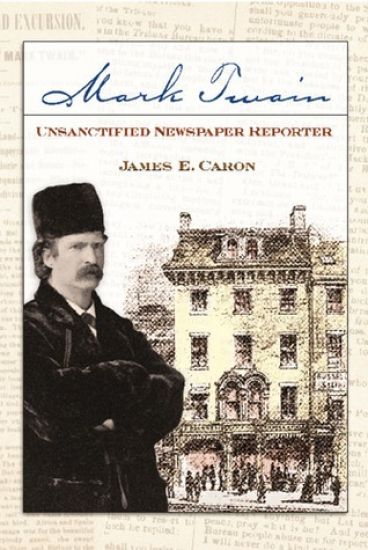
Mark Twain, Unsanctified Newspaper Reporter

Mark Twain, Unsanctified Newspaper Reporter

James E. Caron

University of Missouri Press
2011
nidottu
Before Mark Twain became a national celebrity with his best-selling The Innocents Abroad, he was just another struggling writer perfecting his craft—but already “playin’ hell” with the world. In the first book in more than fifty years to examine the initial phase of Samuel Clemens’s writing career, James Caron draws on contemporary scholarship and his own careful readings to offer a fresh and comprehensive perspective on those early years—and to challenge many long-standing views of Mark Twain’s place in the tradition of American humour. Tracing the arc of Clemens’s career from self-described “unsanctified newspaper reporter” to national author between 1862 and 1867, Caron reexamines the early and largely neglected writings—especially the travel letters from Hawaii and the letters chronicling Clemens’s trip from California to New York City. Caron connects those sets of letters with comic materials Clemens had already published, drawing on all known items from this first phase of his career—even the virtually forgotten pieces from the San Francisco Morning Call in 1864—to reveal how Mark Twain’s humour was shaped by the sociocultural context and how it catered to his audience’s sensibilities while unpredictably transgressing its standards. Caron reveals how Sam Clemens’s contemporaries, notably Charles Webb, provided important comic models, and he shows how Clemens not only adjusted to but also challenged the guidelines of the newspapers and magazines for which he wrote, evolving as a comic writer who transmuted personal circumstances into literary art. Plumbing Mark Twain’s cultural significance, Caron draws on anthropological insights from Victor Turner and others to compare the performative aspects of Clemens’s early work to the role of ritual clowns in traditional societies. Brimming with fresh insights into such benchmarks as “Our Fellow Savages of the Sandwich Islands” and “Jim Smiley and His Jumping Frog,” this book is a gracefully written work that reflects both patient research and considered judgment to chart the development of an iconic American talent. Mark Twain, Unsanctified Newspaper Reporter should be required reading for all serious scholars of his work, as well as for anyone interested in the interplay between artistic creativity and the literary marketplace.
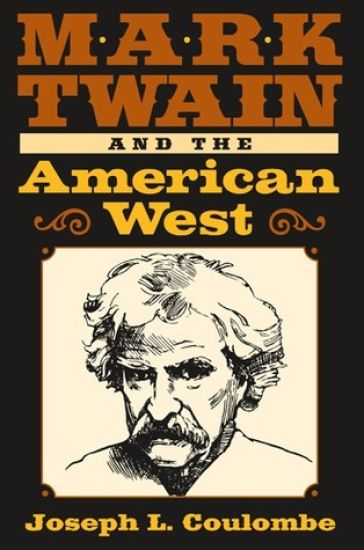
Mark Twain and the American West

Mark Twain and the American West

Joseph L. Coulombe

University of Missouri Press
2011
nidottu
In Mark Twain and the American West, Joseph Coulombe explores how Mark Twain deliberately manipulated contemporary conceptions of the American West to create and then modify a public image that eventually won worldwide fame. He establishes the central role of the western region in the development of a persona that not only helped redefine American manhood and literary celebrity in the late nineteenth century, but also produced some of the most complex and challenging writings in the American canon. Coulombe sheds new light on previously underappreciated components of Twain's distinctly western persona. Gathering evidence from contemporary newspapers, letters, literature, and advice manuals, Coulombe shows how Twain's persona in the early 1860s as a hard-drinking, low-living straight-talker was an implicit response to western conventions of manhood. He then traces the author's movement toward a more sophisticated public image, arguing that Twain characterized language and authorship in the same manner that he described western men: direct, bold, physical, even violent. In this way, Twain capitalized upon common images of the West to create himself as a new sort of western outlaw - one who wrote. Coulombe outlines Twain's struggle to find the proper balance between changing cultural attitudes toward male respectability and rebellion and his own shifting perceptions of the East and the West. Focusing on the tension between these goals, Coulombe explores Twain's emergence as the moneyed and masculine man-of-letters, his treatment of American Indians in its relation to his depiction of Jim in Adventures of Huckleberry Finn, the enigmatic connection of Huck Finn to the natural world, and Twain's profound influence on Willa Cather's western novels. Mark Twain and the American West is sure to generate new interest and discussion about Mark Twain and his influence. By understanding how conventions of the region, conceptions of money and class, and constructions of manhood intersect with the creation of Twain's persona, Coulombe helps us better appreciate the writer's lasting effect on American thought and literature through the twentieth century and into the twenty-first.
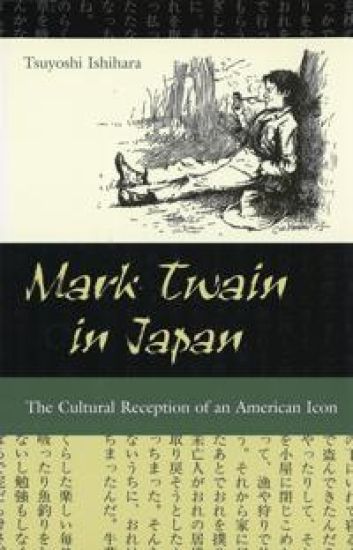
Mark Twain in Japan

Mark Twain in Japan

Tsuyoshi Ishihara

University of Missouri Press
2011
nidottu
Best known for his sharp wit and his portrayals of life along the banks of the Mississippi River, Mark Twain is indeed an American icon, and many scholars have examined how he and his work are perceived in the United States. In Mark Twain in Japan, however, Tsuyoshi Ishihara explores how Twain’s uniquely American work is viewed in a completely different culture.Mark Twain in Japan addresses three principal areas. First, the author considers Japanese translations of Twain’s books, which have been overlooked by scholars but which have had a significant impact on the formation of the public image of Twain and his works in Japan. Second, he discusses the ways in which traditional and contemporary Japanese culture have transformed Twain’s originals and shaped Japanese adaptations. Finally, he uses the example of Twain in Japan as a vehicle to delve into the complexity of American cultural influences on other countries, challenging the simplistic one-way model of “cultural imperialism.” Ishihara builds on the recent work of other researchers who have examined such models of American cultural imperialism and found them wanting. The reality is that other countries sometimes show their autonomy by transforming, distorting, and rejecting aspects of American culture, and Ishihara explains how this is no less true in the case of Twain.Featuring a wealth of information on how the Japanese have regarded Twain over time, this book offers both a history lesson on Japanese-American relations and a thorough analysis of the “Japanisation” of Mark Twain, as Ishihara adds his voice to the growing international chorus of scholars who emphasise the global localisation of American culture. While the book will naturally be of interest to Twain scholars, it also will appeal to other groups, particularly those interested in popular culture, Japanese culture, juvenile literature, film, animation, and globalisation of American culture.
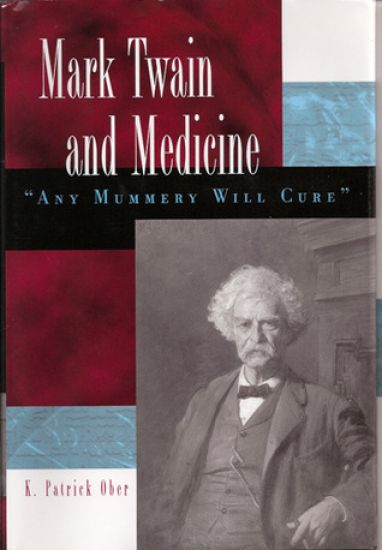
Mark Twain and Medicine

Mark Twain and Medicine

K. Patrick Ober

University of Missouri Press
2011
nidottu
Mark Twain has always been America's spokesman, and his comments on a wide range of topics continue to be accurate, valid, and frequently amusing. His opinions on the medical field are no exception. While Twain's works, including his popular novels about Tom Sawyer and Huckleberry Finn, are rich in medical imagery and medical themes derived from his personal experiences, his interactions with the medical profession and his comments about health, illness, and physicians have largely been overlooked. In Mark Twain and Medicine, K. Patrick Ober remedies this omission. The nineteenth century was a critical time in the development of American medicine, with much competition among the different systems of health care, both traditional and alternative. Not surprisingly, Mark Twain was right in the middle of it all. He experimented with many of the alternative care systems that were available in his day--in part because of his frustration with traditional medicine and in part because he hoped to find the """"perfect"""" system that would bring health to his family. Twain's commentary provides a unique perspective on American medicine and the revolution in medical systems that he experienced firsthand. Ober explores Twain's personal perspective in this area, as he expressed it in fiction, speeches, and letters. As a medical educator, Ober explains in sufficient detail and with clarity all medical and scientific terms, making this volume accessible to the general reader. Ober demonstrates that many of Twain's observations are still relevant to today's health care issues, including the use of alternative or complementary medicine in dealing with illness, the utility of placebo therapies, and the role of hope in the healing process. Twain's evaluation of the medical practices of his era provides a fresh, humanistic, and personalised view of the dramatic changes that occurred in medicine through the nineteenth century and into the first decade of the twentieth. Twain scholars, general readers, and medical professionals will all find this unique look at his work appealing.
Mark Twain and Human Nature

Mark Twain and Human Nature

Tom Quirk

University of Missouri Press
2011
nidottu
Mark Twain once claimed that he could read human character as well as he could read the Mississippi River, and he studied his fellow humans with the same devoted attention. In both his fiction and his nonfiction, he was disposed to dramatise how the human creature acts in a given environment—and to understand why. Now one of America’s preeminent Twain scholars takes a closer look at this icon’s abiding interest in his fellow creatures. In seeking to account for how Twain might have reasonably believed the things he said he believed, Tom Quirk has interwoven the author’s inner life with his writings to produce a meditation on how Twain’s understanding of human nature evolved and deepened, and to show that this was one of the central preoccupations of his life. Quirk charts the ways in which this humourist and occasional philosopher contemplated the subject of human nature from early adulthood until the end of his life, revealing how his outlook changed over the years. His travels, his readings in history and science, his political and social commitments, and his own pragmatic testing of human nature in his writing contributed to Twain’s mature view of his kind. Quirk establishes the social and scientific contexts that clarify Twain’s thinking, and he considers not only Twain’s stated intentions about his purposes in his published works but also his ad hoc remarks about the human condition. Viewing both major and minor works through the lens of Twain’s shifting attitude, Quirk provides refreshing new perspectives on the master’s oeuvre. He offers a detailed look at the travel writings, including The Innocents Abroad and Following the Equator, and the novels, including The Adventures of Tom Sawyer, Adventures of Huckleberry Finn, and Pudd’nhead Wilson, as well as an important review of works from Twain’s last decade, including fantasies centering on man’s insignificance in Creation, works preoccupied with isolation—notably No. 44, The Mysterious Stranger and “Eve’s Diary”—and polemical writings such as What Is Man? Comprising the well-seasoned reflections of a mature scholar, this persuasive and eminently readable study comes to terms with the life-shaping ideas and attitudes of one of America’s best-loved writers. Mark Twain and Human Nature offers readers a better understanding of Twain’s intellect as it enriches our understanding of his craft and his ineluctable humour.
Mark Twain's Homes and Literary Tourism

Mark Twain's Homes and Literary Tourism

Hilary Lowe

University of Missouri Press
2012
sidottu
A century after Samuel Clemens's death, Mark Twain thrives - his recently released autobiography topped bestseller lists. One way fans still celebrate the first true American writer and his work is by visiting any number of Mark Twain destinations. They believe they can learn something unique by visiting the places where he lived. Mark Twain's Homes and Literary Tourism untangles the complicated ways that Clemens's houses, now museums, have come to tell the stories that they do about Twain and, in the process, reminds us that the sites themselves are the products of multiple agendas and, in some cases, unpleasant histories. Hilary Iris Lowe leads us through four Twain homes, beginning at the beginning - Florida, Missouri, where Clemens was born. Today the site is simply a concrete pedestal missing its bust, a plaque, and an otherwise-empty field. Though the original cabin where he was born likely no longer exists, Lowe treats us to an overview of the history of the area and the state park challenged with somehow marking this site. Next, we travel with Lowe to Hannibal, Missouri, Clemens's childhood home, which he saw become a tourist destination in his own lifetime. Today mannequins remind visitors of the man that the boy who lived there became and the literature that grew out of his experiences in the house and little town on the Mississippi. Hartford, Connecticut, boasts one of Clemens's only surviving adulthood homes, the house where he spent his most productive years. Lowe describes the house's construction, its sale when the high cost of living led the family to seek residence abroad, and its transformation into the museum. Lastly, we travel to Elmira, New York, where Clemens spent many summers with his family at Quarry Farm. His study is the only room at this destination open to the public, and yet, tourists follow in the footsteps of literary pilgrim Rudyard Kipling to see this small space. Literary historic sites pin their authority on the promise of exclusive insight into authors and texts through firsthand experience. As tempting as it is to accept the authenticity of Clemens's homes, Mark Twain's Homes and Literary Tourism argues that house museums are not reliable critical texts but are instead carefully constructed spaces designed to satisfy visitors. This volume shows us how these houses' portrayals of Clemens change frequently to accommodate and shape our own expectations of the author and his work.
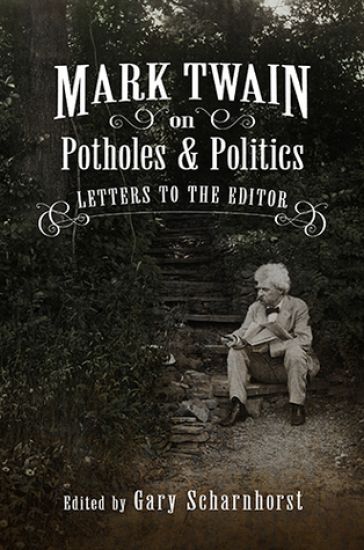
Mark Twain on Potholes and Politics

Mark Twain on Potholes and Politics

University of Missouri Press
2014
sidottu
Whether he was taking us along for a journey down the Mississippi with a couple of runaways or delivering speeches on the importance of careful lying, Mark Twain had an innate ability to captivate readers and listeners alike with his trademark humor and sarcasm. Twain never lacked for material, either, as his strong opinions regarding most issues gave him countless opportunities to articulate his thoughts in the voice that only he could provide.A frequent outlet for Twain’s wit was in letters to the editors of various newspapers and periodicals. Sharing his thoughts and opinions on topical issues ranging from national affairs to local social events, with swipes along the way at woman suffrage, potholes, literary piracy and other scams, slow mail delivery, police corruption, capital punishment, and the removal of Huck Finn from libraries, Twain never hesitated to speak his mind. And now thanks to Gary Scharnhorst, more than a hundred of these letters are available in one place for us to enjoy.From his opinions on the execution of an intellectually brilliant murderer, to his scathing review of a bureau he perceived as “a pack of idiots” running on a currency of doughnuts, Twain’s pure, unbridled voice is evident throughout his letters. Mark Twain on Potholes and Politics gives readers a chance to delve further than ever before into the musings of the most recognizable voice in American literature.
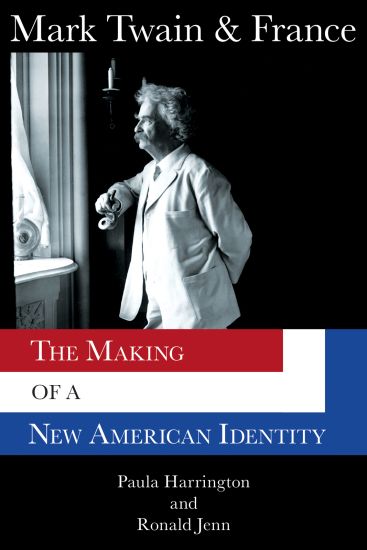
Mark Twain & France

Mark Twain & France

Paula Harrington; Ronald Jenn

University of Missouri Press
2017
sidottu
While critics have generally dismissed Mark Twain’s relationship with France as hostile, Harrington and Jenn see Twain’s use of the French as a foil to help construct his identity as “the representative American.” Examining new materials that detail his Montmatre study, the carte de visite album, and a chronology of his visits to France, the book offers close readings of writings that have been largely ignored, such as The Innocents Adrift manuscript and the unpublished chapters of A Tramp Abroad, combining literary analysis, socio-historical context and biographical research.
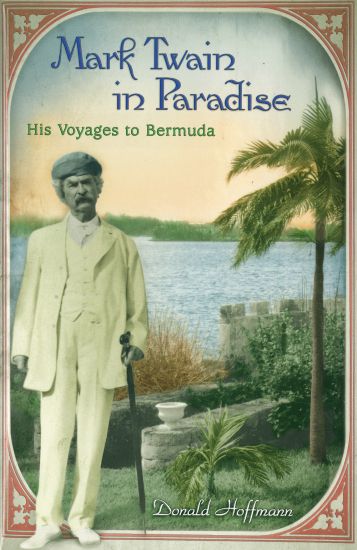
Mark Twain in Paradise

Mark Twain in Paradise

Donald Hoffmann

University of Missouri Press
2018
nidottu
For Mark Twain, it was love at first landfall. Samuel Clemens first encountered the Bermuda Islands in 1867 on a return voyage from the Holy Land and found them much to his liking. One of the most isolated spots in the world, Bermuda offered the writer a refuge from his harried and sometimes sad existence on the mainland, and this island paradise called him back another seven times. Clemens found that Bermuda’s beauty, pace, weather, and company were just the medicine he needed, and its seafaring culture with few connections to the outside world appealed to his love of travel by water.This book is the first comprehensive study of Clemens’s love affair with Bermuda, a vivid depiction of a celebrated author on recurring vacations. Donald Hoffmann has culled and clarified passages from Mark Twain’s travel pieces, letters, and unpublished autobiographical dictation—with cross-references to his fiction and infrequently cited short pieces—to create a little-known view of the author at leisure on his fantasy island.Mark Twain in Paradise sheds light on both Clemens’s complex character and the topography and history of the islands. Hoffmann has plumbed the voluminous Mark Twain scholarship and Bermudian archives to faithfully re-create turn-of-the-century Bermuda, supplying historical and biographical background to give his narrative texture and depth. He offers insight into Bermuda’s natural environment, traditional stone houses, and romantic past, and he presents dozens of illustrations, both vintage and new, showing that much of what Mark Twain described can still be seen today.Hoffmann also provides insight into the social circles Clemens moved in—and sometimes collected around himself. When visiting the islands, he rubbed shoulders with the likes of socialist Upton Sinclair and multimillionaire Henry H. Rogers; with Woodrow Wilson and his lover, socialite Mary Peck; as well as with the young girls to whom he enjoyed playing grandfather. “You go to heaven if you want to,” Mark Twain wrote from Bermuda in 1910 during his long last visit. “I’d druther stay here.” And because much of what Clemens enjoyed in the islands is still available to experience today, visitors to Bermuda can now have America’s favorite author as their guide. Mark Twain in Paradise is an unexpected addition to the vast literature by and about Mark Twain and a work of travel literature unlike any other.
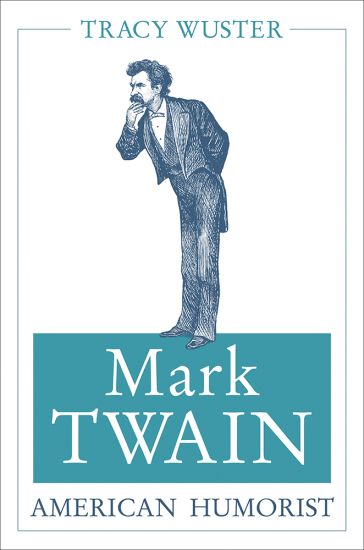
Mark Twain, American Humorist

Mark Twain, American Humorist

Tracy Wuster

University of Missouri Press
2019
nidottu
Mark Twain, American Humorist examines the ways that Mark Twain's reputation developed at home and abroad in the period between 1865 and 1882, years in which he went from a regional humorist to national and international fame. In the late 1860s, Mark Twain became the exemplar of a school of humor that was thought to be uniquely American. As he moved into more respectable venues in the 1870s, especially through the promotion of William Dean Howells in the Atlantic Monthly, Mark Twain muddied the hierarchical distinctions between class-appropriate leisure and burgeoning forms of mass entertainment, between uplifting humor and debased laughter, and between the literature of high culture and the passing whim of the merely popular.
Mark Twain's Homes and Literary Tourism

Mark Twain's Homes and Literary Tourism

Hilary Iris Lowe

UNIVERSITY OF MISSOURI PRESS
2025
nidottu
A century after Samuel Clemens’s death, Mark Twain thrives. One way fans still celebrate the first true American writer and his work is by visiting any number of Mark Twain destinations. They believe they can learn something unique by visiting the places where he lived. Mark Twain’s Homes and Literary Tourism untangles the complicated ways that Clemens’s houses, now museums, have come to tell the stories that they do about Twain and, in the process, reminds us that the sites themselves are the products of multiple agendas and, in some cases, unpleasant histories. Hilary Iris Lowe leads us through four Twain homes, beginning at the beginning—Florida, Missouri, where Clemens was born. Today the site is simply a concrete pedestal missing its bust, a plaque, and an otherwise-empty field. Though the original cabin where he was born likely no longer exists, Lowe treats us to an overview of the history of the area and the state park challenged with somehow marking this site. Next, we travel with Lowe to Hannibal, Missouri, Clemens’s childhood home, which he saw become a tourist destination in his own lifetime. Today mannequins remind visitors of the man that the boy who lived there became and the literature that grew out of his experiences in the house and little town on the Mississippi. Hartford, Connecticut, boasts one of Clemens’s only surviving adulthood homes, the house where he spent his most productive years. Lowe describes the house’s construction, its sale when the high cost of living led the family to seek residence abroad, and its transformation into the museum. Lastly, we travel to Elmira, New York, where Clemens spent many summers with his family at Quarry Farm. His study is the only room at this destination open to the public, and yet, tourists follow in the footsteps of literary pilgrim Rudyard Kipling to see this small space. Literary historic sites pin their authority on the promise of exclusive insight into authors and texts through firsthand experience. As tempting as it is to accept the authenticity of Clemens’s homes, Mark Twain’s Homes and Literary Tourism argues that house museums are not reliable critical texts but are instead carefully constructed spaces designed to satisfy visitors. This volume shows us how these houses’ portrayals of Clemens change frequently to accommodate and shape our own expectations of the author and his work.
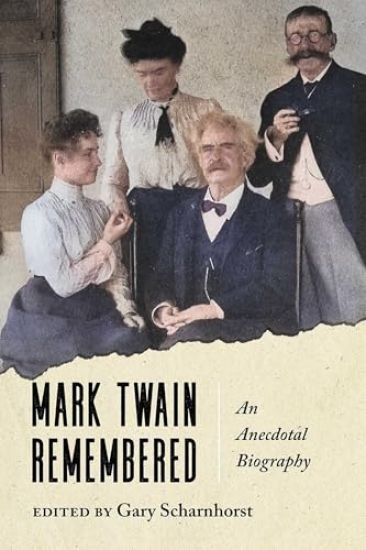
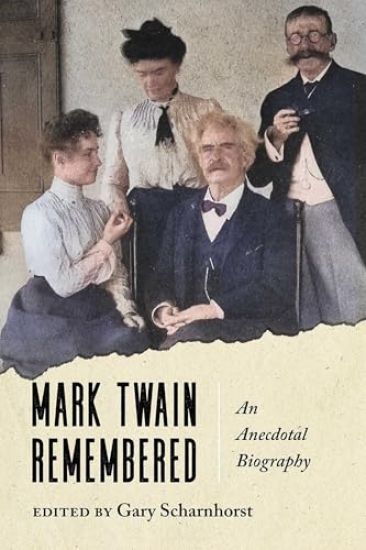
Mark Twain Remembered

Mark Twain Remembered

UNIVERSITY OF NEW MEXICO PRESS
2026
sidottu
Mark Twain's life as told by more than 200 contemporaries including Teddy Roosevelt, Winston Churchill, Charles Darwin, and many more. A master storyteller, Mark Twain inspired his friends, family, fellow authors, and others to reminisce about him at every stage of his life and everywhere he lived. In Mark Twain Remembered: An Anecdotal Biography, Gary Scharnhorst transcribes and annotates over two hundred memoirs by people who knew Twain personally—boyhood friends in Hannibal; family members; mining partners and fellow journalists in Nevada and California; neighbors in Hartford and New York. Commentaries from editors, publishers, lecture managers, and politicians of all stripes—from Prime Ministers and Presidents to grassroots activists—grace these pages. Teddy Roosevelt, Winston Churchill, Charles Darwin, Thomas Edison, Jean Webster, Maxim Gorky, Ambrose Bierce, Booker T. Washington, and P. T. Barnum are all heard from. The greatness of these recollections are the breadth of experience, intimacy, and depth of understanding from Twain’s contemporaries, notable and otherwise. These anecdotes chronicle Twain’s brief service in a Missouri militia during the Civil War; his residences in Paris, Berlin, Vienna, London, and Florence; his campaigns against colonialism in Africa and Asia and US imperialism in the Philippines; his advocacy for international copyright; his opinions on issues of race and ethnicity; and his triumphant trip to England to receive an honorary doctoral degree from Oxford University in 1907. This mosaic of his life should interest general readers, teachers of Twain’s writings, and specialists in American literature.
Mark Twain Remembered

Mark Twain Remembered

UNIVERSITY OF NEW MEXICO PRESS
2026
pokkari
Mark Twain's life as told by more than 200 contemporaries including Teddy Roosevelt, Winston Churchill, Charles Darwin, and many more. A master storyteller, Mark Twain inspired his friends, family, fellow authors, and others to reminisce about him at every stage of his life and everywhere he lived. In Mark Twain Remembered: An Anecdotal Biography, Gary Scharnhorst transcribes and annotates over two hundred memoirs by people who knew Twain personally—boyhood friends in Hannibal; family members; mining partners and fellow journalists in Nevada and California; neighbors in Hartford and New York. Commentaries from editors, publishers, lecture managers, and politicians of all stripes—from Prime Ministers and Presidents to grassroots activists—grace these pages. Teddy Roosevelt, Winston Churchill, Charles Darwin, Thomas Edison, Jean Webster, Maxim Gorky, Ambrose Bierce, Booker T. Washington, and P. T. Barnum are all heard from. The greatness of these recollections are the breadth of experience, intimacy, and depth of understanding from Twain’s contemporaries, notable and otherwise. These anecdotes chronicle Twain’s brief service in a Missouri militia during the Civil War; his residences in Paris, Berlin, Vienna, London, and Florence; his campaigns against colonialism in Africa and Asia and US imperialism in the Philippines; his advocacy for international copyright; his opinions on issues of race and ethnicity; and his triumphant trip to England to receive an honorary doctoral degree from Oxford University in 1907. This mosaic of his life should interest general readers, teachers of Twain’s writings, and specialists in American literature.
Mark: 20 Studies for Individuals and Groups

Mark: 20 Studies for Individuals and Groups

N. T. Wright; Lin Johnson

IVP Bible Studies
2009
nidottu
With a scholar's mind and a pastor's heart, Tom Wright walks you through Mark in this guide designed especially with everyday readers in mind. Perfect for group use or daily personal reflection, this study uses the popular inductive method combined with Wright's thoughtful insights to bring contemporary application of Scripture to life.
Mark: Follow Me

Mark: Follow Me

James Hoover

IVP Bible Studies
1999
nidottu
In the New Testament Gospel of Mark, we meet Jesus, the man who is King. But this king comes to serve--not to be served. He eats with sinners rather than royalty. His crown is made of thorns instead of gold. This twenty session LifeGuide(R) Bible Study guide introduces you to the compassionate, suffering, astonishing king who calls us to follow him.For over three decades LifeGuide Bible Studies have provided solid biblical content and raised thought-provoking questions--making for a one-of-a-kind Bible study experience for individuals and groups. This series has more than 130 titles on Old and New Testament books, character studies, and topical studies.