Kirjojen hintavertailu. Mukana 11 637 059 kirjaa ja 12 kauppaa.

Kirjahaku

Etsi kirjoja tekijän nimen, kirjan nimen tai ISBN:n perusteella.

1000 tulosta hakusanalla Megan Cuthbert

Don't Speak, Shout.

Don't Speak, Shout.

Megan Lewis

Lulu.com
2019
pokkari
Don't speak, shout is a collection of poems that take you through a journey of reclaiming one's story. Victim shaming is a lonely road to be on as you begin to let others speak on your experiences and pain. Don't speak, shout is about a survivor tearing off the tape and finding peace. Let a survivor be the voice of their trauma.
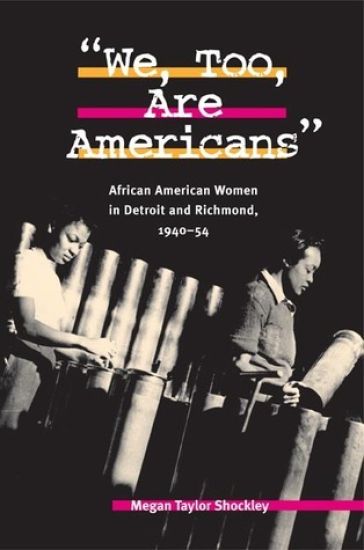
We, Too, Are Americans

We, Too, Are Americans

Megan Taylor Shockley

University of Illinois Press
2003
sidottu
During World War II, factories across America retooled for wartime production, and unprecedented labor opportunities opened up for women and minorities. In We, Too, Are Americans, Megan Taylor Shockley examines the experiences of the African American women who worked in two capitols of industry--Detroit, Michigan, and Richmond, Virginia--during the war and the decade that followed it, making a compelling case for viewing World War II as the crucible of the civil rights movement. As demands on them intensified, the women working to provide American troops with clothing, medical supplies, and other services became increasingly aware of their key role in the war effort. A considerable number of the African Americans among them began to use their indispensability to leverage demands for equal employment, welfare and citizenship benefits, fair treatment, good working conditions, and other considerations previously denied them. Shockley shows that as these women strove to redefine citizenship, backing up their claims to equality with lawsuits, sit-ins, and other forms of activism, they were forging tools that civil rights activists would continue to use in the years to come.
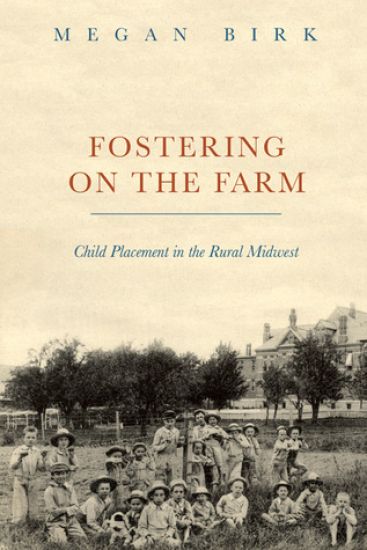
Fostering on the Farm

Fostering on the Farm

Megan Birk

University of Illinois Press
2015
sidottu
From 1870 until after World War I, reformers led an effort to place children from orphanages, asylums, and children's homes with farming families. The farmers received free labor in return for providing room and board. Reformers, meanwhile, believed children learned lessons in family life, citizenry, and work habits that institutions simply could not provide. Drawing on institution records, correspondence from children and placement families, and state reports, Megan Birk scrutinizes how the farm system developed--and how the children involved may have become some of America's last indentured laborers. Between 1850 and 1900, up to one-third of farm homes contained children from outside the family. Birk reveals how the nostalgia attached to misplaced perceptions about healthy, family-based labor masked the realities of abuse, overwork, and loveless upbringings endemic in the system. She also considers how rural people cared for their own children while being bombarded with dependents from elsewhere. Finally, Birk traces how the ills associated with rural placement eventually forced reformers to transition to a system of paid foster care, adoptions, and family preservation.
The Fundamental Institution

The Fundamental Institution

Megan Birk

UNIVERSITY OF ILLINOIS PRESS
2022
sidottu
By the early 1900s, the poor farm had become a ubiquitous part of America's social welfare system. Megan Birk's history of this foundational but forgotten institution focuses on the connection between agriculture, provisions for the disadvantaged, and the daily realities of life at poor farms. Conceived as an inexpensive way to provide care for the indigent, poor farms in fact attracted wards that ranged from abused wives and the elderly to orphans, the disabled, and disaster victims. Most people arrived unable rather than unwilling to work, some because of physical problems, others due to a lack of skills or because a changing labor market had left them behind. Birk blends the personal stories of participants with institutional histories to reveal a loose-knit system that provided a measure of care to everyone without an overarching philosophy of reform or rehabilitation. In-depth and innovative, The Fundamental Institution offers an overdue portrait of rural social welfare in the United States.
Fostering on the Farm

Fostering on the Farm

Megan Birk

University of Illinois Press
2019
nidottu
From 1870 until after World War I, reformers led an effort to place children from orphanages, asylums, and children's homes with farming families. The farmers received free labor in return for providing room and board. Reformers, meanwhile, believed children learned lessons in family life, citizenry, and work habits that institutions simply could not provide. Drawing on institution records, correspondence from children and placement families, and state reports, Megan Birk scrutinizes how the farm system developed--and how the children involved may have become some of America's last indentured laborers. Between 1850 and 1900, up to one-third of farm homes contained children from outside the family. Birk reveals how the nostalgia attached to misplaced perceptions about healthy, family-based labor masked the realities of abuse, overwork, and loveless upbringings endemic in the system. She also considers how rural people cared for their own children while being bombarded with dependents from elsewhere. Finally, Birk traces how the ills associated with rural placement eventually forced reformers to transition to a system of paid foster care, adoptions, and family preservation.
The Fundamental Institution

The Fundamental Institution

Megan Birk

UNIVERSITY OF ILLINOIS PRESS
2022
nidottu
By the early 1900s, the poor farm had become a ubiquitous part of America's social welfare system. Megan Birk's history of this foundational but forgotten institution focuses on the connection between agriculture, provisions for the disadvantaged, and the daily realities of life at poor farms. Conceived as an inexpensive way to provide care for the indigent, poor farms in fact attracted wards that ranged from abused wives and the elderly to orphans, the disabled, and disaster victims. Most people arrived unable rather than unwilling to work, some because of physical problems, others due to a lack of skills or because a changing labor market had left them behind. Birk blends the personal stories of participants with institutional histories to reveal a loose-knit system that provided a measure of care to everyone without an overarching philosophy of reform or rehabilitation. In-depth and innovative, The Fundamental Institution offers an overdue portrait of rural social welfare in the United States.
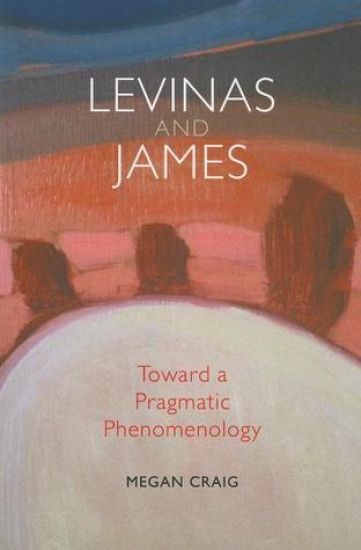
Levinas and James

Levinas and James

Megan Craig

Indiana University Press
2010
pokkari
Bringing to light new facets in the philosophy of Emmanuel Levinas and William James, Megan Craig explores intersections between French phenomenology and American pragmatism. Craig demonstrates the radical empiricism of Levinas's philosophy and the ethical implications of James's pluralism while illuminating their relevance for two philosophical disciplines that have often held each other at arm's length. Revealing the pragmatic minimalism in Levinas's work and the centrality of imagery in James's prose, she suggests that aesthetic links are crucial to understanding what they share. Craig's suggestive readings change current perceptions and clear a path for a more open, pluralistic, and creative pragmatic phenomenology that takes cues from both philosophers.
Governing the Tap

Governing the Tap

Megan Mullin

MIT Press
2009
pokkari
An analysis of the political consequences of special district governance in drinking water management that offers new insights into the influence of political structures on local policymaking.More than ever, Americans rely on independent special districts to provide public services. The special district-which can be as small as a low-budget mosquito abatement district or as vast as the Port Authority of New York and New Jersey-has become the most common form of local governance in the United States. In Governing the Tap, Megan Mullin examines the consequences of specialization and the fragmentation of policymaking authority through the lens of local drinking-water policy. Directly comparing specific conservation, land use, and contracting policies enacted by different forms of local government, Mullin investigates the capacity of special districts to engage in responsive and collaborative decision making that promotes sustainable use of water resources. She concludes that the effect of specialization is conditional on the structure of institutions and the severity of the policy problem, with specialization offering the most benefit on policy problems that are least severe. Mullin presents a political theory of specialized governance that is relevant to any of the variety of functions special districts perform. Governing the Tap offers not only the first study of how the new decentralized politics of water is taking shape in American communities, but also new and important findings about the influence of institutional structures on local policymaking.
Documenting Aftermath

Documenting Aftermath

Megan Finn

MIT PRESS LTD
2024
pokkari
An examination of how changing public information infrastructures shaped people's experience of earthquakes in Northern California in 1868, 1906, and 1989. When an earthquake happens in California today, residents may look to the United States Geological Survey for online maps that show the quake's epicenter, turn to Twitter for government bulletins and the latest news, check Facebook for updates from friends and family, and count on help from the Federal Emergency Management Agency (FEMA). One hundred and fifty years ago, however, FEMA and other government agencies did not exist, and information came by telegraph and newspaper. In Documenting Aftermath, Megan Finn explores changing public information infrastructures and how they shaped people's experience of disaster, examining postearthquake information and communication practices in three Northern California earthquakes: the 1868 Hayward Fault earthquake, the 1906 San Francisco earthquake and fire, and the 1989 Loma Prieta earthquake. She then analyzes the institutions, policies, and technologies that shape today's postdisaster information landscape. Finn argues that information orders--complex constellations of institutions, technologies, and practices--influence how we act in, experience, and document events. What Finn terms event epistemologies, constituted both by historical documents and by researchers who study them, explain how information orders facilitate particular possibilities for knowledge. After the 1868 earthquake, the Chamber of Commerce telegraphed reassurances to out-of-state investors while local newspapers ran sensational earthquake narratives; in 1906, families and institutions used innovative techniques for locating people; and in 1989, government institutions and the media developed a symbiotic relationship in information dissemination. Today, government disaster response plans and new media platforms imagine different sources of informational authority yet work together shaping disaster narratives.
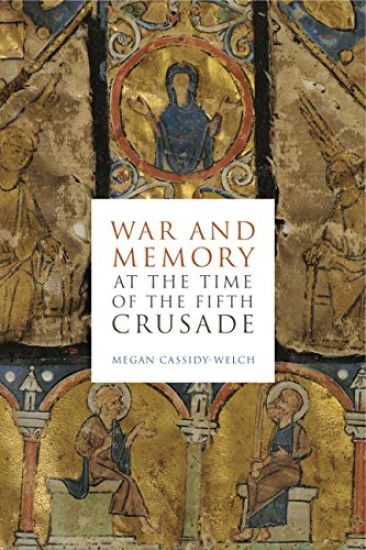
War and Memory at the Time of the Fifth Crusade

War and Memory at the Time of the Fifth Crusade

Megan Cassidy-Welch

Pennsylvania State University Press
2019
sidottu
In this book, Megan Cassidy-Welch challenges the notion that using memories of war to articulate and communicate collective identity is exclusively a modern phenomenon. War and Memory at the Time of the Fifth Crusade explores how and why remembering war came to be culturally meaningful during the early thirteenth century.By the 1200s, discourses of crusading were deeply steeped in the language of memory: crusaders understood themselves to be acting in remembrance of Christ’s sacrifice and following in the footsteps of their ancestors. At the same time, the foundational narratives of the First Crusade began to be transformed by vernacular histories and the advent of crusading romance. Examining how the Fifth Crusade was remembered and commemorated during its triumphs and immediately after its disastrous conclusion, Cassidy-Welch brings a nuanced perspective to the prevailing historiography on war memory, showing that remembering war was significant and meaningful centuries before the advent of the nation-state.This thoughtful and novel study of the Fifth Crusade shows it to be a key moment in the history of remembering war and provides new insights into medieval communication. It will be invaluable reading for scholars interested in the Fifth Crusade, medieval war memory, and the use of war memory.
War and Memory at the Time of the Fifth Crusade

War and Memory at the Time of the Fifth Crusade

Megan Cassidy-Welch

Pennsylvania State University Press
2021
pokkari
In this book, Megan Cassidy-Welch challenges the notion that using memories of war to articulate and communicate collective identity is exclusively a modern phenomenon. War and Memory at the Time of the Fifth Crusade explores how and why remembering war came to be culturally meaningful during the early thirteenth century.By the 1200s, discourses of crusading were deeply steeped in the language of memory: crusaders understood themselves to be acting in remembrance of Christ’s sacrifice and following in the footsteps of their ancestors. At the same time, the foundational narratives of the First Crusade began to be transformed by vernacular histories and the advent of crusading romance. Examining how the Fifth Crusade was remembered and commemorated during its triumphs and immediately after its disastrous conclusion, Cassidy-Welch brings a nuanced perspective to the prevailing historiography on war memory, showing that remembering war was significant and meaningful centuries before the advent of the nation-state.This thoughtful and novel study of the Fifth Crusade shows it to be a key moment in the history of remembering war and provides new insights into medieval communication. It will be invaluable reading for scholars interested in the Fifth Crusade, medieval war memory, and the use of war memory.
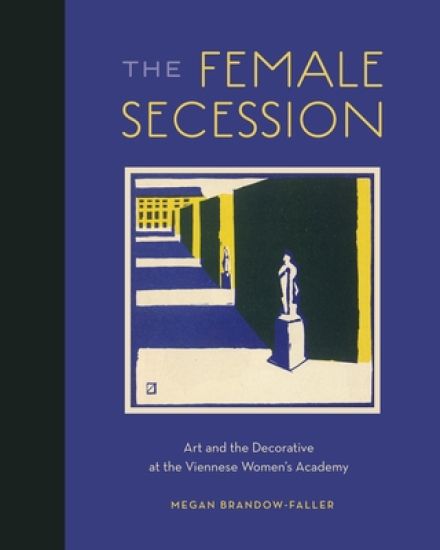
The Female Secession

The Female Secession

Megan Brandow-Faller

Pennsylvania State University Press
2020
sidottu
Decorative handcrafts are commonly associated with traditional femininity and unthreatening docility. However, the artists connected with interwar Vienna’s “female Secession” created craft-based artworks that may be understood as sites of feminist resistance. In this book, historian Megan Brandow-Faller tells the story of how these artists disrupted long-established boundaries by working to dislodge fixed oppositions between “art” and “craft,” “decorative” and “profound,” and “masculine” and “feminine” in art.Tracing the history of the women’s art movement in Secessionist Vienna—from its origins in 1897, at the Women’s Academy, to the Association of Austrian Women Artists and its radical offshoot, the Wiener Frauenkunst—Brandow-Faller tells the compelling story of a movement that reclaimed the stereotypes attached to the idea of Frauenkunst, or women’s art. She shows how generational struggles and diverging artistic philosophies of art, craft, and design drove the conservative and radical wings of Austria’s women’s art movement apart and explores the ways female artists and craftswomen reinterpreted and extended the Klimt Group’s ideas in the interwar years. Brandow-Faller draws a direct connection to the themes that impelled the better-known explosion of feminist art in 1970s America. In this provocative story of a Viennese modernism that never disavowed its ornamental, decorative roots, she gives careful attention to key primary sources, including photographs and reviews of early twentieth-century exhibitions and archival records of school curricula and personnel. Engagingly written and featuring more than eighty representative illustrations, The Female Secession recaptures the radical potential of what Fanny Harlfinger-Zakucka referred to as “works from women’s hands.” It will appeal to art historians working in the decorative arts and modernism as well as historians of Secession-era Vienna and gender history.
Songs of the Spirit

Songs of the Spirit

Megan Daffern

SPCK Publishing
2017
nidottu
Songs of the Spirit give readers of all kinds a new, emotional response to the period of Lent by holding to its heart the Psalms, rather than sticking firmly within the pages of the Gospels. Freshly translated by Rev. Megan Daffern herself, these Psalms and readings are an insightful door to appreciate the countless varieties of ways we can respond to God over the course of just 40 days. Each re-translated Psalm opens up the resonate life their lines. From celebration to mourning, from simplicity to intricacy, Songs of the Spirit offers to a wide range of believers a way to hold the message and truths of Lent close to heart. No matter whether you've never considered faith before, or know the ins-and-outs of faith like rooms of your very own home, there is a rich vein of life to be found in these Psalms. Moving through the problems of the world during Week 1, to injustice in Week 2, and then exploring the complexity and scope of creation in Week 3, its beauty in Week 4, pilgrimage and its effects in Week 5, and then holiness and redemption in Weeks 6 and 7 - this Lent Devotional renews how you approach the world and its maker. Emotive and beautiful, Songs of the Spirit nourishes the spirit and opens your eyes to the ceaseless wonders of God in all things. A Lent devotional filled with life.
The Rise of Cable Programming in the United States

The Rise of Cable Programming in the United States

Megan Mullen

University of Texas Press
2003
pokkari
Winner, McGannon Communications Research Award, 2004 In 1971, the Sloan Commission on Cable Communications likened the ongoing developments in cable television to the first uses of movable type and the invention of the telephone. Cable's proponents in the late 1960s and early 1970s hoped it would eventually remedy all the perceived ills of broadcast television, including lowest-common-denominator programming, inability to serve the needs of local audiences, and failure to recognize the needs of cultural minorities. Yet a quarter century after the "blue sky" era, cable television programming closely resembled, and indeed depended upon, broadcast television programming. Whatever happened to the Sloan Commission's "revolution now in sight"? In this book, Megan Mullen examines the first half-century of cable television to understand why cable never achieved its promise as a radically different means of communication. Using textual analysis and oral, archival, and regulatory history, she chronicles and analyzes cable programming developments in the United States during three critical stages of the medium's history: the early community antenna (CATV) years (1948-1967), the optimistic "blue sky" years (1968-1975), and the early satellite years (1976-1995). This history clearly reveals how cable's roots as a retransmitter of broadcast signals, the regulatory constraints that stymied innovation, and the economic success of cable as an outlet for broadcast or broadcast-type programs all combined to defeat most utopian visions for cable programming.
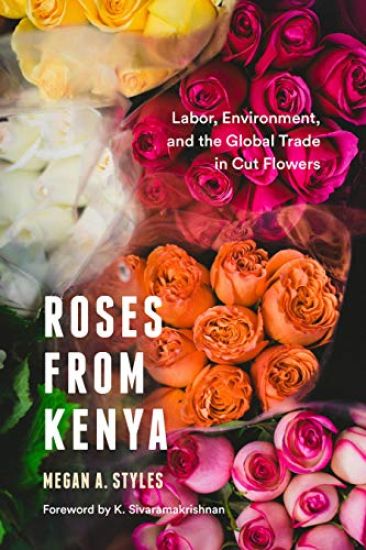
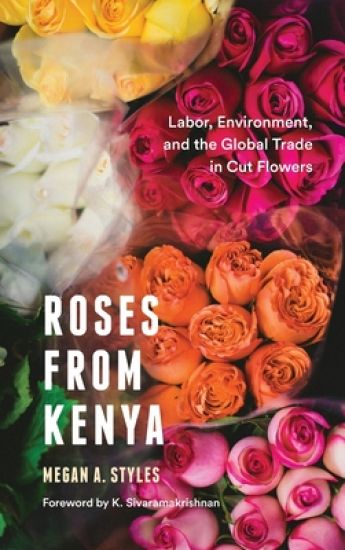
Roses from Kenya

Roses from Kenya

Megan A. Styles; K. Sivaramakrishnan

University of Washington Press
2019
pokkari
Honorable Mention for the Society for the Anthropology of Work (SAW) Book prizeThe potential of floriculture grows at Lake NaivashaKenya supplies more than 35 percent of the fresh-cut roses and other flowers sold annually in the European Union. This industry—which employs at least 90,000 workers, most of whom are women—is lucrative but enduringly controversial. More than half the flowers are grown near the shores of Lake Naivasha, a freshwater lake northwest of Nairobi recognized as a Ramsar site, a wetland of international importance. Critics decry the environmental side effects of floriculture, and human rights activists demand better wages and living conditions for workers.In this rich portrait of Kenyan floriculture, Megan Styles presents the point of view of local workers and investigates how the industry shapes Kenyan livelihoods, landscapes, and politics. She investigates the experiences and perspectives of low-wage farmworkers and the more elite actors whose lives revolve around floriculture, including farm managers and owners, Kenyan officials, and the human rights and environmental activists advocating for reform. By exploring these perspectives together, Styles reveals the complex and contradictory ways that rose farming shapes contemporary Kenya. She also shows how the rose industry connects Kenya to the world, and how Kenyan actors perceive these connections. As a key space of encounter, Lake Naivasha is a synergistic center where many actors seek to solve broader Kenyan social and environmental problems using the global flows of people, information, and money generated by floriculture.
Roses from Kenya

Roses from Kenya

Megan A. Styles; K. Sivaramakrishnan

University of Washington Press
2019
sidottu
Honorable Mention for the Society for the Anthropology of Work (SAW) Book prizeThe potential of floriculture grows at Lake NaivashaKenya supplies more than 35 percent of the fresh-cut roses and other flowers sold annually in the European Union. This industry—which employs at least 90,000 workers, most of whom are women—is lucrative but enduringly controversial. More than half the flowers are grown near the shores of Lake Naivasha, a freshwater lake northwest of Nairobi recognized as a Ramsar site, a wetland of international importance. Critics decry the environmental side effects of floriculture, and human rights activists demand better wages and living conditions for workers.In this rich portrait of Kenyan floriculture, Megan Styles presents the point of view of local workers and investigates how the industry shapes Kenyan livelihoods, landscapes, and politics. She investigates the experiences and perspectives of low-wage farmworkers and the more elite actors whose lives revolve around floriculture, including farm managers and owners, Kenyan officials, and the human rights and environmental activists advocating for reform. By exploring these perspectives together, Styles reveals the complex and contradictory ways that rose farming shapes contemporary Kenya. She also shows how the rose industry connects Kenya to the world, and how Kenyan actors perceive these connections. As a key space of encounter, Lake Naivasha is a synergistic center where many actors seek to solve broader Kenyan social and environmental problems using the global flows of people, information, and money generated by floriculture.
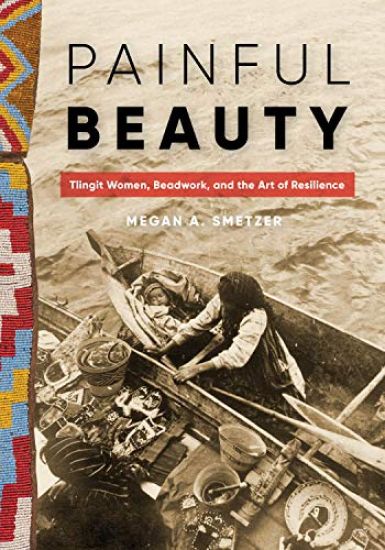
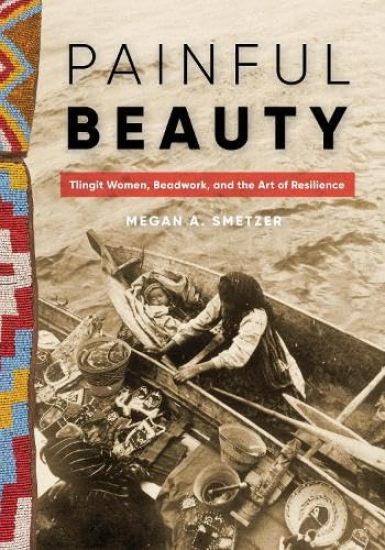
Painful Beauty

Painful Beauty

Megan A. Smetzer

University of Washington Press
2021
sidottu
Winner of the 2024 Charles C. Eldredge Prize by the Smithsonian American Art MuseumShowcases the vibrant practices of Tlingit women's beadworkFor over 150 years, Tlingit women artists have beaded colorful, intricately beautiful designs on moccasins, dolls, octopus bags, tunics, and other garments. Painful Beauty suggests that at a time when Indigenous cultural practices were actively being repressed, beading supported cultural continuity, demonstrating Tlingit women's resilience, strength, and power. Beadwork served many uses, from the ceremonial to the economic, as women created beaded pieces for community use and to sell to tourists. Like other Tlingit art, beadwork reflects rich artistic visions with deep connections to the environment, clan histories, and Tlingit worldviews. Contemporary Tlingit artists Alison Bremner, Chloe French, Shgen Doo Tan George, Lily Hudson Hope, Tanis S'eiltin, and Larry McNeil foreground the significance of historical beading practices in their diverse, boundary-pushing artworks.Working with museum collection materials, photographs, archives, and interviews with artists and elders, Megan Smetzer reframes this often overlooked artform as a site of historical negotiations and contemporary inspirations. She shows how beading gave Tlingit women the freedom to innovate aesthetically, assert their clan crests and identities, support tribal sovereignty, and pass on cultural knowledge. Painful Beauty is the first dedicated study of Tlingit beadwork and contributes to the expanding literature addressing women's artistic expressions on the Northwest Coast.
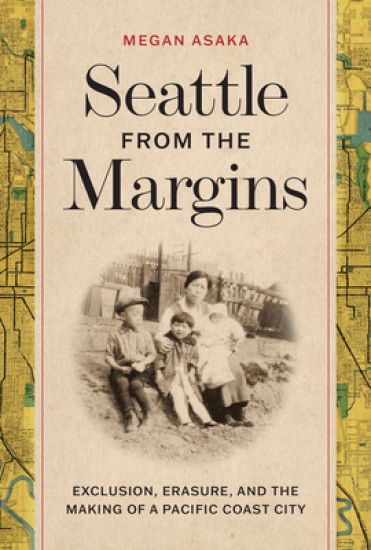
Seattle from the Margins

Seattle from the Margins

Megan Asaka

UNIVERSITY OF WASHINGTON PRESS
2022
sidottu
The creation of Seattle and the displacement of those who built itFrom the origins of the city in the mid-nineteenth century to the beginning of World War II, Seattle's urban workforce consisted overwhelmingly of migrant laborers who powered the seasonal, extractive economy of the Pacific Northwest. Though the city benefitted from this mobile labor force—consisting largely of Indigenous peoples and Asian migrants—municipal authorities, elites, and reformers continually depicted these workers and the spaces they inhabited as troublesome and as impediments to urban progress. Today the physical landscape bears little evidence of their historical presence in the city. Tracing histories from unheralded sites such as labor camps, lumber towns, lodging houses, and so-called slums, Seattle from the Margins shows how migrant laborers worked alongside each other, competed over jobs, and forged unexpected alliances within the marine and coastal spaces of the Puget Sound. By uncovering the historical presence of marginalized groups and asserting their significance in the development of the city, Megan Asaka offers a deeper understanding of Seattle's complex past.Seattle from the Margins was made possible in part by a grant from 4Culture's Heritage Program.
Seattle from the Margins

Seattle from the Margins

Megan Asaka

UNIVERSITY OF WASHINGTON PRESS
2022
pokkari
The creation of Seattle and the displacement of those who built itFrom the origins of the city in the mid-nineteenth century to the beginning of World War II, Seattle's urban workforce consisted overwhelmingly of migrant laborers who powered the seasonal, extractive economy of the Pacific Northwest. Though the city benefitted from this mobile labor force—consisting largely of Indigenous peoples and Asian migrants—municipal authorities, elites, and reformers continually depicted these workers and the spaces they inhabited as troublesome and as impediments to urban progress. Today the physical landscape bears little evidence of their historical presence in the city. Tracing histories from unheralded sites such as labor camps, lumber towns, lodging houses, and so-called slums, Seattle from the Margins shows how migrant laborers worked alongside each other, competed over jobs, and forged unexpected alliances within the marine and coastal spaces of the Puget Sound. By uncovering the historical presence of marginalized groups and asserting their significance in the development of the city, Megan Asaka offers a deeper understanding of Seattle's complex past.Seattle from the Margins was made possible in part by a grant from 4Culture's Heritage Program.
Painful Beauty

Painful Beauty

Megan A. Smetzer

UNIVERSITY OF WASHINGTON PRESS
2025
pokkari
Winner of the 2024 Charles C. Eldredge Prize by the Smithsonian American Art MuseumShowcases the vibrant practices of Tlingit women's beadworkFor over 150 years, Tlingit women artists have beaded colorful, intricately beautiful designs on moccasins, dolls, octopus bags, tunics, and other garments. Painful Beauty suggests that at a time when Indigenous cultural practices were actively being repressed, beading supported cultural continuity, demonstrating Tlingit women's resilience, strength, and power. Beadwork served many uses, from the ceremonial to the economic, as women created beaded pieces for community use and to sell to tourists. Like other Tlingit art, beadwork reflects rich artistic visions with deep connections to the environment, clan histories, and Tlingit worldviews. Contemporary Tlingit artists Alison Bremner, Chloe French, Shgen Doo Tan George, Lily Hudson Hope, Tanis S'eiltin, and Larry McNeil foreground the significance of historical beading practices in their diverse, boundary-pushing artworks.Working with museum collection materials, photographs, archives, and interviews with artists and elders, Megan Smetzer reframes this often overlooked artform as a site of historical negotiations and contemporary inspirations. She shows how beading gave Tlingit women the freedom to innovate aesthetically, assert their clan crests and identities, support tribal sovereignty, and pass on cultural knowledge. Painful Beauty is the first dedicated study of Tlingit beadwork and contributes to the expanding literature addressing women's artistic expressions on the Northwest Coast.