Kirjojen hintavertailu. Mukana 12 186 801 kirjaa ja 12 kauppaa.

Kirjahaku

Etsi kirjoja tekijän nimen, kirjan nimen tai ISBN:n perusteella.

1000 tulosta hakusanalla Michael J. Perry

Driving Your Company's Value

Driving Your Company's Value

Michael J. Mard; Robert R. Dunne; Edi Osborne; James S. Rigby

John Wiley Sons Inc
2005
sidottu
Driving Your Company's Value: Strategic Benchmarking for Value is a step-by-step book presenting a valuation-oriented methodology that helps companies maximize shareholder value. It offers clear, concise, and concrete methods for management to create and preserve value, complete with case study applications. In an easy-to-read format, it brings together the aspects of the Financial Accounting Standards Boards' new performance measurements, the balanced scorecard, and the new guidelines on fraud detection and Extensible Business Reporting Language (XBRL). * Identifies the critical decisions that most effectuate growth and value. * Covers the easy and reliable ways to monitor value of an entity. * Demonstrates how management can apportion and allocate resources to achieve the highest value.
Ultraviolet and Visible Spectroscopy

Ultraviolet and Visible Spectroscopy

Michael J. K. Thomas

JOHN WILEY SONS INC
1996
nidottu
This book provides a low-level introduction to the fundamentals and practical aspects of ultraviolet/visible spectroscopy, the most commonly used and versatile techniques in analytical chemistry. The second edition includes chapters on the increasingly used new derivative techniques, as well as new examples and applications taken from industry and the academic literature. Easily accesible to the novice. Includes self-assessment questions with responses and numerous examples.
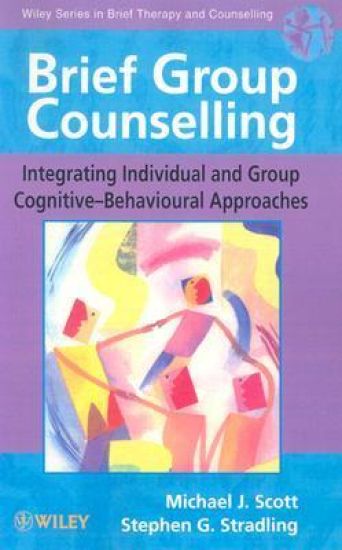
Brief Group Counselling

Brief Group Counselling

Michael J. Scott; Stephen G. Stradling

John Wiley Sons Inc
1998
nidottu
Counselling and therapy in small groups is manageable, effective,efficient, and an increasingly important part of the repertoire ofthe busy practitioner. This book is an up-to-date and accessibleguide to the principles and practice of working with small groups,using a cognitive-behavioural perspective. The context is work withgroups of 5 8 clients in programmes of brief therapy consisting of10 group sessions supplemented, where necessary, by individualcounselling sessions. Therapists and counsellors will welcome thisbook for its * Focus on group treatment combined with individual clientassessment * Treatment of four common emotional problems Generalized Anxiety,Panic with Agoraphobia, PTSD, and Depression. * Detailed examples of programmes in these areas, together withfollow-up sessions * Guidance on the concepts and techniques of cognitive-behaviouralcounselling, as well as the issues which arise in practice. * Realistic techniques for auditing the effectiveness of brieftherapy and counselling programmes "This important book opens up new opportunities to apply provencognitive-behavioural methods in small group settings. The methodsdescribed are eminently practical and the authors have taken painsto prepare the individual counsellor for the challenges of groupwork. It is strongly recommended for counsellors, social workersand clinical psychologists seeking to treat anxiety and depressionin a more cost-effective way". Professor Chris Brewin, RoyalHolloway University of London This book appears in the Wiley Seriesin Brief Therapy and Counselling Series Editor: Windy DrydenGoldsmiths College, University of London, UK
The Modern Legislative Veto

The Modern Legislative Veto

Michael J. Berry

The University of Michigan Press
2017
nidottu
In The Modern Legislative Veto, Michael J. Berry uses a multimethod research design, incorporating quantitative and qualitative analyses, to examine the ways that Congress has used the legislative veto over the past 80 years. This parliamentary maneuver, which delegates power to the executive but grants the legislature a measure of control over the implementation of the law, raises troubling questions about the fundamental principle of separation of governmental powers. Berry argues that, since the U.S. Supreme Court declared the legislative veto unconstitutional in Immigration and Naturalization Service (INS) v. Chadha (1983), Congress has strategically modified its use of the veto to give more power to appropriations committees. Using an original dataset of legislative veto enactments, Berry finds that Congress has actually increased its use of this oversight mechanism since Chadha, especially over defense and foreign policy issues. Democratic and Republican presidents alike have fought back by vetoing legislation containing legislative vetoes and by using signing statements with greater frequency to challenge the legislative veto’s constitutionality. A complementary analysis of state-level use of the legislative veto finds variation in oversight powers granted to state legislatures, but similar struggles between the legislature and the executive. This ongoing battle over the legislative veto points to broader efforts by legislative and executive actors to control policy, efforts that continually negotiate how the democratic republic established by the Constitution actually operates in practice.
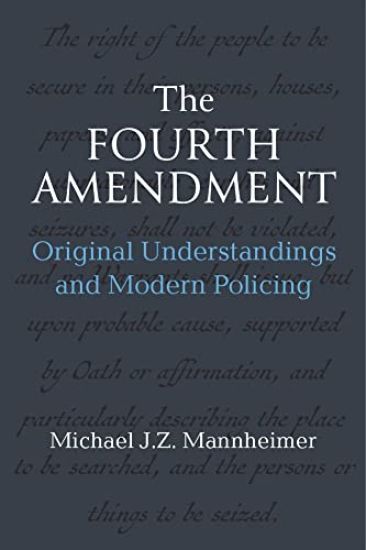
The Fourth Amendment

The Fourth Amendment

Michael J. Z. Mannheimer

THE UNIVERSITY OF MICHIGAN PRESS
2023
nidottu
Police are required to obey the law. While that seems obvious, courts have lost track of that requirement due to misinterpreting the two constitutional provisions governing police conduct: the Fourth and Fourteenth Amendments. The Fourth Amendment forbids "unreasonable searches and seizures" and is the source of most constitutional constraints on policing. Although that provision technically applies only to the federal government, the Fourteenth Amendment, ratified in the wake of the Civil War, has been deemed to apply the Fourth Amendment to the States.This book contends that the courts’ misinterpretation of these provisions has led them to hold federal and state law enforcement mistakenly to the same constitutional standards. The Fourth Amendment was originally understood as a federalism, or “states’ rights,” provision that, in effect, required federal agents to adhere to state law when searching or seizing. Thus, applying the same constraint to the States is impossible. Instead, the Fourteenth Amendment was originally understood in part as requiring that state officials (1) adhere to state law, (2) not discriminate, and (3) not be granted excessive discretion by legislators. These principles should guide judicial review of modern policing. Instead, constitutional constraints on policing are too strict and too forgiving at the same time. In this book, Michael J.Z. Mannheimer calls for a reimagination of what modern policing could look like based on the original understandings of the Fourth and Fourteenth Amendments.
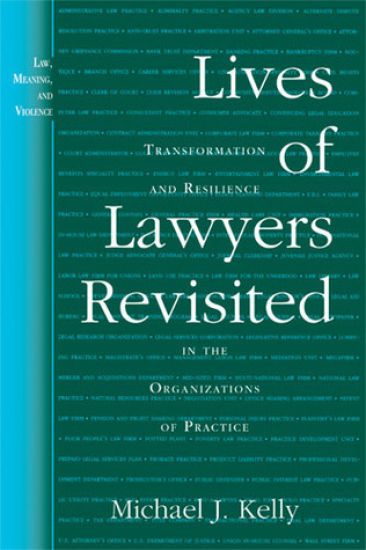
Lives of Lawyers Revisited

Lives of Lawyers Revisited

Michael J. Kelly

The University of Michigan Press
2007
nidottu
The past two decades have seen profound changes in the legal profession. Lives of Lawyers Revisited extends Michael Kelly’s work in the original Lives of Lawyers, offering unique insights into the nature of these changes, examined through stories of five extraordinarily varied law practices. By placing the spotlight on organizations as phenomena that generate their own logic and tensions, Lives of Lawyers Revisited speaks to the experience of many lawyers and anticipates important issues on the professional horizon."Michael Kelly has done it again! His Lives of Lawyers Revisited is a very easy read about some very difficult notions like 'litigation blindness' and law as a business. It presents some fascinating perspectives on our profession."—J. Michael McWilliams, Past President, American Bar Association"The best single book about the American realities and possibilities of the American legal profession, combining an empathic and insightful account of law practice with a penetrating analysis of the wider context of professional work."—Marc Galanter, University of Wisconsin"Michael Kelly believes that professional values and conduct are not realized in codes, but in the experiences of practice, and that practice draws its routines and ideals from organizations. Through his studies of lawyers in various firms, closely observed and sympathetically described, Kelly reveals how differently organizations adapt to the intense pressures of today's practice environment. His method of linking individual life-experiences to organizational strategies and the external constraints of competition and client demands infuses realism and richness into the concept of professionalism and makes this one of the most interesting and original books on professions and professionalism to appear in years."—Robert W. Gordon, Yale Law School"In his two volumes of Lives of Lawyers, Michael Kelly explores legal ethics in an unusual, and unusually rewarding, way. Rather than focusing on rules or arguments, Kelly looks at the kind of lives lawyers lead. Ethics, Socrates thought, is about how to live one's life, and Kelly takes the Socratic question to heart. He explores the institutions lawyers work in and the choices they make. He writes with intelligence, great insight, and above all with heart. This is a superb book."—David Luban, Georgetown UniversityMichael J. Kelly is President and Chairman of the Board of the National Senior Citizens Law Center, an advocacy group for older Americans of limited means.
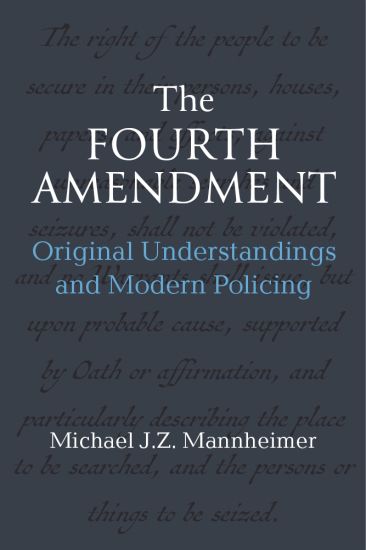
The Fourth Amendment

The Fourth Amendment

Michael J. Z. Mannheimer

THE UNIVERSITY OF MICHIGAN PRESS
2023
sidottu
Police are required to obey the law. While that seems obvious, courts have lost track of that requirement due to misinterpreting the two constitutional provisions governing police conduct: the Fourth and Fourteenth Amendments. The Fourth Amendment forbids "unreasonable searches and seizures" and is the source of most constitutional constraints on policing. Although that provision technically applies only to the federal government, the Fourteenth Amendment, ratified in the wake of the Civil War, has been deemed to apply the Fourth Amendment to the States.This book contends that the courts’ misinterpretation of these provisions has led them to hold federal and state law enforcement mistakenly to the same constitutional standards. The Fourth Amendment was originally understood as a federalism, or “states’ rights,” provision that, in effect, required federal agents to adhere to state law when searching or seizing. Thus, applying the same constraint to the States is impossible. Instead, the Fourteenth Amendment was originally understood in part as requiring that state officials (1) adhere to state law, (2) not discriminate, and (3) not be granted excessive discretion by legislators. These principles should guide judicial review of modern policing. Instead, constitutional constraints on policing are too strict and too forgiving at the same time. In this book, Michael J.Z. Mannheimer calls for a reimagination of what modern policing could look like based on the original understandings of the Fourth and Fourteenth Amendments.
Empowering Exporters

Empowering Exporters

Michael J. Gilligan

The University of Michigan Press
1997
sidottu
Until the New Deal, most groups seeking protection from imports were successful in obtaining relief from Congress. In general the cost of paying the tariffs for consumers was less than the cost of mounting collective action to stop the tariffs. In 1934, with the passage of the Reciprocal Trade Agreements Act, all of this changed. The six decades that followed have produced a remarkable liberalization of trade policy in the United States. This occurred despite the fact that domestic politics, according to some of the best developed theories, should have prevented this liberalization. Michael Gilligan argues that liberalization has succeeded because it has been reciprocal with liberalization in other countries. Our trade barriers have been reduced as an explicit quid pro quo for reduction of trade barriers in other countries. Reciprocity, Gilligan argues, gives exporters the incentive to support free trade policies because it gives them a clear gain from free trade and thus enables the exporters to overcome collective action problems. The lobbying by exporters, balancing the interests of groups seeking protection, changes the preferences of political leaders in favor of more liberalization. Gilligan tests his theory in a detailed exploration of the history of American trade policy and in a quantitative analysis showing increases in the demand for liberalization as the result of reciprocity in trade legislation from 1890 to the present. This book should appeal to political scientists, economists, and those who want to understand the political underpinnings of American trade policy. Michael J. Gilligan is Assistant Professor of Politics, New York University.
The Modern Legislative Veto

The Modern Legislative Veto

Michael J. Berry

The University of Michigan Press
2016
sidottu
In The Modern Legislative Veto, Michael J. Berry uses a multimethod research design, incorporating quantitative and qualitative analyses, to examine the ways that Congress has used the legislative veto over the past 80 years. This parliamentary maneuver, which delegates power to the executive but grants the legislature a measure of control over the implementation of the law, raises troubling questions about the fundamental principle of separation of governmental powers. Berry argues that, since the U.S. Supreme Court declared the legislative veto unconstitutional in Immigration and Naturalization Service (INS) v. Chadha (1983), Congress has strategically modified its use of the veto to give more power to appropriations committees. Using an original dataset of legislative veto enactments, Berry finds that Congress has actually increased its use of this oversight mechanism since Chadha, especially over defense and foreign policy issues. Democratic and Republican presidents alike have fought back by vetoing legislation containing legislative vetoes and by using signing statements with greater frequency to challenge the legislative veto’s constitutionality. A complementary analysis of state-level use of the legislative veto finds variation in oversight powers granted to state legislatures, but similar struggles between the legislature and the executive. This ongoing battle over the legislative veto points to broader efforts by legislative and executive actors to control policy, efforts that continually negotiate how the democratic republic established by the Constitution actually operates in practice.
The Drama of the American Short Story, 1800-1865

The Drama of the American Short Story, 1800-1865

Michael J. Collins

The University of Michigan Press
2016
sidottu
The Drama of the American Short Story, 1800–1865 argues that to truly understand the short story form, one must look at how it was shaped by the lively, chaotic, and deeply politicized world of 19th-century transatlantic theater and performance culture. By resurrecting long-neglected theatrical influences on representative works of short fiction, Michael J. Collins demonstrates that it was the unruly culture of the stage that first energized this most significant of American art forms. Whether it was Washington Irving’s first job as theater critic, Melville’s politically controversial love of British drama, Alcott’s thwarted dreams of stage stardom, Poe and Lippard’s dramatizations of peculiarly bloodthirsty fraternity hazings, or Hawthorne’s fascination with automata, theater was a key imaginative site for the major pioneers of the American short story. The book shows how perspectives from theater studies, anthropology, and performance studies can enrich readings of the short-story form. Moving beyond arbitrary distinctions between performance and text, it suggests that this literature had a social life and was engaged with questions of circumatlantic and transnational culture. It suggests that the short story itself was never conceived as a nationalist literary form, but worked by mobilizing cosmopolitan connections and meanings. In so doing, the book resurrects a neglected history of American Federalism and its connections to British literary forms.
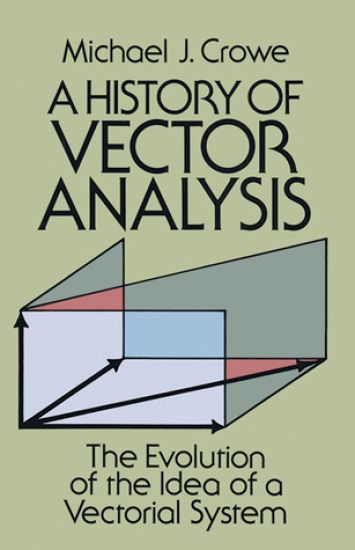
A History of Vector Analysis

A History of Vector Analysis

Michael J. Crowe

Dover Publications Inc.
2003
nidottu
Prize-winning study traces the rise of the vector concept from the discovery of complex numbers through the systems of hypercomplex numbers to the final acceptance around 1910 of the modern system of vector analysis.
Extinctions

Extinctions

Michael J. Benton

THAMES HUDSON LTD
2023
sidottu
A journey through the great mass-extinction events that have shaped our Earth. In this vast sweep of our Earth’s history, Michael Benton brings the deep past to life as never before. Deploying the cutting-edge tools in biology, chemistry, physics and geology that are transforming our understanding of previous environmental cataclysms – including the incredible new discovery of a hitherto unknown extinction event – he uncovers not only their lethal effects but also the processes that brought about such large-scale destruction. Beginning with the oldest extinction, Benton investigates the Late Ordovician, which set the evolution of the first animals on an entirely new course; the late Devonian, brought on by global warming; the cataclysmic End-Permian, which wiped out over 90 per cent of all life on Earth; and, book-ending the age of the dinosaurs, the newly discovered Carnian Pluvial Event and the End-Cretaceous asteroid. He examines how global warming, acid rain, ocean acidification, erupting volcanoes and meteorite impact have affected conditions on Earth, the drastic consequences for global ecology, and how life in turn survived, adapted and evolved. This expert retelling of scientific breakthroughs allows us to link long-ago upheavals to our modern crises. As today’s climate scientists and political leaders grapple to understand these processes and our planet enters the sixth great extinction, these insights from the past may hold the key to survival.
Dinosaurs

Dinosaurs

Michael J. Benton

Thames Hudson Ltd
2021
sidottu
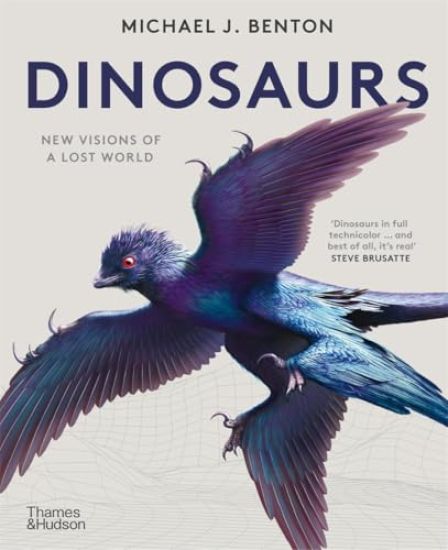
This book presents the first visualizations of dinosaurs and other prehistoric reptiles as they really looked. Up to now, colours were imaginary, but here we draw on the newest research to present stunning images where every detail of colour, pattern, feather, scale and scute are explained from first-hand evidence. Dinosaurs are not what you thought they were – or at least, they didn’t look like you thought they did. The world-leading palaeontologist Michael J. Benton brings us a new visual guide to the world of the dinosaurs, showing how rapid advances in technology and amazing new fossil finds have changed the way we see dinosaurs forever. Stunning new illustrations from palaeoartist Bob Nicholls display the latest and most exciting scientific discoveries in vibrant colour. No book before this has been so rigorous in its use of new data that finally tell us how dinosaurs actually looked. From Sinosauropteryx, the first dinosaur to have its colour patterns identified – a ginger and white striped tail – by Benton’s team at Bristol University in 2010, to the recent research on the mixed feathers and scales of Kulindadromeus, this is the first book to be based on cutting-edge scientific research. Each chapter focuses on one particular species, featuring a specially commissioned illustration that brings to life the latest scientific breakthroughs, with accompanying text exploring how palaeontologists have become able to determine new details such as the patterns on skin and the colours of feathers of animals that lived millions of years ago. This will be a visual compendium to surprise and challenge everything you thought you knew about what dinosaurs looked like and how they lived.With over 150 illustrations in colour
American Art and Architecture

American Art and Architecture

Michael J. Lewis

Thames Hudson Ltd
2006
nidottu
A historical survey of American art and architecture from 1600 to the present is chronologically organized to discuss the characteristics of different periods, in a volume that charts the ways in which American artists and designers adopted and diverged from earlier European models. Original.
When Life Nearly Died

When Life Nearly Died

Michael J. Benton

Thames Hudson Ltd
2015
nidottu
The greatest mass extinction in Earth’s history happened some 251 million years ago. In this cataclysm at least 90% of life was killed, both on land and in the sea, almost bringing evolution to a halt. What caused destruction on such an unimaginable scale? Was it the impact of a huge meteorite, or prolonged volcanic eruption in Siberia? In this acclaimed book, now updated to include the most recent research and findings, Michael Benton assembles all the evidence and gives his verdict.
The Dinosaurs Rediscovered

The Dinosaurs Rediscovered

Michael J. Benton

Thames Hudson Ltd
2020
nidottu
If you want to know how we know what we know about dinosaurs, read this book! Steve Brusatte 'I defy anyone who is, like me, a non-scientist to read it and not feel a sense of wonder’ Tom Holland, Guardian Startling new fossil finds are the lifeblood of modern palaeobiology. Giant sauropod dinosaur skeletons from Patagonia, dinosaurs with feathers from China, and even a tiny dinosaur tail in Burmese amber – complete down to every detail of its filament-like feathers, skin, bones and mummified tail muscles – inspire awe in a global audience enthralled by the idea of these great creatures walking the earth. Dinosaurs are of perennial interest to all ages, as illustrated by the huge range of dino-themed films, books and live attractions, from the enduring popularity of the Jurassic Park franchise to the success of London’s immersive ‘Dinosaurs in the Wild’ experience. In the past twenty years, dinosaur study has changed from natural history to testable science. New technologies have revealed secrets locked in the bones in a way nobody predicted – we can now work out the colour of dinosaurs, their bite forces, speeds and parental care as well as how they came to die out.This groundbreaking book illustrates how science has replaced speculation and how our understanding of dinosaurs and their world hascompletely changed. The subject has never been so vigorous, has never changed so fast, and has never been so attractive to so many.
Dinosaurs

Dinosaurs

Michael J. Benton

THAMES HUDSON LTD
2025
nidottu
An illustrated guide to our astonishing new understanding of dinosaurs, with the latest science and the most accurate and visually stunning palaeoart. Dinosaurs are not what you thought they were – or at least, they didn’t look like you thought they did. The world-leading palaeontologist Michael J. Benton brings us a new visual guide to the world of the dinosaurs, showing how rapid advances in technology and amazing new fossil finds have changed the way we see dinosaurs forever. Stunning new illustrations from palaeoartist Bob Nicholls display the latest and most exciting scientific discoveries in vibrant colour. No book before this has been so rigorous in its use of new data that finally tell us how dinosaurs actually looked. From Sinosauropteryx, the first dinosaur to have its colour patterns identified – a ginger and white striped tail – by Benton’s team at Bristol University in 2010, to the recent research on the mixed feathers and scales of Kulindadromeus, this is the first book to be based on cutting-edge scientific research. Each chapter focuses on one particular species, featuring a specially commissioned illustration that brings to life the latest scientific breakthroughs, with accompanying text exploring how palaeontologists have become able to determine new details such as the patterns on skin and the colours of feathers of animals that lived millions of years ago. This is a visual compendium to surprise and challenge everything you thought you knew about what dinosaurs looked like and how they lived.
Extinctions

Extinctions

Michael J. Benton

THAMES HUDSON LTD
2025
nidottu
A journey through the great mass-extinction events that have shaped our Earth: 'Deeply informed and readable' Nature In this vast sweep of our Earth’s history, Michael Benton brings the deep past to life as never before. Deploying the cutting-edge tools in biology, chemistry, physics and geology that are transforming our understanding of previous environmental cataclysms – including the incredible new discovery of a hitherto unknown extinction event – he uncovers not only their lethal effects but also the processes that brought about such large-scale destruction. Beginning with the oldest extinction, Benton investigates the Late Ordovician, which set the evolution of the first animals on an entirely new course; the late Devonian, brought on by global warming; the cataclysmic End-Permian, which wiped out over 90 per cent of all life on Earth; and, book-ending the age of the dinosaurs, the newly discovered Carnian Pluvial Event and the End-Cretaceous asteroid. He examines how global warming, acid rain, ocean acidification, erupting volcanoes and meteorite impact have affected conditions on Earth, the drastic consequences for global ecology, and how life in turn survived, adapted and evolved. This expert retelling of scientific breakthroughs allows us to link long-ago upheavals to our modern crises. As today’s climate scientists and political leaders grapple to understand these processes and our planet enters the sixth great extinction, these insights from the past may hold the key to survival.
The Jivaro

The Jivaro

Michael J. Harner

University of California Press
1984
pokkari
Only one tribe of American Indians is known ever to have successfully revolted against the empire of Spain and to have thwarted all subsequent attempts by the Spaniards to reconquer them: the Jivaro (hee'-va-ro), the untsuri suarii of eastern Ecuador. From 1599 onward they remained unconquered in their forest fastness east of the Andes, despite the fact that they were known to occupy one of the richest placer gold deposit regions in all of South America. Tales of their fierceness became part of the folklore of Latin America, and their warlike reputation spread in the late nineteenth and early twentieth centuries when Jivaro "shrunken head" trophies, tsantsa, found their way to the markets of exotica in the Western world. As occasional travelers visited them in the first decades of this century, the Jivaro also became known not as just a warlike group, but as an individualistic people intensely jealous of their freedom and unwilling to be subservient to authority, even among themselves. It was this quality that particularly attracted me when I went to study their way of life in 1956-57 and I was most fortunate, at that time, to find, especially east of the Cordillera de Cutucli, a portion of the Jivaro still unconquered and still living, with some changes, their traditional life style. This book is about their culture.