Kirjojen hintavertailu. Mukana 12 586 071 kirjaa ja 12 kauppaa.

Kirjahaku

Etsi kirjoja tekijän nimen, kirjan nimen tai ISBN:n perusteella.

1000 tulosta hakusanalla O. David Pech

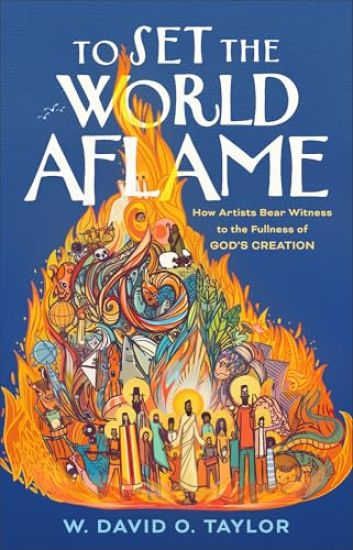
To Set the World Aflame

To Set the World Aflame

W. David O. Taylor

BAKER PUBLISHING GROUP
2026
sidottu
Artists are more than creatives; they are stewards of truth, goodness, and beauty. In To Set the World Aflame, W. David O. Taylor casts a sweeping vision for the vocation of artists. Drawing on three decades of work as a scholar, pastor, and global arts advocate, he shares how artists can shape the imaginations of others and serve the common good. With insights from Scripture, history, theology, aesthetics, missiology, and spiritual formation, Taylor explores how artists are called to be · caretakers of the imagination, custodians of the emotions, and stewards of the senses; · makers of life and meaning for the common good; · wholly alive and wholly themselves; and · witnesses to creation as the theater of God's glory and grace. This inspiring resource shows artists how all that they make--from art installations and moving pictures to graphic novels, gourmet meals, and Gothic cathedrals--brings us into an intentional and intensive experience of the aesthetic aspect of our lives. Artists invest our lives with vibrancy and meaning in a way that enables us to enter into the fullness of God's creative and recreative purposes for our world.
Vertebrate Endocrinology

Vertebrate Endocrinology

David O. Norris; James A. Carr

Academic Press Inc
2021
sidottu
Vertebrate Endocrinology, Sixth Edition, provides a comprehensive, up-to-date treatment of the endocrine system for college and university students as well as researchers. This book is logically arranged, easily comprehended, and well-illustrated. It covers traditional hormone-based systems and introduces all forms of chemical communication, their implications for the health of humans, domesticated, and wild vertebrates. Written by two experts who have completed extensive research in comparative vertebrate endocrinology with an emphasis on natural and anthropogenic environmental factors influencing endocrine systems. Collectively, the authors have taught courses in endocrinology at the undergraduate and graduate level for more than 60 years. After first publishing in 1985, Vertebrate Endocrinology, Sixth Edition, continues to serve as an important resource for graduate students and advanced undergraduates in the biological sciences, animal sciences, and veterinary sciences. Endocrine researchers will also benefit from the book’s relevance in the areas of comparative, veterinary, and mammalian endocrinology.
Computer Systems

Computer Systems

Randal Bryant; David O'Hallaron

Pearson
2015
sidottu
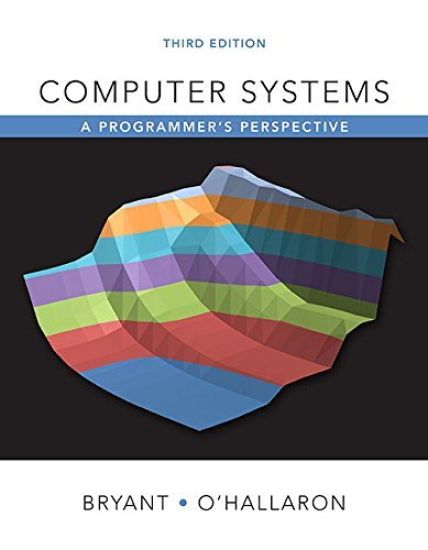
&>standalone product; MasteringEngineering ® does not come packaged with this content. If you would like to purchase both the physical text and MasteringEngineering search for 0134123832 / 9780134123837 Computer Systems: A Programmer's Perspective plus MasteringEngineering with Pearson eText — Access Card Package, 3/e Package consists of: 013409266X/9780134092669 Computer Systems: A Programmer's Perspective, 3/e0134071921/9780134071923 MasteringEngineering with Pearson eText -- Standalone Access Card -- for Computer Systems: A Programmer's Perspective, 3/e MasteringEngineering should only be purchased when required by an instructor. For courses in Computer Science and Programming Computer systems: A Programmer’s Perspective explains the underlying elements common among all computer systems and how they affect general application performance. Written from the programmer’s perspective, this book strives to teach readers how understanding basic elements of computer systems and executing real practice can lead them to create better programs. Spanning across computer science themes such as hardware architecture, the operating system, and systems software, the Third Edition serves as a comprehensive introduction to programming. This book strives to create programmers who understand all elements of computer systems and will be able to engage in any application of the field--from fixing faulty software, to writing more capable programs, to avoiding common flaws. It lays the groundwork for readers to delve into more intensive topics such as computer architecture, embedded systems, and cybersecurity. This book focuses on systems that execute an x86-64 machine code, and recommends that programmers have access to a Linux system for this course. Programmers should have basic familiarity with C or C++. Also available with MasteringEngineering MasteringEngineering is an online homework, tutorial, and assessment system, designed to improve results through personalized learning. This innovative online program emulates the instructor’s office hour environment, engaging and guiding students through engineering concepts with self-paced individualized coaching With a wide range of activities available, students can actively learn, understand, and retain even the most difficult concepts. Students, if interested in purchasing this title with MasteringEngineering, ask your instructor for the correct package ISBN and Course ID. Instructors, contact your Pearson representative for more information.
Danger Is Everywhere: A Handbook for Avoiding Danger
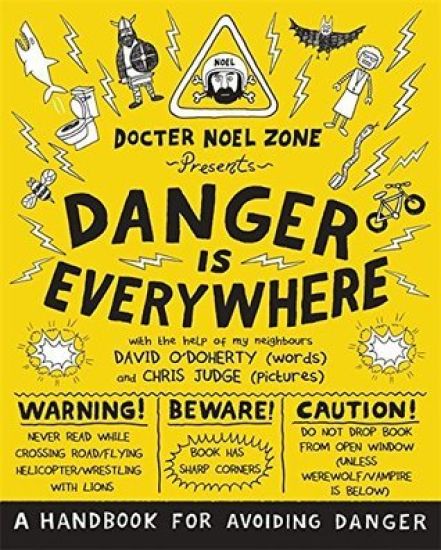
Diary of a Wimpy Kid meets The Dangerous Book for Boys, DANGER IS EVERYWHERE is a brilliantly funny handbook for avoiding danger of all kinds that will have everyone from reluctant readers to bookworms laughing out loud (very safely) from start to finish.DOES IT WARN YOU ABOUT WHAT TO DO IF A SHARK COMES UP OUT OF THE LOO WHILE YOU ARE SITTING ON IT? Yes it does.AND HOW TO FIND OUT IF YOUR GRANNY IS A ROBOT? That too.AND WHAT TO DO IF A VOLCANO ERUPTS UNDERNEATH YOUR HOUSE? After you've made sure it's not a neighbour's barbecue, this book will let you know exactly how to deal with it.'I dislocated my jaw laughing' Eoin Colfer, author of Artemis FowlWritten by Docter Noel Zone, the world's greatest (and only) Dangerologist, with the help of his neighbours:David O'Doherty (words) is a stand-up comedian, writer and regular guest on television shows such as QI, Have I Got News For You and Would I Lie To You? He has written two theatre shows for children, including one where he fixed their bicycles live on stage.Chris Judge (pictures) is the award winning author/illustrator of The Lonely Beast and a number of other picture books for children. His work has appeared in high-profile advertising campaigns, newspapers, magazines, exhibitions and other media in Ireland and the UK. His most recent work includes cover artwork for Roddy Doyle's Brilliant.www.DangerIsEverywhere.co.uk'A brilliantly silly survival guide' Sunday Express'A Joyful riposte to over-cautious parents . . . well-paced and funny throughout.' Time Out London'Imagine the Mighty Boosh crashed into the Wimpy Kid' The Times'A surreal, daft and funny book . . . A bracing satirical sideswipe at today's health-and-safety culture, aimed at kids who'll get the irony and relish the silliness.' Financial Times'Brilliantly funny' Gransnet'A brilliantly mapcap guide' ni4Kids.com'Laugh-out-loud' TheSchoolRun.com
Danger is Still Everywhere: Beware of the Dog (Danger is Everywhere book 2)
DANGER is STILL EVERYWHERE: Beware of the Dog!Will Docter Noel Zone's second book tell you how to combat a CROCUUM*? YESAnd reveal the secrets of the world's greatest (and only) Dangerologist? THAT TOOHas he written it yet? NOIs it because he's hiding in a wardrobe? MAYBEDocter Noel is facing his most terrifying situation EVER - a little dog called Napkin has come to stay. That may not sound particularly dangerous, but every POD (Pupil of Dangerology) knows the only safe pet is a pet rock. So now Docter Noel is hiding in a wardrobe while Napkin wreaks havoc around the Dangerzone. And all the while Docter Noel is supposed to be writing his new VERY IMPORTANT handbook on Dangerology (Level 2).That is until the Pet of the Year (POTY) contest is announced and Docter Noel hatches a plan. There's only one problem. Serial safety-flouter Max WURST is the judge. . .For Docter Noel, it's never been clearer that DANGER IS STILL EVERYWHERE*A crocodile that looks like a vacuum cleaner that lives under the stairs.Diary of a Wimpy Kid meets The Dangerous Book for Boys, DANGER is STILL EVERYWHERE is the second brilliantly funny handbook for avoiding danger of all kinds that will have everyone from reluctant readers to bookworms laughing out loud (very safely) from start to finish.Praise for DANGER IS EVERYWHERE:'I dislocated my jaw laughing' Eoin Colfer, author of Artemis Fowl'A brilliantly silly survival guide' Sunday Express'A Joyful riposte to over-cautious parents . . . well-paced and funny throughout.' Time Out London'Imagine the Mighty Boosh crashed into the Wimpy Kid' The Times'A surreal, daft and funny book . . . A bracing satirical sideswipe at today's health-and-safety culture, aimed at kids who'll get the irony and relish the silliness.' Financial Times'Brilliantly funny' Gransnet'A brilliantly mapcap guide' ni4Kids.com'Laugh-out-loud' TheSchoolRun.comcom
Danger Really is Everywhere: School of Danger (Danger is Everywhere 3)
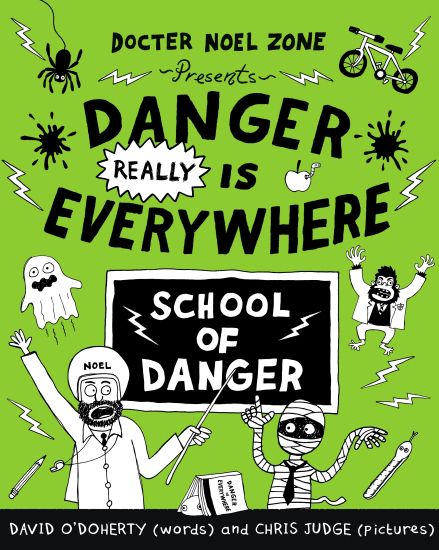
*SHORTLISTED FOR THE LAUGH OUT LOUD CHILDREN'S BOOK AWARDS 2016*The world's greatest (and only) DANGEROLOGIST is back to make YOU into a Level 3 DANGEROLOGIST in his new SCHOOL OF DANGER handbook.Following a mishap involving his DANGER MOBILE (shopping trolley) and the local school dinner lady, Docter Noel Zone joins the teaching staff to help out. WARNING! BEWARE! CAUTION! But any POD (Pupil of Dangerology) knows that schools are full of DANGER - from VAMPIRE teachers to HAUNTED BOOKS! And when bikes start to go missing from around school, to Docter Noel, it's never been clearer that DANGER REALLY IS EVERYWHEREDiary of a Wimpy Kid meets The Dangerous Book for Boys, DANGER REALLY IS EVERYWHERE is the third brilliantly funny handbook for avoiding danger of all kinds that will have everyone from reluctant readers to bookworms laughing out loud (very safely) from start to finish.Praise for the DANGER IS EVERYWHERE series:'I dislocated my jaw laughing' Eoin Colfer, author of Artemis Fowl'A brilliantly silly survival guide' Sunday Express'A Joyful riposte to over-cautious parents . . . well-paced and funny throughout.' Time Out London'Imagine the Mighty Boosh crashed into the Wimpy Kid' The Times'A surreal, daft and funny book . . . A bracing satirical sideswipe at today's health-and-safety culture, aimed at kids who'll get the irony and relish the silliness.' Financial Times'Brilliantly funny' Gransnet'A brilliantly mapcap guide' ni4Kids.com'Laugh-out-loud' TheSchoolRun.comcom.
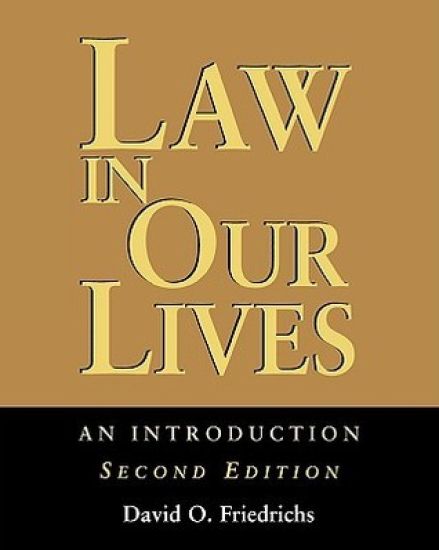
Law in Our Lives

Law in Our Lives

David O. Friedrichs

Oxford University Press Inc
2005
nidottu
Law in Our Lives is a law and society text that provides an interdisciplinary "mapping" of the nature of law as a social institution. The book is student-oriented and highly readable. Themes addressed include: * The meaning of law and legal reasoning. * Law in relation to justice, morality, and religion. * Explaining law and society: schools of jurisprudence and sociolegal theories. * Major legal traditions and systems of law. * Perspectives on comparative law. * A life in the legal profession. * An overview of legal institutions and processes. * Legal culture and beliefs about law and legal behavior. * Legal ethics. * Legal socialization. * How law has been reformed. * Emerging attributes of law in the 21st century.
Mill's Progressive Principles

Mill's Progressive Principles

David O. Brink

Oxford University Press
2015
nidottu
In Mill's Progressive Principles David Brink provides a systematic reconstruction and assessment of John Stuart Mill's contributions to the utilitarian and liberal traditions, examining his first principles and their application to issues of representative democracy and sexual equality. Brink defends novel interpretations of key elements in Mill's moral and political philosophy, including his concepts of motivation, happiness, duty, proof, harm and the harm principle, freedom of expression, anti-paternalism, representative democracy and weighted voting, and sexual equality. However, the most distinctive aspect of this account of Mill's commitments is the case it makes for a perfectionist reading of his conception of happiness and the significance this has for other aspects of his moral and political philosophy. On this perfectionist conception, the chief ingredients of happiness involve the exercise of a person's capacities for practical deliberation and decision that mark us as progressive beings. Once this perfectionist theme is made explicit, it can be shown to be central to Mill's views about utilitarianism, liberalism, rights, democratic government, and sexual equality.
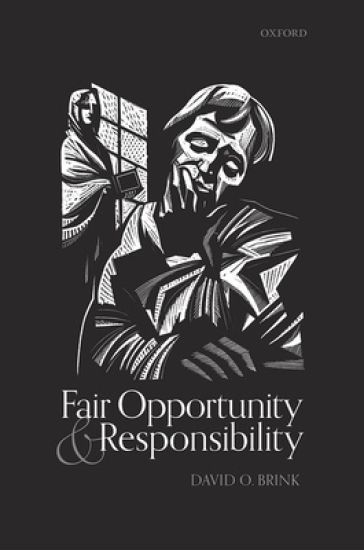
Fair Opportunity and Responsibility

Fair Opportunity and Responsibility

David O. Brink

Clarendon Press
2021
sidottu
Fair Opportunity and Responsibility lies at the intersection of moral psychology and criminal jurisprudence and analyzes responsibility and its relations to desert, culpability, excuse, blame, and punishment. It links responsibility with the reactive attitudes but makes the justification of the reactive attitudes depend on a prior and independent conception of responsibility. Responsibility and excuse are inversely related; an agent is responsible for misconduct if and only if it is not excused. As a result, we can study responsibility by understanding excuses. We excuse misconduct when an agent's capacities or opportunities are significantly impaired, because these capacities and opportunities are essential if agents are to have a fair opportunity to avoid wrongdoing. This conception of excuse tells us that responsibility itself consists in agents having suitable cognitive and volitional capacities - normative competence - and a fair opportunity to exercise these capacities free from undue interference - situational control. Because our reactive attitudes and practices presuppose the fair opportunity conception of responsibility, this supports a predominantly retributive conception of blame and punishment that treats culpable wrongdoing as the desert basis of blame and punishment. We can then apply the fair opportunity framework to assessing responsibility and excuse in circumstances of structural injustice, situational influences in ordinary circumstances and in wartime, insanity and psychopathy, immaturity, addiction, and crimes of passion. Though fair opportunity has important implications for each issue, treating them together allows us to explore common themes and appreciate the need to take partial responsibility and excuse seriously in our practices of blame and punishment.
Fair Opportunity and Responsibility

Fair Opportunity and Responsibility

David O. Brink

Oxford University Press
2025
nidottu
Fair Opportunity and Responsibility lies at the intersection of moral psychology and criminal jurisprudence and analyzes responsibility and its relations to desert, culpability, excuse, blame, and punishment. It links responsibility with the reactive attitudes but makes the justification of the reactive attitudes depend on a prior and independent conception of responsibility. Responsibility and excuse are inversely related; an agent is responsible for misconduct if and only if it is not excused. As a result, we can study responsibility by understanding excuses. We excuse misconduct when an agent's capacities or opportunities are significantly impaired, because these capacities and opportunities are essential if agents are to have a fair opportunity to avoid wrongdoing. This conception of excuse tells us that responsibility itself consists in agents having suitable cognitive and volitional capacities - normative competence - and a fair opportunity to exercise these capacities free from undue interference - situational control. Because our reactive attitudes and practices presuppose the fair opportunity conception of responsibility, this supports a predominantly retributive conception of blame and punishment that treats culpable wrongdoing as the desert basis of blame and punishment. We can then apply the fair opportunity framework to assessing responsibility and excuse in circumstances of structural injustice, situational influences in ordinary circumstances and in wartime, insanity and psychopathy, immaturity, addiction, and crimes of passion. Though fair opportunity has important implications for each issue, treating them together allows us to explore common themes and appreciate the need to take partial responsibility and excuse seriously in our practices of blame and punishment.
Perfectionism and the Common Good

Perfectionism and the Common Good

David O. Brink

Clarendon Press
2007
nidottu
David Brink presents a study of T. H. Green's classic Prolegomena to Ethics (1883) and its role in his philosophical thought. Green is one of the two most important figures in the British idealist tradition, and his political writings and activities had a profound influence on the development of Liberal politics in Britain. The Prolegomena is his major philosophical work. It begins with his idealist attack on empiricist metaphysics and epistemology and develops a perfectionist ethical theory that aims to bring together the best elements in the ancient and modern traditions, and that provides the moral foundations for Green's own distinctive brand of liberalism. Brink aims to restore the Prolegomena to its rightful place in the history of philosophy by providing a prolegomenon to the Prolegomena - one that situates the work in its intellectual context, sympathetically but critically engages its main themes, and explains Green's enduring significance for the history of ethics and contemporary ethical theory. Brink examines Green's life and work, his idealist attack on empiricism, his conception of agency, his perfectionist ethics of self-realization, the connections he draws between perfectionism and the common good, his conception of the differences between perfectionism and utilitarianism, and the connections between his perfectionism and his defense of a new form of political liberalism. Because Green develops his own views out of an examination of other traditions in the history of ethics, a fair assessment of Green's own contributions must compare his claims with the traditions that he examines and sometimes criticizes. Brink's study examines Green's relation to Aristotle, Locke, Hume, Butler, Mill, Kant, Hegel, Bradley, and Sidgwick, and concludes by examining Green's legacy for ethical theory. Perfectionism and the Common Good will be of substantial interest to students and scholars of the history of ethics, ethical theory, political philosophy, and nineteenth century philosophy.
Mill's Progressive Principles

Mill's Progressive Principles

David O. Brink

Oxford University Press
2013
sidottu
In Mill's Progressive Principles David Brink provides a systematic reconstruction and assessment of John Stuart Mill's contributions to the utilitarian and liberal traditions, examining his first principles and their application to issues of representative democracy and sexual equality. Brink defends novel interpretations of key elements in Mill's moral and political philosophy, including his concepts of motivation, happiness, duty, proof, harm and the harm principle, freedom of expression, anti-paternalism, representative democracy and weighted voting, and sexual equality. However, the most distinctive aspect of this account of Mill's commitments is the case it makes for a perfectionist reading of his conception of happiness and the significance this has for other aspects of his moral and political philosophy. On this perfectionist conception, the chief ingredients of happiness involve the exercise of a person's capacities for practical deliberation and decision that mark us as progressive beings. Once this perfectionist theme is made explicit, it can be shown to be central to Mill's views about utilitarianism, liberalism, rights, democratic government, and sexual equality.
Law in Our Lives: An Introduction

Law in Our Lives: An Introduction

David O. Friedrichs

Oxford University Press
2011
nidottu
Combining detailed theoretical discussions with real-world examples, Law in Our Lives: An Introduction, Third Edition, presents a broad analysis of the nature of law in contemporary society. Author David O. Friedrichs employs an exceptionally lucid writing style that makes the complex subject matter as student friendly as possible. Numerous pedagogical features--including boldfaced key terms, discussion questions, and appendices on case briefing, law in films, and relevant websites--further enhance the text's accessibility. Providing students with an interdisciplinary framework through which to understand law and society, Law in Our Lives, Third Edition, is ideal for courses that introduce law or address law and society.
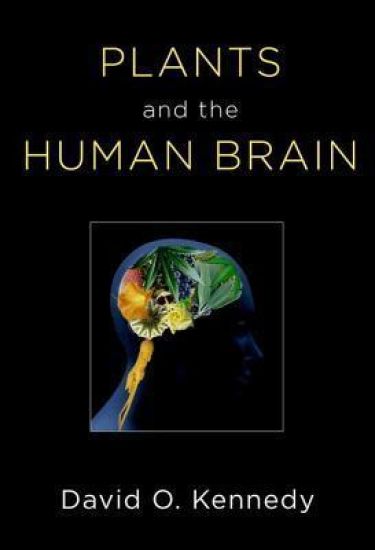
Plants and the Human Brain

Plants and the Human Brain

David O. Kennedy

Oxford University Press Inc
2014
sidottu
We're all familiar with the idea that plant-derived chemicals can have an impact on the functioning of the human brain. Most of us reach for a cup of coffee or tea in the morning, many of us occasionally eat some chocolate, some smoke a cigarette or take an herbal supplement, and some people use illicit drugs. We know a great deal about the mechanisms by which the psychoactive components of these various products have their effects on human brain function, but the question of why they have these effects has been almost totally ignored. This book sets out to describe not only how, in terms of pharmacology or psychopharmacology, but more importantly why plant- and fungus-derived chemicals have their effects on the human brain. The answer to this last question resides, in part, with the terrestrial world's two dominant life forms, the plants and the insects, and the many ecological roles the 'secondary metabolite' plant chemicals are trying to play; for instance, defending the plant against insect herbivores whilst attracting insect pollinators. The answer also resides in the intersecting genetic heritage of mammals, plants, and insects and the surprising biological similarities between the three taxa. In particular it revolves around the close correspondence between the brains of insects and humans, and the intercellular signaling pathways shared by plants and humans. Plants and the Human Brain describes and discusses both how and why phytochemicals affect brain function with respect to the three main groups of secondary metabolites: the alkaloids, which provide us with caffeine, a host of poisons, a handful of hallucinogens, and most drugs of abuse (e.g. morphine, cocaine, DMT, LSD, and nicotine); the phenolics, including polyphenols, which constitute a significant and beneficial part of our natural diet; and the terpenes, a group of multifunctional compounds which provide us with the active components of cannabis and a multitude of herbal extracts such as ginseng, ginkgo and valerian.
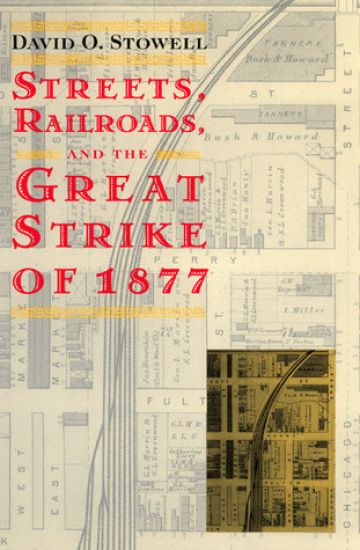
Streets, Railroads, and the Great Strike of 1877

Streets, Railroads, and the Great Strike of 1877

David O. Stowell

University of Chicago Press
1999
sidottu
For one week in late July of 1877, America shook with anger and fear as a variety of urban residents, mostly working class, attacked railroad property in dozens of towns and cities. The Great Strike of 1877 was one of the largest and most violent urban uprisings in American history. Whereas most historians treat the event solely as a massive labor strike that targeted the railroads, David O. Stowell examines America's predicament more broadly to uncover the roots of this rebellion. He studies the urban origins of the Strike in three upstate New York cities--Buffalo, Albany, and Syracuse. He finds that locomotives rumbled through crowded urban spaces, sending panicked horses and their wagons careening through streets. Hundreds of people were killed and injured with appalling regularity. The trains also disrupted street traffic and obstructed certain forms of commerce. For these reasons, Stowell argues, The Great Strike was not simply an uprising fueled by disgruntled workers. Rather, it was a grave reflection of one of the most direct and damaging ways many people experienced the Industrial Revolution.
Streets, Railroads, and the Great Strike of 1877

Streets, Railroads, and the Great Strike of 1877

David O. Stowell

University of Chicago Press
1999
nidottu
For one week in late July of 1877, America shook with anger and fear as a variety of urban residents, mostly working class, attacked railroad property in dozens of towns and cities. The Great Strike of 1877 was one of the largest and most violent urban uprisings in American history.Whereas most historians treat the event solely as a massive labor strike that targeted the railroads, David O. Stowell examines America's predicament more broadly to uncover the roots of this rebellion. He studies the urban origins of the Strike in three upstate New York cities—Buffalo, Albany, and Syracuse. He finds that locomotives rumbled through crowded urban spaces, sending panicked horses and their wagons careening through streets. Hundreds of people were killed and injured with appalling regularity. The trains also disrupted street traffic and obstructed certain forms of commerce. For these reasons, Stowell argues, The Great Strike was not simply an uprising fueled by disgruntled workers. Rather, it was a grave reflection of one of the most direct and damaging ways many people experienced the Industrial Revolution."Through meticulously crafted case studies . . . the author advances the thesis that the strike had urban roots, that in substantial part it represented a community uprising. . . .A particular strength of the book is Stowell's description of the horrendous accidents, the toll in human life, and the continual disruption of craft, business, and ordinary movement engendered by building railroads into the heart of cities."—Charles N. Glaab, American Historical Review
Obama`s Race – The 2008 Election and the Dream of a Post–Racial America

Obama`s Race – The 2008 Election and the Dream of a Post–Racial America

Michael Tesler; David O Sears; David O. Sears

University of Chicago Press
2010
sidottu
Barack Obama's presidential victory naturally led people to believe that the United States might finally be moving into a post-racial era. "Obama's Race" - and its eye-opening account of the role played by race in the election - paints a dramatically different picture. The authors argue that the 2008 election was more polarized by racial attitudes than any other presidential election on record - and perhaps more significantly, that there were two sides to this racialization: resentful opposition to and racially liberal support for Obama. As Obama's campaign was given a boost in the primaries from racial liberals that extended well beyond that usually offered to ideologically similar white candidates, Hillary Clinton lost much of her long-standing support and instead became the preferred candidate of Democratic racial conservatives. Time and again, voters' racial predispositions trumped their ideological preferences as John McCain - seldom described as conservative in matters of race - became the darling of racial conservatives from both parties. Hard-hitting and sure to be controversial, "Obama's Race" will be both praised and criticized - but certainly not ignored.
Obama's Race

Obama's Race

Michael Tesler; David O Sears; David O. Sears

University of Chicago Press
2010
nidottu
Barack Obama's presidential victory naturally led people to believe that the United States might finally be moving into a post-racial era. "Obama's Race" - and its eye-opening account of the role played by race in the election - paints a dramatically different picture. The authors argue that the 2008 election was more polarized by racial attitudes than any other presidential election on record - and perhaps more significantly, that there were two sides to this racialization: resentful opposition to and racially liberal support for Obama. As Obama's campaign was given a boost in the primaries from racial liberals that extended well beyond that usually offered to ideologically similar white candidates, Hillary Clinton lost much of her long-standing support and instead became the preferred candidate of Democratic racial conservatives. Time and again, voters' racial predispositions trumped their ideological preferences as John McCain - seldom described as conservative in matters of race - became the darling of racial conservatives from both parties. Hard-hitting and sure to be controversial, "Obama's Race" will be both praised and criticized - but certainly not ignored.