Kirjahaku
Etsi kirjoja tekijän nimen, kirjan nimen tai ISBN:n perusteella.
1000 tulosta hakusanalla Olga Pattern
Hypertheatre: Contemporary Radical Adaptation of Greek Tragedy investigates the adaptation of classical drama for the contemporary stage and explores its role as an active, polemical form of theatre which addresses present-day issues. The book’s premise is that by breaking drama into constituent parts, revising, reinterpreting and rewriting to create a new, culturally and politically relevant construct, the process of adaptation creates a 'hyperplay', newly repurposed for the contemporary world. This process is explored through a diverse collection of postmodern adaptations of Antigone, Medea, and The Trojan Women, analysing their adaptive strategies and the evidence of how these remakings reflect the cultures of which they are a part. Central to this study is the idea that each of these adaptations becomes an entirely new play, redefining its central female figures and invoking reconfigurations of femininity which emphasise individual women’s strengths and female solidarity. Written for scholars of Theatre, Adaptation, Performance Studies, and Literature, Hypertheatre places the Greek classics firmly within a contemporary feminist discourse.
Originally published in 1990, Soviet Urbanization provides an assessment of Soviet urban systems. Drawing on her personal experiences at the Soviet Academy of Sciences and bringing with her much material otherwise unavailable in the West, the author analyses the structure of the Soviet urban network and its future development under the constraints of central planning. The author concludes that the danger to Soviet urbanization programme lies in the gap between central planning on the one hand and actual spatial change on the other. This book will appeal to students and academics working in the disciplines of geography, urban studies and planning.
A Flora of Northeastern Minnesota was first published in 1965. Minnesota Archive Editions uses digital technology to make long-unavailable books once again accessible, and are published unaltered from the original University of Minnesota Press editions. A manual for the identification of the ferns, fern allies, flowering plants, trees, shrubs, and herbs of Minnesota's Arrowhead region, this volume lists 113 botanic families and describes 1,300 species, with keys for identification. There are 80 line drawings of plant species and 419 maps showing distribution.
La Mujer en el Contexto Epistolar Poetico del Siglo de Oro
Olga M. Muaniz
Peter Lang Publishing Inc
1996
sidottu
Born into a Victorian Danish family, Karen Christentze Dinesen married her second cousin, a high-spirited and philandering baron, and moved to Kenya where she ran a coffee plantation, painted, and wrote. She later returned to Denmark, lived through the German occupation during World War II, and became a pivotal figure in Heretica, a major literary movement that flourished in Denmark after the war. By the time of her death, Dinesen was an international figure. Truman Capote would later call Out of Africa one of the most beautiful books of the century. Despite the popularity of her writing, little is known about her life. For this provocative biography, Pelensky has uncovered hundreds of papers in libraries and private collections, and discovered new interview sources in Africa, Denmark, and England to help put the pieces of Dinesen's life together. Her father's outspoken sympathy for the plight of the American Indians, his suicide and the effects of his personal anguish as a failed adventurer are illuminated as major forces on Dinesen's imagination. The Danish history of romance and masquerade and the tradition of pantomime in Denmark are also explored as themes that recur in Dinesen's work.
This historical overview of criticism of the famous Danish writer is the first such collection available in English. Composed of selections from major critics and scholars both here and abroad (including Aage Henriksen, Eudora Welty, Curtis Cate, Abdul JanMohamed, and Lionel Trilling, among others), Isak Dinesen would have suited the self-absorbed artist, who so delighted in being continually appropriated and invented within different forms of critical discourse that it became a source of amusement and distraction for her. For us, it is a reminder that literary works and their authors must yield gracefully to critical shaping for a literary reputation to take on a life of its own. To watch the unfolding of reputation under such continual reinvention becomes high literary spectacle. Readers of this collection will witness a major twentieth-century writer emerge from the judgments imposed by various critical schools in vogue from the early 1950s.
Linear and Quasilinear Equations of Parabolic Type
Olga Aleksandrovna Ladyzhenskaia
Amer Mathematical Society
1968
pokkari
In this volume boundary value problems are studied from two points of view; solvability, unique or otherwise, and the effect of various smoothness properties of the given functions on the smoothness of the solutions. There are seven chapters contained in this volume. Chapter One gives a statement of the new results and an historical sketch. Chapter two introduces the various function spaces typical of modern Russian-style functional analysis. Chapters three and four deal with linear equations. Chapter six concerns itself with quasilinear equations, and chapter seven with systems of equations. These last four chapters can be read independently of one another.
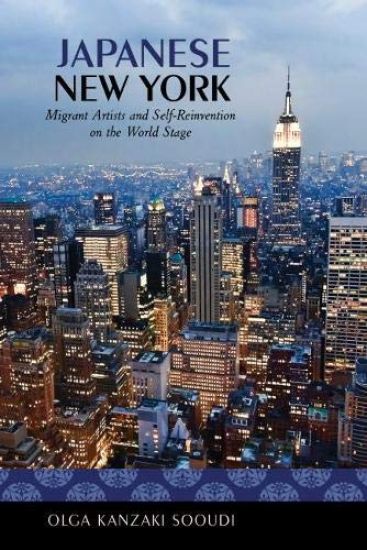
Spend time in New York City and, soon enough, you will encounter some of the Japanese nationals who live and work there—young English students, office workers, painters, and hairstylists. New York City, one of the world’s most vibrant and creative cities, is also home to one of the largest overseas Japanese populations in the world. Among them are artists and designers who produce cutting-edge work in fields such as design, fashion, music, and art. Part of the so-called “creative class” and a growing segment of the neoliberal economy, they are usually middle-class and college-educated. They move to New York for anywhere from a few years to several decades in the hope of realising dreams and aspirations unavailable to them in Japan. Yet the creative careers they desire are competitive, and many end up working illegally in precarious, low paying jobs. Though they often migrate without fixed plans for return, nearly all eventually do, and their migrant trajectories are punctuated by visits home.Japanese New York offers an intimate, ethnographic portrait of these Japanese creative migrants living and working in NYC. At its heart is a universal question—how do adults reinvent their lives? In the absence of any material or social need, what makes it worthwhile for people to abandon middle-class comfort and home for an unfamiliar and insecure life? Author Olga Sooudi explores these questions in four different venues patronized by New York’s Japanese: a grocery store and restaurant, where hopeful migrants work part-time as they pursue their ambitions; a fashion designer’s atelier and an art gallery, both sites of migrant aspirations. As Sooudi’s migrant artists toil and network, biding time until they “make it” in their chosen industries, their optimism is complicated by the material and social limitations of their lives.The story of Japanese migrants in NYC is both a story about Japan and a way of examining Japan from beyond its borders. The Japanese presence abroad, a dynamic process involving the moving, settling, and return to Japan of people and their cultural products, is still underexplored. Sooudi’s work will help fill this lacuna and will contribute to international migration studies, to the study of contemporary Japanese culture and society, and to the study of Japanese youth, while shedding light on what it means to be a creative migrant worker in the global city today.
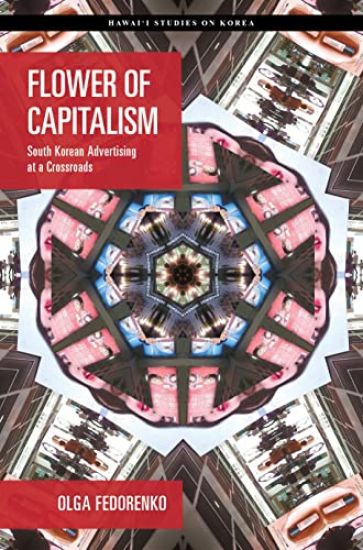
An ethnography of advertising in postmillennial South Korea, Flower of Capitalism: South Korean Advertising at a Crossroads details contests over advertising freedoms and obligations among divergent vested interests while positing far-reaching questions about the social contract that governs advertising in late-capitalist societies. The term "flower of capitalism" is a clichéd metaphor for advertising in South Korea, bringing resolutely positive connotations, which downplay the commercial purposes of advertising and give prominence to its potential for public service. Historically, South Korean advertising was tasked to promote virtue with its messages, while allocation of advertising expenditures among the mass media was monitored and regulated to curb advertisers’ influence in the name of public interest. Though this ideal was often sacrificed to situational considerations, South Korean advertising had been remarkably accountable to public scrutiny and popular demands. This beneficent role of advertising, however, came under attack as a neoliberal hegemony consolidated in South Korea in the twenty-first century. Flower of Capitalism examines the clash of advertising's old obligations and new freedoms, as it was navigated by advertising practitioners, censors, audiences, and activists. It weaves together a rich multi-sited ethnography—at an advertising agency and at an advertising censorship board—with an in-depth exploration of advertising-related controversies—from provocative advertising campaigns to advertising boycotts. Advertising emerges as a contested social institution whose connections to business, mass media, and government are continuously tested and revised. Olga Fedorenko challenges the mainstream notions of advertising, which universalize the ways it developed in Transatlantic countries, and offers a glimpse of what advertising could look like if its public effects were taken as seriously as its marketing goals. A critical and innovative intervention into the studies of advertising, Flower of Capitalism breaks new ground in current debates on the intersection of media, culture, and politics.
Princess Li?u H?nh, often called the Mother of the Vietnamese people by her followers, is one of the most prominent goddesses in Vietnamese popular religion. First emerging some four centuries ago as a local sect appealing to women, the princess’s cult has since transcended its geographical and gender boundaries and remains vibrant today. Who was this revered deity? Was she a virtuous woman or a prostitute? Why did people begin worshiping her and why have they continued? Cult, Culture, and Authority traces Li?u H?nh’s cult from its ostensible appearance in the sixteenth century to its present-day prominence in North Vietnam and considers it from a broad range of perspectives, as religion and literature and in the context of politics and society.Over time, Li?u H?nh’s personality and cult became the subject of numerous literary accounts, and these historical texts are a major source for this book. Author Olga Dror explores the authorship and historical context of each text considered, treating her subject in an interdisciplinary way. Her interest lies in how these accounts reflect the various political agendas of successive generations of intellectuals and officials. The same cult was called into service for a variety of ideological ends: feminism, nationalism, Buddhism, or Daoism.
Each year, for three days in September, the citizens of Jocotán, an ancient indigenous community near Guadalajara, Mexico, symbolically reenact the Spanish conquest of Mexico in mock battles between Santiago, the patron saint of Spain, and the Tastoanes, the leaders of the indigenous resistance. Paradoxically, the Jocoteños honor Santiago, their special protector, and incorporate both Christian and indigenous practices and beliefs in their fiesta. Employing the concept of hegemony, the author explores what the festival means culturally to the community and shows how it enables Jocoteños to adapt to Christianity and to resist the social order it symbolizes. Through the festival, Jocoteños address their collective identity, the preservation of their folk culture, and their relationship to the social-political power structure of Jocotán. Students of Mexican culture and of syncretic religions worldwide will find this study stimulating and informative.
The author examines both Russian and rebel tactics and operations in those battles, focusing on how and why the combatants' approaches changed over time.
Trends in the Russian Federation are of concern because they indicate the potential for instability and unrest in a country that remains a vital interest for the United States. Continuing trends toward military, political, economic, and social decline in Russia threaten the interests of the United States and its allies. Moscow's capacity to govern is called into question by increasing crime and corruption (and by political and economic regionalization). Both the military nuclear arsenal and the civilian nuclear power sector present risks of materials theft or diversion, as well as of tragic accident. An increasingly aging and ailing population bodes ill for Russia's future. Reversing the country's economic decline and rebuilding an effective military have proven difficult for the financially strapped government. While improvements, especially in the economic realm, are now evident, their sustainability is far from certain. The future development of these trends is critical to U.S. interests. Nuclear material from Russia could fall into the hands of terrorists-organized crime in Russia is part of a multinational network with links to global and local terror.Russia is a major oil and gas producer and transit state, and the U.S. government has identified energy interests as key to national security. A humanitarian crisis in Russia could threaten U.S. allies with refugee flows, environmental crisis, or conflict spillover. In many scenarios, it seems likely that the United States would respond. If so, the U.S. Air Force is certain to be called upon for transportation and perhaps military missions in a very demanding environment. (author) What challenges does today's Russia pose for the United States and the U.S. Air Force? If certain economic, military, social, and political negative trends in Russia continue, they may create a new set of dangers that might prove more real, and therefore more frightening, than the far-off specter of Russian attack ever was. In a number of scenarios, the U.S. Air Force is certain to be called upon for transportation and perhaps for various military missions in a very demanding environment.
Faultlines of Conflict in Central Asia and the South Caucasus
Olga Oliker; Thomas S. Szayna
RAND
2003
pokkari
Central Asia and the South Caucasus is a region that has witnessed violent clashes both within and between states in recent decades. Moreover, conflict is likely to be a continuing problem over the next 10-15 years. Depending on how the region develops, the form and degree of conflict may or may not grow to involve other states, including the United States. The authors identify and evaluate key faultlines in Central Asia and the South Caucasus and how they affect the like-lihood and possible evolution of armed conflict in these regions. These faultlines include the role of state political and economic weakness; the impact of crime and the drug trade; the effects of ethnic tensions, foreign interests, and influence; and the impact of competition over natural resources. The analysis then examines the ways in which the emergence of conflict could draw the United States into the strife and examines the operational challenges the region poses for possible Army deployments in the 2010-2015 time frame. Although this research was largely completed prior to the 9/11 attacks on the United States, the report has been updated in light of the changed security environment and U.S. military presence on the ground in the Caspian region.The operations in Afghanistan have not altered the faultlines; they are long-term and structural in nature. In fact, U.S. presence on the ground highlights the importance of understanding these faultlines and responding to them effectively.
Aid During Conflict
Olga Oliker; Richard Kauzlarich; James Dobbins; Kurt W. Basseuner; Donald L. Sampler; John G. McGinn; Michael J. Dziedzic; Adam Grissom; Bruce R. Pirnie; Nora Bensahel; A.Istar Guven
RAND
2004
pokkari
An assessment of humanitarian-assistance efforts by and interaction between civilian and military providers in the early phases of Operation Enduring Freedom in Afghanistan Description and evaluation of relief, reconstruction, humanitarian, and humanitarian-type aid efforts in Afghanistan during the most intense phase of military operations, from September 2001 to June 2002. The efforts were generally successful, but there were serious coordination problems among the various civilian and military aid providers. Critical issues, both positive and negative, are identified, and a list of recommendations is provided for policymakers, implementers, and aid providers, based on lessons learned.
One-liner: Examines long-term U.S. military interests in Central Asia 450-character abstract: The republics of Central Asia became more important to United States when U.S. forces were deployed there in support of Operation Enduring Freedom. The authors examine U.S. interests in the region, identify three main components of a successful military strategy there; and conclude that the U.S. military should have a relatively minor, but important, role in U.S. policy toward this part of the world.
U.S. Policy Options for Iraq
Olga Oliker; Keith Crane; Audra K Grant; Terrence K Kelly; Andrew Rathmell
RAND
2007
pokkari
This book examines five possible U.S. strategies for Iraq. It offers recommendations for ways in which U.S. political, security, and economic policies in Iraq could be improved. It argues that the focus of policy must be the security of Iraq's population. It also emphasizes the need for policymakers to prepare and plan not only for success, but also for failure.