Create a Pedro Pascal amigurumi doll! With this unique kit, you get all the materials and instructions you need to stitch Pedro in one of his classic looks. An inspiring actor and advocate, it’s no wonder Pedro Pascal is having his Hollywood moment. And you can get in on the fun with the Unofficial Pedro Pascal Book and Crochet Kit! Start with crochet basics, including techniques and illustrated stitches, then follow along step by step to create Pedro, from his stylish clothes to his signature glasses. Plus, enjoy interesting biographical tidbits along the way. The kit includes: 32-page, photo-illustrated instruction book 4 colors of yarn Thread Crochet hook Yarn needle Safety eyes Fiberfill stuffing Grab this all-in-one kit for a fellow Pedro enthusiast or gift it to yourself and enjoy the crochet process!
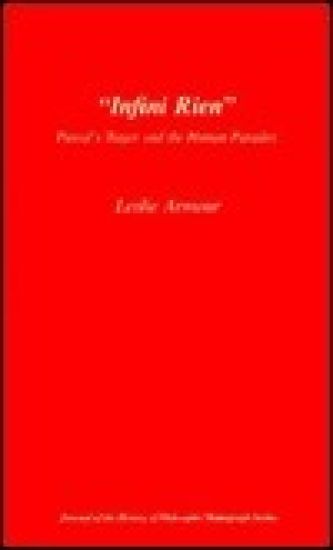
The wager fragment in Blaise Pascal’s Penseés opens with the phrase "infini rien"—"infinite nothing"—which is meant to describe the human condition. Pascal was responding to what was, even in the seventeenth century, becoming a pressing human problem: we seem to be able to know much about the world but less about ourselves.The traditional European view of human beings as creatures made in the image of God and potentially capable of a mystical union with God was increasingly confounded by the difficulty of finding God in nature. Despite his own scientific work, however, Pascal argued that if one does not know whether or not God exists, one should bet that he does: if one is right the rewards are infinitely good and, if one is wrong, what one has lost is, by comparison, utterly trivial.The argument behind this wager is one of the most celebrated—and disputed—in the history of philosophy. It has been seen in terms of the calculus of probabilities, as a piece of religious apologetic, as an event in the religious and psychological life of Pascal himself, and as an event in the life of the Jansenist movement and its various expressions at Port-Royal.In this book, Leslie Armour explores the underlying logic of ideas brought to the surface by the intersection of two philosophical lines of thought. He shows that Pascal had come to philosophy by way of two particular strands of Platonism, one strongly mystical, associated with the founder of the French Oratorian order, Pierre de Bérulle, and the other the Augustinian Platonism associated with Duvergier de Hauranne and Cornelius Jansen. At the same time Pascal was engaged in an internal struggle with skepticism. While he agreed that it is difficult to find God in physical nature, he disagreed with the claim that we know nothing of nature. The problem is that the human being is both infinite and nothing.Thus, Armour locates Pascal’s wager within the confluence of a vital neo-Platonism and an intellectually powerful skepticism. He concludes that even today, "If we must act and cannot know enough, we must bet.
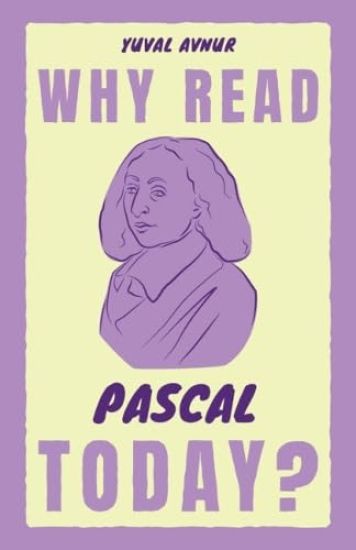
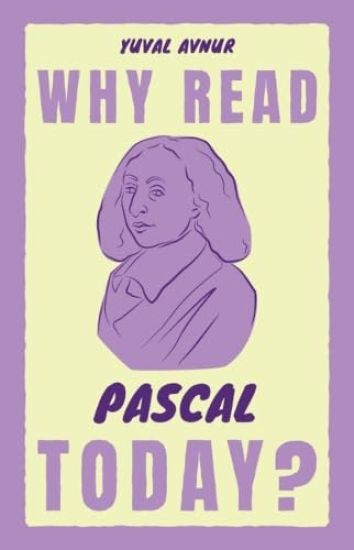
Blaise Pascal (1623-1662) is known in the English-speaking world principally for the wager (an argument that it is rational to do what will affect belief in God and irrational not to), and, more generally, for the Pensées, a collection of philosophical and theological fragments of unusual emotional and intellectual intensity collected and published after his death. He thought and wrote, however, about much more than this: mathematics; physics; grace, freedom, and predestination; the nature of the church; the Christian life; what it is to write and read; the order of things; the nature and purpose of human life; and more. He was among the polymaths of the seventeenth century, and among the principal apologists of his time for the Catholic faith, against both its Protestant opponents and its secular critics.Why Read Pascal? engages all the major topics of Pascal's theological and philosophical writing. It provides discussion of Pascal's literary style, his linked understandings of knowledge and of the various orders of things, his anthropology (with special attention to his presentation of affliction, death, and boredom), his politics, and his understanding of the relation between Christianity and Judaism. Pascal emerges as a literary stylist of a high order, a witty and polemical writer (never have the Jesuits been more thoroughly eviscerated), and, perhaps above all else, as someone concerned to show to Christianity's cultured despisers that the fabric of their own lives implies the truth of Christianity if only they can be brought to look at what their lives are like.Why Read Pascal? is the first book in English in a generation to engage all the principal themes in Pascal's theology and philosophy. The book takes Pascal seriously as an interlocutor and as a contributor of continuing relevance to Catholic thought; but it also offers criticisms of some among the positions he takes, showing, in doing so, how lively his writing remains for us now.
Blaise Pascal (1623–1662) made important contributions to mathematics, the theory of probability, and several scientific fields, was one of the inventors of the first mathematical calculator, and was also a deeply religious thinker who grappled with issues concerning the existence of God, the possibility of human salvation, and the sinfulness of human life. His famous Wager is often discussed, but there is much else of interest and relevance in his thought which remains undiscovered. This book provides an accessible yet detailed account of Pascal's philosophy and how it applies to important issues facing all of us today, as well as novel interpretations of Pascal's ideas. It will stimulate and challenge anyone who is interested in the role of the heart in rationality, human nature, our relation to reality and our individual and collective purpose, and the underexplored thoughts of one of history's greatest geniuses.
Blaise Pascal (1623–1662) made important contributions to mathematics, the theory of probability, and several scientific fields, was one of the inventors of the first mathematical calculator, and was also a deeply religious thinker who grappled with issues concerning the existence of God, the possibility of human salvation, and the sinfulness of human life. His famous Wager is often discussed, but there is much else of interest and relevance in his thought which remains undiscovered. This book provides an accessible yet detailed account of Pascal's philosophy and how it applies to important issues facing all of us today, as well as novel interpretations of Pascal's ideas. It will stimulate and challenge anyone who is interested in the role of the heart in rationality, human nature, our relation to reality and our individual and collective purpose, and the underexplored thoughts of one of history's greatest geniuses.
This work has been selected by scholars as being culturally important and is part of the knowledge base of civilization as we know it.This work is in the public domain in the United States of America, and possibly other nations. Within the United States, you may freely copy and distribute this work, as no entity (individual or corporate) has a copyright on the body of the work.Scholars believe, and we concur, that this work is important enough to be preserved, reproduced, and made generally available to the public. To ensure a quality reading experience, this work has been proofread and republished using a format that seamlessly blends the original graphical elements with text in an easy-to-read typeface.We appreciate your support of the preservation process, and thank you for being an important part of keeping this knowledge alive and relevant.
This work has been selected by scholars as being culturally important and is part of the knowledge base of civilization as we know it.This work is in the public domain in the United States of America, and possibly other nations. Within the United States, you may freely copy and distribute this work, as no entity (individual or corporate) has a copyright on the body of the work.Scholars believe, and we concur, that this work is important enough to be preserved, reproduced, and made generally available to the public. To ensure a quality reading experience, this work has been proofread and republished using a format that seamlessly blends the original graphical elements with text in an easy-to-read typeface.We appreciate your support of the preservation process, and thank you for being an important part of keeping this knowledge alive and relevant.
Originally published in 1945, this book constitutes the companion volume to The Apology of Pascal (1942); both volumes were formed using selections from Pascal's Pensées. The text contains his meditations and prayers, notes for his anti-Jesuit campaign, and remarks on language and style. An index and preface by the editor are also provided. This is a highly informative book that will be of value to anyone with an interest in Pascal and his late thought.
Originally published in 1915, this book presents the content of four lectures delivered by the author at the University of Cambridge from 1914 to 1915, as part of the Hulsean Lectures series. The text discusses the abiding value of Pascal and deals with misconceptions regarding the nature of his work and character. Detailed notes and an authorial preface are also provided. This book will be of value to anyone with an interest in Pascal and his influence on early twentieth-century thought.