Kirjahaku
Etsi kirjoja tekijän nimen, kirjan nimen tai ISBN:n perusteella.
1000 tulosta hakusanalla Patricia Emison
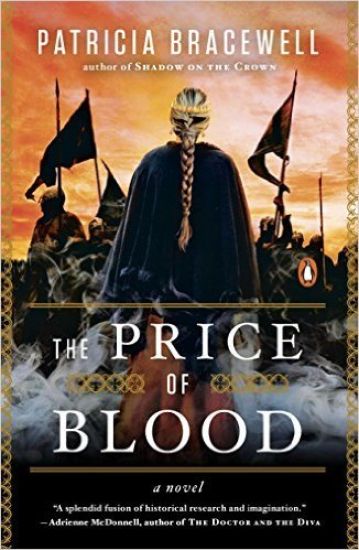
"A splendid fusion of historical research and imagination." --Adrienne McDonnell, author of The Doctor and the Diva Readers first met Emma of Normandy in Patricia Bracewell's gripping debut novel, Shadow on the Crown. Unwillingly thrust into marriage to England's King thelred, Emma has given the king a son and heir, but theirs has never been a happy marriage. In The Price of Blood, Bracewell returns to 1006, when a beleaguered thelred--still haunted by his brother's ghost--governs with an iron fist and a royal policy that embraces murder. As tensions escalate and enmities solidify, Emma forges alliances to protect her young son from ambitious men--even from the man she loves. In the north there is treachery brewing, and when Viking armies ravage England, loyalties are shattered and no one is safe from the sword. Rich with intrigue, compelling personalities, and fascinating detail about a little-known period in history, The Price of Blood will captivate fans of both historical fiction and fantasy novels such as George R. R. Martin's A Game of Thrones.
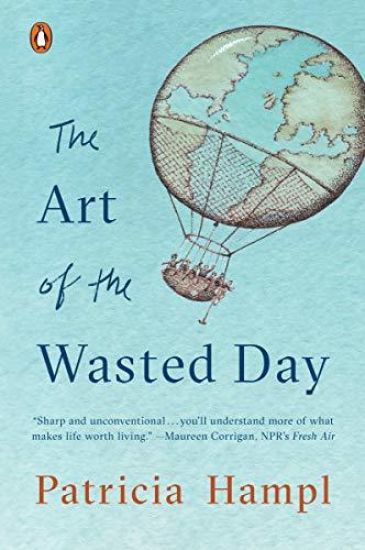
"A sharp and unconventional book -- a swirl of memoir, travelogue and biography of some of history's champion day-dreamers." --Maureen Corrigan, "Fresh Air" A spirited inquiry into the lost value of leisure and daydream The Art of the Wasted Day is a picaresque travelogue of leisure written from a lifelong enchantment with solitude. Patricia Hampl visits the homes of historic exemplars of ease who made repose a goal, even an art form. She begins with two celebrated eighteenth-century Irish ladies who ran off to live a life of "retirement" in rural Wales. Her search then leads to Moravia to consider the monk-geneticist, Gregor Mendel, and finally to Bordeaux for Michel Montaigne--the hero of this book--who retreated from court life to sit in his chateau tower and write about whatever passed through his mind, thus inventing the personal essay. Hampl's own life winds through these pilgrimages, from childhood days lazing under a neighbor's beechnut tree, to a fascination with monastic life, and then to love--and the loss of that love which forms this book's silver thread of inquiry. Finally, a remembered journey down the Mississippi near home in an old cabin cruiser with her husband turns out, after all her international quests, to be the great adventure of her life. The real job of being human, Hampl finds, is getting lost in thought, something only leisure can provide. The Art of the Wasted Day is a compelling celebration of the purpose and appeal of letting go.
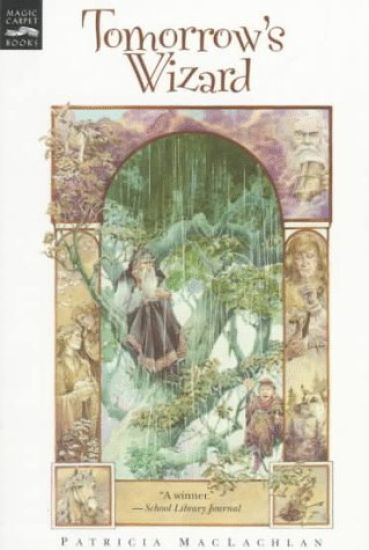
Newbery Medalist Patricia MacLachlan explores what happens when a wizard would rather be human. "Notable for its elliptical style, which fosters a feeling of wonder, and its warm, affectionate view of life."--The Horn Book
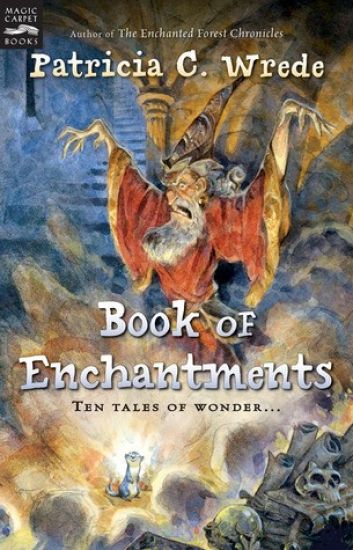
Ten short fantasies include the tale of Queen Cimorene's Frying Pan of Doom, a zany yarn about a magical blue chipmunk with a passion for chestnuts, and an eerie story about an enchanted wizard's daughter. Reprint.
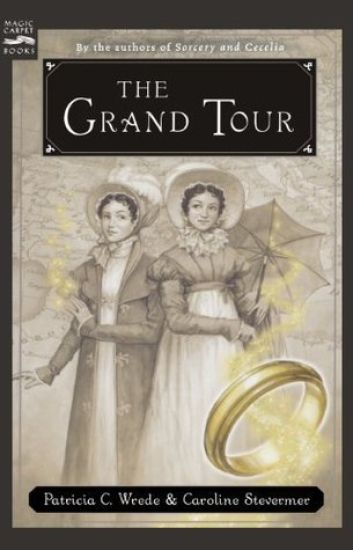
The Grand Tour: Being a Revelation of Matters of High Confidentiality and Greatest Importance, Including Extracts from the Intimate Diary of a Noblewo
Patricia C. Wrede; Caroline Stevermer
Clarion Books
2006
nidottu
Kate and Cecy and their new husbands Thomas and James embark on a honeymoon in Europe, but when they arrive in France, mysterious and possibly magical events unfold, ranging from the arrival of a lost coronation treasure to the strange disappearance of a glove. Reprint.
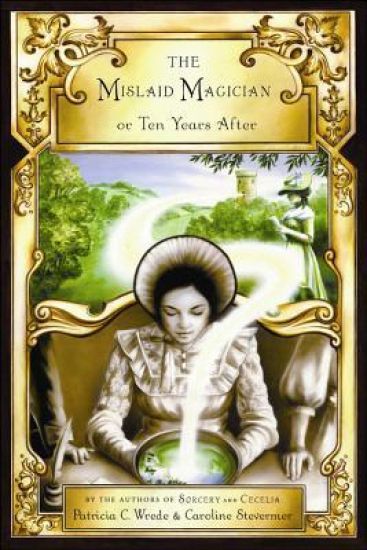
The Mislaid Magician or Ten Years After: Being the Private Correspondence Between Two Prominent Familiesregarding a Scandal Touching the Highest Level
Patricia C. Wrede; Caroline Stevermer
Clarion Books
2009
nidottu
Ten years have passed since Kate and Cecy married Thomas and James, and England is now being transformed by the first railways. When James is asked to look into the sudden disappearance of a German railway engineer, he and Cecy make a shocking discovery: The railway lines are wreaking havoc with ancient underground magic, which could endanger the very unity of England. Written in letters between Kate and Cecy--and between their husbands--this installment of the cousins' adventures is another satisfying blend of magic, mystery, adventure, humor, and romance.
Jill has long arms and strong hands. And when it comes to playing soccer, she knows how to use her head
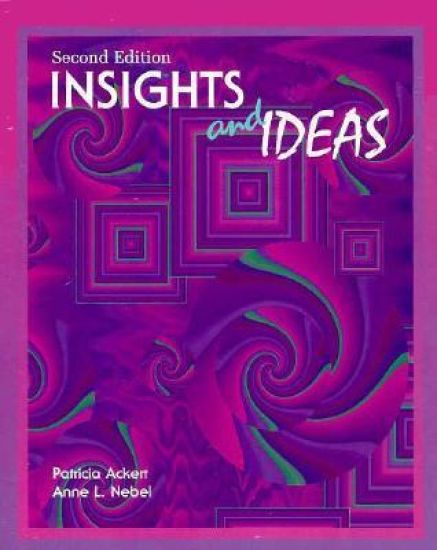
INSIGHTS AND IDEAS includes twenty-five engaging thematic selections that develop essential vocabulary and reading skills. Learners with a 1,000 word vocabulary will double their word bases while investigating strategies to further their comprehension through context clues, predictions, inference, main ideas, and details.
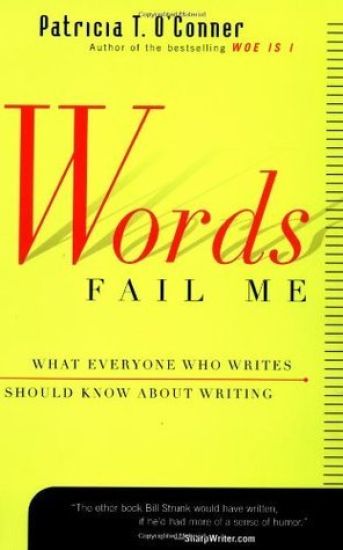
Whether you are working on the novel that's been in the back of your mind for years or simply facing an increasing demand to write well at work or school, the fact remains: more and more of us are writing more often these days-reports, e-mails, faxes, and newsletters. But despite the increase in written communication, something has been lost-the fundamentals of good writing. Grammar maven Patricia T.O'Conner comes to the rescue with the most painless, practical, and funny writing book ever written. In short, snappy chapters filled with crystal-clear examples, amusing comparisons, and humorous allegories that cover everything from "Pronoun Pileups" and "Verbs That Zing" to "What to Do When You're Stuck," O'Conner provides simple, straightforward tips to help you sort your thoughts and make sentences that make sense. Push aside those stuffy old-fashioned rule books, because O'Conner has written the most accessible and enjoyable book yet for today's writer.
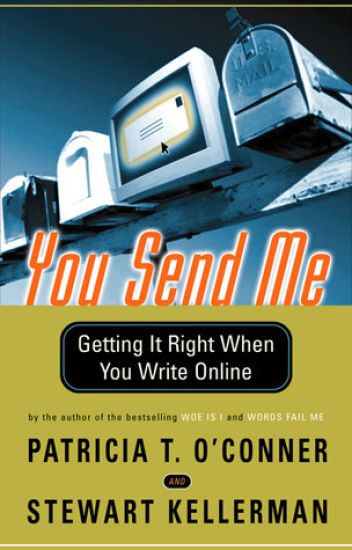
Patricia T. O'Conner, the bestselling language maven who charmed legions of readers into civilizing their grammar (Woe Is I) and their writing (Words Fail Me), now drags proper English kicking and screaming into the Age of E-Mail. Do the old truths still apply? Yes, insist O'Conner and co-author Stewart Kellerman, her journalist husband. In fact, good English and good manners are even more important online. Thanks to the computer, we're writing again, but we'll have to upgrade our lousy language and social skills or suffer the cyber-consequences. With chapters on etiquette (To E or Not to E), beefier writing (The E-Mail Eunuch), deconstructing a message (All's Well That Sends Well), and civilized English (Grammar la Modem), You Send Me delivers everything you need to connect with real people in the virtual world.
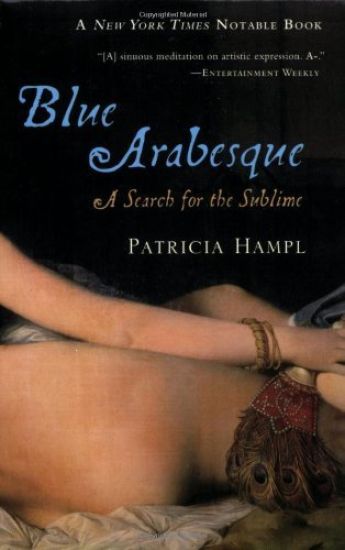
Just out of college, Patricia Hampl was mesmerized by a Matisse painting in the Art Institute of Chicago: an aloof woman gazing at goldfish in a bowl, a Moroccan screen behind her. In Blue Arabesque, Hampl explores the allure of this lounging woman, immersed in leisure, so at odds with the rush of the modern era. Hampl's meditation takes us to the Cote d'Azur and to North Africa, from cloister to harem, pondering figures as diverse as Eugene Delacroix, F. Scott Fitzgerald, and Katherine Mansfield. Returning always to Matisse's portraits of languid women, she discovers they were not decorative indulgences but something much more. Moving with the life force that Matisse sought in his work, Blue Arabesque is Hampl's dazzling and critically acclaimed tour de force.
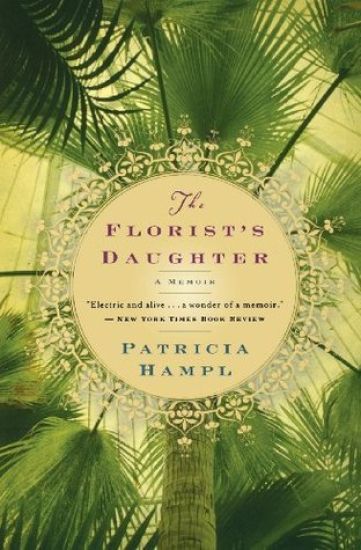
During the long farewell of her mother's dying, Patricia Hampl revisits her midwestern girlhood.Daughter of a debonair Czech father, whose floral work gave him entr e to St. Paul society, and a distrustful Irishwoman with an uncanny ability to tell a tale, Hampl remained, primarily and passionately, a daughter well into adulthood. She traces the arc of faithfulness and struggle that comes with that role--from the postwar years past the turbulent sixties. At the heart of The Florist's Daughter is the humble passion of people who struggled out of the Depression into a better chance, not only for themselves but for the common good.Widely recognized as one of our most masterly memoirists, Patricia Hampl has written an extraordinary memoir that is her most intimate, yet most universal, work to date.This transporting work will resonate with readers of Francine du Plessix Gray's Them: A Memoir of Parents and JeannetteWall's The Glass Castle.
Anti-Oppressive Social Work Practice and the Carceral State
Patricia O'Brien; Judith S. Willison
OXFORD UNIVERSITY PRESS INC
2022
nidottu
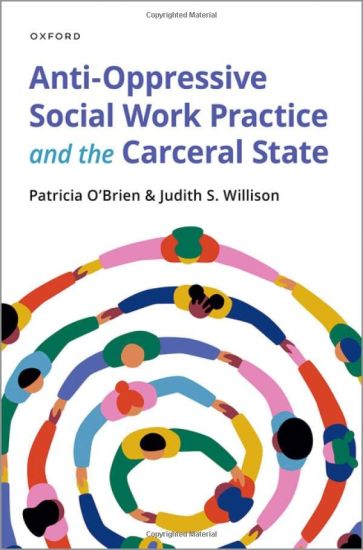
With violent policing, inhumane detention and imprisonment, community surveillance and loss of civil rights, the criminal legal system is unjust; and it is crucial for social workers to understand and take steps toward change. Under the guise of helping adults in multiple correctional contexts, social workers have historically engaged in efforts that privilege the carceral system and reproduce its harmful apparatus that extends to families and communities. Anti-Oppressive Social Work Practice and the Carceral State plots a path to change by using an anti-oppressive and transformative approach. Patricia O'Brien and Judith S. Willison critically examine strategies to shift punishment-centered practices to build collaborative partnerships and possibilities toward decarceration and individual and community power.
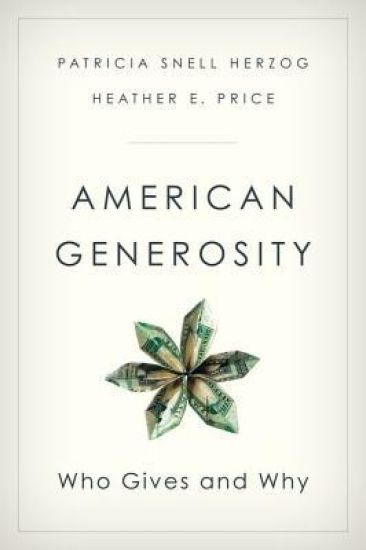
This accessibly written book presents a picture of generosity that is unique in its breadth. American Generosity is distinguished by its comprehensive approach to answering the what, how much, who, where, and why of giving. The authors consider multiple forms of generosity. They focus on three especially important forms of giving: donating money, volunteering time, and taking political action. But they also look at activities like giving blood and bodily organs, material possessions, relational attention, and participation in environmental activism. Their striking and sometimes counterintuitive findings are based on data from the Science of Generosity initiative, which combines a nationally representative survey of adult Americans with in-depth interviews and ethnographies. From the interviews, case studies are selected to illustrate core themes. The analyses examine multiple dimensions of resources, social status, regional cultural norms, different approaches to giving, social-psychological orientation, and the relational contexts of generosity. The authors conclude that giving is supported by "circles of generosity," which ripple outward in their reach to giving targets. The practical implications include tips for readers who want to increase their own giving, and for parents modeling giving to their children, spouses desiring alignment in their giving, and friends and community members seeking to support other people's giving. Also on offer are explicit fundraising ideas for nonprofits, foundations, and religious leaders. In American Generosity we find a broad yet nuanced explanation of giving that transcends the usual categories of sociological study to address the simple but confounding question about charity-who gives and why?
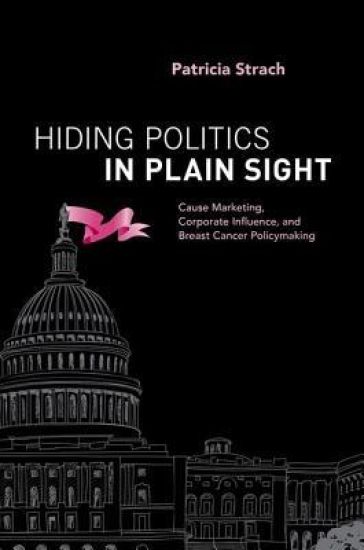
As late as the 1980s, breast cancer was a stigmatized disease, so much so that local reporters avoided using the word "breast" in their stories and early breast cancer organizations steered clear of it in their names. But activists with business backgrounds began to partner with corporations for sponsored runs and cause-marketing products, from which a portion of the proceeds would benefit breast cancer research. Branding breast cancer as "pink"--hopeful, positive, uncontroversial--on the products Americans see every day, these activists and corporations generated a pervasive understanding of breast cancer that is widely shared by the public and embraced by policymakers. Clearly, they have been successful: today, more Americans know that the pink ribbon is the symbol of breast cancer than know the name of the vice president. Hiding Politics in Plain Sight examines the costs of employing market mechanisms--especially cause marketing--as a strategy for change. Patricia Strach suggests that market mechanisms do more than raise awareness of issues or money to support charities: they also affect politics. She shows that market mechanisms, like corporate-sponsored walks or cause-marketing, shift issue definition away from the contentious processes in the political sphere to the market, where advertising campaigns portray complex issues along a single dimension with a simple solution: breast cancer research will find a cure and Americans can participate easily by purchasing specially-marked products. This market competition privileges even more specialized actors with connections to business. As well, cooperative market activism fundamentally alters the public sphere by importing processes, values, and biases of market-based action into politics. Market activism does not just bring social concerns into market transactions, it also brings market biases into public policymaking, which is inherently undemocratic. As a result, industry and key activists work cooperatively rather than contentiously, and they define issues as consensual rather than controversial, essentially hiding politics in plain sight.
A colossal statue, originally built to honor an ancient pharaoh, still stands today in Egyptian Thebes, with more than a hundred Greek and Latin inscriptions covering its lower surfaces. Partially damaged by an earthquake, and later re-identified as the Homeric hero Memnon, it was believed to "speak" regularly at daybreak. By the middle of the first century CE, tourists flocked to the colossus of Memnon to hear the miraculous sound, and left behind their marks of devotion (proskynemata): brief acknowledgments of having heard Memnon's cry; longer lists by Roman administrators; and more elaborate elegiac verses by both amateur and professional poets. The inscribed names left behind reveal the presence of emperors and soldiers, provincial governors and businessmen, elite women and military wives, and families with children. While recent studies of imperial literature acknowledge the colossus, few address the inscriptions themselves. This book is the first critical assessment of all the inscriptions considered in their social, cultural, and historical context. The Memnon colossus functioned as a powerful site of engagement with the Greek past, and appealed to a broad segment of society. The inscriptions shed light on contemporary attitudes toward sacred tourism, the role of Egypt in the Greco-Roman imagination, and the cultural legacy of Homeric epic. Memnon is a ghost from the Homeric past anchored in the Egyptian present, and visitors yearned for a "close encounter" that would connect them with that distant past. The inscriptions thus idealize Greece by echoing archaic literature in their verses at the same time as they reflect their own historical horizon. These and other subjects are expertly explored in the book, including a fascinating chapter on the colossus's post-classical life when the statue finds new worshippers among Romantic artists and poets in nineteenth-century Europe.
The Oxford Handbook of Qualitative Research, Second Edition presents a comprehensive, interdisciplinary overview of the field of qualitative research. Divided into eight parts, the forty chapters address key topics in the field such as approaches to qualitative research (philosophical perspectives), narrative inquiry, field research, and interview methods, text, arts-based, and internet methods, analysis and interpretation of findings, and representation and evaluation. The handbook is intended for students of all levels, faculty, and researchers across the disciplines, and the contributors represent some of the most influential and innovative researchers as well as emerging scholars. This handbook provides a broad introduction to the field of qualitative research to those with little to no background in the subject, while providing substantive contributions to the field that will be of interest to even the most experienced researchers. It serves as a user-friendly teaching tool suitable for a range of undergraduate or graduate courses, as well as individuals working on their thesis or other research projects. With a focus on methodological instruction, the incorporation of real-world examples and practical applications, and ample coverage of writing and representation, this volume offers everything readers need to undertake their own qualitative studies.
Dirty dollars, tainted donors and "poverty porn" have caused a social backlash against philanthropy. As more wealth is concentrated in the hands of a rising number of billionaires, it is clear that the same system that created their wealth also perpetuates deep inequality, social injustice, and human suffering. Philanthropists often give with strings attached. They want to make the world a better place, but insist on their own vision of what constitutes a better world. Some donors also pay with tainted money, give to hate groups, or use their money to launder their reputations. Nonprofits that ignore the warning signs are often complicit in the fallout that comes with "dark dollars". Using case studies, Patricia Illingworth shows how to address this problem. She argues that approaching philanthropy through a human rights lens can improve the quality of giving, resolve urgent quandaries, and mitigate the social injustice that philanthropy can perpetuate. A philosopher and lawyer, Illingworth makes the case that people and organizations have human rights responsibilities that should guide philanthropy and the nonprofit sector. When philanthropy begins to acknowledge, respect, and protect human rights it will regain its social license and help to make the world a better place.
The Science of College
Patricia S. Herzog; Casey T. Harris; Shauna A. Morimoto; Shane W. Barker; Jill G. Wheeler; A. Justin Barnum; Terrance L. Boyd
Oxford University Press Inc
2020
nidottu
The transition to adulthood is a complex process, and college is pivotal to this experience. The Science of College aids entering college students--and the people who support them--in navigating college successfully, with up-to-date recommendations based upon real student situations, sound social science research, and the collective experiences of faculty, lecturers, advisors, and student support staff. The stories captured in this book highlight how the challenges that college students encounter vary in important ways based on demographics and social backgrounds. Despite these varied backgrounds, all students are more likely to have successful college experiences if they invest in their communities. Universities have many resources available, but as this book will show, students need to learn when to access which resources and how best to engage with people serving students. This includes having a better awareness of the different roles held by university faculty and staff, and navigating who to go to for what, based upon understanding their distinct sets of expertise and approaches to support. There is no single template for student success. Yet, this book highlights common issues that many students face and provides science-based advice for how to navigate college. Each topic covered is geared towards the life stage that most college students are in: emerging adulthood. In addition to the student-focused chapters, the book includes appendixes with activities for students, tips for parents, and methods information for faculty. Supplemental website materials suggest classroom activities for instructors who adopt this book within first-year seminars and general education courses. This is an open access title available under the terms of a CC BY-NC-ND 4.0 International licence. It is free to read at Oxford Scholarship Online and offered as a free PDF download from OUP and selected open access locations.