Kirjojen hintavertailu. Mukana 11 627 220 kirjaa ja 12 kauppaa.

Kirjahaku

Etsi kirjoja tekijän nimen, kirjan nimen tai ISBN:n perusteella.

1000 tulosta hakusanalla Patricia Springborg

Surviving Triple Negative Breast Cancer

Surviving Triple Negative Breast Cancer

Patricia Prijatel; Carol Scott-Conner

Oxford University Press Inc
2012
sidottu
After her diagnosis of triple negative breast cancer (TNBC), health journalist Patricia Prijatel did what any reporter would do: start investigating the disease, how it occurs, and how it's treated. While she learned that important research was emerging, she found a noticeable lack of resources on the disease, which affects 70,000 women a year and differs from hormone-positive breast cancer in important ways, including prognosis and treatment options. Hormone negative breast cancer disproportionately affects younger women and African-American women - and it can be more dangerous than other types of breast cancer. But there are many reasons to be hopeful, as Prijatel learned. Through her blog, Positives About Negative, she has met hundreds of women who have told her their stories and shared their fears, confusion, and frustration. After her recovery, she began writing this book to provide the first dedicated resource for women diagnosed with TNBC. Surviving Triple Negative Breast Cancer delivers research-based information on the biology of TNBC; the role of genetics, family history, and race; how to navigate treatment options; and a plethora of strategies to reduce the risk of recurrence, including diet and lifestyle changes. In clear, approachable language, Prijatel provides an accessible guide to understanding a pathology report and a vast array of scientific studies. Woven throughout the book are stories of women who have faced TNBC. These are mothers, wives, daughters, and sisters who went through a variety of medical treatments and then got on with life -- one competes in triathlons, two had babies after being treated with chemo, one got remarried in her 50s, and one just celebrated the 30th birthday of the son she was nursing when she was diagnosed. With honesty and humor, Prijatel's inspiring story shows the heart of a survivor. Her message is that TNBC is a disease to take seriously, with proper and occasionally aggressive treatment, but it is not automatically a killer. Most women diagnosed with the disease do survive. Surviving Triple Negative Breast Cancer is a roadmap for women who want to be empowered through their treatment and recovery.
Oral History

Oral History

Patricia Leavy

Oxford University Press Inc
2011
nidottu
Oral History is part of the Understanding Qualitative Research series, which is designed to provide researchers with authoritative guides to understanding, presenting, and critiquing analyses and associated inferences. There are three subareas in this series: Quantitative Research, Measurement, and Qualitative Research. This volume fits in the Qualitative Research group and addresses issues surrounding oral history - how to both fully and succinctly report and present this material, as well as the challenges of evaluating it.
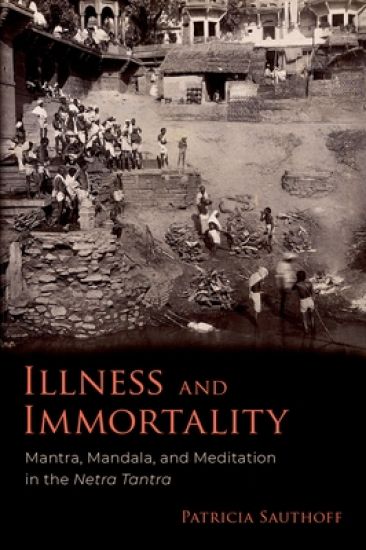
Illness and Immortality

Illness and Immortality

Patricia Sauthoff

OXFORD UNIVERSITY PRESS INC
2022
sidottu
Illness and Immortality examines a medieval Sanskrit text, the Netra Tantra, which is devoted to health and healing through a yogic practice dedicated to the chanting of mantras, the building of mandalas, and meditation. Patricia Sauthoff examines the role of such ritual elements in rites to alleviate illness and death. She includes analysis of the various forms of the deity Amrtesa or Mrtyuñjaya (Conqueror of Death), the nature of mantra, and the relationship between the tantric practitioner and the patient. This work explores what is meant by immortality within the medieval context and how one goes about attaining it. It asks how ritual alleviates illness, what role the deity plays in health and healing, and finally who has access to the rites described within the text. Central to this study is the conception of a body vulnerable to demons and reliant on deities for continued existence, and how the three yogic bodies (sthula, suksma, and para) play a role in physical and spiritual well-being. Featuring new translations of large sections of the Netra Tantra, the book offers readers various points of entry into the text so that tantric practitioners and scholars alike can access the influential and important concepts and practices found within this long-revered but under-studied work.
A Practical Guide to Clinical Supervision in Genetic Counseling

A Practical Guide to Clinical Supervision in Genetic Counseling

Patricia McCarthy Veach

OXFORD UNIVERSITY PRESS INC
2023
nidottu
A Practical Guide to Clinical Supervision in Genetic Counseling provides a comprehensive overview of clinical supervision, emphasizing the supervision of genetic counseling students. The book draws on theory and research in genetic counseling, psychology, counselor education, and Dr. Veach's many years of experience in supervision practice. Chapters address key issues in clinical supervision, including the infrastructure required for effective supervision; relationship dynamics inherent in supervision; and critical supervision processes, such as goal setting, feedback, evaluation, culturally-responsive supervision, and common clinical supervision challenges. Additional chapters cover models of supervisor and supervisee development, strategies to promote student wellness, how to recognize and address problematic performance, and supervision delivery models. Each chapter contains instructional objectives, illustrations of major topics with supervision vignettes and examples, and descriptions of specific strategies for promoting self-reflective supervision practice. Experiential activities at the end of each chapter provide opportunities for readers to strengthen and maintain competencies associated with effective supervision processes and outcomes. The activities are appropriate for both current and future supervisors at all levels of experience and are suitable for use in the classroom and by individuals engaged in self-study. A Practical Guide to Clinical Supervision in Genetic Counseling also features three contributed chapters by experts in supervision, education, and research and an appendix with instructional tips for designing and conducting supervision training opportunities to facilitate participants' learning experiences.
The Great Nation of Futurity

The Great Nation of Futurity

Patricia L. Dunmire

OXFORD UNIVERSITY PRESS INC
2023
sidottu
The Great Nation of Futurity is situated within the discourse and ideology of American exceptionalism which has undergirded the nation's identity throughout its history. It draws out the temporal dimension of the exceptionalist ideology, namely the construal of America as the "great nation of futurity," and examines how this identity manifests linguistically and functions rhetorically in Cold War foreign policy discourse. Working within a critical discourse analytic framework, Patricia L. Dunmire examines the space-times construed within foreign policy discourse and demonstrates that these consistently position the United States in a privileged position vis-à-vis the future. This positioning, in turn, sanction a foreign policy approach focused on global future design.
Epilepsy

Epilepsy

Patricia Dugan; Manisha Holmes; Chad Carlson

OXFORD UNIVERSITY PRESS INC
2025
nidottu
Part of the "What Do I Do Now?" series, Epilepsy (Second Edition) serves as an easy-to-use reference guide for anyone working with epilepsy patients. This book offers a case-based approach to give a holistic look at concepts for understanding and treating epilepsy. These concepts range from initial diagnosis to determining treatment options to understanding the role of epilepsy in patients' day-to-day life. Topics represent common clinical scenarios and frequent areas assessed in standardized examinations. The book includes 33 case studies and is broken up into four parts: Section 1: Diagnostic Dilemmas; Section 2: Treatment Considerations: Antiseizure Medications; Section 3: Treatment Considerations: Diagnosis and Management of Refractory Epilepsy; and Section 4: Prognostic, Neuropsychiatric, Social, and Behavioral Issues. Each case study provides a discussion of the diagnosis, key points to remember, and selected references for further reading. In this new edition, all cases and references have been updated, reflecting the advances in pharmacological treatment and understanding of epilepsy in the past ten years. Engaging and succinct, Epilepsy, Second Edition, is an essential resource for clinicians and students at any stage in their career.
High-Quality Psychosocial Interventions Research

High-Quality Psychosocial Interventions Research

Patricia A. Areán; Michael D. Pullmann

OXFORD UNIVERSITY PRESS INC
2026
sidottu
High Quality Psychosocial Interventions Research is the second edition of the book High Quality Psychotherapy Research, written by Drs. Patricia Areán and Helena Kraemer. Like the original book, this fully updated version serves as a comprehensive primer on the clinical trial research pipeline as it applies to psychosocial interventions. It is meant to serve alongside other works that delve into the theory of research methods and the conduct of data analysis to be the "how-to" book for running a clinical trial and the guide for planning a course of investigation into a psychosocial intervention. The book provides a step-by-step process for investigators to follow, discussing the daily conduct of these studies and common concerns, such as how to write a treatment manual, manage your study team, recruit participants, and finance and cost your trial. Arean and Pullman offer practical, hard-earned lessons of conducting clinical trials for psychosocial interventions--the kind of insights rarely taught in classrooms but often gained through mentorship, hands-on experience, and trial and error. The book delves into the ins and outs of different clinical trials, from proof of concept to large scale digitally remote trials and explains the purpose of each trial type. High Quality Psychosocial Interventions Research aims to provide something of value for researchers at all stages of their careers.
Gluck: An Eighteenth-Century Portrait in Letters and Documents
This book brings together a variety of eighteenth century sources in an attempt to construct a portrait of one of the most interesting musicians of that century. Celebrated today for his historical significance, as the one composer who did most to effect the transition between baroque and classical opera, Gluck in his lifetime was both a controversial figure and a colourful one: the sources portray a man of enormous energy, relish for good food and good company, and passion for his art. The basis of the book is the body of letters to and from Gluck. There has been only one previous attempt to collect and translate the material into English, and apart from the fact that it was universally deemed inadequate at the time of publication (1962), it has been superceded by discoveries of new material, now incorporated in this study. Besides the letters, the book includes a wealth of factual documents and informal anecdotes, not easily accessible in the original German, French and Italian languages, almost none of which has ever been made available in English. The material has been arranged and translated with the aim of providing readers with a lively, continuous narrative of Gluck's life, while at the same time indicating the major locations of the published and unpublished sources, in order that scholars can access the material in its original languages.
Ladies Elect

Ladies Elect

Patricia Hollis

Oxford University Press
1989
nidottu
Fifty years before the suffragettes fought to have the parliamentary vote, women in England were able to elect and be elected to local district councils, school boards and Poor Law boards. This pioneering study explores the world of those women who held office on behalf of other women, children, the old and the sick. They faced widespread hostility, but such was their success that in many cities and counties they were a stronger presence in 1900 than in 1975. Local government offered that conjunction of "compulsory philanthropy", "municipal housekeeping" and local responsibility which made it a sphere suitable for women. Based on the records of some 20 towns and 10 rural districts, Ladies Elect describes and assesses their work in local government before 1914, and places it in the context of the general movement towards woman's emancipation.
Women, Work, and Politics

Women, Work, and Politics

Patricia Penn Hilden

Clarendon Press
1993
sidottu
This is a study of the working women of Belgium from the country's independence in 1830 until the First World War. Patricia Penn Hilden argues that the success of Belgium's industrial revolution - second only to Britain's in the nineteenth century - was uniquely dependent on female labour. In contrast to women in other European nations, Belgian women earned their wages in virtually every industrial setting: in mines and mills, in factories, on the docks, and in the dozens of semi-artisanal trades that underpinned industrial development. Women's widespread and significant participation in the labour market - unrestricted by the labour legislation that elsewhere controlled female waged work - found expression in the emergent politics of Belgium's working class. Women not only participated in male-led politics, but also created and led their own `women's movements', first during the `anarchist' period of the First International, then during the organization of socialist politics after 1880. Dr Hilden's extensively researched analysis indicates the extent to which the economic and political activities of Belgium's ouvrières and arbeidsters mirrored their small country's many deviations from historical patterns prevalent elsewhere. This important scholarly study has many valuable contributions to make to our understanding of the relations between socialism and feminism, labour history, and the history of Belgium.
Inorganic Chemistry in Biology

Inorganic Chemistry in Biology

Patricia C. Wilkins; Ralph G. Wilkins

Oxford University Press
1997
nidottu
Providing a good starting survey of the field, this book emphasizes the importance of inorganic chemistry in biological systems. The basic background of the interactions of atoms, molecules and especially metal ions, with biomolecules covers about a quarter of the book. The remainder discusses the biologically important elements, and their occurrence and functions in biomaterials - these are illustrated by certain roles in humans, fishes, beetles, and plants and in varied human diseases, such as cystic fibrosis methemoglobemia, and thalassemia. This upper level undergraduate textbook for students of chemistry and biology is the only current short book covering, briefly, most areas of bioinorganic chemistry.
Securing the World Economy

Securing the World Economy

Patricia Clavin

Oxford University Press
2015
nidottu
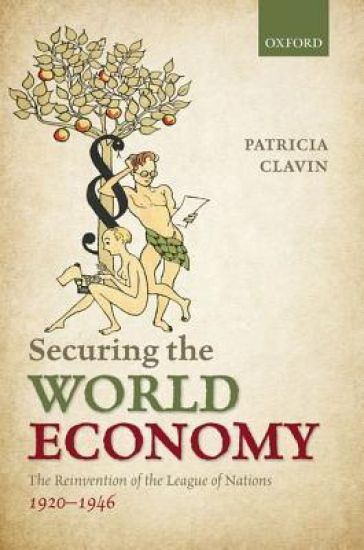
Securing the World Economy explains how efforts to support global capitalism became a core objective of the League of Nations. Based on new research drawn together from archives on three continents, it explores how the world's first ever inter-governmental organization confronted the powerful forces that influenced the global economy, and the prospects for peace. It traces how the League was drawn into economics and finance by the exigencies of the financial slump and hyperinflation after the First World War, when it provided essential financial support to Austria, Hungary, Greece, Bulgaria, and Estonia, and thereby established the founding principles of financial intervention, international oversight, and the twentieth-century notion of international 'development'. But it is the impact of the Great Depression after 1929 that lies at the heart of this history. Patricia Clavin traces how the League of Nations sought to combat economic nationalism and promote economic and monetary co-operation in a variety of, sometimes contradictory, ways. Many of the economists, bureaucrats, and policy-advisors who worked for it played a seminal role in the history of international relations and social science, and their efforts did not end with the outbreak of the Second World War. In 1940 the League established an economic mission in the United States, where it contributed to the creation of organizations for the post-war world - the United Nations Organization, the IMF, the World Bank, the UN Food and Agriculture Organization - as well as to plans for European reconstruction and co-operation. It is a history that resonates deeply with challenges that face the twenty-first century world.
A Lab of One's Own

A Lab of One's Own

Patricia Fara

Oxford University Press
2018
sidottu
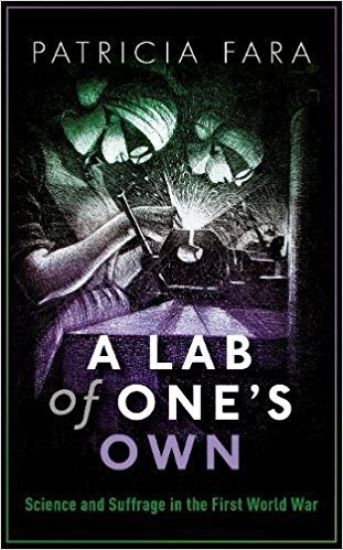
Many extraordinary female scientists, doctors, and engineers tasted independence and responsibility for the first time during the First World War. How did this happen? Patricia Fara reveals how suffragists, such as Virginia Woolf's sister, Ray Strachey, had already aligned themselves with scientific and technological progress, and that during the dark years of war they mobilized women to enter conventionally male domains such as science and medicine. Fara tells the stories of women such as: mental health pioneer Isabel Emslie, chemist Martha Whiteley, a co-inventor of tear gas, and botanist Helen Gwynne Vaughan. Women were now carrying out vital research in many aspects of science, but could it last? Though suffragist Millicent Fawcett declared triumphantly that 'the war revolutionised the industrial position of women. It found them serfs, and left them free', the outcome was very different. Although women had helped the country to victory and won the vote for those over thirty, they had lost the battle for equality. Men returning from the Front reclaimed their jobs, and conventional hierarchies were re-established even though the nation now knew that women were fully capable of performing work traditionally reserved for men. Fara examines how the bravery of these pioneer women scientists, temporarily allowed into a closed world before the door clanged shut again, paved the way for today's women scientists. Yet, inherited prejudices continue to limit women's scientific opportunities.
A Lab of One's Own

A Lab of One's Own

Patricia Fara

Oxford University Press
2019
nidottu
2018 marked a double centenary: peace was declared in war-wracked Europe, and women won the vote after decades of struggle. A Lab of One's Own commemorates both anniversaries by revealing the untold lives of female scientists, doctors, and engineers who undertook endeavours normally reserved for men. It tells fascinating and extraordinary stories featuring initiative, determination, and isolation, set against a backdrop of war, prejudice, and disease. Patricia Fara investigates the enterprising careers of these pioneering women and their impact on science, medicine, and the First World War. Suffrage campaigners aligned themselves with scientific and technological progress. Defying protests about their intellectual inferiority and child-bearing responsibilities, during the War they won support by mobilizing women to enter conventionally male domains. A Lab of One's Own focuses on the female experts who carried out vital research. They had already shown exceptional resilience by challenging accepted norms to pursue their careers, now they played their part in winning the War at home and overseas. In 1919, the suffragist Millicent Fawcett declared triumphantly that 'The war revolutionised the industrial position of women. It found them serfs, and left them free.' She was wrong: Women had helped the country to victory, had won the vote for those over thirty - but had lost the battle for equality. A Lab of One''s Own is essential reading to understand and eliminate the inequalities still affecting professional women today.
Life after Gravity

Life after Gravity

Patricia Fara

Oxford University Press
2021
sidottu
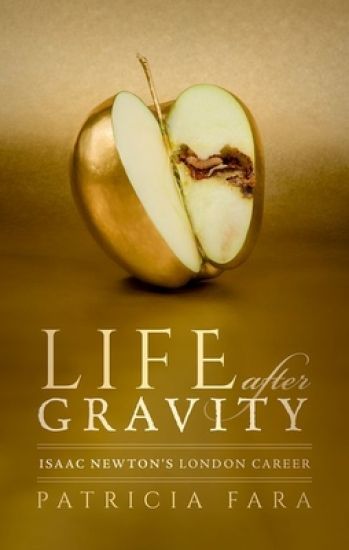
The story of Isaac Newton's decades in London - as ambitious cosmopolitan gentleman, President of London's Royal Society, Master of the Mint, and investor in the slave trade. Isaac Newton is celebrated throughout the world as a great scientific genius who conceived the theory of gravity. But in his early fifties, he abandoned his life as a reclusive university scholar to spend three decades in London, a long period of metropolitan activity that is often overlooked. Enmeshed in Enlightenment politics and social affairs, Newton participated in the linked spheres of early science and imperialist capitalism. Instead of the quiet cloisters and dark libraries of Cambridge's all-male world, he now moved in fashionable London society, which was characterized by patronage relationships, sexual intrigues and ruthless ambition. Knighted by Queen Anne, and a close ally of influential Whig politicians, Newton occupied a powerful position as President of London's Royal Society. He also became Master of the Mint, responsible for the nation's money at a time of financial crisis, and himself making and losing small fortunes on the stock market. A major investor in the East India Company, Newton benefited from the global trading networks that relied on selling African captives to wealthy plantation owners in the Americas, and was responsible for monitoring the import of African gold to be melted down for English guineas. Patricia Fara reveals Newton's life as a cosmopolitan gentleman by focussing on a Hogarth painting of an elite Hanoverian drawing room. Gazing down from the mantelpiece, a bust of Newton looms over an aristocratic audience watching their children perform a play about European colonialism and the search for gold. Packed with Newtonian imagery, this conversation piece depicts the privileged, exploitative life in which this eminent Enlightenment figure engaged, an uncomfortable side of Newton's life with which we are much less familiar.
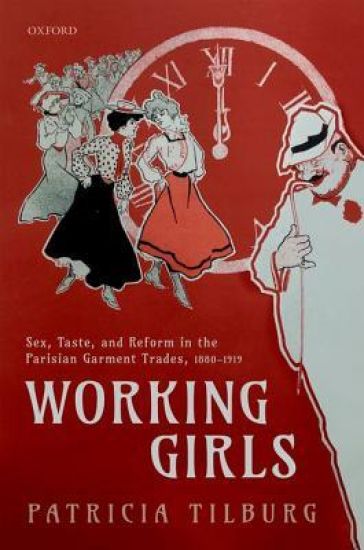
Working Girls

Working Girls

Patricia Tilburg

Oxford University Press
2019
sidottu
As the twentieth century dawned and France entered an era of extraordinary labor activism and industrial competition, an insistently romantic vision of the Parisian garment worker was deployed by politicians, reformers, and artists to manage anxieties about economic and social change. Nostalgia about a certain kind of France was written onto the bodies of the capital's couture workers throughout French pop culture from the 1880s to the 1930s. And the midinettes-as these women were called- were written onto the geography of Paris itself, by way of festivals, monuments, historic preservation, and guide books. The idealized working Parisienne stood in for, at once, the superiority of French taste and craft, and the political (and sexual) subordination of French women and labour. But she was also the public face of more than 80,000 real working women whose demands for better labour conditions were inflected, distorted, and, in some cases, amplified by this ubiquitous Romantic type in the decades straddling World War I. Working Girls bridges cultural histories of the Parisian imaginary and histories of French labour, and puts them in raucous dialogue with one another: a letter by a nineteen-year-old seamstress, a speech by a government minister; a frothy Parisian guide by a bon vivant, the minutes of a union meeting; a bawdy café-concert song, a policy brief on garment working conditions.
Noun-Based Constructions in the History of Portuguese and Spanish

Noun-Based Constructions in the History of Portuguese and Spanish

Patrícia Amaral; Manuel Delicado Cantero

Oxford University Press
2021
sidottu
This book explores syntactic and semantic change in three types of construction in Spanish and Portuguese: (i) complex determiner phrases with clausal adjunction (el hecho de, o facto de), (ii) complex prepositions/complementizers and complex connectives (sin embargo de/sem embargo de, so(b) pena de), and (iii) complex predicates containing light verbs (dar consejo/conselho de). While these constructions are syntactically different, they are all clause-taking complex expressions containing a noun followed by the functional preposition de ('of'). This book is the first work to use a systematic comparative corpus study to explore these expressions together; this approach allows individual changes to be distinguished from general changes, as well as emphasizing the chronological clustering of changes that involve complex constructions in both languages. By studying mechanisms of language change and their outcomes in two sister languages, Patrícia Amaral and Manuel Delicado Cantero address questions such as: How do complex constructions evolve? How does the meaning of the noun change when considered in isolation and when compared to the meaning of the whole construction? And how do syntactic categories change over time? This study of two closely-related languages reveals distinct developments occurring in parallel, and provides a crucial test case for theories of language change.
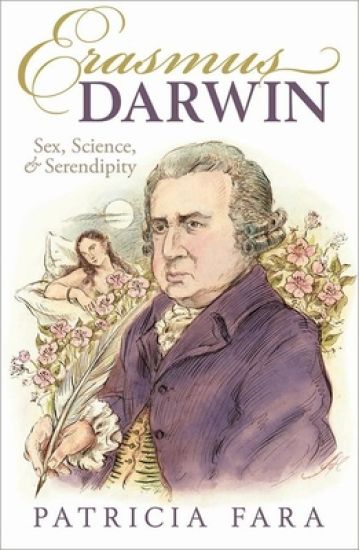
Erasmus Darwin

Erasmus Darwin

Patricia Fara

Oxford University Press
2020
nidottu
Dr Erasmus Darwin seemed an innocuous Midlands physician, a respectable stalwart of eighteenth-century society. But there was another side to him. Botanist, physician, Lunar inventor and popular poet, Darwin was internationally renowned for extraordinary poems explaining his theories about sex and science. Yet he became a target for the political classes, the victim of a sustained and vitriolic character assassination by London's most savage satirists. Intrigued, prize-winning historian Patricia Fara set out to investigate why Darwin had provoked such fierce intellectual and political reaction. Inviting her readers to accompany her, she embarked on what turned out to be a circuitous and serendipitous journey. Her research led her to discover a man who possessed, according to Samuel Taylor Coleridge, 'perhaps a greater range of knowledge than any other man in Europe.' His evolutionary ideas influenced his grandson Charles, were banned by the Vatican, and scandalized his reactionary critics. But for modern readers he shines out as an impassioned Enlightenment reformer who championed the abolition of slavery, the education of women, and the optimistic ideals of the French Revolution. As she tracks down her quarry, Patricia Fara uncovers a ferment of dangerous ideas that terrified the establishment, inspired the Romantics, and laid the ground for Victorian battles between faith and science.