Kirjojen hintavertailu. Mukana 12 595 353 kirjaa ja 12 kauppaa.

Kirjahaku

Etsi kirjoja tekijän nimen, kirjan nimen tai ISBN:n perusteella.

1000 tulosta hakusanalla Patrick Gildea

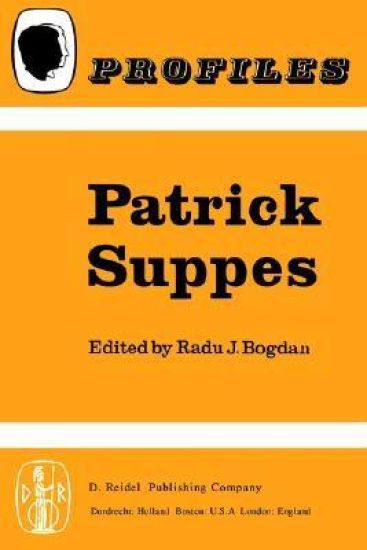
Patrick Suppes

Patrick Suppes

R. Bogdan

Kluwer Academic Publishers
1979
sidottu
The aim of this series is to inform both professional philosophers and a larger readership (of social and natural scientists, methodologists, mathematicians, students, teachers, publishers, etc. ) about what is going on, who's who, and who does what in contemporary philosophy and logic. PROFILES is designed to present the research activity and the results of already outstanding personalities and schools and of newly emerging ones in the various fields of philosophy and logic. There are many Festschrift volumes dedicated to various philosophers. There is the celebrated Library of Living Philosophers edited by P. A. Schilpp whose format influenced the present enterprise. Still they can only cover very little of the contemporary philosophical scene. Faced with a tremen­ dous expansion of philosophical information and with an almost frighten­ ing division of labor and increasing specialization we need systematic and regular ways of keeping track of what happens in the profession. PRO­ FILES is intended to perform such a function. Each volume is devoted to one or several philosophers whose views and results are presented and discussed. The profiled philosopher(s) will summarize and review his (their) own work in the main fields of signifi­ cant contribution. This work will be discussed and evaluated by invited contributors. Relevant historical and/or biographical data, an up-to-date bibliography with short abstracts of the most important works and, whenever possible, references to significant reviews and discussions will also be included.
Patrick Suppes

Patrick Suppes

R. Bogdan

Kluwer Academic Publishers
1979
nidottu
The aim of this series is to inform both professional philosophers and a larger readership (of social and natural scientists, methodologists, mathematicians, students, teachers, publishers, etc. ) about what is going on, who's who, and who does what in contemporary philosophy and logic. PROFILES is designed to present the research activity and the results of already outstanding personalities and schools and of newly emerging ones in the various fields of philosophy and logic. There are many Festschrift volumes dedicated to various philosophers. There is the celebrated Library of Living Philosophers edited by P. A. Schilpp whose format influenced the present enterprise. Still they can only cover very little of the contemporary philosophical scene. Faced with a tremen­ dous expansion of philosophical information and with an almost frighten­ ing division of labor and increasing specialization we need systematic and regular ways of keeping track of what happens in the profession. PRO­ FILES is intended to perform such a function. Each volume is devoted to one or several philosophers whose views and results are presented and discussed. The profiled philosopher(s) will summarize and review his (their) own work in the main fields of signifi­ cant contribution. This work will be discussed and evaluated by invited contributors. Relevant historical and/or biographical data, an up-to-date bibliography with short abstracts of the most important works and, whenever possible, references to significant reviews and discussions will also be included.
Patrick vi älskar dig

Patrick vi älskar dig

Göran Westerholm

Vulkan
2014
nidottu
Denna bok handlar om min son, Patrick. Han föddes 1983 i Toscana i Italien, där vi fortfarande är bosatta. Han är utvecklingsstörd (Downs syndrom) och är nu 31 år gammal.Under min tid som journalist, har jag skrivit hundratals spaltmeter om utvecklingsstörda.Jag kom ganska tidigt i kontakt med utvecklingsstörda människor, för det mesta sådana som hade Downs syndrom.Nu har jag själv ett utvecklingsstört barn.Och det är jag vansinnigt tacksam över. Ingenting bättre kunde ha hänt mig.Boken är rikligt illustrerad med foton tagna av författaren, vilket underlättar läsningen, samt gör att boken blir mera intressant.Varje år föds drygt 100 barn med Downs syndrom (1 per 700 graviditer) i Sverige.Sjukdomen är uppkallad efter den engelske läkaren John Langdon Down, som år 1866 beskrev syndromet mycket precist som en kombination av mental utvecklingsstörning och en rad fysiska missbildningar.Läs och begrunda.
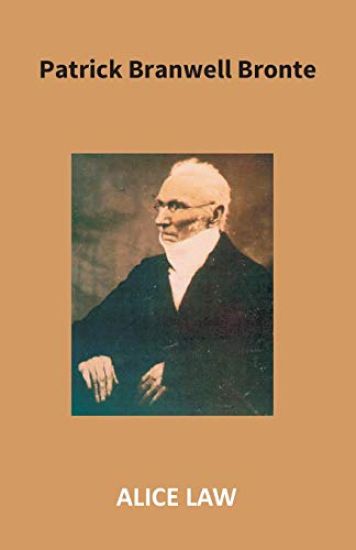
Patrick Branwell Bronte

Patrick Branwell Bronte

Alice Law

GYAN BOOKS
2017
sidottu
This work has been selected by scholars as being culturally important and is part of the knowledge base of civilization as we know it.This work is in the public domain in the United States of America, and possibly other nations. Within the United States, you may freely copy and distribute this work, as no entity (individual or corporate) has a copyright on the body of the work.Scholars believe, and we concur, that this work is important enough to be preserved, reproduced, and made generally available to the public. To ensure a quality reading experience, this work has been proofread and republished using a format that seamlessly blends the original graphical elements with text in an easy-to-read typeface.We appreciate your support of the preservation process, and thank you for being an important part of keeping this knowledge alive and relevant.
Patrick Branwell Brontë

Patrick Branwell Brontë

Alice Law

Alpha Edition
2020
pokkari
This book has been considered by academicians and scholars of great significance and value to literature. This forms a part of the knowledge base for future generations. So that the book is never forgotten we have represented this book in a print format as the same form as it was originally first published. Hence any marks or annotations seen are left intentionally to preserve its true nature.
Patrick Suppes: Scientific Philosopher
Patrick Suppes is a philosopher and scientist whose contributions range over probability and statistics, mathematical and experimental psychology, the foundations of physics, education theory, the philosophy of language, measurement theory, and the philosophy of science. He has also been a pioneer in the area of computer assisted instruction. In each of these areas, Suppes has provided seminal ideas that in some cases led to shaping the direction of research in the field. The papers contained in this collection were commissioned with the mandate of advancing research in their respective fields rather than retrospectively surveying the contributions that Suppes himself has made. The authors form an interesting mixture of researchers in both formal philosophy of science and science itself all of whom have been inspired by his ideas. To maintain the spirit of constructive dialogue that characterizes Suppes's intellectual style, he has written individual responses to each article. In Volume 1: Probability and Probabilistic Causality, nineteen distinguished philosophers and scientists focus their attention on probabilistic issues. In Part I the contributors explore axiomatic representations of probability theory including qualitative and interval valued probabilities as well as traditional point valued probabilities. Belief structures and the dynamics of belief are also treated in detail. In Part II the rapidly growing field of probabilistic causation is assessed from both formal and empirical viewpoints. For probability theorists, statisticians, economists, philosophers of science, psychologists and those interested in the foundations of mathematical social science. In Volume 2: Philosophy of Physics, Theory Structure, and Measurement Theory, fifteen distinguished philosophers and scientists cover a wide variety of topics. Part III covers issues in quantum theory, geometry, classical mechanics, and computational physics. Part IV explores Suppes's well known set-theoretic account of scientific theories which has served him well throughout his career. Suppes's contributions to measurement theory have been widely used in mathematical psychology and elsewhere, and this material is the subject of Part V. For physicists, logicians, workers in mathematical social sicence, and philosophers of science. In Volume 3: Philosophy of Language and Logic, Learning and Action Theory, fourteen distinguished philosophers and scientists explore issues in the philosophy of language, logic, and philosophical psychology. Suppes's suggestions that quantum theory requires a rethinking of classical logic form a particularly sharp account of that controversial thesis, and Part VI deals with this issue together with topics in the philosophy of language and logic, including relational grammars and anaphora. Part VII deals with issues in psychology, action theory, and robotics, while Part VIII concludes with a general survey of Suppes's views in the philosophy of science. A comprehensive chronological and topical bibliography of Suppes's writings is included in this volume. For philosophers of language, theoretical linguists, logicians, workers in mathematical social sciences, and philosophers of science.
Patrick Suppes: Scientific Philosopher
Patrick Suppes is a philosopher and scientist whose contributions range over probability and statistics, mathematical and experimental psychology, the foundations of physics, education theory, the philosophy of language, measurement theory, and the philosophy of science. He has also been a pioneer in the area of computer assisted instruction. In each of these areas, Suppes has provided seminal ideas that in some cases led to shaping the direction of research in the field. The papers contained in this collection were commissioned with the mandate of advancing research in their respective fields rather than retrospectively surveying the contributions that Suppes himself has made. The authors form an interesting mixture of researchers in both formal philosophy of science and science itself all of whom have been inspired by his ideas. To maintain the spirit of constructive dialogue that characterizes Suppes's intellectual style, he has written individual responses to each article. In Volume 1: Probability and Probabilistic Causality, nineteen distinguished philosophers and scientists focus their attention on probabilistic issues. In Part I the contributors explore axiomatic representations of probability theory including qualitative and interval valued probabilities as well as traditional point valued probabilities. Belief structures and the dynamics of belief are also treated in detail. In Part II the rapidly growing field of probabilistic causation is assessed from both formal and empirical viewpoints. For probability theorists, statisticians, economists, philosophers of science, psychologists and those interested in the foundations of mathematical social science. In Volume 2: Philosophy of Physics, Theory Structure, and Measurement Theory, fifteen distinguished philosophers and scientists cover a wide variety of topics. Part III covers issues in quantum theory, geometry, classical mechanics, and computational physics. Part IV explores Suppes's well known set-theoretic account of scientific theories which has served him well throughout his career. Suppes's contributions to measurement theory have been widely used in mathematical psychology and elsewhere, and this material is the subject of Part V. For physicists, logicians, workers in mathematical social sicence, and philosophers of science. In Volume 3: Philosophy of Language and Logic, Learning and Action Theory, fourteen distinguished philosophers and scientists explore issues in the philosophy of language, logic, and philosophical psychology. Suppes's suggestions that quantum theory requires a rethinking of classical logic form a particularly sharp account of that controversial thesis, and Part VI deals with this issue together with topics in the philosophy of language and logic, including relational grammars and anaphora. Part VII deals with issues in psychology, action theory, and robotics, while Part VIII concludes with a general survey of Suppes's views in the philosophy of science. A comprehensive chronological and topical bibliography of Suppes's writings is included in this volume. For philosophers of language, theoretical linguists, logicians, workers in mathematical social sciences, and philosophers of science.
Patrick Suppes: Scientific Philosopher
Patrick Suppes is a philosopher and scientist whose contributions range over probability and statistics, mathematical and experimental psychology, the foundations of physics, education theory, the philosophy of language, measurement theory, and the philosophy of science. He has also been a pioneer in the area of computer assisted instruction. In each of these areas, Suppes has provided seminal ideas that in some cases led to shaping the direction of research in the field. The papers contained in this collection were commissioned with the mandate of advancing research in their respective fields rather than retrospectively surveying the contributions that Suppes himself has made. The authors form an interesting mixture of researchers in both formal philosophy of science and science itself all of whom have been inspired by his ideas. To maintain the spirit of constructive dialogue that characterizes Suppes's intellectual style, he has written individual responses to each article. In Volume 1: Probability and Probabilistic Causality, nineteen distinguished philosophers and scientists focus their attention on probabilistic issues. In Part I the contributors explore axiomatic representations of probability theory including qualitative and interval valued probabilities as well as traditional point valued probabilities. Belief structures and the dynamics of belief are also treated in detail. In Part II the rapidly growing field of probabilistic causation is assessed from both formal and empirical viewpoints. For probability theorists, statisticians, economists, philosophers of science, psychologists and those interested in the foundations of mathematical social science. In Volume 2: Philosophy of Physics, Theory Structure, and Measurement Theory, fifteen distinguished philosophers and scientists cover a wide variety of topics. Part III covers issues in quantum theory, geometry, classical mechanics, and computational physics. Part IV explores Suppes's well known set-theoretic account of scientific theories which has served him well throughout his career. Suppes's contributions to measurement theory have been widely used in mathematical psychology and elsewhere, and this material is the subject of Part V. For physicists, logicians, workers in mathematical social sicence, and philosophers of science. In Volume 3: Philosophy of Language and Logic, Learning and Action Theory, fourteen distinguished philosophers and scientists explore issues in the philosophy of language, logic, and philosophical psychology. Suppes's suggestions that quantum theory requires a rethinking of classical logic form a particularly sharp account of that controversial thesis, and Part VI deals with this issue together with topics in the philosophy of language and logic, including relational grammars and anaphora. Part VII deals with issues in psychology, action theory, and robotics, while Part VIII concludes with a general survey of Suppes's views in the philosophy of science. A comprehensive chronological and topical bibliography of Suppes's writings is included in this volume. For philosophers of language, theoretical linguists, logicians, workers in mathematical social sciences, and philosophers of science.
In Tearing Haste: Letters Between Deborah Devonshire and Patrick Leigh Fermor

In Tearing Haste: Letters Between Deborah Devonshire and Patrick Leigh Fermor

Patrick Leigh Fermor; Deborah Devonshire

New York Review of Books
2017
nidottu
Now in paperback, Patrick Leigh Fermor and Deborah Devonshire's witty, informative, and altogether delightful correspondence. In the spring of 1956, Deborah, Duchess of Devonshire, youngest of the six legendary Mitford sisters, invited the writer and war hero Patrick Leigh Fermor to visit Lismore Castle, the Devonshires' house in Ireland. The halcyon visit sparked a deep friendship and a lifelong exchange of highly entertaining correspondence.
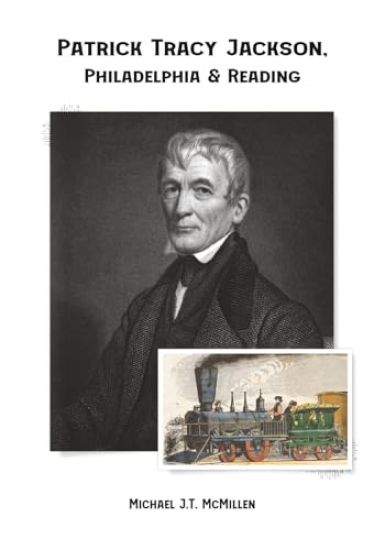
Patrick Tracy Jackson, Philadelphia & Reading

Patrick Tracy Jackson, Philadelphia & Reading

Michael J T McMillen

River Stone Publishing Group
2025
pokkari
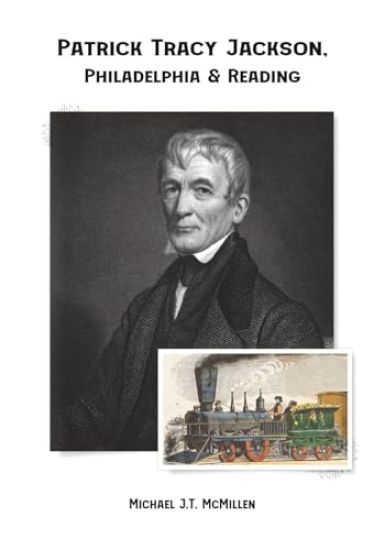
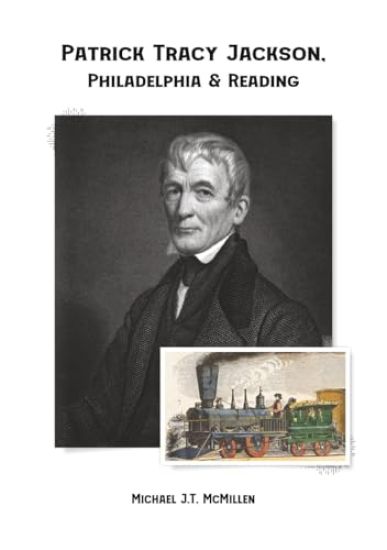
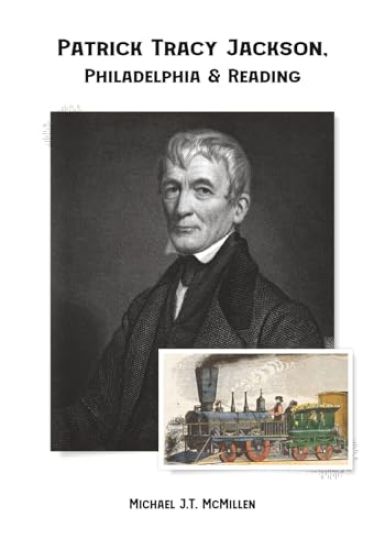
After the Panic of 1837, the Locks & Canals machine shop had little work; it was to be sold or converted to a twist mill. The L&C treasurer, Patrick Tracy Jackson, strove to keep the shop busy pending sale or conversion. An 1841 plea to Jackson from Elihu Chauncey, president of the Philadelphia & Reading railroad, seemed salvation. Despite incomplete infrastructure, the P&R would begin operating in 1842. It urgently needed coal cars and locomotives to carry anthracite from Pennsylvania fields to Philadelphia. But its financial situation was dire, its debt in default, its assets being seized by sheriffs. It struggled to borrow. Its bridges suffered arson; its trains were derailed. Statutory completion deadlines loomed. Despite the risks, L&C built P&R cars and engines.There were conditions to award of the teased building contracts. Chauncey wanted L&C to make loans to the P&R. L&C had no interest in lending. Jackson sought P&R equity enabling participation in two infant industries: railroads and coal. Chauncey concocted a surreptitious scheme to acquire P&R stock from the Bank of the United States for sale to L&C, thereby diminishing the bank's power over the P&R.Nine months later, the P&R and L&C entered into the 1842 Running Gear Contract for running gear for wood jimmies. Developing a financial structure for the locomotives transaction consumed a year: the Engines Contract for locomotives and coal cars was signed in 1843. For the contracts, Jackson developed unique financial structures to protect L&C, as builder and financier, while allowing P&R use of the equipment for revenue generation. How could L&C sell equipment to, and ensure receipt and retention of payments from, an insolvent railroad (the P&R) that had not yet, or had only recently, commenced operations, during a severe economic depression or other adverse financial circumstances?The transaction went badly. Neither Jackson nor the P&R anticipated new iron coal cars or Baldwin's flexible beam truck: they rendered small L&C engines inadequate. Builders of large engines were paid; L&C received little. Payment defaults were continuous (for years), diminishing L&C's ability to sell the machine shop.This is a story of desperation, debt, and default: of balancing on the brink of bankruptcy. Jackson began with payment admonitions, eventually including favonian, then whetted, threats of resort to legal remedies. L&C acquired P&R stock and bonds and aligned with P&R stockholders and bond holders. His focus expanded beyond the equipment debt to the P&R's financial health, especially elimination of floating debt. In 1845, L&C and P&R bond holders initiated one of the first audits of managerial custodianship in U.S. corporate history. A Pennsylvania law was enacted allowing bond holders voting rights on a parity with stockholders.When further efforts at suasion and blandishment failed, Jackson sought legal advice from the eminent Philadelphia lawyer Horace Binney. Binney and Jackson developed an elegant four-step plan to take control of the trusts and debt under the Rolling Stock Contracts and neutralize the P&R. The plan derived from contract terms, threats of legal remedies (including personal liability for trustees), and extra-legal mechanisms. Within two months, L&C took control of the remedies relating to the P&R debt from the trustees, neutralized the P&R, and forced a P&R financial restructuring. Its value enhanced, L&C rid itself of the P&R debt. But more was needed.
Patrick Tracy Jackson, Philadelphia & Reading

Patrick Tracy Jackson, Philadelphia & Reading

Michael J T McMillen

River Stone Publishing Group
2025
pokkari
After the Panic of 1837, the Locks & Canals machine shop had little work; it was to be sold or converted to a twist mill. The L&C treasurer, Patrick Tracy Jackson, strove to keep the shop busy pending sale or conversion. An 1841 plea to Jackson from Elihu Chauncey, president of the Philadelphia & Reading railroad, seemed salvation. Despite incomplete infrastructure, the P&R would begin operating in 1842. It urgently needed coal cars and locomotives to carry anthracite from Pennsylvania fields to Philadelphia. But its financial situation was dire, its debt in default, its assets being seized by sheriffs. It struggled to borrow. Its bridges suffered arson; its trains were derailed. Statutory completion deadlines loomed. Despite the risks, L&C built P&R cars and engines.There were conditions to award of the teased building contracts. Chauncey wanted L&C to make loans to the P&R. L&C had no interest in lending. Jackson sought P&R equity enabling participation in two infant industries: railroads and coal. Chauncey concocted a surreptitious scheme to acquire P&R stock from the Bank of the United States for sale to L&C, thereby diminishing the bank's power over the P&R.Nine months later, the P&R and L&C entered into the 1842 Running Gear Contract for running gear for wood jimmies. Developing a financial structure for the locomotives transaction consumed a year: the Engines Contract for locomotives and coal cars was signed in 1843. For the contracts, Jackson developed unique financial structures to protect L&C, as builder and financier, while allowing P&R use of the equipment for revenue generation. How could L&C sell equipment to, and ensure receipt and retention of payments from, an insolvent railroad (the P&R) that had not yet, or had only recently, commenced operations, during a severe economic depression or other adverse financial circumstances?The transaction went badly. Neither Jackson nor the P&R anticipated new iron coal cars or Baldwin's flexible beam truck: they rendered small L&C engines inadequate. Builders of large engines were paid; L&C received little. Payment defaults were continuous (for years), diminishing L&C's ability to sell the machine shop.This is a story of desperation, debt, and default: of balancing on the brink of bankruptcy. Jackson began with payment admonitions, eventually including favonian, then whetted, threats of resort to legal remedies. L&C acquired P&R stock and bonds and aligned with P&R stockholders and bond holders. His focus expanded beyond the equipment debt to the P&R's financial health, especially elimination of floating debt. In 1845, L&C and P&R bond holders initiated one of the first audits of managerial custodianship in U.S. corporate history. A Pennsylvania law was enacted allowing bond holders voting rights on a parity with stockholders.When further efforts at suasion and blandishment failed, Jackson sought legal advice from the eminent Philadelphia lawyer Horace Binney. Binney and Jackson developed an elegant four-step plan to take control of the trusts and debt under the Rolling Stock Contracts and neutralize the P&R. The plan derived from contract terms, threats of legal remedies (including personal liability for trustees), and extra-legal mechanisms. Within two months, L&C took control of the remedies relating to the P&R debt from the trustees, neutralized the P&R, and forced a P&R financial restructuring. Its value enhanced, L&C rid itself of the P&R debt. But more was needed.
Patrick Tracy Jackson, Philadelphia & Reading

Patrick Tracy Jackson, Philadelphia & Reading

Michael J T McMillen

River Stone Publishing Group
2025
sidottu
After the Panic of 1837, the Locks & Canals machine shop had little work; it was to be sold or converted to a twist mill. The L&C treasurer, Patrick Tracy Jackson, strove to keep the shop busy pending sale or conversion. An 1841 plea to Jackson from Elihu Chauncey, president of the Philadelphia & Reading railroad, seemed salvation. Despite incomplete infrastructure, the P&R would begin operating in 1842. It urgently needed coal cars and locomotives to carry anthracite from Pennsylvania fields to Philadelphia. But its financial situation was dire, its debt in default, its assets being seized by sheriffs. It struggled to borrow. Its bridges suffered arson; its trains were derailed. Statutory completion deadlines loomed. Despite the risks, L&C built P&R cars and engines.There were conditions to award of the teased building contracts. Chauncey wanted L&C to make loans to the P&R. L&C had no interest in lending. Jackson sought P&R equity enabling participation in two infant industries: railroads and coal. Chauncey concocted a surreptitious scheme to acquire P&R stock from the Bank of the United States for sale to L&C, thereby diminishing the bank's power over the P&R.Nine months later, the P&R and L&C entered into the 1842 Running Gear Contract for running gear for wood jimmies. Developing a financial structure for the locomotives transaction consumed a year: the Engines Contract for locomotives and coal cars was signed in 1843. For the contracts, Jackson developed unique financial structures to protect L&C, as builder and financier, while allowing P&R use of the equipment for revenue generation. How could L&C sell equipment to, and ensure receipt and retention of payments from, an insolvent railroad (the P&R) that had not yet, or had only recently, commenced operations, during a severe economic depression or other adverse financial circumstances?The transaction went badly. Neither Jackson nor the P&R anticipated new iron coal cars or Baldwin's flexible beam truck: they rendered small L&C engines inadequate. Builders of large engines were paid; L&C received little. Payment defaults were continuous (for years), diminishing L&C's ability to sell the machine shop.This is a story of desperation, debt, and default: of balancing on the brink of bankruptcy. Jackson began with payment admonitions, eventually including favonian, then whetted, threats of resort to legal remedies. L&C acquired P&R stock and bonds and aligned with P&R stockholders and bond holders. His focus expanded beyond the equipment debt to the P&R's financial health, especially elimination of floating debt. In 1845, L&C and P&R bond holders initiated one of the first audits of managerial custodianship in U.S. corporate history. A Pennsylvania law was enacted allowing bond holders voting rights on a parity with stockholders.When further efforts at suasion and blandishment failed, Jackson sought legal advice from the eminent Philadelphia lawyer Horace Binney. Binney and Jackson developed an elegant four-step plan to take control of the trusts and debt under the Rolling Stock Contracts and neutralize the P&R. The plan derived from contract terms, threats of legal remedies (including personal liability for trustees), and extra-legal mechanisms. Within two months, L&C took control of the remedies relating to the P&R debt from the trustees, neutralized the P&R, and forced a P&R financial restructuring. Its value enhanced, L&C rid itself of the P&R debt. But more was needed.
Patrick Tracy Jackson, Philadelphia & Reading

Patrick Tracy Jackson, Philadelphia & Reading

Michael J T McMillen

River Stone Publishing Group
2025
pokkari
After the Panic of 1837, the Locks & Canals machine shop had little work; it was to be sold or converted to a twist mill. The L&C treasurer, Patrick Tracy Jackson, strove to keep the shop busy pending sale or conversion. An 1841 plea to Jackson from Elihu Chauncey, president of the Philadelphia & Reading railroad, seemed salvation. Despite incomplete infrastructure, the P&R would begin operating in 1842. It urgently needed coal cars and locomotives to carry anthracite from Pennsylvania fields to Philadelphia. But its financial situation was dire, its debt in default, its assets being seized by sheriffs. It struggled to borrow. Its bridges suffered arson; its trains were derailed. Statutory completion deadlines loomed. Despite the risks, L&C built P&R cars and engines.There were conditions to award of the teased building contracts. Chauncey wanted L&C to make loans to the P&R. L&C had no interest in lending. Jackson sought P&R equity enabling participation in two infant industries: railroads and coal. Chauncey concocted a surreptitious scheme to acquire P&R stock from the Bank of the United States for sale to L&C, thereby diminishing the bank's power over the P&R.Nine months later, the P&R and L&C entered into the 1842 Running Gear Contract for running gear for wood jimmies. Developing a financial structure for the locomotives transaction consumed a year: the Engines Contract for locomotives and coal cars was signed in 1843. For the contracts, Jackson developed unique financial structures to protect L&C, as builder and financier, while allowing P&R use of the equipment for revenue generation. How could L&C sell equipment to, and ensure receipt and retention of payments from, an insolvent railroad (the P&R) that had not yet, or had only recently, commenced operations, during a severe economic depression or other adverse financial circumstances?The transaction went badly. Neither Jackson nor the P&R anticipated new iron coal cars or Baldwin's flexible beam truck: they rendered small L&C engines inadequate. Builders of large engines were paid; L&C received little. Payment defaults were continuous (for years), diminishing L&C's ability to sell the machine shop.This is a story of desperation, debt, and default: of balancing on the brink of bankruptcy. Jackson began with payment admonitions, eventually including favonian, then whetted, threats of resort to legal remedies. L&C acquired P&R stock and bonds and aligned with P&R stockholders and bond holders. His focus expanded beyond the equipment debt to the P&R's financial health, especially elimination of floating debt. In 1845, L&C and P&R bond holders initiated one of the first audits of managerial custodianship in U.S. corporate history. A Pennsylvania law was enacted allowing bond holders voting rights on a parity with stockholders.When further efforts at suasion and blandishment failed, Jackson sought legal advice from the eminent Philadelphia lawyer Horace Binney. Binney and Jackson developed an elegant four-step plan to take control of the trusts and debt under the Rolling Stock Contracts and neutralize the P&R. The plan derived from contract terms, threats of legal remedies (including personal liability for trustees), and extra-legal mechanisms. Within two months, L&C took control of the remedies relating to the P&R debt from the trustees, neutralized the P&R, and forced a P&R financial restructuring. Its value enhanced, L&C rid itself of the P&R debt. But more was needed.