Kirjojen hintavertailu. Mukana 12 016 292 kirjaa ja 12 kauppaa.

Kirjahaku

Etsi kirjoja tekijän nimen, kirjan nimen tai ISBN:n perusteella.

1000 tulosta hakusanalla Peter J Fast

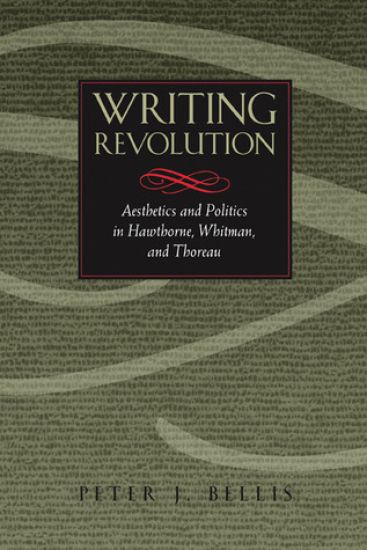
Writing Revolution

Writing Revolution

Peter J. Bellis

University of Georgia Press
2010
pokkari
In recent years, formalist and deconstructive approaches to literary studies have been under attack, charged by critics with isolating texts as distinctive aesthetic or linguistic objects, separate from their social and historical contexts. Historicist and cultural approaches have often responded by simply reversing the picture, reducing texts to no more than superstructural effects of historical or ideological forces. In Writing Revolution, Peter J. Bellis explores the ways in which literature can engage with—rather than escape from or obscure—social and political issues.Bellis argues that a number of nineteenth-century American writers, including Nathaniel Hawthorne, Henry David Thoreau, and Walt Whitman, saw their texts as spaces where alternative social and cultural possibilities could be suggested and explored. All writing in the same historical moment, Bellis's subjects were responding to the same cluster of issues: the need to redefine American identity after the Revolution, the problem of race slavery, and the growing industrialization of American society.Hawthorne, Bellis contends, sees the romance as "neutral territory" where the Imaginary and the Actual—the aesthetic and the historical—can interpenetrate and address crucial issues of class, race, and technological modernity. Whitman conceives of Leaves of Grass as a transformative democratic space where all forms of meditation, both political and literary, are swept away. Thoreau oscillates between these two approaches. Walden, like the romance, aims to fashion a mediating space between nature and society. His abolitionist essays, however, shift sharply away from both linguistic representation and the political, toward an apocalyptic cleansing violence.In addition to covering selected works by Hawthorne, Whitman, and Thoreau, Bellis also examines powerful works of social and political critique by Louisa May Alcott and Margaret Fuller. With its suggestions for new ways of reading antebellum American writing, Writing Revolution breaks through the thickets of contemporary literary discourse and will spark debate in the literary community.
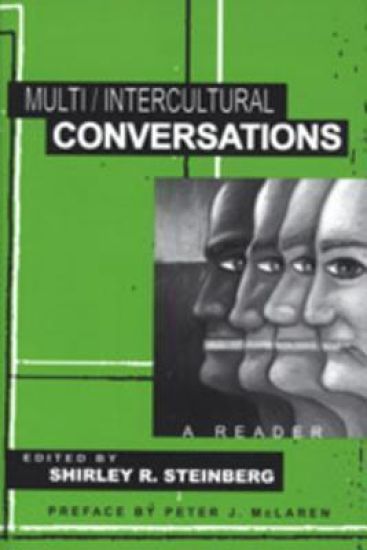
Multi/Intercultural Conversations

Multi/Intercultural Conversations

Peter J. McLaren

Peter Lang Publishing Inc
2001
nidottu
Multi/Intercultural Conversations brings together voices from all over the world in the examination of critical pedagogy and the politics of identity in regard to viewing education as a global endeavor. The authors are teachers, parents, professors, and writers engaged in projects of social justice and education with the desire to open a conversation between both students and teachers about education in the new millennium.
Religion and Poverty

Religion and Poverty

Peter J. Paris

Duke University Press
2009
sidottu
A Ghanaian scholar of religion argues that poverty is a particularly complex subject in traditional African cultures, where holistic worldviews unite life’s material and spiritual dimensions. A South African ethicist examines informal economies in Ghana, Jamaica, Kenya, and South Africa, looking at their ideological roots, social organization, and vulnerability to global capital. African American theologians offer ethnographic accounts of empowering religious rituals performed in churches in the United States, Jamaica, and South Africa. This important collection brings together these and other Pan-African perspectives on religion and poverty in Africa and the African diaspora. Contributors from Africa and North America explore poverty’s roots and effects, the ways that experiences and understandings of deprivation are shaped by religion, and the capacity and limitations of religion as a means of alleviating poverty. As part of a collaborative project, the contributors visited Ghana, Kenya, and South Africa, as well as Jamaica and the United States. In each location, they met with clergy, scholars, government representatives, and NGO workers, and they examined how religious groups and community organizations address poverty. Their essays complement one another. Some focus on poverty, some on religion, others on their intersection, and still others on social change. A Jamaican scholar of gender studies decries the feminization of poverty, while a Nigerian ethicist and lawyer argues that the protection of human rights must factor into efforts to overcome poverty. A church historian from Togo examines the idea of poverty as a moral virtue and its repercussions in Africa, and a Tanzanian theologian and priest analyzes ujamaa, an African philosophy of community and social change. Taken together, the volume’s essays create a discourse of mutual understanding across linguistic, religious, ethnic, and national boundaries.Contributors. Elizabeth Amoah, Kossi A. Ayedze, Barbara Bailey, Katie G. Cannon, Noel Erskine, Dwight N. Hopkins, Simeon O. Ilesanmi, Laurenti Magesa, Madipoane Masenya, Takatso A. Mofokeng, Esther M. Mombo, Nyambura J. Njoroge, Jacob Olupona, Peter J. Paris, Anthony B. Pinn, Linda E. Thomas, Lewin L. Williams
Religion and Poverty

Religion and Poverty

Peter J. Paris

Duke University Press
2009
pokkari
A Ghanaian scholar of religion argues that poverty is a particularly complex subject in traditional African cultures, where holistic worldviews unite life’s material and spiritual dimensions. A South African ethicist examines informal economies in Ghana, Jamaica, Kenya, and South Africa, looking at their ideological roots, social organization, and vulnerability to global capital. African American theologians offer ethnographic accounts of empowering religious rituals performed in churches in the United States, Jamaica, and South Africa. This important collection brings together these and other Pan-African perspectives on religion and poverty in Africa and the African diaspora. Contributors from Africa and North America explore poverty’s roots and effects, the ways that experiences and understandings of deprivation are shaped by religion, and the capacity and limitations of religion as a means of alleviating poverty. As part of a collaborative project, the contributors visited Ghana, Kenya, and South Africa, as well as Jamaica and the United States. In each location, they met with clergy, scholars, government representatives, and NGO workers, and they examined how religious groups and community organizations address poverty. Their essays complement one another. Some focus on poverty, some on religion, others on their intersection, and still others on social change. A Jamaican scholar of gender studies decries the feminization of poverty, while a Nigerian ethicist and lawyer argues that the protection of human rights must factor into efforts to overcome poverty. A church historian from Togo examines the idea of poverty as a moral virtue and its repercussions in Africa, and a Tanzanian theologian and priest analyzes ujamaa, an African philosophy of community and social change. Taken together, the volume’s essays create a discourse of mutual understanding across linguistic, religious, ethnic, and national boundaries.Contributors. Elizabeth Amoah, Kossi A. Ayedze, Barbara Bailey, Katie G. Cannon, Noel Erskine, Dwight N. Hopkins, Simeon O. Ilesanmi, Laurenti Magesa, Madipoane Masenya, Takatso A. Mofokeng, Esther M. Mombo, Nyambura J. Njoroge, Jacob Olupona, Peter J. Paris, Anthony B. Pinn, Linda E. Thomas, Lewin L. Williams
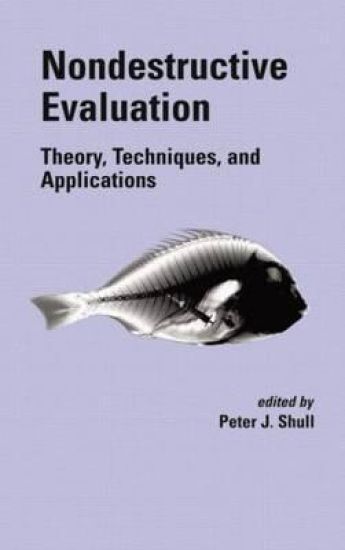
Nondestructive Evaluation

Nondestructive Evaluation

Peter J. Shull

CRC Press Inc
2002
sidottu
Describing NDE issues associated with real-world applications, this comprehensive book details conventional and forthcoming NDE technologies. It instructs on current practices, common techniques and equipment applications, and the potentials and limitations of current NDE methods. Each chapter details a different method, providing an overview, an explanation of the fundamental physical laws governing the method, the inspection techniques and typical equipment used in it's application, final system integration of transducers, supporting instrumentation, commonly practiced procedures necessary for viable NDE inspection, examples of how the method can be applied, and end-of-chapter problems.
A Practical Guide to Divorce in Hawaii

A Practical Guide to Divorce in Hawaii

Peter J. Herman

University of Hawai'i Press
1990
nidottu
Are you or is someone you know- contemplating or in the midst of a divorce?- having post-divorce problems?- living with someone? This new edition of A Practical Guide to Divorce in Hawaii explains in clear, nonlegal language current Hawaii family law and how it may affect your life. The author, an experienced divorce lawyer, presents the most recent developments in child support guidelines; laws affecting property division, military retirement, alimony taxes; and court procedures, including the requirement of mediation in all cases. Offering dozens of suggestions on how to negotiate a fair settlement with your spouse, it answers questions about alimony, child custody and support, property division, and tax and debt responsibilities. An entire chapter is devoted to the special problems of military personnel. There is even a chapter on pre- and postmarital agreements and palimony. Not intended as a substitute for an attorney, this book will, however, give you a broad understanding of the divorce process in Hawaii and the knowledge of how to fully protect your rights. Originally published in 1990.
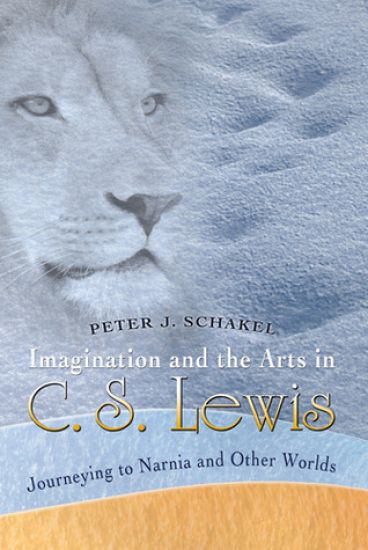
Imagination and the Arts in C.S. Lewis

Imagination and the Arts in C.S. Lewis

Peter J. Schakel

University of Missouri Press
2011
nidottu
Imagination has long been regarded as central to C. S. Lewis's life and to his creative and critical works, but this is the first study to provide a thorough analysis of his theory of imagination, including the different ways he used the word and how those uses relate to each other. Peter Schakel begins by concentrating on the way reading or engaging with the other arts is an imaginative activity. He focuses on three books in which imagination is the central theme—Surprised by Joy, An Experiment in Criticism, and The Discarded Image—and shows the important role of imagination in Lewis's theory of education. He then examines imagination and reading in Lewis's fiction, concentrating specifically on the Chronicles of Narnia, the most imaginative of his works. He looks at how the imaginative experience of reading the Chronicles is affected by the physical texture of the books, the illustrations, revisions of the texts, the order in which the books are read, and their narrative "voice," the "storyteller" who becomes almost a character in the stories. Imagination and the Arts in C. S. Lewis also explores Lewis's ideas about imagination in the nonliterary arts. Although Lewis regarded engagement with the arts as essential to a well- rounded and satisfying life, critics of his work and even biographers have given little attention to this aspect of his life. Schakel reviews the place of music, dance, art, and architecture in Lewis's life, the ways in which he uses them as content in his poems and stories, and how he develops some of the deepest, most significant themes of his stories through them. Schakel concludes by analyzing the uses and abuses of imagination. He looks first at "moral imagination." Although Lewis did not use this term, Schakel shows how Lewis developed the concept in That Hideous Strength and The Abolition of Man long before it became popularized in the 1980s and 1990s. While readers often concentrate on the Christian dimension of Lewis's works, equally or more important to him was their moral dimension. Imagination and the Arts in C. S. Lewis will appeal to students and teachers of both children's literature and twentieth-century British writers. It will also be of value to readers who wish to compare Lewis's creations with more recent imaginative works such as the Harry Potter series.
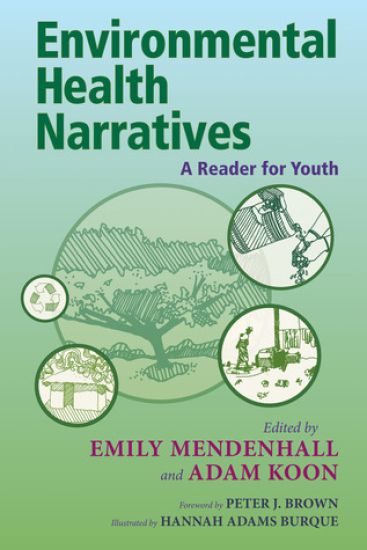
Environmental Health Narratives

Environmental Health Narratives

Peter J. Brown

University of New Mexico Press
2012
nidottu
Andrew woke up with a guinea worm coming out of his foot as a result of drinking unsafe water a year previously. Anjali awoke with a cough because smoke from kilns filled her dilapidated home.Tyler stayed home from school because he had a stomachache from eating bad beef.What are the links between the environments in which these young people live and their health problems?The stories, most set in poor communities, draw attention to the effects of air, water, food, climate, urbanization, and other human impacts on health. A comprehensive teaching guide provides a context from which readers can explore problems and solutions in environmental health.
The Bare-toed Vaquero

The Bare-toed Vaquero

Peter J. Marchand

University of New Mexico Press
2013
nidottu
Rarely visited by outsiders, the ranchers of the Sierra de la Giganta in Baja California Sur live much as their ancestors have for the past two centuries. They raise goats and cattle and grow a magnificent variety of fruits, vegetables, and flowers. In this book a gifted photojournalist introduces us to individual ranchers and their families and describes their traditional practices and the ways they have adapted to twenty-first-century challenges and technological advances. Marchand’s photographs and text are both informative and intimate. His introduction to this little-known corner of Mexico will delight travelers and scholars alike.
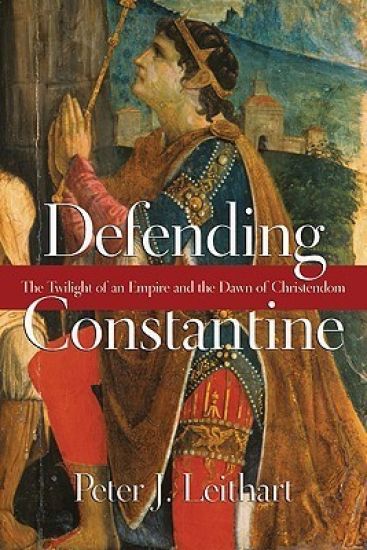
Defending Constantine – The Twilight of an Empire and the Dawn of Christendom
We know that Constantine issued the Edict of Milan in 313outlawed paganism and made Christianity the official religion of the Roman Empiremanipulated the Council of Nicea in 325exercised absolute authority over the church, co-opting it for the aims of empire And if Constantine the emperor were not problem enough, we all know that Constantinianism has been very bad for the church. Or do we know these things? Peter Leithart weighs these claims and finds them wanting. And what's more, in focusing on these historical mirages we have failed to notice the true significance of Constantine and Rome baptized. For beneath the surface of this contested story there emerges a deeper narrative of the end of Roman sacrifice--a tectonic shift in the political theology of an empire--and with far-reaching implications. In this probing and informative book Peter Leithart examines the real Constantine, weighs the charges against Constantinianism, and sets the terms for a new conversation about this pivotal emperor and the Christendom that emerged.
Is Your Lord Large Enough?

Is Your Lord Large Enough?

Peter J. Schakel

Inter-Varsity Press,US
2008
nidottu
Peter Schakel opens to you the more practical parts of C S Lewis' wonderful writings. Covering areas of potential struggle such as prayer, suffering, doubt and control, Schakel draws principles from Lewis' non-fiction as well as illustrations from the "Chronicles of Narnia" to stir your imagination and soul so that you might see God in new ways.
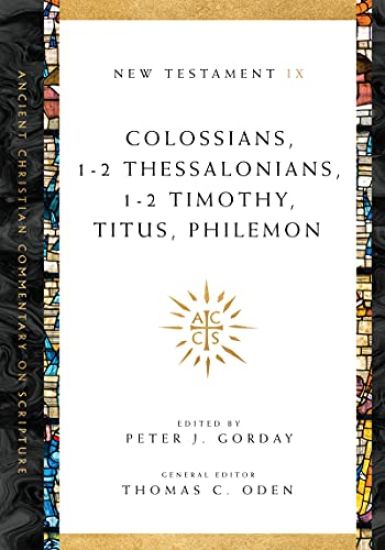
Colossians, 1–2 Thessalonians, 1–2 Timothy, Titus, Philemon

Colossians, 1–2 Thessalonians, 1–2 Timothy, Titus, Philemon

Peter J. Gorday; Thomas C. Oden

IVP Academic
2019
nidottu
Christianity Today Book of the Year For the early church fathers, certain passages in the shorter letters of St. Paul proved particularly important in doctrinal disputes and practical church matters. Pivotal in controversies with the Arians and the Gnostics, the most commented-on christological text in these letters was Colossians 1:15-20, where Jesus is declared "the image of the invisible God, the firstborn of all creation." The fathers found ample support scattered throughout the Pastorals for the divinity of the Son and the Spirit and for the full union of humanity and divinity in the "one mediator between God and men, the man Christ Jesus" (1 Timothy 2:5). These commentators also looked to the Pastorals for important teaching on ethics and church life. Chief among the Eastern commentators and widely excerpted throughout this volume is John Chrysostom, praised for his pastoral insight. Other Greek commentators cited include Theodoret of Cyr, Theodore of Mopsuestia, Severian of Gabala, Ignatius of Antioch, Justin Martyr, Irenaeus, Clement of Alexandria, Athanasius, Basil the Great, Gregory of Nazianzus, and Gregory of Nyssa. Western commentators include Augustine, Ambrosiaster, Pelagius, Jerome, Hippolytus, Tertullian, Novatian, Cyprian of Carthage, Hilary of Poitiers, and Ambrose. Of particular interest for their ascetical and devotional insight are works from Syrian and Egyptian churches, including Aphrahat, Ephrem the Syrian, Isaac of Nineveh, and Philoxenus of Mabbug. This Ancient Christian Commentary on Scripture volume opens up a treasure house of ancient wisdom that allows these faithful witnesses, some appearing here in English translation for the first time, to speak with eloquence and intellectual acumen to the church today.
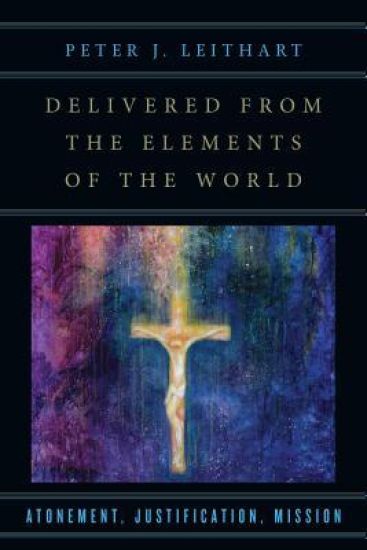
Delivered from the Elements of the World – Atonement, Justification, Mission
In Delivered from the Elements of the World Peter Leithart reframes Anselm's question, "Why the God Man?" Instead he asks, "How can the death and resurrection of a Jewish rabbi of the first century . . . be the decisive event in the history of humanity, the hinge and crux and crossroads for everything?" With the question reframed for the wide screen, Leithart pursues the cultural and public settings and consequences of the cross and resurrection. He writes, "I hope to show that atonement theology must be social theory if it is going to have any coherence, relevance or comprehensibility at all." There are no small thoughts or cramped plot lines in this vision of the deep-down things of cross and culture. While much is recognizable as biblical theology projected along Pauline vectors, Leithart marshals a stunning array of discourse to crack open one of the big questions of Christian theology. This is a book on the atonement that eludes conventional categories, prods our theological imaginations and is sure to spark conversation and debate.
Better Parties, Better Government

Better Parties, Better Government

Peter J. Wallison; Joel Gora

AEI Press
2009
pokkari
Every federal campaign finance reform law enacted since 1971_ostensibly intended to keep politicians honest and limit the influence of contributors_has in reality protected incumbents by reducing the funds available to challengers. Although the courts have struck down many of the most egregious incumbent-protection measures enacted by Congress, important ones still remain_particularly restrictions on what political parties can spend in support of their candidates. These restrictions explain why reelection rates for incumbents are so high_up to 98 percent in recent years_despite record-low approval ratings for Congress. The most effective way to change this pro-incumbent system is to lift the restrictions on political parties, allowing them to become both the principal vehicles for political fundraising and the principal sources of campaign funds for their candidates. This would improve funding resources for challengers, strengthen the parties, reduce the appearance of corruption inherent in the current candidate-centered fundraising system, and ultimately strengthen American democracy. In Better Parties, Better Government: A Realistic Program for Campaign Finance Reform, Peter J. Wallison and Joel M. Gora guide us through the complex tangle of laws, rules, regulations, exceptions, exemptions, and safe harbors that constitute our current campaign finance regime, and explain how to reform the system with a single change: ending the restrictions on spending by political parties in support of their candidates. This single reform will make elections more competitive, improve the candidate and policy choices available to voters, and thereby transform American politics.
Dissent from the Majority Report of the Financial Crisis Inquiry Commission
Peter J. Wallison is the only member of the Financial Crisis Inquiry Commission (FCIC) to release a formal dissent to the FCIC’s official report on the causes of the financial crisis. Wallison, codirector of financial policy studies at the American Enterprise Institute, argues that the FCIC’s report fails to address the cause of the deterioration in mortgage underwriting standards that led to the housing bubble widely accepted as the key factor in destabilizing the American economy. Wallison’s Dissent to the Majority Report of the Financial Crisis Inquiry Commission reveals that government-mandated subprime loans, not greedy investors, were the force behind the deterioration in underwriting standards. This dissent is a must-read for anyone seeking to understand the causes of the financial crisis—and to prevent future economic collapse.
Bad History, Worse Policy

Bad History, Worse Policy

Peter J. Wallison

AEI Press
2013
sidottu
This timely study focuses on how the government-constructed narratives surrounding the collapse of Fannie Mae and Freddie Mac and the 2008 financial crisis shaped the policymaking that led to the Dodd-Frank Act. The book shows that every major provision of the act can be traced directly to that narrative, which ignored the government’s own role and focused entirely on the errors of the private sector. In the next Congress, whether or not the Republicans are in control of the House and Senate, there will be a concerted effort to make changes in—or even repeal—the Dodd-Frank Act. The essays in this book, originally published by AEI as Financial Services Outlooks, and the accompanying commentary provide a thorough backgrounder for anyone interested in financial policy.
A Professor's Duties

A Professor's Duties

Peter J. Markie

Rowman Littlefield
1994
sidottu
In A Professor's Duties, distinguished philosopher Peter J. Markie adds to the expanding discussion of the ethics of college teaching. Part One concentrates on the obligations of individual professors, primarily with regard to issues about what and how to teach. Part Two expands Professor Markie's views by providing a selection of the most significant previously published writings on the ethics of college teaching.