Kirjojen hintavertailu. Mukana 12 081 024 kirjaa ja 12 kauppaa.

Kirjahaku

Etsi kirjoja tekijän nimen, kirjan nimen tai ISBN:n perusteella.

1000 tulosta hakusanalla Philo

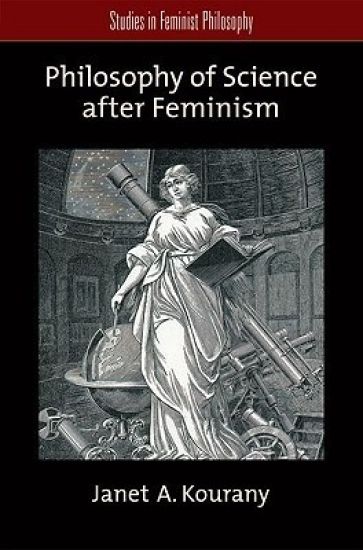
Philosophy of Science after Feminism

Philosophy of Science after Feminism

Janet A. Kourany

Oxford University Press Inc
2010
nidottu
In this monograph Janet A. Kourany argues for a philosophy of science more socially engaged and socially responsible than the philosophy of science we have now, a philosophy of science that can help to promote a science more socially engaged and socially responsible than the science we have now. The central questions feminist scientists, philosophers, and historians have been raising about science during the last three decades form Kourany's point of departure and her response to these questions builds on their insights. This way of approaching science differs from mainstream philosophy of science in two crucial respects: it locates science within its wider societal context rather than treating science as if it existed in a social, political, and economic vacuum; and it points the way to a more comprehensive understanding of scientific rationality, one that integrates the ethical with the epistemic. Kourany develops her particular response, dubbed by her the ideal of socially responsible science, beyond the gender-related questions and contexts that form its origins and she defends it against a variety of challenges, epistemological, historical, sociological, economic, and political. She ends by displaying the important new directions philosophy of science can take and the impressive new roles philosophers of science can fill with the approach to science she offers.
Philosophy of Science after Feminism

Philosophy of Science after Feminism

Janet A. Kourany

Oxford University Press Inc
2010
sidottu
In this monograph Janet A. Kourany argues for a philosophy of science more socially engaged and socially responsible than the philosophy of science we have now. The central questions feminist scientists, philosophers, and historians have been raising about science during the last three decades form Kourany's point of departure and her response to these questions builds on their insights. This way of approaching science differs from mainstream philosophy of science in two crucial respects: it locates science within its wider societal context rather than treating science as if it existed in a social, political, and economic vacuum; and it points the way to a more comprehensive understanding of scientific rationality, one that integrates the ethical with the epistemic. Kourany develops her particular response, dubbed by her the ideal of socially responsible science, beyond the gender-related questions and contexts that form its origins and she defends it against a variety of challenges, epistemological, historical, sociological, economic, and political. She ends by displaying the important new directions philosophy of science can take and the impressive new roles philosophers of science can fill with the approach to science she offers.
Philosophy of Science Matters

Philosophy of Science Matters

Oxford University Press Inc
2011
sidottu
In this, the first book devoted to Peter Achinstein's influential work in philosophy of science, twenty distinguished philosophers, including four Lakatos award winners, address various aspects of Achinstein's influential views on the nature of scientific evidence, scientific explanation, and scientific realism. It includes short essays by Steve Gimbel and Jeff Maynes, Nancy Cartwright, Jordi Cat, Victor DiFate, Jerry Doppelt, Adam Goldstein, Philip Kitcher, Fred Kronz, Deborah Mayo, Greg Morgan, Helen Longino, John Norton, Michael Ruse, Bas van Fraassen, Stathis Psillos, Larry Laudan, Richard Richards, Kent Staley, and Jim Woodward with replies to each contributor from Peter Achinstein. Readers will come away with an understanding of the current debate in multiple areas of philosophy of science and how various contemporary issues are connected.
Philosophers without Gods

Philosophers without Gods

Oxford University Press Inc
2010
nidottu
Atheists are frequently demonized as arrogant intellectuals, antagonistic to religion, devoid of moral sentiments, advocates of an "anything goes" lifestyle. Now, in this revealing volume, nineteen leading philosophers open a window on the inner life of atheism, shattering these common stereotypes as they reveal how they came to turn away from religious belief. These highly engaging personal essays capture the marvelous diversity to be found among atheists, providing a portrait that will surprise most readers. Many of the authors, for example, express great affection for particular religious traditions, even as they explain why they cannot, in good conscience, embrace them. None of the contributors dismiss religious belief as stupid or primitive, and several even express regret that they cannot, or can no longer, believe. Perhaps more important, in these reflective pieces, they offer fresh insight into some of the oldest and most difficult problems facing the human mind and spirit. For instance, if God is dead, is everything permitted? Philosophers without Gods demonstrates convincingly, with arguments that date back to Plato, that morality is independent of the existence of God. Indeed, every writer in this volume adamantly affirms the objectivity of right and wrong. Moreover, they contend that secular life can provide rewards as great and as rich as religious life. A naturalistic understanding of the human condition presents a set of challenges--to pursue our goals without illusions, to act morally without hope of reward--challenges that can impart a lasting value to finite and fragile human lives. Collectively, these essays highlight the richness of atheistic belief--not only as a valid alternative to religion, but as a profoundly fulfilling and moral way of life. "This Atheists R Us compilation differs markedly in tone from Hitchens and Dawkins. Excellent fare for Christian small groups whose members are genuinely interested in the arguments raised by atheists." --Christianity Today "Readable, personal, and provocative.... Contrary to the popular image, atheism isn't all rebellious trumpets and defiant drums.... Here we have all the varieties of unreligious experience, a full symphony of unbelief." --Free Inquiry "Compelling and sophisticated arguments that religious people ought to confront." --Tikkun
Philosophy

Philosophy

Ron Mallon; Shaun Nichols

Oxford University Press Inc
2012
nidottu
Recently, the fields of empirical and experimental philosophy have generated tremendous excitement, due to unexpected results that have challenged philosophical dogma. Responding to this trend, Philosophy: Traditional and Experimental Readings is the first introductory philosophy reader to integrate cutting-edge work in empirical and experimental philosophy with traditional philosophy. Featuring coverage that is equal parts historical, contemporary, and empirical/experimental, this topically organized reader provides students with a unique introduction to both the core and the vanguard of philosophy. The text is enhanced by pedagogical tools including commentary on each reading and chapter, study questions, suggested further readings, and a glossary. An Instructor's Manual and Companion Website at www.oup.com/us/allhoff provide additional resources.
Philosophical Interventions

Philosophical Interventions

Martha C. Nussbaum

Oxford University Press Inc
2012
sidottu
This volume collects the notable published book reviews of Martha C. Nussbaum, a philosopher and high profile public intellectual who comments often on issues in philosophy, politics, gender equality, economics, and the law. Many of her engagements have been through the medium of the book review, which she has published prolifically in academic journals and in high profile venues like The New Republic and The New York Times for over 20 years. This volume collects 25 of what she considers to be her key reviews. The reviews date from 1986 and range to the present, and engage with authors like Roger Scruton, Allan Bloom, Charles Taylor, Judith Butler, Richard Posner, Catherine MacKinnon, and other prominent intellectuals of our time. Throughout, her views defy ideological predictability, heralding interesting work from unlikely sources, deftly critiquing where it is deserved, and generally providing a compelling picture of how intellectuals might engage with broad social concerns. Nussbaum will provide a new introduction that explains her selection, and provides her view of the role of public intellectuals.
Philosophy of Language

Philosophy of Language

A. P. Martinich; David Sosa

Oxford University Press
2012
nidottu
What is meaning? How is linguistic communication possible? What is the nature of language? What is the relationship between language and the world? How do metaphors work? The Philosophy of Language, Sixth Edition, is an excellent introduction to such fundamental questions. Incorporating insights from new coeditor David Sosa, the sixth edition collects forty-eight of the most important articles in the field, making it the most up-to-date and comprehensive volume on the subject. Revised to address changing trends and contemporary developments, the sixth edition features eighteen new articles, including influential work by Kent Bach, Paul Boghossian, M. A. E. Dummett, Delia Graff Fara, Hartry Field, H. P. Grice and P.F. Strawson, Carl G. Hempel, Saul Kripke, Benson Mates, Hilary Putnam, Diana Raffman, Nathan Salmon, Stephen Schiffer, John R. Searle, Roy Sorenson, David Sosa, Dennis Stampe, and Ludwig Wittgenstein. A general introduction and introductions to each section give students background to the issues and explain the connections between them. A bibliography of suggested further reading follows each section.
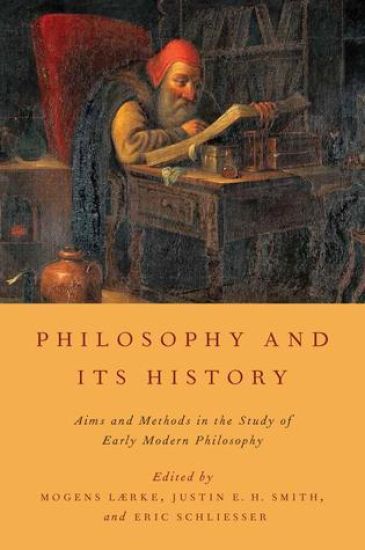
Philosophy and Its History

Philosophy and Its History

Oxford University Press Inc
2013
sidottu
This volume collects contributions from leading scholars of early modern philosophy from a wide variety of philosophical and geographic backgrounds. The distinguished contributors offer very different, competing approaches to the history of philosophy. Many chapters articulate new, detailed methods of doing history of philosophy. These present conflicting visions of the history of philosophy as an autonomous sub-discipline of professional philosophy. Several other chapters offer new approaches to integrating history into one's philosophy. These do so by re-telling the history of recent philosophy. A number of chapters explore the relationship between history of philosophy and history of science. Among the topics discussed and debated in the volume are: the status of the principle of charity; the nature of reading texts; the role of historiography within the history of philosophy; the nature of establishing proper context.
Philosophy and Its History

Philosophy and Its History

Oxford University Press Inc
2013
nidottu
This volume collects contributions from leading scholars of early modern philosophy from a wide variety of philosophical and geographic backgrounds. The distinguished contributors offer very different, competing approaches to the history of philosophy. Many chapters articulate new, detailed methods of doing history of philosophy. These present conflicting visions of the history of philosophy as an autonomous sub-discipline of professional philosophy. Several other chapters offer new approaches to integrating history into one's philosophy. These do so by re-telling the history of recent philosophy. A number of chapters explore the relationship between history of philosophy and history of science. Among the topics discussed and debated in the volume are: the status of the principle of charity; the nature of reading texts; the role of historiography within the history of philosophy; the nature of establishing proper context.
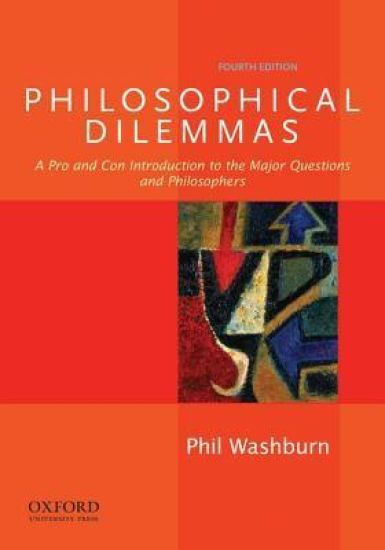
Philosophical Dilemmas

Philosophical Dilemmas

Phil Washburn

Oxford University Press Inc
2015
nidottu
Philosophical Dilemmas: A Pro and Con Introduction to the Major Questions and Philosophers, Fourth Edition, outlines the classic arguments made by philosophers through the ages. It features sixty-three brief topical essays by author Phil Washburn organized around thirty-one fundamental philosophical questions like "Does God exist?" "Is morality relative?" and "Are we free?" Each essay takes a definite stand and promotes it vigorously, creating a sharp contrast between the two positions and giving each abstract theory a more personal and believable "voice." The accessible writing style and conflicting answers encourage students to examine the different positions and to think carefully about which essay makes the stronger case. This fourth edition, a major revision, now enriches the discussion of each philosophical question by adding fifty-four brief essays--two in each chapter--on great philosophers who held conflicting viewpoints on the issues covered. Additionally, the chapters have been rearranged so that these essays and the philosophers discussed appear in approximate chronological order, from Plato and Protagoras to Wittgenstein and Searle. The text is enhanced by numerous pedagogical features including an introduction to each issue, key terms, chapter summaries, study questions after each essay, chronologies, a glossary, and an appendix on how to write an essay. A Companion Website at www.oup.com/us/washburn contains online sources and self-test questions for students and numerous instructor resources: introductions to the issues; summaries of the topical essays; summary points, PowerPoint-based slides, and test questions for the historical essays; answers to the critical questions that follow each essay; test questions on the topical essays; suggestions for class discussions; and a list of online resources.
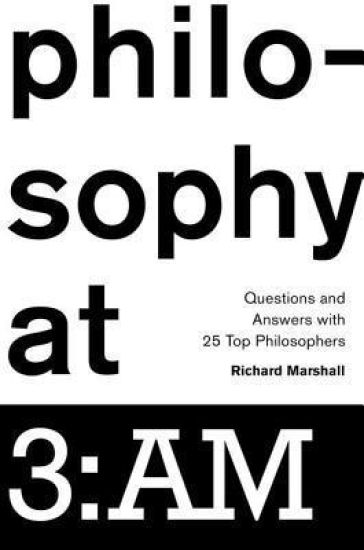
Philosophy at 3:AM

Philosophy at 3:AM

Richard Marshall

Oxford University Press Inc
2014
sidottu
The appeal of philosophy has always been its willingness to speak to those pressing questions that haunt us as we make our way through life. What is truth? Could we think without language? Is materialism everything? But in recent years, philosophy has been largely absent from mainstream cultural commentary. Many have come to believe that the field is excessively technical and inward-looking and that it has little to offer outsiders. The 25 interviews collected in this volume, all taken from a series of online interviews with leading philosophers published by the cultural magazine 3ammagazine.com, were carried out with the aim of confronting widespread ignorance about contemporary philosophy. Interviewer Richard Marshall's informed and enthusiastic questions help his subjects explain the meaning of their work in a way that is accessible to non-specialists. Contemporary philosophical issues are presented through engaging but serious dialogues that, taken together, offer a glimpse into key debates across the discipline. Alongside metaphysics, philosophy of mind, epistemology, logic, philosophy of science, philosophy of language, political philosophy and ethics, discussed here are feminist philosophy, continental philosophy, pragmatism, philosophy of religion, experimental philosophy, bioethics, animal rights, and legal philosophy. Connections between philosophy and fields such as psychology, cognitive science, and theology are likewise examined. Marshall interviews philosophers both established and up-and coming. Engaging, thoughtful and thought-provoking, inviting anyone with a hunger for philosophical questions and answers to join in, Philosophy at 3:AM shows that contemporary philosophy can be relevant -- and even fun.
Philosophical Troubles

Philosophical Troubles

Saul A. Kripke

Oxford University Press Inc
2013
nidottu
This important new book is the first of a series of volumes collecting the essential articles by the eminent and highly influential philosopher Saul A. Kripke. It presents a mixture of published and unpublished articles from various stages of Kripke's storied career. Included here are seminal and much discussed pieces such as "Identity and Necessity", "Outline of a Theory of Truth", "Speaker's Reference and Semantic Reference", and "A Puzzle About Belief." More recent published articles include "Russell's Notion of Scope" and "Frege's Theory of Sense and Reference" among others. Several articles are published here for the first time, including both older works ("Two Paradoxes of Knowledge", "Vacuous Names and Fictional Entities", "Nozick on Knowledge") as well as newer ("The First Person" and "Unrestricted Exportation"). "A Puzzle on Time and Thought" was written expressly for this volume. Publication of this volume -- which ranges over epistemology, linguistics, pragmatics, philosophy of language, history of analytic philosophy, theory of truth, and metaphysics -- represents a major event in contemporary analytic philosophy. It will be of great interest to the many who are interested in the work of one its greatest living figures.
Philosophic Classics, Volume III

Philosophic Classics, Volume III

Forrest Baird

Routledge Member of the Taylor and Francis Group
2016
nidottu
Esteemed for providing the best available translations, Philosophic Classics: Modern Philosophy, features complete works or complete sections of the most important works by the major thinkers, as well as shorter samples from transitional thinkers. First published in 1961, Forrest E. Baird's revision of Philosophic Classics continues the tradition of providing generations of students with high quality course material. Using the complete works, or where appropriate, complete sections of works, this anthology allows philosophers to speak directly to students.
Philosophic Classics, Volume II: Medieval and Renaissance Philosophy
Esteemed for providing the best available translations, Philosophic Classics: Ancient Philosophy, features complete works or complete sections of the most important works by the major thinkers, as well as shorter samples from transitional thinkers. First published in 1961, Forrest E. Baird's revision of Philosophic Classics, Pearson Education's long-standing anthology (available in split volumes), continues the tradition of providing generations of students with high quality course material. Using the complete works, or where appropriate, complete sections of works, this anthology allows philosophers to speak directly to students. For more information on the main combined anthology, or the additional period volumes, please see below: Philosophic Classics: From Plato to Derrida, 6/E ISBN-10: 0205783864Philosophic Classics, Volume I: Ancient Philosophy, 6/E ISBN-10: 0205783856Philosophic Classics, Volume III: Modern Philosophy, 6/E ISBN-10: 0205783899
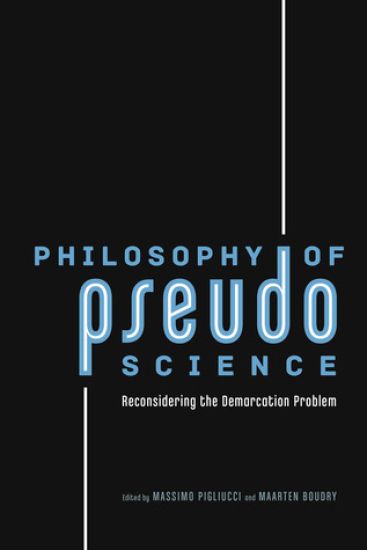
Philosophy of Pseudoscience

Philosophy of Pseudoscience

University of Chicago Press
2013
sidottu
What sets the practice of rigorously tested, sound science apart from pseudoscience? In this volume, the contributors seek to answer this question, known to philosophers of science as "the demarcation problem." This issue has a long history in philosophy, stretching as far back as the early twentieth century and the work of Karl Popper. But by the late 1980s, scholars in the field began to treat the demarcation problem as impossible to solve and futile to ponder. However, the essays that Massimo Pigliucci and Maarten Boudry have assembled in this volume make a rousing case for the unequivocal importance of reflecting on the separation between pseudoscience and sound science. Moreover, the demarcation problem is not a purely theoretical dilemma of mere academic interest: it affects parents' decisions to vaccinate children and governments' willingness to adopt policies that prevent climate change. Pseudoscience often mimics science, using the superficial language and trappings of actual scientific research to seem more respectable. Even a well-informed public can be taken in by such questionable theories dressed up as science. Pseudoscientific beliefs compete with sound science on the health pages of newspapers for media coverage and in laboratories for research funding. Now more than ever the ability to separate genuine scientific findings from spurious ones is vital, and Philosophy of Pseudoscience provides ground for philosophers, sociologists, historians, and laypeople to make decisions about what science is or isn't.
Philosophy of Pseudoscience

Philosophy of Pseudoscience

University of Chicago Press
2013
nidottu
What sets the practice of rigorously tested, sound science apart from pseudoscience? In this volume, the contributors seek to answer this question, known to philosophers of science as "the demarcation problem." This issue has a long history in philosophy, stretching as far back as the early twentieth century and the work of Karl Popper. But by the late 1980s, scholars in the field began to treat the demarcation problem as impossible to solve and futile to ponder. However, the essays that Massimo Pigliucci and Maarten Boudry have assembled in this volume make a rousing case for the unequivocal importance of reflecting on the separation between pseudoscience and sound science. Moreover, the demarcation problem is not a purely theoretical dilemma of mere academic interest: it affects parents' decisions to vaccinate children and governments' willingness to adopt policies that prevent climate change. Pseudoscience often mimics science, using the superficial language and trappings of actual scientific research to seem more respectable. Even a well-informed public can be taken in by such questionable theories dressed up as science. Pseudoscientific beliefs compete with sound science on the health pages of newspapers for media coverage and in laboratories for research funding. Now more than ever the ability to separate genuine scientific findings from spurious ones is vital, and Philosophy of Pseudoscience provides ground for philosophers, sociologists, historians, and laypeople to make decisions about what science is or isn't.
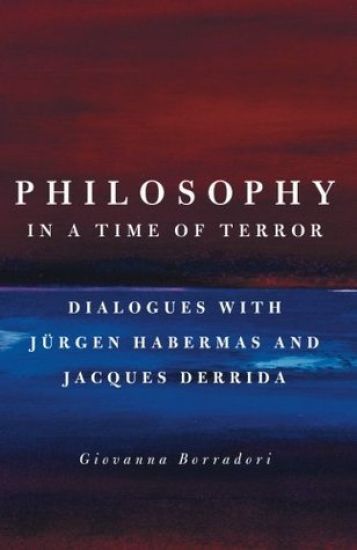
Philosophy in a Time of Terror

Philosophy in a Time of Terror

Giovanna Borradori

University of Chicago Press
2004
nidottu
The idea for Philosophy in a Time of Terror was born hours after the attacks on 9/11 and was realized just weeks later when Giovanna Borradori sat down with Jürgen Habermas and Jacques Derrida in New York City, in separate interviews, to evaluate the significance of the most destructive terrorist act ever perpetrated. This book marks an unprecedented encounter between two of the most influential thinkers of our age as here, for the first time, Habermas and Derrida overcome their mutual antagonism and agree to appear side by side. As the two philosophers disassemble and reassemble what we think we know about terrorism, they break from the familiar social and political rhetoric increasingly polarized between good and evil. In this process, we watch two of the greatest intellects of the century at work.
Philosophy Between the Lines

Philosophy Between the Lines

Arthur M. Melzer

University of Chicago Press
2014
sidottu
Philosophical esotericism - the practice of communicating one's unorthodox thoughts "between the lines"-was a common practice until the end of the eighteenth century. The famous Encyclopedie of Diderot, for instance, not only discusses this practice in over twenty different articles, but admits to employing it itself. The history of Western thought contains hundreds of such statements by major philosophers testifying to the use of esoteric writing in their own work or that of others. Despite this long and well-documented history, however, esotericism is often dismissed today as a rare occurrence. But by ignoring esotericism, we risk cutting ourselves off from a full understanding of Western philosophical thought. Arthur M. Melzer serves as our deeply knowledgeable guide in this capacious and engaging history of philosophical esotericism. Walking readers through both an ancient (Plato) and a modern (Machiavelli) esoteric work, he explains what esotericism is-and is not. It relies not on secret codes, but simply on a more intensive use of familiar rhetorical techniques like metaphor, irony, and insinuation. Melzer explores the various motives that led thinkers in many different times and places to engage in this strange practice, while also exploring the motives that led more recent thinkers not only to dislike and avoid this practice but to deny its very existence. In the book's final section, "A Beginner's Guide to Esoteric Reading," Melzer turns to how we might once again cultivate the long-forgotten art of reading esoteric works. Philosophy Between the Lines is the first comprehensive, book-length study of the history and theoretical basis of philosophical esotericism, and it provides a crucial guide to how many major writings-philosophical, but also theological, political, and literary-were composed prior to the nineteenth century.
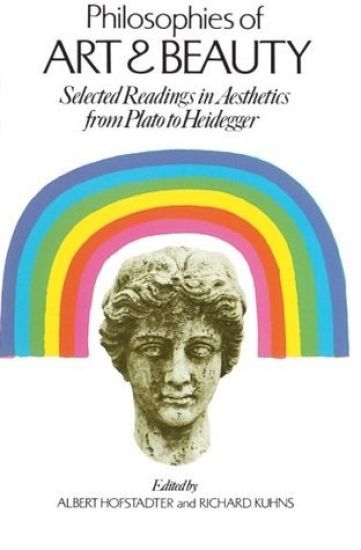
Philosophies of Art and Beauty

Philosophies of Art and Beauty

Albert Hofstadter; Richard Kuhns

University of Chicago Press
1976
nidottu
This anthology is remarkable not only for the selections themselves, among which the Schelling and the Heidegger essays were translated especially for this volume, but also for the editors' general introduction and the introductory essays for each selection, which make this volume an invaluable aid to the study of the powerful, recurrent ideas concerning art, beauty, critical method, and the nature of representation. Because this collection makes clear the ways in which the philosophy of art relates to and is part of general philosophical positions, it will be an essential sourcebook to students of philosophy, art history, and literary criticism.