Kirjojen hintavertailu. Mukana 11 629 877 kirjaa ja 12 kauppaa.

Kirjahaku

Etsi kirjoja tekijän nimen, kirjan nimen tai ISBN:n perusteella.

1000 tulosta hakusanalla Quentin Labridy

Forensic Shakespeare

Forensic Shakespeare

Quentin Skinner

Oxford University Press
2014
sidottu
Forensic Shakespeare illustrates Shakespeare's creative processes by revealing some of the intellectual materials out of which some of his most famous works were composed. Focusing on the narrative poem Lucrece, on four of his late Elizabethan plays -- Romeo and Juliet, The Merchant of Venice, Julius Caesar and Hamlet -- and on three early Jacobean dramas, Othello, Measure for Measure and All's Well That Ends Well, Quentin Skinner argues that there are major speeches, and sometimes sequences of scenes, that are crafted according to a set of rhetorical precepts about how to develop a persuasive judicial case, either in accusation or defence. Some of these works have traditionally been grouped together as 'problem plays', but here Skinner offers a different explanation for their frequent similarities of tone. There have been many studies of Shakespeare's rhetoric, but they have generally concentrated on his wordplay and use of figures and tropes. By contrast, this study concentrates on Shakespeare's use of judicial rhetoric as a method of argument. By approaching the plays from this perspective, Skinner is able to account for some distinctive features of Shakespeare's vocabulary, and also help to explain why certain scenes follow a recurrent pattern and arrangement.
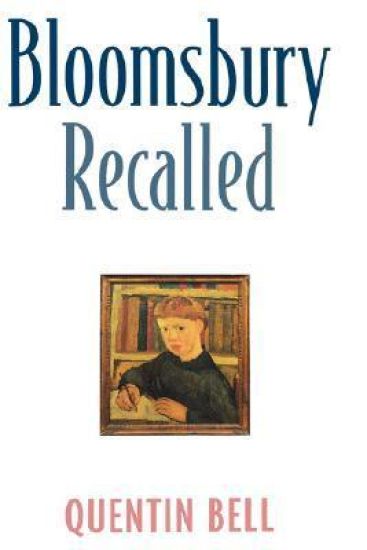
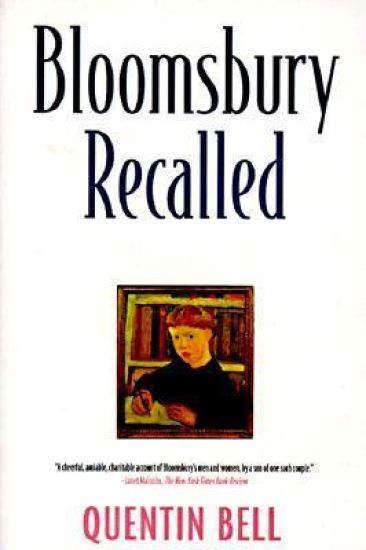
Bloomsbury Recalled

Bloomsbury Recalled

Quentin Bell

Columbia University Press
1996
sidottu
The author recounts anecdotes of his parents, Vanessa and Clive Bell, his aunt, Virginia Woolf, E.M. Forster, Maynard Keynes, Anthony Blunt, and other British writers and artists.
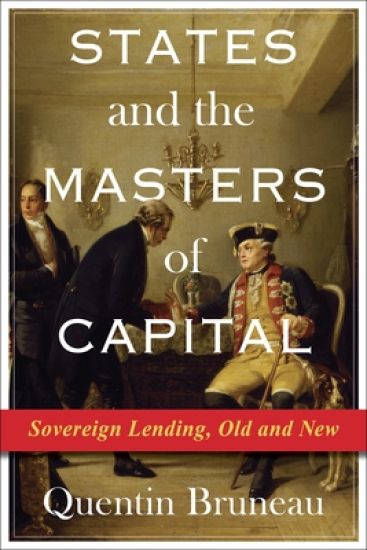
States and the Masters of Capital

States and the Masters of Capital

Quentin Bruneau

Columbia University Press
2022
sidottu
Winner, 2025 Francesco Guicciardini Prize for Best Book in Historical International Relations, Historical International Relations section, International Studies AssociationToday, states’ ability to borrow private capital depends on stringent evaluations of their creditworthiness. While many presume that this has long been the case, Quentin Bruneau argues that it is a surprisingly recent phenomenon—the outcome of a pivotal shift in the social composition of financial markets.Investigating the financiers involved in lending capital to sovereigns over the past two centuries, Bruneau identifies profound changes in their identities, goals, and forms of knowledge. He shows how an old world made up of merchant banking families pursuing both profit and status gradually gave way to a new one dominated by large companies, such as joint stock banks and credit rating agencies, exclusively pursuing profit. Lacking the web of personal ties to sovereigns across the world that their established rivals possessed, these financial institutions began relying on a different form of knowledge created to describe and compare states through quantifiable data: statistics. Over the course of this epochal shift, which only came to an end a few decades ago, financial markets thus reconceptualized states. Instead of a set of individuals to be known in person, they became numbers on a page. Raising new questions about the history of sovereign lending, this book illuminates the nature of the relationship between states and financial markets today—and suggests that it may be on the cusp of another major transformation.
States and the Masters of Capital

States and the Masters of Capital

Quentin Bruneau

Columbia University Press
2022
pokkari
Winner, 2025 Francesco Guicciardini Prize for Best Book in Historical International Relations, Historical International Relations section, International Studies AssociationToday, states’ ability to borrow private capital depends on stringent evaluations of their creditworthiness. While many presume that this has long been the case, Quentin Bruneau argues that it is a surprisingly recent phenomenon—the outcome of a pivotal shift in the social composition of financial markets.Investigating the financiers involved in lending capital to sovereigns over the past two centuries, Bruneau identifies profound changes in their identities, goals, and forms of knowledge. He shows how an old world made up of merchant banking families pursuing both profit and status gradually gave way to a new one dominated by large companies, such as joint stock banks and credit rating agencies, exclusively pursuing profit. Lacking the web of personal ties to sovereigns across the world that their established rivals possessed, these financial institutions began relying on a different form of knowledge created to describe and compare states through quantifiable data: statistics. Over the course of this epochal shift, which only came to an end a few decades ago, financial markets thus reconceptualized states. Instead of a set of individuals to be known in person, they became numbers on a page. Raising new questions about the history of sovereign lending, this book illuminates the nature of the relationship between states and financial markets today—and suggests that it may be on the cusp of another major transformation.
Ethical and Religious Thought in Analytic Philosophy of Language
This book is the first to provide a critical history of analytic philosophy from its inception in the late nineteenth century to the present day. Quentin Smith focuses on the connections between the four leading movements in analytic philosophy—logical realism, logical positivism, ordinary language analysis, and linguistic essentialism—and corresponding twentieth-century theories of ethics and of religion. Through a critical evaluation of each school’s theoretical positions, Smith counters the widespread view of analytic philosophy as indifferent to important questions about right and wrong and human meaning. He argues that analytic philosophy throughout its history has revolved around the central issues of existence, and he offers a new ethics and philosophy of religion.The author develops a positive ethical theory based on a method of ethics first formulated by Robert Adams. Smith’s theory belongs to the tradition of perfectionism or self-realization ethics and builds on Thomas Hurka’s recent theory of perfectionism. In his consideration of philosophy of religion, Smith concludes that there is a sound "logical argument from evil" that takes into account Alvin Plantinga’s free-will defense and undermines monotheism, paving the way to a naturalistic pantheism.
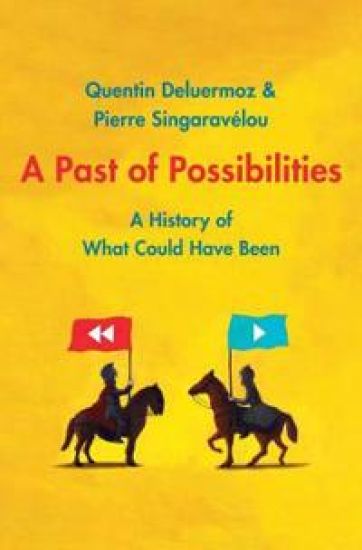
A Past of Possibilities

A Past of Possibilities

Quentin Deluermoz; Pierre Singaravelou

Yale University Press
2021
sidottu
An exploration of hypothetical turning points in history from Ancient Greece to September 11 What if history, as we know it, had run another course? Touching on alternate histories of the future and the past, or uchronias, A Past of Possibilities encourages deeper consideration of watershed moments in the course of history. Wide-ranging in scope, it examines the Boxer Rebellion in China, the 1848 revolution in France, and the assassination of Archduke Franz Ferdinand in 1914, and integrates science fiction, history, historiography, sociology, anthropology, and film. In probing the genre of literature and history that is fascinated with hypotheticals surrounding key points in history, Quentin Deluermoz and Pierre Singaravélou reach beyond a mere reimagining of history, exploring the limits and potentials of the futures past. From the most bizarre fiction to serious scientific hypothesis, they provide a survey of the uses of counterfactual histories, methodological issues on the possible in social sciences, and practical proposals for using alternate histories in research and the wider public.
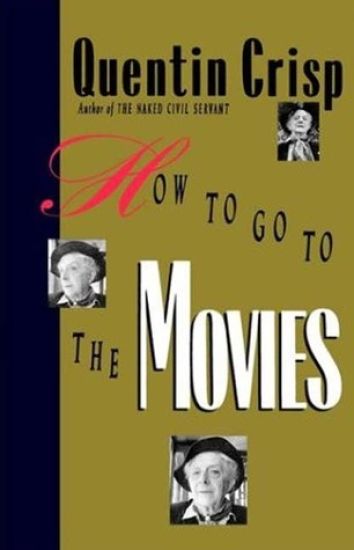
How to Go to the Movies

How to Go to the Movies

Quentin Crisp

St. Martin's Griffin
2003
nidottu
Since moving to New York City over a decade ago, Quentin Crisp has brought his love of the cinema and his notorious wit together in a series of essays on films and film stars. A veteran film-goer of seventy years who has kept a vigilant eye on changing Hollywood styles and the public tastes that follow, Mr. Crisp discusses both films and stars with his typical panache and dexterity and leads his readers with polite madness to a clear, straightforward moral, proving himself to be an unexpected champion of good sense. Along the way Mr. Crisp shares his personal encounters with the likes of Lillian Gish, John Hurt, David Hockney, Divine, Sting, and Geraldine Page. Prefaced by longer essays on the essence of stardom, the nature of Hollywood, and the deplorable state of that town today, Mr. Crisp's book is a delight to read.
Wiser Than Despair

Wiser Than Despair

Quentin Faulkner

Praeger Publishers Inc
1996
sidottu
This book addresses a highly complex and elusive matter: why the Christian Church was able to contribute so generously to music from its earliest days through the 18th century and why it has suffered since that time from a creeping artistic paralysis. Modern attitudes and assumptions often find the values and accomplishments of the Christian worldview enigmatic, even repellant, and church music has come to be one of the primary areas in which the tension between conflicting worldviews continues to be worked out on a daily basis. This thoughtful work investigates the historical interaction of theology, philosophy and music, and will be of interest to church musicians, theologians, music historians and cultural anthropologists.In its concluding chapter this work explores a number of basic questions: In what sense, if any, can the arts (and then the fine arts) be considered profoundly significant for modern society? Is there a meaningful role for artists of genius and total commitment? Do the arts (and then the fine arts) have any profound significance for the Church in the modern world? Of what significance, if any, to the Church in the modern world are the great Christian artistic accomplishments of the past? This exploration is by means of excerpts from historical sources, quotations from modern authors, and commentary on both. It calls upon historical, philosophical, theological, liturgical, anthropological, and musical sources and concepts in an attempt to develop a comprehensive understanding of musical developments that have served the Christian church for centuries and that have also provided a rich heritage of art music.
The 100 Most Significant Events in American Business

The 100 Most Significant Events in American Business

Quentin R. Skrabec Jr.

Greenwood Press
2012
sidottu
This reference book details the top 100 groundbreaking events in the history of American business, featuring case studies of successful companies who challenged traditional operating paradigms, historical perspectives on labor laws, management practices, and economic climates, and an examination of the impact of these influences on today's business practices.Throughout history, important commercial developments in the United States have made it possible for American companies to leverage tough economic conditions to survive—even thrive in a volatile marketplace. This reference book examines the top 100 groundbreaking events in the history of American business and illustrates their influence on the labor laws, business practices, and management methodologies of corporate America today.The 100 Most Significant Events in American Business: An Encyclopedia depicts the chronological order of events contributing to the evolution of American business, with an emphasis on the commercial innovations of each period. The book explores the origins of successful brands, including Apple, Wal-Mart, and Heinz; demonstrates the successful collaboration between public and private sectors illustrated by the Erie Canal, Hoover Dam, and the interstate highway system; and depicts the commercial impact of major economic events from the Panic of 1857 to the Great Recession of 2010.
Inglorious Basterds: A Screenplay

Inglorious Basterds: A Screenplay

Quentin Tarantino

Little Brown and Company
2009
nidottu
From the most original and beloved screenwriter of his generation, the complete Oscar-nominated screenplay of Quentin Tarantino's World War II epic Inglorious Basterds. From the brilliant writer/director behind the iconic films Pulp Fiction, Kill Bill, and Once Upon a Time in Hollywood, comes Tarantino's most ambitious movie: a World War II epic starring Brad Pitt and filmed on location in Germany and France. The action tale follows the parallel story of a guerrilla-like squad of American soldiers called "The Basterds" and the French Jewish teenage girl Shosanna who find themselves behind enemy Nazi lines during the German occupation. When the Inglourious Basterds encounter Shosanna at a propaganda screening at the movie house she runs, they conspire to launch an unexpected plot to end the war. Pitt plays Lieutenant Aldo Raine -- the leader of the Basterds. Raine is an illiterate hillbilly from the mountains of Tennessee who puts together a team of eight Jewish-American soldiers to hunt down the Nazis. Filled with Tarantino's trademark electric dialogue and thrilling action sequences, Inglourious Basterds is one of the most celebrated films of the twenty-first century.
Conservation, Development and Collective Power in the Tuna-Political Indo-Pacific

Conservation, Development and Collective Power in the Tuna-Political Indo-Pacific

Quentin Hanich; Bianca Haas

Elsevier - Health Sciences Division
2024
nidottu
Conservation, Development and Collective Power in the Tuna-Political Indo-Pacific explores industrial fisheries, which now cover 55 per cent of the World’s oceans, an area four times larger than the terrestrial area devoted to agriculture. In addition to fisheries, our oceans provide crucial highways and oceanscapes for shipping, oil and gas, seabed mining, blue carbon, coastal development, tourism and defense – all of which must balance conservation and development imperatives as they navigate and exploit our fragile marine environment. This book analyses and discusses the development of regional fisheries management and development in the Indo-Pacific, with the purpose of fostering the expansion and further development of collective strategies, science-based approaches and true ocean stewardship. It is the first book to analyze the development of these regional initiatives and discuss their global implications for sustainable development.
Formal Software Development

Formal Software Development

Quentin Charatan; Aaron Kans

Red Globe Press
2003
nidottu
This gently-paced software engineering text concentrates on the use of formal methods for the development of high integrity software. The book contains examples and exercises throughout and is supported by a dedicated web site.
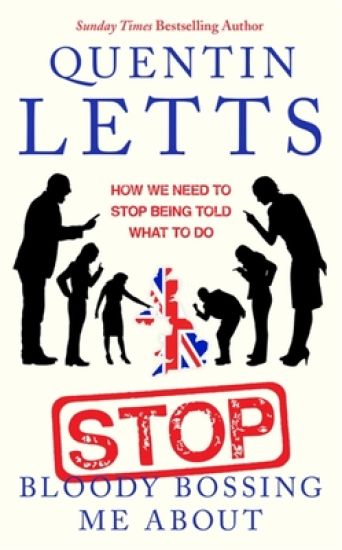
Stop Bloody Bossing Me About

Stop Bloody Bossing Me About

Quentin Letts

Little, Brown Book Group
2021
pokkari
'The inimitable Quentin Letts dares to say in a new book what we've all been secretly thinking' Mail on Sunday 'Fuming and chuckling by turns' Daily Telegraph'Underneath the jocularity of Letts's style is a lot of real anger' Roger Lewis, The Times Hands, face, space. Curfews. Don't drink. Bend your knees. Conform, obey, comply - surrender. British life has become infested by bossiness. Post Lockdown, Quentin Letts storms back with a vituperative howl against the 'bossocracy'. They tell us what to do, what to say, how to think. Letts gives them a prolonged, resonant raspberry. He names the guilty men and women: Dominic Cummings, Prof Neil Ferguson, that strutting self-polisher Nicola Sturgeon, the Archbishop of Canterbury, Cressida Dick, Michael Gove, even the sainted Sir David Attenborough. Bang! They all take a barrel. And then there's publicity-prone plonker Matt Hancock posing for photographs while doing his 'Mr Fit' press-ups. Reasonable people have had enough of being bossed about. And when reasonable people stop respecting the law, society has a problem. 'Brilliantly critical, but always warm-hearted and fair' Rory Knight Bruce, The Field
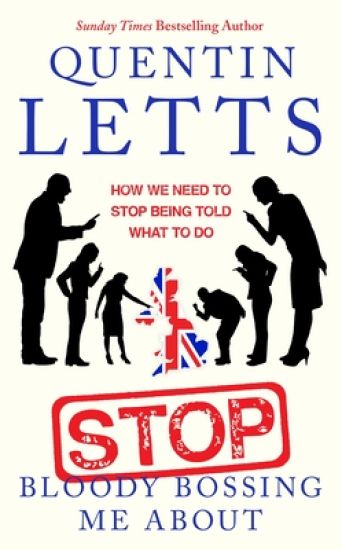
Stop Bloody Bossing Me About

Stop Bloody Bossing Me About

Quentin Letts

Constable
2021
sidottu
Hands, face, space. Curfews. Don't drink. Bend your knees. Conform, obey, comply - surrender. British life has become infested by bossiness. Boris Johnson won power as one of life's free-wheelers but his first year as PM saw a fever of finger-wagging. The real pandemic? Passive-aggressive ninnying by politicians, scientists and officialdom. From Sage with its graphs to BBC grandees telling us not to sing 'Rule Britannia', the National Trust with its slavery mania, to calorie counts on menus: why won't they leave us alone? Theatre directors beat us over the head with their agitprop. Militant cyclists scream at us from their saddles. Meghan Markle ticks us off for not being more Californian. Bossiness: did it begin when Moses came down from the mountain with his tablets? Cromwell beat Chris Whitty to it by four centuries and banned Christmas. A. Hitler, B. Mussolini and J.V. Stalin: they liked to throw their weight around, but today's self-serving dictators are more subtle. They do it with a caring smile. Tell us it's for our own good. They claim to be liberals! Following his best-selling Fifty People Who Buggered Up Britain and his 2017 Christmas favourite Patronising Bastards, parliamentary sketchwriter Quentin Letts storms back into hard covers with a vituperative howl against the 'bossocracy'. They tell us what to do, what to say, how to think. Letts gives them a prolonged, resonant raspberry. He names the guilty men and women: Dominic Cummings, Prof Neil Ferguson, that strutting self-polisher Nicola Sturgeon, the Archbishop of Canterbury, Cressida Dick, Michael Gove, even the sainted Sir David Attenborough. Bang! They all take a barrel. And then there's publicity-prone plonker Matt Hancock posing for photographs while doing his 'Mr Fit' press-ups. Reasonable people have had enough of being bossed about. And when reasonable people stop respecting the law, society has a problem.
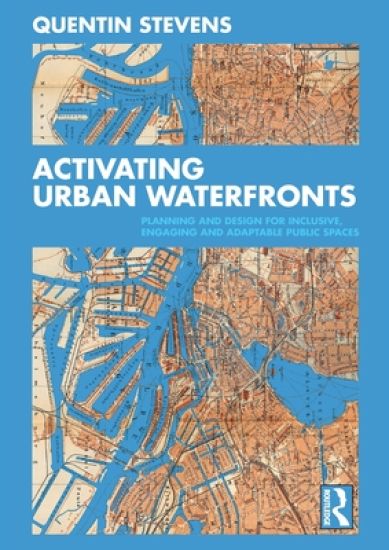
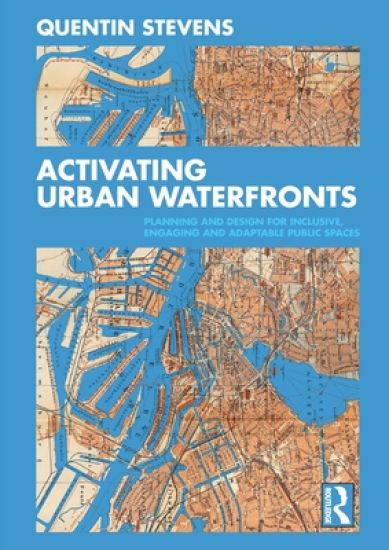
Activating Urban Waterfronts

Activating Urban Waterfronts

Quentin Stevens

Routledge
2020
nidottu
Activating Urban Waterfronts shows how urban waterfronts can be designed, managed and used in ways that can make them more inclusive, lively and sustainable. The book draws on detailed examination of a diversity of waterfronts from cities across Europe, Australia and Asia, illustrating the challenges of connecting these waterfront precincts to the surrounding city and examining how well they actually provide connection to water. The book challenges conventional large scale, long-term approaches to waterfront redevelopment, presenting a broad re-thinking of the formats and processes through which urban redevelopment can happen. It examines a range of actions that transform and activate urban spaces, including informal appropriations, temporary interventions, co-design, creative programming of uses, and adaptive redevelopment of waterfronts over time. It will be of interest to anyone involved in the development and management of waterfront precincts, including entrepreneurs, the creative industries, community organizations, and, most importantly, ordinary users.
Activating Urban Waterfronts

Activating Urban Waterfronts

Quentin Stevens

Routledge
2020
sidottu
Activating Urban Waterfronts shows how urban waterfronts can be designed, managed and used in ways that can make them more inclusive, lively and sustainable. The book draws on detailed examination of a diversity of waterfronts from cities across Europe, Australia and Asia, illustrating the challenges of connecting these waterfront precincts to the surrounding city and examining how well they actually provide connection to water. The book challenges conventional large scale, long-term approaches to waterfront redevelopment, presenting a broad re-thinking of the formats and processes through which urban redevelopment can happen. It examines a range of actions that transform and activate urban spaces, including informal appropriations, temporary interventions, co-design, creative programming of uses, and adaptive redevelopment of waterfronts over time. It will be of interest to anyone involved in the development and management of waterfront precincts, including entrepreneurs, the creative industries, community organizations, and, most importantly, ordinary users.
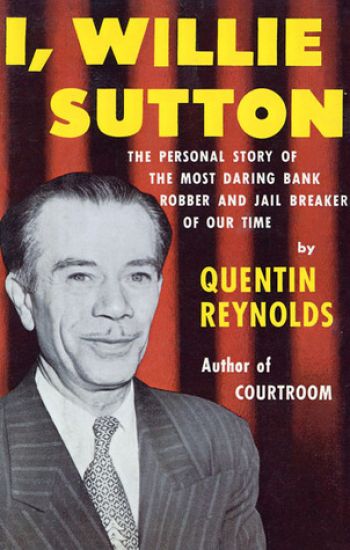
I, Willie Sutton

I, Willie Sutton

Quentin Reynolds

Farrar, Straus and Giroux
1999
nidottu
The story of Willie Sutton is one of the most astonishing in the annals of crime. Known as 'Willie the Actor' for his clever and disarming impersonations, his career was an amazingly successful one of fabulous bank robberies, daring prison breaks, and front page headlines, all of which captured the imagination of America. Yet Willie Sutton was 'clean'-throughout his life of crime he never killed anyone, and he was known as much for his intelligence, manners, and dapper elegance as for his audacious escapades.