
Kirjahaku
Etsi kirjoja tekijän nimen, kirjan nimen tai ISBN:n perusteella.
1000 tulosta hakusanalla Randall Calhoun


Randall Ivey, the acclaimed author of "The Shape of a Man: A Novella and Five Stories, offers readers another collection of stories, each marked by the writer's versatility and scored by a chorus of distinct voices, young and old, black and white, rich and poor, urbane and primitive. Here are ghost stories, modern fables, prickly satire, and a love ballad or two. Set in the contemporary American South, these stories resound with universal themes and touch the heart with their humor and insight.


Mr. Ping's Almanac of the Twisted & Weird Presents Boyd McCloyd and the Perpetual Motion Machine
Randall P. Girdner
Acclimated Spooks, Light, Power Publishing
2009
pokkari
On the day that the fattest, sweatiest man in Hong Kong kidnapped his parents, thirteen-year-old Boyd McCloyd found out he had a new job from an eight-foot tall yeti in a pinstripe suit. The job in question: Boyd was to continue to produce yearly editions of The Almanac of the Twisted and Weird (the world's number one printed resource for the odd and unusual, macabre and profane, twisted and...weird). However, because Boyd had inherited this job from the venerable Confucius Ping, he also inherited Mr. Ping's enemies, every one of which had made it their lifelong goal to destroy everything that Mr. Ping represented. This dastardly and treacherous group of werewolves, leprechauns, mutant swordfish, dwarf giants, and various other cadres of criminals includes the very man who had kidnapped Boyd's parents: Mr. Fang.



A Fairer Paradise: California River Delta Stories
Randall Marcus Gutierrez
Gray Iguana Publishing Company
2012
nidottu

The Christian Opportunity; Being Sermons and Speeches Delivered in America
Randall Thomas Davidson
Trieste Publishing
2018
nidottu

Common wisdom concerning Luther and Calvin suggests that these two theologians do not relate the testimony of Christ to the conscience in the same way. Randall Zachman undertakes the long-overdue comparison of their theologies, especially the ways in which Luther and Calvin define and describe the conscience and relate this to the testimonies of the Word and the Spirit. While remaining critical of the distinction that both Luther and Calvin sought to maintain between the foundation of assurance and its confirmation in faith and election, Zachman concludes that although Luther and Calvin have different emphases in their theological treatment of the conscience, they fundamentally agree: the foundation of the peace, assurance, and certainty of conscience lies in the grace of God for us, as revealed to the conscience both by the external witness of the word of God and the internal witness of the Holy Spirit.

In The Launch Pad, Randall Stross, author of eBoys and Planet Google, takes a behind-the-scenes look at how tomorrow's hottest startups are being primed for greatness.Twice a year, in the heart of Silicon Valley, a small investment firm called Y Combinator selects an elite group of young entrepreneurs. Months of intense work culminates in Demo Day, when investors and venture capitalists flock to hear their pitches. Any one of them might turn out to be the next Dropbox (class of 2007), or Airbnb (class of 2009).Randall Stross was granted unprecedented access to Y Combinator, enabling a unique inside tour of the world of software startups. He tells the full story of this ultra-exclusive institution, how it chooses the aspiring Mark Zuckerbergs, and how it teaches them to go from concept to profitability in record time.This is the definitive story of a seismic shift in the business world, in which coding skill beats job experience, pairs of undergraduates take on Goliaths, and investors fall in love. The Launch Pad is both a gripping narrative and a gold mine of useful insights.'A must-read for anyone interested in the realities of modern entrepreneurship' -Eric Ries, author ofThe Lean Startup'Stross's account of the best new entrepreneurs and the exciting companies they're building at startup schools is a great read for founders and would-be founders alike' -Marc Andreessen, cofounder, Andreessen HorowitzRandall Stross is the author of several acclaimed books, including eBoys, Planet Google, and The Wizard of Menlo Park. He has a Ph.D. in history from Stanford University.
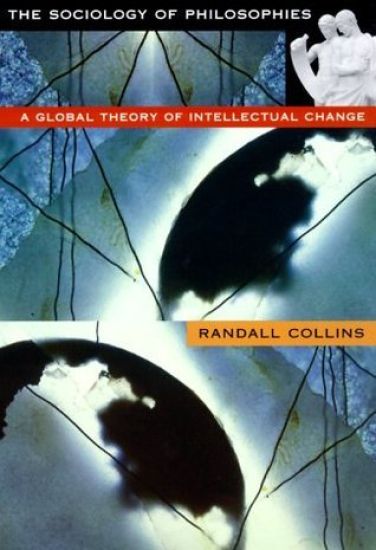
Randall Collins traces the movement of philosophical thought in ancient Greece, China, Japan, India, the medieval Islamic and Jewish world, medieval Christendom, and modern Europe. What emerges from this history is a social theory of intellectual change, one that avoids both the reduction of ideas to the influences of society at large and the purely contingent local construction of meanings. Instead, Collins focuses on the social locations where sophisticated ideas are formed: the patterns of intellectual networks and their inner divisions and conflicts.
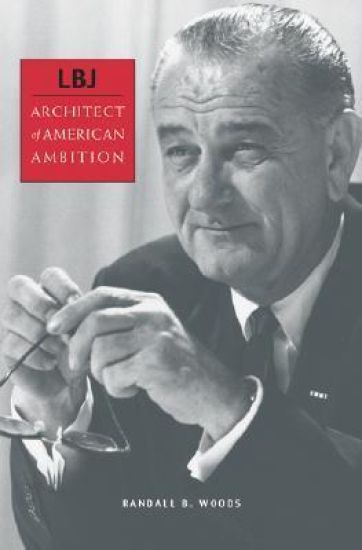
A Christian Science Monitor Best Nonfiction Book of the Year“In his masterful new biography, Randall B. Woods convincingly makes the case for Johnson’s greatness—as the last American president whose leadership achieved truly revolutionary breakthroughs in progressive domestic legislation, bringing changes that have improved the lives of most Americans. In this compelling, massive narrative, Woods portrays Johnson fairly and fully in all his complexity, with adequate attention to flaws in his character and his tragic miscalculations in Vietnam.”—Nick Kotz, Washington Post Book World“In writing LBJ: Architect of American Ambition, Woods has produced an excellent biography that fully deserves a place alongside the best of the Johnson studies yet to appear…Even readers familiar with the many other fine books on Johnson will learn a great deal from Woods…Among Woods’s many achievements in this fine biography is to allow us to see not only the enormous, tragic flaws in this extraordinary man, but also the greatness.”—Alan Brinkley, New York Times Book ReviewA distinguished historian of twentieth-century America, Randall B. Woods offers a wholesale reappraisal and sweeping, authoritative account of the life of one of the most fascinating and complex U.S. presidents.
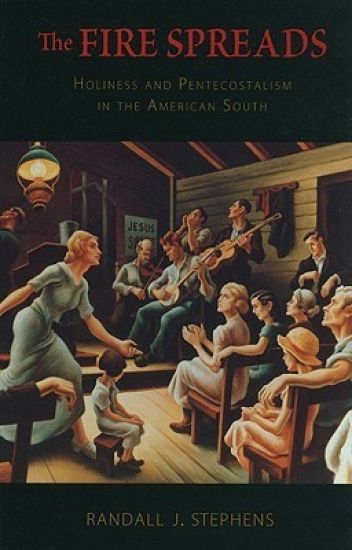
Today pentecostalism claims nearly 500 million followers worldwide. An early stronghold was the American South, where believers spoke in unknown tongues, worshipped in free-form churches, and broke down social barriers that had long divided traditional Protestants. Thriving denominations made their headquarters in the region and gathered white and black converts from the Texas plains to the Carolina low country. Pentecostalism was, in fact, a religious import. It came to the South following the post-Civil War holiness revival, a northern-born crusade that emphasized sinlessness and religious empowerment. Adherents formed new churches in the Jim Crow South and held unconventional beliefs about authority, power, race, and gender. Such views set them at odds with other Christians in the region. By 1900 nearly all southern holiness folk abandoned mainline churches and adopted a pessimistic, apocalyptic theology. Signs of the last days, they thought, were all around them. The faith first took root among anonymous religious zealots. It later claimed southern celebrities and innovators like televangelists Oral Roberts, Jimmy Swaggart, T. D. Jakes, and John Hagee; rock-and-roll icons Elvis Presley, Jerry Lee Lewis, and Little Richard; and, more recently, conservative political leaders such as John Ashcroft.With the growth of southern pentecostal denominations and the rise of new, affluent congregants, the movement moved cautiously into the evangelical mainstream. By the 1980s the once-apolitical faith looked entirely different. Many still watched and waited for spectacular signs of the end. Yet a growing number did so as active political conservatives.

American evangelicalism often appears as a politically monolithic, textbook red-state fundamentalism that elected George W. Bush, opposes gay marriage, abortion, and evolution, and promotes apathy about global warming. Prominent public figures hold forth on these topics, speaking with great authority for millions of followers. Authors Stephens and Giberson, with roots in the evangelical tradition, argue that this popular impression understates the diversity within evangelicalism—an often insular world where serious disagreements are invisible to secular and religiously liberal media consumers. Yet, in the face of this diversity, why do so many people follow leaders with dubious credentials when they have other options? Why do tens of millions of Americans prefer to get their science from Ken Ham, founder of the creationist Answers in Genesis, who has no scientific expertise, rather than from his fellow evangelical Francis Collins, current Director of the National Institutes of Health?Exploring intellectual authority within evangelicalism, the authors reveal how America’s populist ideals, anti-intellectualism, and religious free market, along with the concept of anointing—being chosen by God to speak for him like the biblical prophets—established a conservative evangelical leadership isolated from the world of secular arts and sciences.Today, charismatic and media-savvy creationists, historians, psychologists, and biblical exegetes continue to receive more funding and airtime than their more qualified counterparts. Though a growing minority of evangelicals engage with contemporary scholarship, the community’s authority structure still encourages the “anointed” to assume positions of leadership.

Consumption Behavior and the Effects of Government Fiscal Policies
Randall P. Mariger
Harvard University Press
1986
sidottu
In Consumption Behavior and the Effects of Government Fiscal Policies, Randall Mariger explores how people make decisions about how much to consume and save over their lifetimes. An understanding of these issues illuminates not only individual behavior but important properties of the macro economy as well. The most popular framework for analyzing consumption has been the life-cycle theory. Mariger tests two fundamental, and controversial, assumptions underlying the theory—that there are no planned bequests and that human capital is marketable. To do this, he fits a structural consumption model that incorporates endogenous liquidity constraints (non-marketability of human capital), but no planned bequests, to data on a cross-section of U. S. families. This estimated model, in conjunction with estimates of alternative models, enables him to make inferences about the respective effects of liquidity constraints and social security wealth on consumption. This latter effect yields indirect evidence concerning planned bequests. Mariger also presents direct evidence concerning bequest behavior.Among his findings are that the model fits the data very well in spite of its tight theoretical structure; that liquidity constraints are prevalent and have important effects on consumption behavior; that planned bequests appear not to be common among families in the lower 99.1% of the wealth distribution; and that families in the upper 0.9% of the wealth distribution appear to plan substantial bequests. Mariger devotes the latter part of his book to studying the implications of his estimated consumption model for the effects of government fiscal policies. More specifically, he simulates the model to infer the effects of government tax/debt policy, as well as those of the social security system, on aggregate savings.

When rock ’n’ roll emerged in the 1950s, ministers denounced it from their pulpits and Sunday school teachers warned of the music’s demonic origins. The big beat, said Billy Graham, was “ever working in the world for evil.” Yet by the early 2000s Christian rock had become a billion-dollar industry. The Devil’s Music tells the story of this transformation.Rock’s origins lie in part with the energetic Southern Pentecostal churches where Elvis, Little Richard, James Brown, and other pioneers of the genre worshipped as children. Randall J. Stephens shows that the music, styles, and ideas of tongue-speaking churches powerfully influenced these early performers. As rock ’n’ roll’s popularity grew, white preachers tried to distance their flock from this “blasphemous jungle music,” with little success. By the 1960s, Christian leaders feared the Beatles really were more popular than Jesus, as John Lennon claimed.Stephens argues that in the early days of rock ’n’ roll, faith served as a vehicle for whites’ racial fears. A decade later, evangelical Christians were at odds with the counterculture and the antiwar movement. By associating the music of blacks and hippies with godlessness, believers used their faith to justify racism and conservative politics. But in a reversal of strategy in the early 1970s, the same evangelicals embraced Christian rock as a way to express Jesus’s message within their own religious community and project it into a secular world. In Stephens’s compelling narrative, the result was a powerful fusion of conservatism and popular culture whose effects are still felt today.
Rothenberg chronicles the brief, turbulent marriage between a recession-plagued auto company and an aggressively hip ad agency (whose creative director despised cars), capturing both the ad world's tantalizing gossip and the broader significance of its creations. "Simply the best book about advertising I have ever read." Neil Postman, Technopoly