Kirjojen hintavertailu. Mukana 12 186 841 kirjaa ja 12 kauppaa.

Kirjahaku

Etsi kirjoja tekijän nimen, kirjan nimen tai ISBN:n perusteella.

1000 tulosta hakusanalla Richard J. Walter

The New Constellation

The New Constellation

Richard J. Bernstein

Polity Press
1991
nidottu
In this major new work, Bernstein explores the ethical and political dimensions of the modernity/post-modernity debate. Bernstein argues that modernity / post-modernity should be understood as a kind of mood - one which is amorphous, shifting and protean but which exerts a powerful influence on our current thinking. Focusing on thinkers such as Heidegger, Derrida, Foucault, Habermas and Rorty, Bernstein probes the strengths and weaknesses of their work, and shows how they have contributed to the formation of a new mood, a new and distinctive constellation of ideas. This new constellation has put ethical and political issues back on the philosophical agenda, forcing us to confront anew, the Socratic question 'How should I live?'
Hannah Arendt and the Jewish Question

Hannah Arendt and the Jewish Question

Richard J. Bernstein

Polity Press
1996
nidottu
Hannah Arendt is increasingly recognised as one of the most original social and political thinkers of the twentieth century. In this important book, Richard Bernstein sets out to show that many of the most significant themes in Arendt's thinking have their origins in their confrontation with the Jewish Question. By approaching her mature work from this perspective, we can gain a richer and more subtle grasp of her main ideas. Bernstein discusses some of the key experiences and events in Arendt's life story in order to show how they shaped her thinking. He examines her distinction between the Jewish parvenu and the pariah, and shows how the conscious pariah becomes a basis for understanding the independent thinker. Arendt's deepest insights about politics emerged from her reflections on statelessness, which were based on her own experiences as a stateless person. By confronting the horrors of totalitarianism and the concentration camps, Arendt developed her own distinctive understanding of authentic politics - the politics required to express our humanity and which totalitarianism sought to destroy. Finally, Bernstein takes up Arendt's concern with the phenomenon of the banality of evil. He follows her use of Eichmann in order to explore how the failure to think and to judge is the key for grasping this new phenomenon. Hannah Arendt and the Jewish Question offers a new interpretation of Arendt and her work - one which situates her in her historical context as an engaged Jewish intellectual.
Radical Evil

Radical Evil

Richard J. Bernstein

Polity Press
2002
nidottu
At present, there is an enormous gulf between the visibility of evil and the paucity of our intellectual resources for coming to grips with it. We have been flooded with images of death camps, terrorist attacks and horrendous human suffering. Yet when we ask what we mean by radical evil and how we are to account for it, we seem to be at a loss for proper responses. Bernstein seeks to discover what we can learn about the meaning of evil and human responsibility. He turns to philosophers such as Kant, who coined the expression 'radical evil', as well as to Hegel and Schelling. He also examines more recent explorations of evil, namely the thinking of Freud and Nietzsche on the moral psychology of evil. Finally, he looks at the way in which three post-Holocaust thinkers – Emmanuel Levinas, Hans Jonas, and Hannah Arendt – have sought to come to grips with evil "after Auschwitz." Bernstein's primary concern throughout this challenging book is to enrich and deepen our understanding of evil in the contemporary world, and to emphasize the vigilance and personal responsibility required for combating it. Radical Evil will be essential reading for students and scholars of philosophy, social and political theory, and religious studies.
The Abuse of Evil

The Abuse of Evil

Richard J. Bernstein

Polity Press
2005
nidottu
Since 9/11 politicians, preachers, conservatives and the media are all speaking about evil. In the past the dicourse about evil in our religious, philosophic and literary traditions has provoked thinking, questioning and inquiry. But today the appeal to evil is being used as a political tool to obscure compex issues, block serious thinking and stifle public discussion and debate. We are now confronting a clash of mentalities, not a clash of civilisations. One mentality is drawn to absolutes, moral certainties, and simplistic dichotomies of good and evil. The other seriously questions an appeal to absolutes in politics and criticizes the simplistic division of the world into the forces of evil and the forces of good. In The Abuse of Evil Bernstein challenges the claim that without an appeal to absolutes, we lack the grounds for acting decisively in fighting our enemies. The post 9/11 abuse of evil corrupts both democratic politics and religion. The stakes are high in this clash of mentalities in shaping how we think and act in the world today - and in the future.
The Pragmatic Turn

The Pragmatic Turn

Richard J. Bernstein

Polity Press
2010
sidottu
In this major new work, Richard J. Bernstein argues that many of the most important themes in philosophy during the past one hundred and fifty years are variations and developments of ideas that were prominent in the classical American pragmatists: Charles S. Peirce, William James, John Dewey and George H Mead. Pragmatism begins with a thoroughgoing critique of the Cartesianism that dominated so much of modern philosophy. The pragmatic thinkers reject a sharp dichotomy between subject and object, mind-body dualism, the quest for certainty and the spectator theory of knowledge. They seek to bring about a sea change in philosophy that highlights the social character of human experience and normative social practices, the self-correcting nature of all inquiry, and the continuity of theory and practice. And they-especially James, Dewey, and Mead-emphasize the democratic ethical-political consequences of a pragmatic orientation. Many of the themes developed by the pragmatic thinkers were also central to the work of major twentieth century philosophers like Wittgenstein and Heidegger, but the so-called analytic-continental split obscures this underlying continuity. Bernstein develops an alternative reading of contemporary philosophy that brings out the persistence and continuity of pragmatic themes. He critically examines the work of leading contemporary philosophers who have been deeply influenced by pragmatism, including Hilary Putnam, Jürgen Habermas, Richard Rorty, and Robert Brandom, and he explains why the discussion of pragmatism is so alive, varied and widespread. This lucid, wide-ranging book by one of America's leading philosophers will be compulsory reading for anyone who wants to understand the state of philosophy today.
The Pragmatic Turn

The Pragmatic Turn

Richard J. Bernstein

Polity Press
2010
nidottu
In this major new work, Richard J. Bernstein argues that many of the most important themes in philosophy during the past one hundred and fifty years are variations and developments of ideas that were prominent in the classical American pragmatists: Charles S. Peirce, William James, John Dewey and George H Mead. Pragmatism begins with a thoroughgoing critique of the Cartesianism that dominated so much of modern philosophy. The pragmatic thinkers reject a sharp dichotomy between subject and object, mind-body dualism, the quest for certainty and the spectator theory of knowledge. They seek to bring about a sea change in philosophy that highlights the social character of human experience and normative social practices, the self-correcting nature of all inquiry, and the continuity of theory and practice. And they-especially James, Dewey, and Mead-emphasize the democratic ethical-political consequences of a pragmatic orientation. Many of the themes developed by the pragmatic thinkers were also central to the work of major twentieth century philosophers like Wittgenstein and Heidegger, but the so-called analytic-continental split obscures this underlying continuity. Bernstein develops an alternative reading of contemporary philosophy that brings out the persistence and continuity of pragmatic themes. He critically examines the work of leading contemporary philosophers who have been deeply influenced by pragmatism, including Hilary Putnam, Jürgen Habermas, Richard Rorty, and Robert Brandom, and he explains why the discussion of pragmatism is so alive, varied and widespread. This lucid, wide-ranging book by one of America's leading philosophers will be compulsory reading for anyone who wants to understand the state of philosophy today.
Violence

Violence

Richard J. Bernstein

Polity Press
2013
sidottu
We live in a time when we are overwhelmed with talk and images of violence. Whether on television, the internet, films or the video screen, we can’t escape representations of actual or fictional violence - another murder, another killing spree in a high school or movie theatre, another action movie filled with images of violence. Our age could well be called “The Age of Violence” because representations of real or imagined violence, sometimes fused together, are pervasive. But what do we mean by violence? What can violence achieve? Are there limits to violence and, if so, what are they? In this new book Richard Bernstein seeks to answer these questions by examining the work of five figures who have thought deeply about violence - Carl Schmitt, Walter Benjamin, Hannah Arendt, Frantz Fanon, and Jan Assmann. He shows that we have much to learn from their work about the meaning of violence in our times. Through the critical examination of their writings he also brings out the limits of violence. There are compelling reasons to commit ourselves to non-violence, and yet at the same time we have to acknowledge that there are exceptional circumstances in which violence can be justified. Bernstein argues that there can be no general criteria for determining when violence is justified. The only plausible way of dealing with this issue is to cultivate publics in which there is free and open discussion and in which individuals are committed to listen to one other: when public debate withers, there is nothing to prevent the triumph of murderous violence.
Violence

Violence

Richard J. Bernstein

Polity Press
2013
nidottu
We live in a time when we are overwhelmed with talk and images of violence. Whether on television, the internet, films or the video screen, we can’t escape representations of actual or fictional violence - another murder, another killing spree in a high school or movie theatre, another action movie filled with images of violence. Our age could well be called “The Age of Violence” because representations of real or imagined violence, sometimes fused together, are pervasive. But what do we mean by violence? What can violence achieve? Are there limits to violence and, if so, what are they? In this new book Richard Bernstein seeks to answer these questions by examining the work of five figures who have thought deeply about violence - Carl Schmitt, Walter Benjamin, Hannah Arendt, Frantz Fanon, and Jan Assmann. He shows that we have much to learn from their work about the meaning of violence in our times. Through the critical examination of their writings he also brings out the limits of violence. There are compelling reasons to commit ourselves to non-violence, and yet at the same time we have to acknowledge that there are exceptional circumstances in which violence can be justified. Bernstein argues that there can be no general criteria for determining when violence is justified. The only plausible way of dealing with this issue is to cultivate publics in which there is free and open discussion and in which individuals are committed to listen to one other: when public debate withers, there is nothing to prevent the triumph of murderous violence.
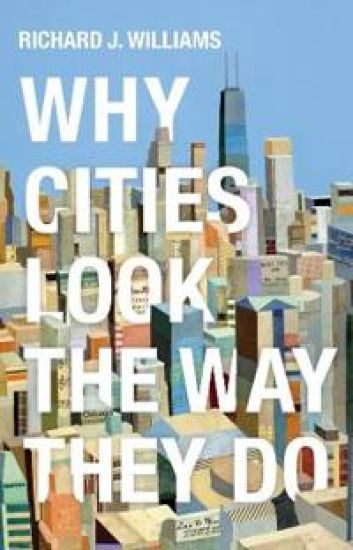
Why Cities Look the Way They Do

Why Cities Look the Way They Do

Richard J. Williams

Polity Press
2019
sidottu
We tend to think cities look the way they do because of the conscious work of architects, planners and builders. But what if the look of cities had less to do with design, and more to do with social, cultural, financial and political processes, and the way ordinary citizens interact with them? What if the city is a process as much as a design? Richard J. Williams takes the moment construction is finished as a beginning, tracing the myriad processes that produce the look of the contemporary global city. This book is the story of dramatic but unforeseen urban sights: how financial capital spawns empty towering skyscrapers and hollowed-out ghettoes; how the zoning of once-illicit sexual practices in marginal areas of the city results in the reinvention of culturally vibrant gay villages; how abandoned factories have been repurposed as creative hubs in a precarious postindustrial economy. It is also the story of how popular urban clichés and the fictional portrayal of cities powerfully shape the way we read and see the bricks, concrete and glass that surround us. Thought-provoking and original, Why Cities Look the Way They Do will appeal to anyone who wants to understand the contemporary city, shedding new light on humanity’s greatest collective invention.
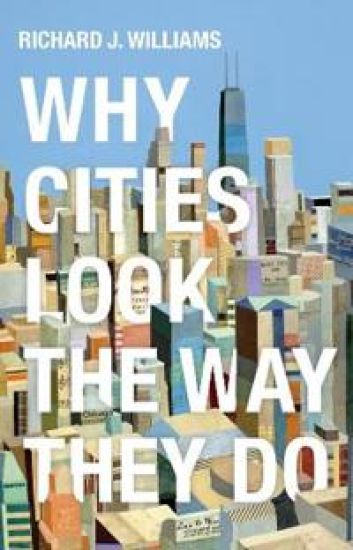
Why Cities Look the Way They Do

Why Cities Look the Way They Do

Richard J. Williams

Polity Press
2019
nidottu
We tend to think cities look the way they do because of the conscious work of architects, planners and builders. But what if the look of cities had less to do with design, and more to do with social, cultural, financial and political processes, and the way ordinary citizens interact with them? What if the city is a process as much as a design? Richard J. Williams takes the moment construction is finished as a beginning, tracing the myriad processes that produce the look of the contemporary global city. This book is the story of dramatic but unforeseen urban sights: how financial capital spawns empty towering skyscrapers and hollowed-out ghettoes; how the zoning of once-illicit sexual practices in marginal areas of the city results in the reinvention of culturally vibrant gay villages; how abandoned factories have been repurposed as creative hubs in a precarious postindustrial economy. It is also the story of how popular urban clichés and the fictional portrayal of cities powerfully shape the way we read and see the bricks, concrete and glass that surround us. Thought-provoking and original, Why Cities Look the Way They Do will appeal to anyone who wants to understand the contemporary city, shedding new light on humanity’s greatest collective invention.
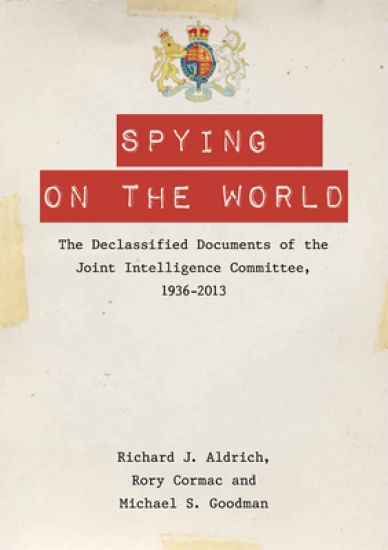
Spying on the World

Spying on the World

Richard J. Aldrich; Rory Cormac; Michael S. Goodman

Edinburgh University Press
2014
sidottu
For more than half a century, the Joint Intelligence Committee or 'JIC' has been a central component of the British Government's secret machinery. It represents the highest authority in the world of intelligence and acts as a broker between the spy and the policy-maker. From WWII to the War in Iraq, and from the Falklands to the IRA, it has been involved in almost every key foreign policy decision. This book reveals the declassified papers of the JIC, shining a light on the workings of Whitehall's secret world and the vital, previously unknown, role played by intelligence in pivotal events across the twentieth and twenty-first centuries.
Spying on the World

Spying on the World

Richard J. Aldrich; Rory Cormac; Michael S. Goodman

Edinburgh University Press
2014
nidottu
This is a documentary history of how intelligence influenced Britain's policy response to key 20th century events. For more than 50 years, the Joint Intelligence Committee (JIC) has been central to the secret machinery of the British Government, acting as a broker between the realms of the spy and the policy-maker. From WWII to the War in Iraq, and from the Falklands to the IRA, it has been involved in almost every key foreign policy decision. These 18 case studies look at key moments in the JIC's history. Each case study includes a contextualising introduction, a full reproduction of an original JIC document that influenced the government's policy response to a particular situation and explanatory footnotes. It features 18 case studies that pinpoint the role of intelligence in foreign and defence policy from 1936 to the present day. It reproduces the original versions of declassified intelligence assessments and reports. It is suitable for students and academics studying contemporary international history and government policymaking processes.
Sports Psychology in Action

Sports Psychology in Action

Richard J. Butler

Hodder Arnold
1996
nidottu
Psychological preparation is now recognised as being of key importance in improving sports performance. This book describes performance profiling methods used by coaches and psychologists and exercises and assessments are presented in an accessiblestyle. Although based on practical experience, the text is firmly rooted in research. It is therefore an innovative and authoritative book that can be used at both professional and amateur level.Sports performers continually endeavour to excel at what they do and to break records. Their search for new and innovative techniques which might enable them to achieve these aims is unceasing. This book offers accessible and practical guidance on anincreasingly important and proven approach - the use of mental processes to enhance physical performance. It is now recognised that psychology has a key role in sports, not only in improving performance, but also in helping sportsmen and women attain asense of mastery of their discipline. The book explores the important characteristics in top sporting performance and illustrates techniques and exercises designed to assist athletes reach their potential. It should be an essential part of any serioussports performance preparation. * Very practical, easy to use, clearly presented * Based on a model of psychology which emphasises the importance of understanding the performer's view * All techniques rigorously tested at an elite level 'This isa book for everyone interesteed in individual sports performance. I wholeheartedly recommend this book.' - Brit. Assoc. of Sports Sciences News, April 1996
Maiwand

Maiwand

Richard J Stacpoole-Ryding

The History Press Ltd
2008
nidottu
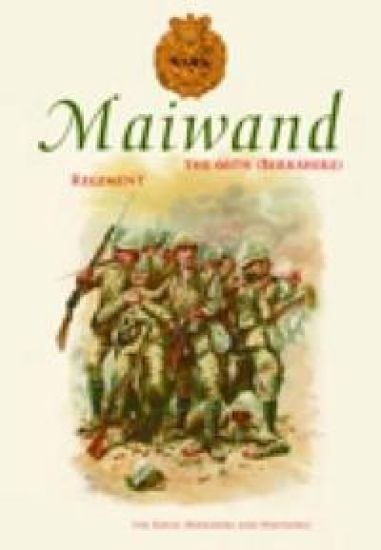
On 27 July 1880 the 66th (Berkshire) Regiment fought a terrible battle on the dusty plains of Afghanistan. The battle went down in history as a massacre which effectively wiped out the regiment. They lost 10 officers and 276 men. Nonetheless, their valiant fighting was an inspiration to many, from Kipling to Conan Doyle, who based Dr Watson on the 66th medical officer Major Preston. Queen Victoria presented medals to the survivors, and it was Maiwand and the 66th's battle against the Zulus the year before which resulted in the British Army no longer carrying Colours into battle. This book tells the story of this fine Victorian regiment from 1870 when they went to India through Afghanistan and back to England in 1881, bringing the regiment to life and concentrating on the characters who made it what it was.
Picturing Scotland through the Waverley Novels

Picturing Scotland through the Waverley Novels

Richard J. Hill

Ashgate Publishing Limited
2010
sidottu
Innovative and accessibly written, Picturing Scotland examines the genesis and production of the first author-approved illustrations for Sir Walter' Scott's Waverley novels in Scotland. Consulting numerous neglected primary sources, Richard J. Hill demonstrates that Scott, usually seen as disinterested in the mechanics of publishing, actually was at the forefront of one of the most innovative publishing and printing trends, the illustrated novel. Hill examines the historical precedents, influences, and innovations behind the creation of the illustrated editions, tracking Scott's personal interaction with the mechanics of the printing and illustration process, as well as Scott's opinions on visual representations of literary scenes. Of particular interest is Scott's relationships with William Allan and Alexander Nasmyth, two important early nineteenth-century Scottish artists. As the first illustrators of the Waverley novels, their work provided a template for one of the more lucrative publishing phenomena. Informed by meticulous close readings of Scott's novels and augmented by a bibliographic catalogue of illustrations, Picturing Scotland is an important contribution to Scott studies, the development of the illustrated novel, and publishing history.
Unity Root Matrix Theory - Mathematical and Physical Advances - Volume II
This book naturally follows on from Volume I, developing the mathematical foundations and physical applications of the relatively new subject known as Unity Root Matrix Theory (URMT).The mathematical advances extend URMT's new method of arbitrary vector embedding to two arbitrary vectors, in three or more dimensions, by way of a complete reformulation of URMT in terms of projection operators and exterior products. The similarity of the resulting matrix forms to those used in quaternions, rotations and electromagnetism enables URMT to extend its physical applications to angular dynamics and the electromagnetic plane wave. In particular, URMT's inherently discrete nature results in a treatment of quantised particle spin.Armed with a common mathematical formulation of physical applications as an eigenvector solution to a matrix operator, all generated in a language more recognisable to conventional mathematical physics, the path is now clear for closer future development of URMT to existing, and highly successful, physical theories.
Intimate Violence in Families

Intimate Violence in Families

Richard J. Gelles

SAGE Publications Inc
1997
nidottu
Praise for the Second Edition: "A must read for anyone working in the broad field of mental health. It is a most comprehensive, scholarly, and up-to-date presentation of the issues involved in this difficult but increasingly important field. The author's . . . scholarly comments enable the reader to come to a clear, definitive opinion about the real facts in this emotion-laden area. . . . Well written and quite readable." --Nathan B. Epstein, M.D., Psychiatrist-in-Chief, St. Luke's Hospital, New Bedford, Massachusetts "Serves as an excellent guide to introduce the reader to the broad range of family problems associated with family violence. It does a good job of showing how devastating and tragic family violence really is, as well as showing the emotional and physical trauma suffered by the victims." --Family Violence Bulletin Winner of the American Journal of Nursing 1990 Book of the Year Award in its second edition, Intimate Violence in Families has been thoroughly revised and updated in its third edition. Drawing on the latest research, this book dismantles many of the conventional myths hindering our understanding of family violence. Through an exploration of some of the major controversies in the field, Richard Gelles discusses various theories of intimate violence and the contributing social factors. This third edition includes a substantial expansion of material on hidden victims of familial violence-siblings, parents, and the elderly-as well as an examination of violence between gay and lesbian couples. While the first two editions of Intimate Violence in Families focused on physical abuse, here Gelles also explores neglect and emotional and psychological abuse, offering a much broader look at the full spectrum of familial abuse. Breaking important new ground, Gelles carefull examines what we know about intervention and treatment program effectiveness, with special attention to intensive family preservation programs and men's treatment programs. A major text for use in coursework on interpersonal violence, family violence, psychology, counseling, social work, and special issues in gender studies and sociology, Intimate Violence in Families, Third Edition will also provide essential information to professionals working in those areas.