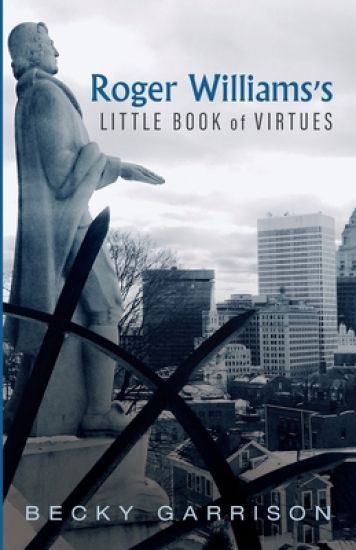
In Roger Williams's Little Book of Virtues, religion writer Becky Garrison delves into the life of her eleventh/twelfth great-grandfather to uncover the untold story behind this forgotten pioneer of religious liberty. Employing a format reminiscent of How Proust Can Change Your Life and The Little Book of Atheist Spirituality, Garrison examines Roger Williams's work through the lens of the four classical virtues, which, as she observes, define values that have an almost universal consensus regardless of one's particular belief system. How can Roger Williams's life and ministry shed light on the role of the citizens in a global pluralized world? Garrison asks why this conversation focusing on the role of religion in public life got relegated to moralists like William J. Bennett, who crafted a fundamentalist rulebook that views these virtues through a very strict black-and-white lens. In this age of horizontal social media, what prevents people from standing up to these modern-day Goliaths and taking away their media megaphone? Here Garrison sees hope in the rise of the "nones" who, like Williams, follow their own spiritual path and create spaces that embrace women, POC, LGBT folks, and others marginalized by the institutional church.
In Roger Williams's Little Book of Virtues, religion writer Becky Garrison delves into the life of her eleventh/twelfth great-grandfather to uncover the untold story behind this forgotten pioneer of religious liberty. Employing a format reminiscent of How Proust Can Change Your Life and The Little Book of Atheist Spirituality, Garrison examines Roger Williams's work through the lens of the four classical virtues, which, as she observes, define values that have an almost universal consensus regardless of one's particular belief system. How can Roger Williams's life and ministry shed light on the role of the citizens in a global pluralized world? Garrison asks why this conversation focusing on the role of religion in public life got relegated to moralists like William J. Bennett, who crafted a fundamentalist rulebook that views these virtues through a very strict black-and-white lens. In this age of horizontal social media, what prevents people from standing up to these modern-day Goliaths and taking away their media megaphone? Here Garrison sees hope in the rise of the ""nones"" who, like Williams, follow their own spiritual path and create spaces that embrace women, POC, LGBT folks, and others marginalized by the institutional church.
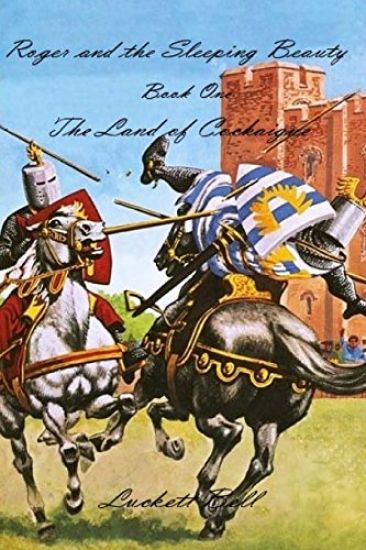
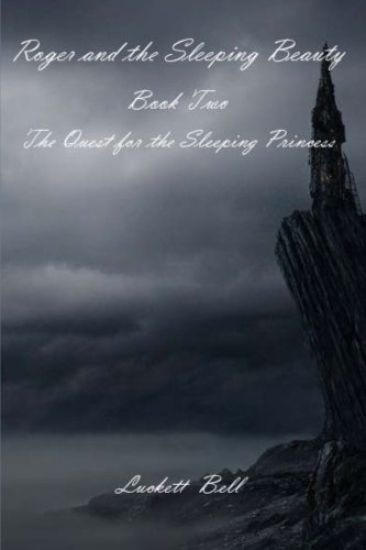
Giles Jerome, disillusioned and at odds with the modern world, has abandoned a respectable career in the City of London in favour of the vagabond life of the open road. On a certain Midsummer's Eve of full moon his steps lead him to a country inn where Morris Men are dancing. Among them he meets an old friend and makes a new one, and also enjoys an agreeable encounter with a pretty girl, but is less taken with her cross-grained male companion. Later in the evening this assorted group of young people, unexpectedly thrown together, discover an anachronistically dressed man asleep in a moonlit meadow. He invites them to accompany him to his home, and they find themselves translated into a bewildering land of legends and nursery tales. This land is one of colour, pageantry and great beauty. But it proves also to be one of great perils. Giles and his friends find themselves committed to a fantastic quest, but first they must learn, the hard way, the accomplishments required of knights-errant. Giles' idiosyncratic and rather old-fashioned narrative describes the course of his personal transformation from carefree vagabond to dedicated knight, and also confides to the reader his hopeless love for an enigmatic lady of high degree and surpassing beauty. The tale is completed in Book 2: "The Quest of the Sleeping Princess".
Following Battle of Pequawket (Hawthorne uses the name Lovell's Fight) in 1725, two survivors of the battle struggle to return home. Roger Malvin and Reuben Bourne are both wounded and weak, and they have little hope that they will survive. They rest near a rock that resembles an enormous tombstone. Malvin, a much older man, asks Reuben to leave him to die alone, since his wounds are mortal. Reuben insists that he will stay with Malvin as long as he remains alive, but the old man knows that this would mean death for both of them. Malvin convinces Reuben to leave. Reuben survives. Because he has not honored his promise to bury the old man, he is not at peace. His unease is exacerbated by his failure to tell his fianc e, Dorcas (Malvin's daughter) that he left her father to die. Reuben is considered a brave man by his compatriots, but inside he feels that he has failed them.
En juillet 1872, celui que l'on surnomme le p re Larouette est assassin dans sa villa de Ville-d'Avray. Tout accuse Roger Laroque. La femme et la fille de Roger Laroque ont t t moins du meurtre mais la m re fait promettre la fillette qu'elle ne dira rien... Victoire, la nouvelle bonne, a entendu la m re et la fille au moment o elles reconnaissaient l'assassin et, lorsqu'elle est interrog e, elle d nonce son patron. C'est l'ami de Laroque, Lucien de Noirville, qui se charge de sa d fense.
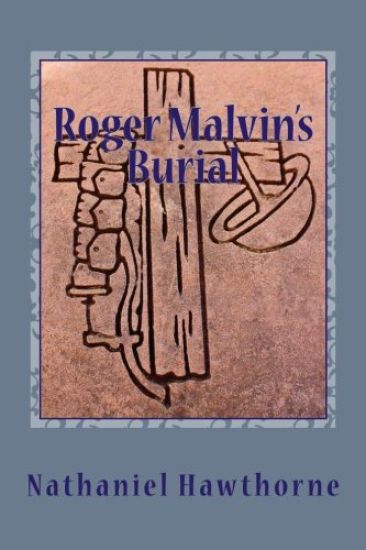
Following Battle of Pequawket (Hawthorne uses the name Lovell's Fight) in 1725, two survivors of the battle struggle to return home. Roger Malvin and Reuben Bourne are both wounded and weak, and they have little hope that they will survive. They rest near a rock that resembles an enormous tombstone. Malvin, a much older man, asks Reuben to leave him to die alone, since his wounds are mortal. Reuben insists that he will stay with Malvin as long as he remains alive, but the old man knows that this would mean death for both of them. Malvin convinces Reuben to leave. Reuben survives. Because he has not honored his promise to bury the old man, he is not at peace. His unease is exacerbated by his failure to tell his fiancee, Dorcas (Malvin's daughter) that he left her father to die. Reuben is considered a brave man by his compatriots, but inside he feels that he has failed them.
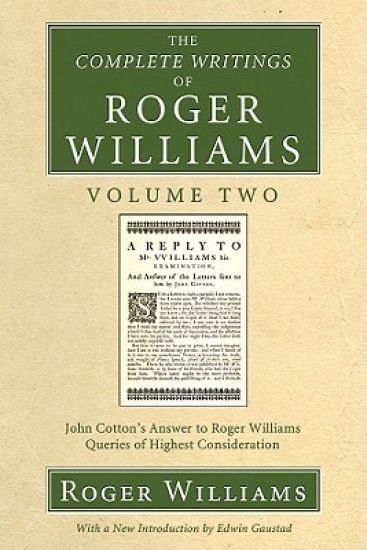
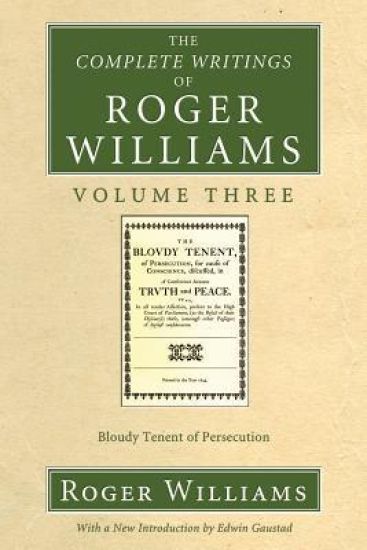
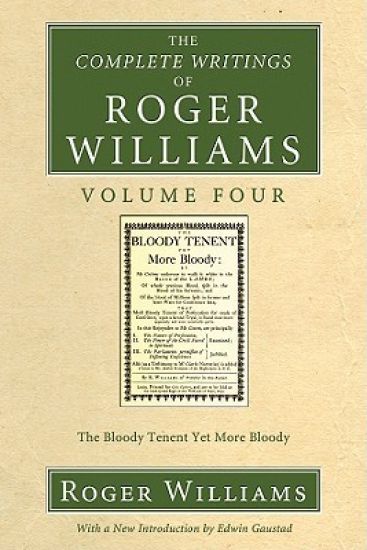
Ten years after the U. S. Civil War, a group of men in Rhode Island made a conserted effort to rescue the widely scattered writings of Roger Williams. Few sets were printed though, and under the guidance of Perry Miller, The Complete Writings of Roger Williams were brought back in 1963, but still in short numbers. The present collection now makes these volumes available to readers in their original orthography. The theme of religious liberty is dominant in these volumes, running through Williams's correspondence with John Cotton and on through his famous pair of works on The Bloudy Tenent of Persecution. All of the extant shorter writings and letters of Roger Williams are included in this set, along with two significant works resulting from his engagement with Native Americans: his seminal Key into the Language of America and Christenings Make Not Christians. ""Roger Williams was one of those rare individuals who took the accepted ideas of his time and followed them to conclusions that challenged his contemporaries and still challenge us. To have his complete writings once again available is a great service to all who would understand American religion and political institutions at the deepest level."" Edmund S. Morgan Sterling Professor of History Emeritus Yale University ""It has been America's great good fortune that Roger Williams's career stood at the beginning of its history. Just as some experience in the youth of a person is ever afterward a determinant of his personality, so the American character has inevitably been molded by the fact that in the first years of colonization there arose this prophet of religious liberty. Later generations could not forget him or deny him. The image of him in conflict with the founders of New England could not be obliterated; all later righteous men would be tormented by it until they learned to accept his basic thesis, that freedom is a condition of the spirit."" Perry Miller (1963) Roger Williams (1603-1683) grew up in Puritan circles in London, sailed to Massachusetts in 1630, and, having been banished for his controversial views on the separation of church and state, founded Rhode Island on the basis of his new principles of religious liberty.
Ten years after the U. S. Civil War, a group of men in Rhode Island made a conserted effort to rescue the widely scattered writings of Roger Williams. Few sets were printed though, and under the guidance of Perry Miller, The Complete Writings of Roger Williams were brought back in 1963, but still in short numbers. The present collection now makes these volumes available to readers in their original orthography. The theme of religious liberty is dominant in these volumes, running through Williams's correspondence with John Cotton and on through his famous pair of works on The Bloudy Tenent of Persecution. All of the extant shorter writings and letters of Roger Williams are included in this set, along with two significant works resulting from his engagement with Native Americans: his seminal Key into the Language of America and Christenings Make Not Christians. ""Roger Williams was one of those rare individuals who took the accepted ideas of his time and followed them to conclusions that challenged his contemporaries and still challenge us. To have his complete writings once again available is a great service to all who would understand American religion and political institutions at the deepest level."" Edmund S. Morgan Sterling Professor of History Emeritus Yale University ""It has been America's great good fortune that Roger Williams's career stood at the beginning of its history. Just as some experience in the youth of a person is ever afterward a determinant of his personality, so the American character has inevitably been molded by the fact that in the first years of colonization there arose this prophet of religious liberty. Later generations could not forget him or deny him. The image of him in conflict with the founders of New England could not be obliterated; all later righteous men would be tormented by it until they learned to accept his basic thesis, that freedom is a condition of the spirit."" Perry Miller (1963) Roger Williams (1603-1683) grew up in Puritan circles in London, sailed to Massachusetts in 1630, and, having been banished for his controversial views on the separation of church and state, founded Rhode Island on the basis of his new principles of religious liberty.
Ten years after the U. S. Civil War, a group of men in Rhode Island made a conserted effort to rescue the widely scattered writings of Roger Williams. Few sets were printed though, and under the guidance of Perry Miller, The Complete Writings of Roger Williams were brought back in 1963, but still in short numbers. The present collection now makes these volumes available to readers in their original orthography. The theme of religious liberty is dominant in these volumes, running through Williams's correspondence with John Cotton and on through his famous pair of works on The Bloudy Tenent of Persecution. All of the extant shorter writings and letters of Roger Williams are included in this set, along with two significant works resulting from his engagement with Native Americans: his seminal Key into the Language of America and Christenings Make Not Christians. ""Roger Williams was one of those rare individuals who took the accepted ideas of his time and followed them to conclusions that challenged his contemporaries and still challenge us. To have his complete writings once again available is a great service to all who would understand American religion and political institutions at the deepest level."" Edmund S. Morgan Sterling Professor of History Emeritus Yale University ""It has been America's great good fortune that Roger Williams's career stood at the beginning of its history. Just as some experience in the youth of a person is ever afterward a determinant of his personality, so the American character has inevitably been molded by the fact that in the first years of colonization there arose this prophet of religious liberty. Later generations could not forget him or deny him. The image of him in conflict with the founders of New England could not be obliterated; all later righteous men would be tormented by it until they learned to accept his basic thesis, that freedom is a condition of the spirit."" Perry Miller (1963) Roger Williams (1603-1683) grew up in Puritan circles in London, sailed to Massachusetts in 1630, and, having been banished for his controversial views on the separation of church and state, founded Rhode Island on the basis of his new principles of religious liberty.
Ten years after the U. S. Civil War, a group of men in Rhode Island made a conserted effort to rescue the widely scattered writings of Roger Williams. Few sets were printed though, and under the guidance of Perry Miller, The Complete Writings of Roger Williams were brought back in 1963, but still in short numbers. The present collection now makes these volumes available to readers in their original orthography. The theme of religious liberty is dominant in these volumes, running through Williams's correspondence with John Cotton and on through his famous pair of works on The Bloudy Tenent of Persecution. All of the extant shorter writings and letters of Roger Williams are included in this set, along with two significant works resulting from his engagement with Native Americans: his seminal Key into the Language of America and Christenings Make Not Christians. ""Roger Williams was one of those rare individuals who took the accepted ideas of his time and followed them to conclusions that challenged his contemporaries and still challenge us. To have his complete writings once again available is a great service to all who would understand American religion and political institutions at the deepest level."" Edmund S. Morgan Sterling Professor of History Emeritus Yale University ""It has been America's great good fortune that Roger Williams's career stood at the beginning of its history. Just as some experience in the youth of a person is ever afterward a determinant of his personality, so the American character has inevitably been molded by the fact that in the first years of colonization there arose this prophet of religious liberty. Later generations could not forget him or deny him. The image of him in conflict with the founders of New England could not be obliterated; all later righteous men would be tormented by it until they learned to accept his basic thesis, that freedom is a condition of the spirit."" Perry Miller (1963) Roger Williams (1603-1683) grew up in Puritan circles in London, sailed to Massachusetts in 1630, and, having been banished for his controversial views on the separation of church and state, founded Rhode Island on the basis of his new principles of religious liberty.