Kirjojen hintavertailu. Mukana 11 542 769 kirjaa ja 12 kauppaa.

Kirjahaku

Etsi kirjoja tekijän nimen, kirjan nimen tai ISBN:n perusteella.

1000 tulosta hakusanalla Samuel Gridley Howe

Samuel Roth, Infamous Modernist

Samuel Roth, Infamous Modernist

Jay A. Gertzman

University Press of Florida
2015
nidottu
Samuel Roth is known to most literary scholars as a bold literary “pirate” for issuing unauthorised editions of modernist sensations, including Ulysses and Lady Chatterley’s Lover.In the absence of an international copyright agreement and because works deemed obscene could not be copyrighted, what he did was not illegal. But it did violate the protocols of mutual fair dealing between publishers and authors. Those publications provoked an unprecedented international protest of writers, publishers, and intellectuals, who eventually vilified Roth on two continents.Roth was a man with an uncanny ability to recognise good contemporary writing and make it accessible to popular audiences. Ultimately, his dedication to the publication of these works broke down many of the censorship laws of the time, though he suffered greatly for his efforts. His story portrays a struggle with literary censorship in the mid-twentieth century while providing insights into how modernism was marketed in America.
Samuel Steward and the Pursuit of the Erotic Sexuality, Literature, Archives
Samuel Steward and thePursuit of the Erotic: Sexuality, Literature, Archivesexamines one of the most fascinating sexual renegades of the twentieth century and the social, cultural, pedagogical, and erotic projects with which he was engaged. This innovative collection, edited by Debra A. Moddelmog and Martin Joseph Ponce, examines the life and work of Samuel Steward at their most daring and controversial. Samuel Steward writer, literature professor, visual artist, tattoo artist, sexual archivist, unofficial sexologist, and vernacular pornographer gave voice and vision to some of the central concerns of twentieth-century U.S. gay culture and politics. These essays frame Steward not merely as an associate or a lover of more well-known luminaries but as a significant cultural figure in his own right, one whose work anticipated some of the current aims and methods of queer studies. With work by prominent scholars in queer, transgender, and sexuality studies, and with topics such as the queer archive, hoarding, masochism, the queer mystery, race and desire, sexology, and gay pornography, Samuel Steward and the Pursuit of the Eroticwill appeal to a wide range of readers across a variety of disciplines invested in queer experience. Closing on a personal recollection from one of Steward s last close friends, the volume will also appeal to readers interested in the personal aspects of this fascinating, idiosyncratic figure s multifaceted life. "
Samuel Babcock (ca. 1760-1813)
Samuel Babcock was an active Boston-area composer who made a significant contribution to the repertory of American psalmody. Best known for his tunebook, Middlesex Harmony, Babcock composed extended and plain psalm tunes, set pieces, fuging tunes, and anthems, and frequently used three-part vocal textures. He uniquely combined elements of both traditional and newer Methodist styles of psalmody. This edition includes 75 works known to be by Babcock, plus six of unknown attribution.
Samuel Holyoke (1762-1820) and Jacob Kimball (1761-1826)
This series presents the music of early American composers of sacred music·psalmody, as it was called·in collected critical editions. Each volume has been prepared by a scholar who has studied the musical history of the period and the stylistic qualities of the composer. The purpose of the series is to present the music of important early American composers in accurate editions for both performance and study. This volume presents representative compositions by two American psalmodists, Samuel Holyoke and Jacob Kimball, who were actively engaged in the reform of American psalmody during the 1790s and early 1800s. American compositions were often criticized for two features: their failure to conform to the harmonic norms of European art music and their often vigorous, animated musical style, which was sometimes considered lacking in a reverent spirit appropriate for use in public worship
Samuel Beckett

Samuel Beckett

CRC Press Inc
1998
sidottu
Samuel Beckett: A Casebook may be characterized as a new collection of essays by a generation of Beckett scholars who did not have access to the author. This text demarcates the line between the critical work produced when Beckett was alive, and the critical work produced within ten years of the author's death. This collection is distinctive, too, because the text offers a variety of critical perspectives which engage and problematize Beckett's dramatic canon. From Deleuzean rhizomatics to New Historicism to the crucial question of gender-each reading re-positions Beckett's plays and forces us to rethink our standard interpretations of Beckett's drama.
Samuel Beckett in the Literary Marketplace

Samuel Beckett in the Literary Marketplace

Stephen John Dilks

Syracuse University Press
2011
sidottu
Samuel Beckett has long carried the aura of an artist ""damned to fame."" Known for being a recluse with a profound distaste for publicity, Beckett gained a legendary image, infusing much of the critical attention that his literary work continues to receive. In this highly original and audacious volume, Dilks sharply departs from existing accounts of Beckett’s persona by developing a critical analysis of his life as a professional writer. Focusing on the period between 1929 and 1969, and taking into account published and unpublished letters, advertising materials, photographic portraits, royalty statements, and other archival material, Samuel Beckett in the Literary Marketplace offers a powerful challenge to the received understanding of Beckett as an author shy of fame, averse to self-promotion, and unconcerned with commercial success. Showing how Beckett’s assumptions about professional life were shaped by his socioeconomic upbringing in South Dublin, Dilks illustrates the author’s protracted efforts to develop and sustain a successful career as a professional writer with an enduring legacy. Dilks explores in great detail how Beckett fashioned an authorial persona, shaped public reception of his work, and controlled his business affairs. He shrewdly used agents and professional acquaintances to market himself as an unknown celebrity and to defend and disseminate his public image. Throughout, the book acknowledges Beckett’s self-consciousness about his mythic relationship with the literary marketplace.
Samuel Johnson

Samuel Johnson

James L. Clifford; Donald J. Greene

University of Minnesota Press
1970
nidottu
Samuel Johnson was first published in 1970. Minnesota Archive Editions uses digital technology to make long-unavailable books once again accessible, and are published unaltered from the original University of Minnesota Press editions.For anyone interested in the work of Samuel Johnson and his place in eighteenth-century studies, this bibliography will be of great value, for it includes virtually everything of importance that has been written about Johnson from his own lifetime to the present. In addition, Professors Clifford and Greene, in an introductory essay, survey and evaluate the changing attitudes toward Johnson through the entire period covered in the bibliography. This volume is a revision and enlargement of Professor Clifford's earlier work Johnsonian Studies, 1887–1950: A Survey and Bibliography,long recognized as an indispensable tool for the study of Samuel Johnson, his circle, and his times, and now out of print. The present volume contains nearly four thousand bibliographical entries, grouped under twenty-five subject headings, and arranged chronologically within each classification. This arrangement enables the student to trace the development of the scholarship of the various aspects of Johnson's life and work. A detailed author and subject index to the whole volume makes it easy for him to find the description of the particular book or article for which he is searching.
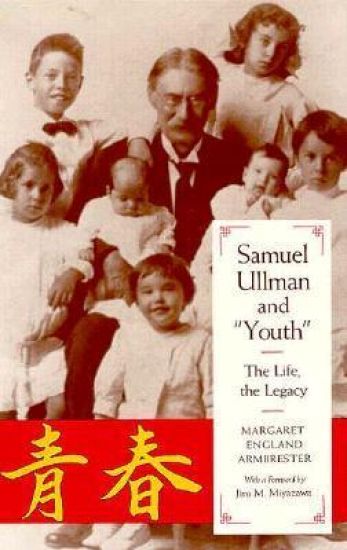
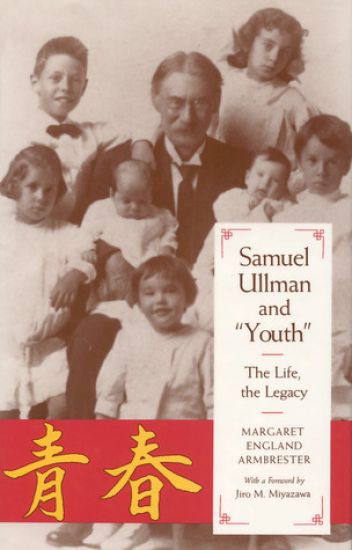
Samuel Ullman and Youth

Samuel Ullman and Youth

Margaret England Armbrester; Jiro M. Miyazawa

The University of Alabama Press
1993
sidottu
A biography of the writer of "Youth", a poem known and admired among the Japanese population and yet largely unknown in the United States. The poem's message of encouragement is presented as a reflection of the substance of Ullman's life and his legacy to Japanese and Americans alike.
Samuel Ullman and Youth

Samuel Ullman and Youth

Margaret England Armbrester; Jiro M. Miyazawa

The University of Alabama Press
2009
nidottu
A biography of the writer of Youth, a poem known and admired among the Japanese population and yet largely unknown in the United States. The poem's message of encouragement is presented as a reflection of the substance of Ullman's life and his legacy to Japanese and Americans alike.
Samuel Johnson and Three Infidels

Samuel Johnson and Three Infidels

Mark J. Temmer

University of Georgia Press
2009
pokkari
European literary history teems with prejudices. Nowhere perhaps is bias more evident than in the field of Anglo-French relations of the eighteenth century. In England looms the formidable figure of Samuel Johnson, while the French-speaking world is dominated by Rousseau, Voltaire, and Diderot. Samuel Johnson thought little of Voltaire and never mentioned Diderot. That he wanted to banish Rousseau to the American colonies is well known. All three men were, in Johnson's mind, infidels to the Christian order of society.In Samuel Johnson and Three Infidels, Mark Temmer reevaluates dogmatic views and critical commonplaces that have encrusted these relationships by comparing representative works of the three Continental authors to corresponding works and realities embodied and created by Samuel Johnson. After reviewing existing harmonies and dissonances between France and England, Temmer turns to the lives of Johnson and Rousseau, interpreting them as ontological masterpieces made visible mainly in Rousseau's Confessions and in biographies of Johnson by James Boswell and Hester Piozzi, both of whom insist on remarkable affinities between the two men. In the words of Mrs. Piozzi, they were "alike as sensations of frost and fire." Despite their opposing doctrines, Temmer reveals a pietism in Rousseau that often matches in intensity Johnson's otherworldly yearnings.Temmer moves from this comparison into a discussion of Candide and Rasselas, works published within months of each other in 1759. Integrating Voltaire's satire and Johnson's moral tale into the philosophical history of the age, Temmer goes on to uncover shared moments of laughter and music, ringing out against the gray background of a life in which, for both men, "much is to be endured and little to be enjoyed." Finally, exploring Johnson's Life of Richard Savage and Diderot's Le Neveu de Rameau, Temmer suggests the strong possibility that Diderot's masterpiece may have been influenced by Johnson's biography as well as by Savage's own An Author to be Lett.In this book, Temmer moves beyond the boundaries that have traditionally defined eighteenth-century scholarship on either shore of the English Channel. Creating a cross-cultural conversation bounded only by the lives and interests of his subjects, Temmer relates Johnson to Continental literature and defines his innovative role in a tradition that leads to Hegel, Dostoevsky, and Nietzsche.
Samuel Johnson and the Sense of History

Samuel Johnson and the Sense of History

John A. Vance

University of Georgia Press
2009
pokkari
No area of Johnsonian studies has been less appreciated and more misunderstood than Johnson's response to history. Popular notions to the effect that he was insensitive to history have discouraged scholars and critics from discovering the role history played in his thinking. In this first book-length investigation of the subject, John A. Vance concludes that few misconceptions about Samuel Johnson have been so glaring as his supposed dislike of history.More specifically, in separate chapters Vance examines the development of Johnson's historical sense—from his readings, heritage, and travels to historical sites; Johnson's recall and use of historical figures and events, most notably the seventeenth-century attitude toward the most maligned member of the historical family, antiquarianism.The author also devotes two chapters to Johnson's historical writings—that is, those works in which he either incorporates history into his critical, biographical, and political discussions or those in which he clearly assumes the role of historian himself. Vance furthermore considers Johnson's views on historical facts, educative and moral history, the broadening scope of historical investigation, the nature of historical truth and skepticism, historical research, historical causation, and the historian's style.
Samuel Johnson and the Age of Travel

Samuel Johnson and the Age of Travel

Thomas M. Curley

University of Georgia Press
2009
pokkari
Although Samuel Johnson's famed ramblings never took him more than five hundred miles from his London home, he was an indefatigable planner of distant voyages. Sharing with his fellow Englishmen that passion for investigating the unknown which had ushered in a momentous geographical revolution, Johnson became the original armchair traveler. His writings proclaim a boundless curiosity about the globe and demonstrate a pervasive preoccupation with travel in every conceivable form. Travel represented more for him than geographical movement; it was a symbol of intellectual growth in his life, his morality, and his society. While Johnson's biographers have all emphasized his fascination with exploration and discovery, no comprehensive study of his complex relationship to the epoch-making geographical advances of his century has heretofore appeared.Thomas Curley's Samuel Johnson and the Age of Travel offers new perspectives on this crucial and surprisingly little-known concern of the man and his age, when English literature brilliantly mirrored the widening frontiers of the British Empire. Drawing extensively on Johnson's entire canon, the works of his contemporaries, and a vast store of much neglected travel books, Curley places Johnson's love of travel and travel literature firmly in its literary and historical contexts.Johnson's career began with the translation of a travel book, yielded numerous articles and essays on the subject in his middle years, and culminated in the publication of his own splendid description of the Highlands in A Journey to the Western Islands of Scotland. Keenly interested in geography, Johnson studied well over two centuries of travel literature to validate his own philosophy of human nature and to promote improved literary standards in what was then the second most popular genre in England. His masterpiece, Rasselas, not only enshrined his recurring vision of man as perpetual explorer but also exemplified that fruitful interaction between travel books and belles-lettres so prevalent throughout Johnson's age.Samuel Johnson and the Age of Travel sheds new light on Johnson's career ambitions, his talents in moral observation and literary creation, and his inquisitive age. Johnson emerges in Curley's study as a truly representative writer completely captivated by the romance of Georgian travel and illustrative of the cultural impact of an expanding world picture upon the minds and letter of eighteenth-century Englishmen.
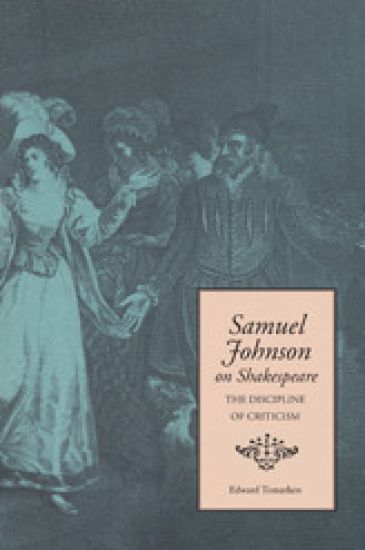
Samuel Johnson on Shakespeare

Samuel Johnson on Shakespeare

Edward Tomarken

University of Georgia Press
2009
pokkari
Since the first appearance of Samuel Johnson's edition of Shakespeare's drama in 1765, its Preface has often been published separately, while the Notes have been treated as miscellaneous and fragmentary. As a result, few modern readers realize that the Notes in fact contain coherent interpretations of most of the plays and that many portions of the Preface are generalizations related to those readings. Scholars who have examined the Notes carefully have almost always used them in studies of larger issues, such as Johnson's morality or rhetoric. In this book, Edward Tomarken provides the first full-length study of the Notes to Shakespeare, showing how they raise issues of direct concern to modern critics and theoreticians.While referring to Johnson's notes on all the Shakespearean dramas, Tomarken focuses on eight plays--Henry IV, Troilus and Cressida, Twelfth Night, The Taming of the Shrew, King Lear, The Tempest, Hamlet, and Macbeth--to demonstrate the range of Johnson's editorial and critical abilities. Each chapter, devoted to a single play, moves from the particular to the general-from specific remarks about the play in the Notes, to related theoretical statements in the Preface, and finally to an axiom of literary theory. Ranging from a formulation concerning ideology in criticism to a reconsideration of aesthetic empathy, these axioms are, Tomarken contends, essential to literary criticism as a discipline and manifest Johnson's relevance to moder
Samuel Richardson's New Nation

Samuel Richardson's New Nation

Ewha Chung

Peter Lang Publishing Inc
1998
sidottu
"Samuel Richardson's New Nation" focuses on four novels, taking new and varied approaches in analyzing the construct of native -English- virtue and the role of the domestic sphere within eighteenth-century England. Ewha Chung not only examines Richardson's use of such themes but also links the novels to historical developments that inevitably heightened the sense of English superiority so crucial to the age of imperialism. The powerful influence of Richardson's literary nationalism inspired eighteenth-century readers in England and Europe. This work investigates the phenomenal investment in Richardson's characters and demonstrates beyond question the far-reaching impact of his work."
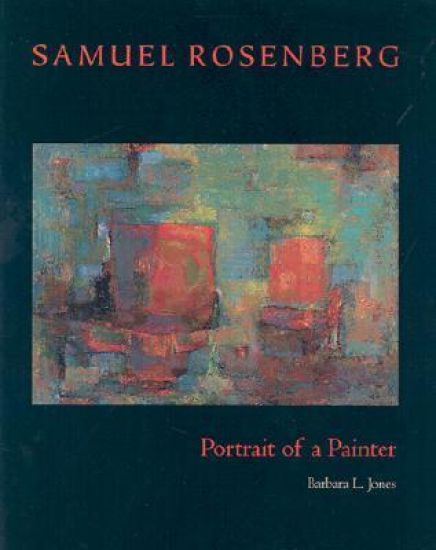
Samuel Rosenberg

Samuel Rosenberg

Barbara L. Jones

University of Pittsburgh Press
2003
sidottu
While other artists moved to New York or Paris, painter Samuel Rosenberg (1896-1972) never left the city he called home. From the age of twelve, when he took his first art class at a settlement house in Pittsburgh's Hill District, through a vigorous career that spanned six decades, Rosenberg was challenged by the complex city whose artistic legacy he did much to shape. In Pittsburgh, Rosenberg created more than five hundred paintings, engaged with the dynamic progress of American painting in the twentieth century, and inspired generations of students. This book is the first full study of his work and influence. The constancyof Rosenberg's career was change. He began as a portraitist (1915-1930), influenced by Velazquez, Rembrandt, Matisse, and later, Picasso. In the 1930s, however, Rosenberg turned to portray the city around him. Inspired by the steep hills, densely polluted atmosphere, crooked houses, and layered immigrant populations with intersecting poverties, he created emotional urban landscapes that ensured Pittsburgh's place in the American regionalist art movement.Rosenberg's focus was the Hill District, where he lived as a young man. In poignant, socially conscious paintings, he traced the transitions of this gritty, multiethnic neighborhood through the Great Depression and Pittsburgh's early experiments in urban renewal. "Yes, I know there are artists in town who sneer at Pittsburgh, who want to go to Venice and paint canals," Rosenberg told a reporter. "But the artist who dislikes the town should . . . stay here and put his hate into pictures of the Pittsburgh scene. In doing so, he would have something to say."In the 1940s, responding to the horrors of World War II, Rosenberg's subjects became more universal and allegorical. In paintings such as Israel (1945), his most reproduced work, haunting human figures do not allow viewers to remain indifferent to the world situation. Here he began experiments with abstraction and the quality of light, a search he would continue for the rest of his life.From 1949 until his death in 1972, Rosenberg developed his own form of abstract expressionism, translating emotion with color, but without entirely abandoning representation. Using sequential layers of translucent color and transparent glazes, Rosenberg was able to achieve a penetrating, shimmering effect in his work. His paintings from this period are reminiscent of stained glass windows in that they seem to emit light rather than reflect it.Samuel Rosenberg's paintings were exhibited widely, from the World's Fair (1939) to the nation's preeminent museums, including the Museum of Modern Art, the Whitney Museum of American Art, the Corcoran Gallery in Washington, D.C., and the Pennsylvania Academy of Fine Arts in Philadelphia. He had twenty-six solo exhibitions during his lifetime, and he was accepted into the prestigious Carnegie International in 1920, 1925, and every subsequent exhibition from 1933 to 1967.But it is possible that Rosenberg's most enduring legacy is his teaching. For more than forty years he taught drawing and painting at Carnegie Institute of Technology (now Carnegie Mellon University), where his students included Philip Pearlstein, Mel Bochner, and Andy Warhol-whom Rosenberg saved from expulsion in 1947. He chaired the art department at the Pennsylvania College for Women (now Chatham College). He directed art programs and taught for decades at two community art schools: the Irene Kaufmann Settlement in the Hill District and the Isaac Seder Educational Center for the Young Men's and Women's Hebrew Association, which merged in 1961. A revered and devoted master teacher, he awakened several generations of Pittsburgh artists to the "adventure," as he called it, of art.Samuel Rosenberg: Portrait of a Painter accompanies the first major retrospective of his work since 1960. In a thorough and carefully researched essay, accompanying eighty-two color and fifty black-and-white reproductions, curator Barbara L. Jones tells the story of Rosenberg's life, his evolving artistic vision, and his teaching legacy. She also provides biographical, exhibition, and award chronologies, along with a complete catalog of paintings and preparatory sketches. Lively sidebars by regional historians Barbara Burstin, Eric Davin, and Laurence Glasco, and by artist and former student Bennard Perlman, give social and cultural context, recreating the Pittsburgh in which this remarkable artist lived and worked.
Samuel Pepys in the Diary

Samuel Pepys in the Diary

Percival Hunt

University of Pittsburgh Press
1958
nidottu
In this work, the reader experiences the life of Samuel Pepys and his freinds, great and small, in seventeenth-century London. We see great men of war, business and letters, enhanced by Percival HuntAEs comprehensive bibliography.