Kirjojen hintavertailu. Mukana 11 244 527 kirjaa ja 12 kauppaa.

Kirjahaku

Etsi kirjoja tekijän nimen, kirjan nimen tai ISBN:n perusteella.

1000 tulosta hakusanalla Stuart Croft

Imaging Stuart Family Politics

Imaging Stuart Family Politics

Catriona Murray

Routledge
2016
sidottu
From conception onwards, Stuart offspring were presented to their subjects through texts, images and public celebrations. Audiences were exhorted to share in their development, establishing affective bonds with the royal family and its latest additions. Yet inviting the public into Stuart domestic affairs exposed them to intense scrutiny and private interactions were endowed with public dimensions. Images of royal children had the potential both to support and to undermine dynastic messages. In Imaging Stuart Family Politics, Catriona Murray explores the promotion of Stuart familial propaganda through the figure of the royal child. Bringing together royal ritual, court portraiture and popular prints, she offers a distinctive perspective on this crucial dimension of seventeenth-century political culture, exploring the fashioning and dismantling of reproductive imagery, as well as the vital role of visual display within these dialogues. This wide-ranging study will appeal to scholars of Stuart cultural, political and social history.
Autobiography by John Stuart Mill: Autobiography

Autobiography by John Stuart Mill: Autobiography

John Stuart Mill

Createspace Independent Publishing Platform
2013
nidottu
John Stuart Mill, (20 May 1806 - 8 May 1873) was an English philosopher, political economist and civil servant. He was an influential contributor to social theory, political theory and political economy. He has been called "the most influential English-speaking philosopher of the nineteenth century". Mill's conception of liberty justified the freedom of the individual in opposition to unlimited state control. He was a proponent of utilitarianism, an ethical theory developed by Jeremy Bentham. Hoping to remedy the problems found in an inductive approach to science, such as confirmation bias, he clearly set forth the premises of falsifiability as the key component in the scientific method. Mill was also a Member of Parliament and an important figure in liberal political philosophy.
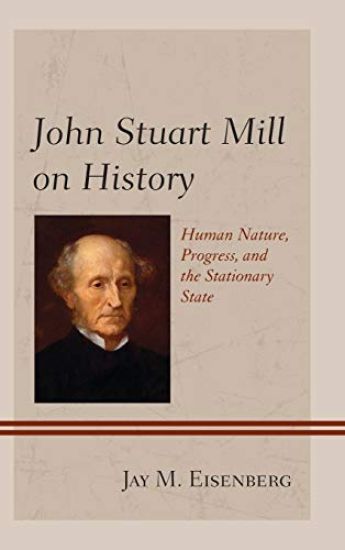
John Stuart Mill on History

John Stuart Mill on History

Jay M. Eisenberg

Lexington Books
2018
sidottu
Though Mill has been the subject of an imposing volume of scholarship, his philosophy of history has received scant attention. This inquiry considers the role of history in Mill’s break from the Benthamite radicals, his effort to define a methodology for the study of society modelled on the natural sciences, and his speculations about the course and meaning of history. A dominant theme is Mill’s struggle to reconcile his ambition to develop a comprehensive science of society with his convictions that human nature is malleable and that history progresses as a consequence of intellectual achievement and diversity of beliefs. Mill’s compatibilist vision of the individual as driven by deterministic psychological laws and as also capable of freely choosing a life of autonomous “self-culture” was mirrored in his philosophy of history, as Mill retained the materialistic stadial theory of social development proposed during the Scottish Enlightenment, and an idealistic vision of history derived from the Saint-Simonians, Guizot and Comte. Though Mill claimed the primacy of the intellect in advancing material living conditions, he believed that the culmination of instrumental rationalism in his own Age of Commerce was undermining and marginalizing other forms of individual accomplishment—indeed, individuality itself—in the suffocating conformity of mass culture. Mindful of what he considered to be the culturally stationary states of Asia, Mill dreaded the prospect that a commercial culture with no higher ambition than the acquisition of ever-greater wealth would also become inert as the consequence of overbearing social conventions and intellectual stagnation. Like Smith and Ricardo, Mill anticipated the inevitability of the economically stationary state as the consequence of the fall in the rate of profits under free market capitalism, but rather than await its arrival, Mill seized on its possibilities. The stationary state became Mill’s vehicle for advocating an egalitarian supra-subsistence economy in the expectation that cultural priorities would shift to the pursuit of higher moral, intellectual and aesthetic aspirations, and the revitalization of individual autonomy.