Kirjojen hintavertailu. Mukana 11 244 527 kirjaa ja 12 kauppaa.

Kirjahaku

Etsi kirjoja tekijän nimen, kirjan nimen tai ISBN:n perusteella.

1000 tulosta hakusanalla Thomas Witherow

Thomas Munro and the Development of Administrative Policy in Madras 1792–1818
This book was originally published in 1966. The great territorial acquisitions made by the British in South India at the end of the eighteenth century called for an administrative system differing in many ways from that in use in Bengal. These changes influenced subsequent administrative practice not only in Madras but in the whole of British India. Although it had long been recognised that Thomas Munro was in part responsible for the changes, this was the first full study of how his ideas developed and how much they were his alone. Dr Beaglehole's study added greatly to the knowledge of the personality and ideas of one of the key figures in British India. The analysis of the controversy and discussion which took place at the time also provided an insight into the nature of British rule in India.
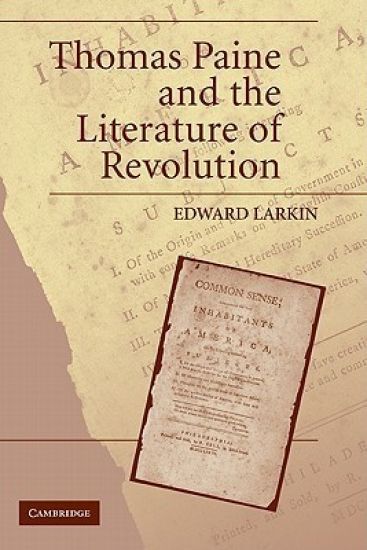
Thomas Paine and the Literature of Revolution

Thomas Paine and the Literature of Revolution

Edward Larkin

Cambridge University Press
2010
pokkari
Although the impact of works such as Common Sense and The Rights of Man has led historians to study Thomas Paine's role in the American Revolution and political scientists to evaluate his contributions to political theory, scholars have tacitly agreed not to treat him as a literary figure. This book not only redresses this omission, but also demonstrates that Paine's literary sensibility is particularly evident in the very texts that confirmed his importance as a theorist. And yet, because of this association with the 'masses', Paine is often dismissed as a mere propagandist. Thomas Paine and the Literature of Revolution recovers Paine as a transatlantic popular intellectual who would translate the major political theories of the eighteenth century into a language that was accessible and appealing to ordinary citizens on both sides of the Atlantic.
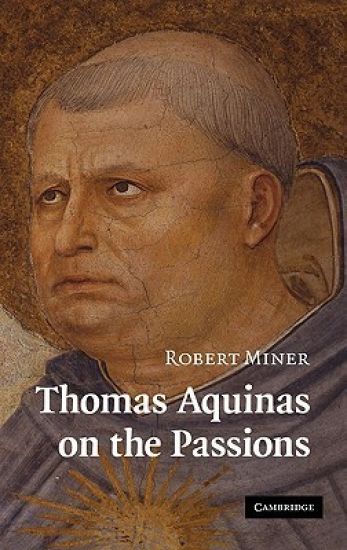
Thomas Aquinas on the Passions

Thomas Aquinas on the Passions

Robert Miner

Cambridge University Press
2011
pokkari
The Summa Theologiae is Thomas Aquinas' undisputed masterwork, and it includes his thoughts on the elemental forces in human life. Feelings such as love, hatred, pleasure, pain, hope and despair were described by Aquinas as 'passions', representing the different ways in which happiness could be affected. But what causes the passions? What impact do they have on the person who suffers them? Can they be shaped and reshaped in order to better promote human flourishing? The aim of this book is to provide a better understanding of Aquinas' account of the passions. It identifies the Aristotelian influences that lie at the heart of the Summa Theologiae, and it enters into a dialogue with contemporary thinking about the nature of emotion. The study argues that Aquinas' work is still important today, and shows why for Aquinas both the understanding and attainment of happiness requires prolonged reflection on the passions.
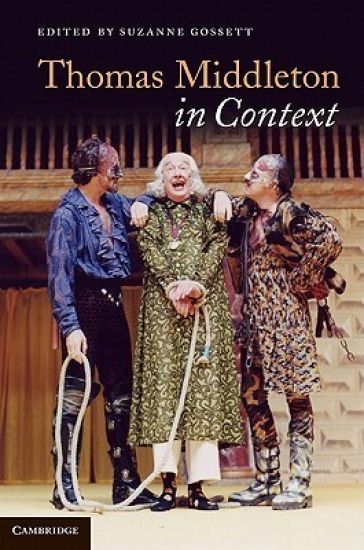
Thomas Middleton in Context

Thomas Middleton in Context

Cambridge University Press
2011
sidottu
The redefinition of the Thomas Middleton canon has led to an explosion of interest in this quintessential Jacobean. Middleton's best-known plays, such as Women Beware Women and The Changeling, are now staged, filmed and rewritten for modern audiences. But Middleton also wrote religious poetry, satires, historical allegory, prose and less familiar plays, collaborating frequently, even with Shakespeare. His works are rooted in his historical and cultural environment, from the Overbury scandal to the fall of the boys' companies. Here, experts in literature, theatre, history, law and religion analyze the complex contexts of Middleton's works, clarifying debates over his religious and political affiliations. Divided into sections presenting new interpretations of the world in which Middleton wrote - as a Londoner, citizen, dramatist and early modern man - and concluding with a section on performance history, the essays cover the full range of his works, from the frequently performed to the newest attributions.
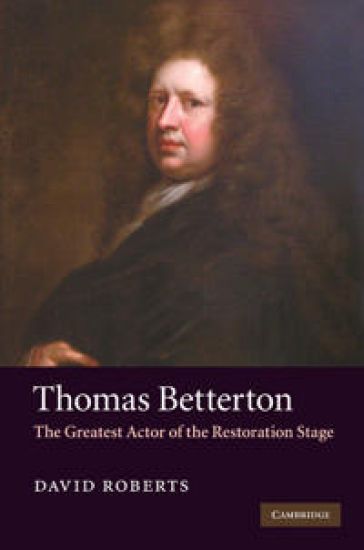
Thomas Betterton

Thomas Betterton

David Roberts

Cambridge University Press
2010
sidottu
Restoration London's leading actor and theatre manager Thomas Betterton has not been the subject of a biography since 1891. He worked with all the best-known playwrights of his age and with the first generation of English actresses; he was intimately involved in the theatre's responses to politics, and became a friend of leading literary men such as Pope and Steele. His innovations in scenery and company management, and his association with the dramatic inheritance of Shakespeare, helped to change the culture of English theatre. David Roberts's entertaining study unearths new documents and draws fresh conclusions about this major but shadowy figure. It contextualizes key performances and examines Betterton's relationship to patrons, colleagues and family, as well as to significant historical moments and artefacts. The most substantial study available of any seventeenth-century actor, Thomas Betterton gives one of England's greatest performing artists his due on the tercentenary of his death.
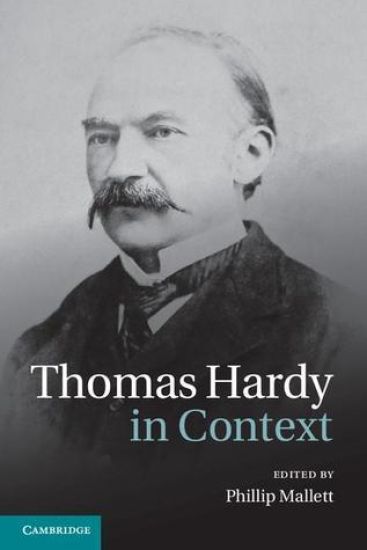
Thomas Hardy in Context

Thomas Hardy in Context

Cambridge University Press
2013
sidottu
This collection covers the range of Thomas Hardy's works and their social and intellectual contexts, providing a comprehensive introduction to Hardy's life and times. Featuring short, lively contributions from forty-four international scholars, the volume explores the processes by which Hardy the man became Hardy the published writer; the changing critical responses to his work; his response to the social and political challenges of his time; his engagement with contemporary intellectual debate; and his legacy in the twentieth century and after. Emphasising the subtle and ongoing interaction between Hardy's life, his creative achievement and the unique historical moment, the collection also examines Hardy's relationship to such issues as class, education, folklore, archaeology and anthropology, evolution, marriage and masculinity, empire and the arts. A valuable contextual reference for scholars of Victorian and modernist literature, the collection will also prove accessible for the general reader of Hardy.
Thomas Young: Natural Philosopher 1773–1829

Thomas Young: Natural Philosopher 1773–1829

Alexander Wood

Cambridge University Press
2011
pokkari
Originally published in 1954, this biography was the result of many years' labour by its author, Alexander Wood. At the time of Dr Wood's death, he had completed the first ten chapters and left notes for the remaining two, which were finished by Frank Oldham. The volume traces the life of the famous English natural philosopher Thomas Young (1773–1829) from his precocious childhood through his later career as a physician and his accomplishments in the study of optics and languages. As Mr Oldham notes in the preface, 'Young forms a fascinating subject in the field of biography, not only from his amazing scientific record and his wide classical learning combined with his remarkable depth of knowledge in philosophy, but also as a humanist working disinterestedly in the cause of truth.' The book is richly illustrated and contains a memoir of the late author by his acquaintance Professor Charles E. Raven.
Thomas Mann

Thomas Mann

Thomas Mann; Erich Heller

Cambridge University Press
1981
pokkari
In this book, which was first published in 1958 and reissued in 1981, Professor Heller sees Mann as the late heir of the central tradition of modern German literature and also as one of the most ironic writers within that tradition. He offers a detailed study of the major works of fiction, Buddenbrooks, Tonio Kröher, Death in Venice, The Magic Mountain, Joseph and His Brothers, Doctor Faustus and Felix Krull, as well as a discussion of Mann's most significant political essay, 'Meditations of a Non-Political Man'. Beyond this, Heller's book is a profound commentary on Mann by a mind attuned to (and mouded by) precisely the intellectual and cultural traditions which are so much part of Mann's creative make-up.
Thomas Stearns Eliot: Poet

Thomas Stearns Eliot: Poet

Moody A. David

Cambridge University Press
1995
pokkari
A. David Moody's Thomas Stearns Eliot: Poet was published to acclaim in 1979, with a successful paperback following in 1980. This carefully revised and corrected second edition, with a specially written preface and a new appendix, meets the demand for one of the classic studies of the twentieth century's best-known poet.
Thomas Starkey and the Commonwealth

Thomas Starkey and the Commonwealth

Thomas Mayer

Cambridge University Press
2002
pokkari
Thomas Starkey (c. 1495–1538) was the most Italianate Englishman of his generation. This book places Starkey into new and more appropriate contexts, both biographical and intellectual, taking him out of others in which he does not belong, from displaced Roundhead to follower of Marsilio of Padua. Beginning with his native Cheshire, it traces his career through Oxford, Padua, Paris, Avignon, Padua again, and finally England, where he spent the last four years of his life trying to fulfil his ambition to serve the commonweal. Most of Starkey’s career revolved around his patron Reginald Pole, scion of the highest nobility, but Starkey (and many other Englishmen) managed to balance loyalty to Pole with allegiance to Henry VIII. Out of favour with the king’s secretary after the middle of 1536, Starkey turned increasingly to religion, continuing to cling to his conciliarist and Italian Evangelical opinions until his death.
Thomas Reid and the Story of Epistemology

Thomas Reid and the Story of Epistemology

Nicholas Wolterstorff

Cambridge University Press
2004
pokkari
The two great philosophical figures at the culminating point of the Enlightenment are Thomas Reid in Scotland and Immanuel Kant in Germany. Reid was by far the most influential across Europe and the United States well into the nineteenth century. Since that time his fame and influence have been eclipsed by his German contemporary. This important book by one of today’s leading philosophers of knowledge and religion will do much to reestablish the significance of Reid for philosophy today. Nicholas Wolterstorff has produced the first systematic account of Reid’s epistemology. Relating Reid’s philosophy to present-day epistemological discussions the author demonstrates how they are at once remarkably timely, relevant, and provocative. No other book both uncovers the deep pattern of Reid’s thought and relates it to contemporary philosophical debate. This book should be read by historians of philosophy as well as all philosophers concerned with epistemology and the philosophy of mind.
Thomas Wright's Political Songs of England

Thomas Wright's Political Songs of England

Thomas Wright

Cambridge University Press
1996
sidottu
This book contains a collection of political verses, venality satires and songs of social protest from medieval England. First edited by Thomas Wright in 1839, these so-called ‘political songs’ are reissued here on behalf of the Royal Historical Society. The collection provides a fascinating insight into medieval responses to contemporary events. A new and wide-ranging introduction from Peter Coss offers observations on authorship, audience, the means of dissemination and the use of the languages involved. The reader is brought up to date on the critical study of the poems and on their significance and potentiality for the modern historian and literary scholar. Professor Coss corrects Wright’s dating where necessary and puts each item into its full contemporary context, making these fascinating verses accessible to the modern reader.
Thomas Wright's Political Songs of England

Thomas Wright's Political Songs of England

Thomas Wright

Cambridge University Press
1996
pokkari
This book contains a collection of political verses, venality satires and songs of social protest from medieval England. First edited by Thomas Wright in 1839, these so-called 'political songs' are reissued here on behalf of the Royal Historical Society. The collection provides a fascinating insight into medieval responses to contemporary events. A wide-ranging introduction from Peter Coss offers observations on authorship, audience, the means of dissemination and the use of the languages involved. The reader is brought up to date on the critical study of the poems and on their significance and potentiality for the modern historian and literary scholar. Professor Coss corrects Wright's dating where necessary and puts each item into its full contemporary context, making these fascinating verses accessible to the modern reader.
Thomas Hardy on Screen

Thomas Hardy on Screen

Cambridge University Press
2006
pokkari
The novels of Thomas Hardy have often been regarded as cinematic in their scope and power, and they have inspired some of the most absorbing adaptations of fiction for the big screen. This collection of essays by prominent international Hardy scholars explores both successful and unsuccessful attempts to transfer Hardy's novels to the screen. It provides a fascinating illustrated history of the interpretation and recreation of Hardy's work, from the silent era to television. The essays highlight the challenging nature of Hardy's work, which finds its most powerful reflection in films by controversial directors such as Roman Polanski and Michael Winterbottom. Adaptations on screen have revived Hardy's reputation for new generations of readers, and have reinforced the continuing relevance of his works. This collection offers a stimulating starting-point both for the study of Hardy's novels as films, and of the ways in which cinema and television adaptations illuminate the novels.
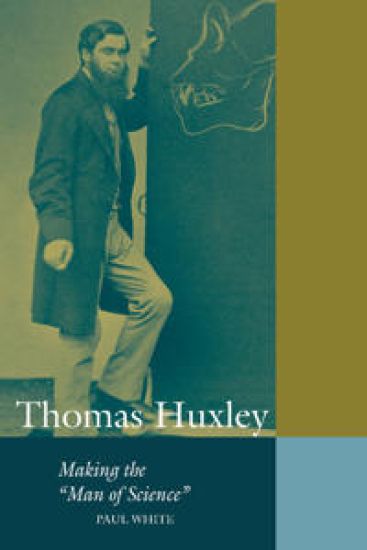
Thomas Huxley

Thomas Huxley

Paul White

Cambridge University Press
2002
sidottu
Dubbed 'Darwin's Bulldog' for his combative role in the Victorian controversies over evolutionary theory, Thomas Huxley has been widely regarded as the epitome of the professional scientist who emerged in the nineteenth century from the restrictions of ecclesiastical authority and aristocratic patronage. Yet from the 1850s until his death in 1895, Huxley always defined himself as a 'man of science', a moral and religious figure, not a scientist. Exploring his relationships with his wife, fellow naturalists, clergymen and men of letters, White presents a new analysis of the authority of science, literature, and religion during the Victorian period, showing how these different practices were woven into a fabric of high culture, and integrated into institutions of print, education and research. He provides a substantially different view of Huxley's role in the evolution debates, and of his relations with his scientific contemporaries, especially Richard Owen and Charles Darwin.
Thomas Huxley

Thomas Huxley

Paul White

Cambridge University Press
2002
pokkari
Dubbed ‘Darwin’s Bulldog’ for his combative role in the Victorian controversies over evolutionary theory, Thomas Huxley has been widely regarded as the epitome of the professional scientist who emerged in the nineteenth century from the restrictions of ecclesiastical authority and aristocratic patronage. Yet from the 1850s until his death in 1895, Huxley always defined himself as a ‘man of science’, a moral and religious figure, not a scientist. Exploring his relationships with his wife, fellow naturalists, clergymen and men of letters, White presents a new analysis of the authority of science, literature, and religion during the Victorian period, showing how these different practices were woven into a fabric of high culture, and integrated into institutions of print, education and research. He provides a substantially different view of Huxley’s role in the evolution debates, and of his relations with his scientific contemporaries, especially Richard Owen and Charles Darwin.
The Journal of Thomas Juxon, 1644–1647

The Journal of Thomas Juxon, 1644–1647

Thomas Juxon

Cambridge University Press
2000
sidottu
This book is a modern and accessible edition of a manuscript journal kept by Thomas Juxon, a Puritan Londoner, who produced and traded in sugar. Juxon’s journal focuses on public affairs and political and military developments during years of intense political manoeuvring, from the latter stages of the civil war and post-war attempts to reach a settlement with the king, to the crisis of the summer of 1647 and the army’s occupation of London. It sheds fresh light on the emergence and course of party and factional politics both within Parliament and in the City of London, and reveals the thoughts and convictions of an informed Londoner who was a committed participant in these events. Keith Lindley and David Scott’s substantial introduction provides a full account of Juxon’s life, describes the format of the journal and discusses its historical value, while the text is supported by full scholarly apparatus.
Thomas Aquinas: Disputed Questions on the Virtues

Thomas Aquinas: Disputed Questions on the Virtues

Thomas Aquinas

Cambridge University Press
2005
sidottu
The great medieval philosopher Thomas Aquinas (1224/6-1274) was Dominican regent master in theology at the University of Paris, where he presided over a series of questions - academic debates - on ethical topics. This volume offers translations of disputed questions on the nature of virtues in general, the fundamental or 'cardinal' virtues of practical wisdom, justice, courage, and temperateness, the divinely bestowed virtues of hope and charity, and the practical question of how, when and why one should rebuke a 'brother' for wrongdoing. The introduction explains how Aquinas's theory of virtue fits into his ethics as a whole, and it illuminates Aquinas's views by explaining the institutional and intellectual context in which these disputed questions were debated.